28 June 2026 · Patios and Paths
Slippery paths and patios: how to make them safe
A slippery path or patio can put you, your family, and your visitors at real risk of a nasty fall — especially through autumn and winter when surfaces stay damp for days at a time. Slippery paths and patios are one of the most common problems we deal with across Lincolnshire, and the good news is that the fix is usually straightforward and long-lasting. Here's what causes the problem, what actually works, and how to stop it coming back.
Why paths and patios become slippery
The short answer: biology. When moisture sits on a surface — whether that's rain, dew, or just shade stopping it from drying — algae, moss, lichen, and biofilm start to grow. These organisms form a thin, invisible or greenish layer that becomes incredibly slick when wet. It's the same stuff that makes riverbanks treacherous, and it thrives on garden surfaces.
A few things make it worse:
- North-facing or shaded surfaces that rarely dry out fully
- Smooth or polished materials like porcelain or glazed concrete
- Autumn leaf fall, which traps moisture and feeds organic growth
- Old or worn surfaces where the texture has been lost
- Poor drainage, leaving puddles and damp patches
Patios and paths in spots like Cherry Willingham or Skellingthorpe — where gardens are shaded by mature trees — tend to suffer more than open, south-facing plots.
The real danger: when does it get serious?
A thin film of algae on a dry day is barely noticeable. The same surface after overnight rain or a frost is a completely different matter. Polished porcelain in particular can become as slippery as ice when it's wet and colonised by algae. Indian sandstone and concrete block paving are not far behind once a biofilm builds up.
The risk is highest in:
- Autumn — wet leaves plus algae
- Winter — frozen moisture on top of organic growth
- Early spring — when growth picks up again after winter
If you have elderly relatives visiting, young children running about, or a route to your bins or garage that gets used in all weathers, this isn't something to leave until it causes an accident.
How to fix slippery paths and patios
The most effective solution is thorough pressure washing to remove the algae and biofilm completely — not just scrubbing the surface with a brush and some patio cleaner, which rarely gets deep enough into the pores and joints of the surface.
A professional hot or cold pressure wash strips back the biological growth, restores the texture of the surface, and reveals the grip that was always there underneath. For many surfaces, this alone makes a dramatic difference. You can see the full range of surfaces we work with over at our patio cleaning topic hub.
What about treatments and sealers?
After cleaning, applying a biocidal treatment or an appropriate sealer can significantly slow regrowth. This is especially worth considering on shaded, damp-prone surfaces that would otherwise need cleaning every year. Sealers work by filling the microscopic pores that algae and moss anchor themselves into — less grip for the biology means a cleaner, safer surface for longer.
It's worth noting that not every sealer suits every surface. A matt anti-slip sealer is very different from a wet-look finish, and applying the wrong product can actually make a surface more slippery, not less. If you're unsure, it's worth having a conversation before anything goes down.
DIY vs professional cleaning
You can hire a pressure washer from a tool-hire shop and have a go yourself. The honest truth is that consumer and hire machines often lack the pressure or flow rate to fully remove an embedded biofilm — you can shift the visible green colour without removing the layer underneath. A professional machine running at the right pressure for your specific surface type will do a more thorough job, and it takes much less time.
For paths that run alongside a house, to a back gate, or around a patio, the surface area is usually modest and the job can be done in a morning.
Keeping surfaces safe through the year
Once the surface is clean, a few habits make a real difference:
- Clear leaves promptly in autumn — they are the single biggest contributor to slippery surfaces
- Improve drainage if water is pooling in particular spots
- Apply a biocidal spray annually on problem areas before the autumn damp sets in
- Repoint block paving joints if weeds and moss are establishing themselves in the gaps — this removes the anchor points for organic growth
Homes in Nettleham and Heighington with large, established trees overhanging paved areas tend to need a bit more attention than average — it's just part of maintaining an older, tree-lined garden.
When to call us in
If your path or patio is visibly green, if it feels slick underfoot, or if you've slipped or nearly slipped on it, that's the time to act — not after the first frost. We cover the whole of Lincolnshire and can usually turn around a quote quickly. Take a look at our services to get a sense of what we can do, or check if we cover your area on our areas page.
A clean, safe surface that you can use confidently all year is absolutely achievable — and it usually costs less than people expect.
Get a free quote
If you'd like us to take a look at your paths or patio and give you a straight, no-obligation price, get in touch for a quote. We'll let you know exactly what we'd recommend and what it will cost — no pressure, no jargon.
Frequently asked questions
What makes a patio or path slippery?
Algae, moss, and biofilm growing on the surface are the main culprits. They form a thin layer that becomes extremely slick when wet, especially on shaded or north-facing surfaces that stay damp for long periods.
Will pressure washing make my path safe again?
In most cases, yes. Thorough pressure washing removes the algae and biofilm that cause the slipping hazard, restoring the surface's natural grip. A follow-up biocidal treatment or sealer can help keep it safe for longer.
Is porcelain paving more slippery than other materials?
Smooth or polished porcelain can be particularly slippery when wet and covered in algae. However, most porcelain paving designed for outdoor use has a textured or anti-slip finish — if it feels slippery, it almost certainly needs cleaning rather than replacing.
How often should I have my paths pressure washed to keep them safe?
For most Lincolnshire gardens, once every one to two years is enough to keep surfaces clean and safe. Heavily shaded paths or those under trees may benefit from an annual clean, especially heading into winter.
Need a hand with yours? We cover Lincolnshire for patios, driveways, paths and more — see the areas we cover or browse our services. Get a free quote or call 07874 010739.
Keep reading
More on patio cleaning
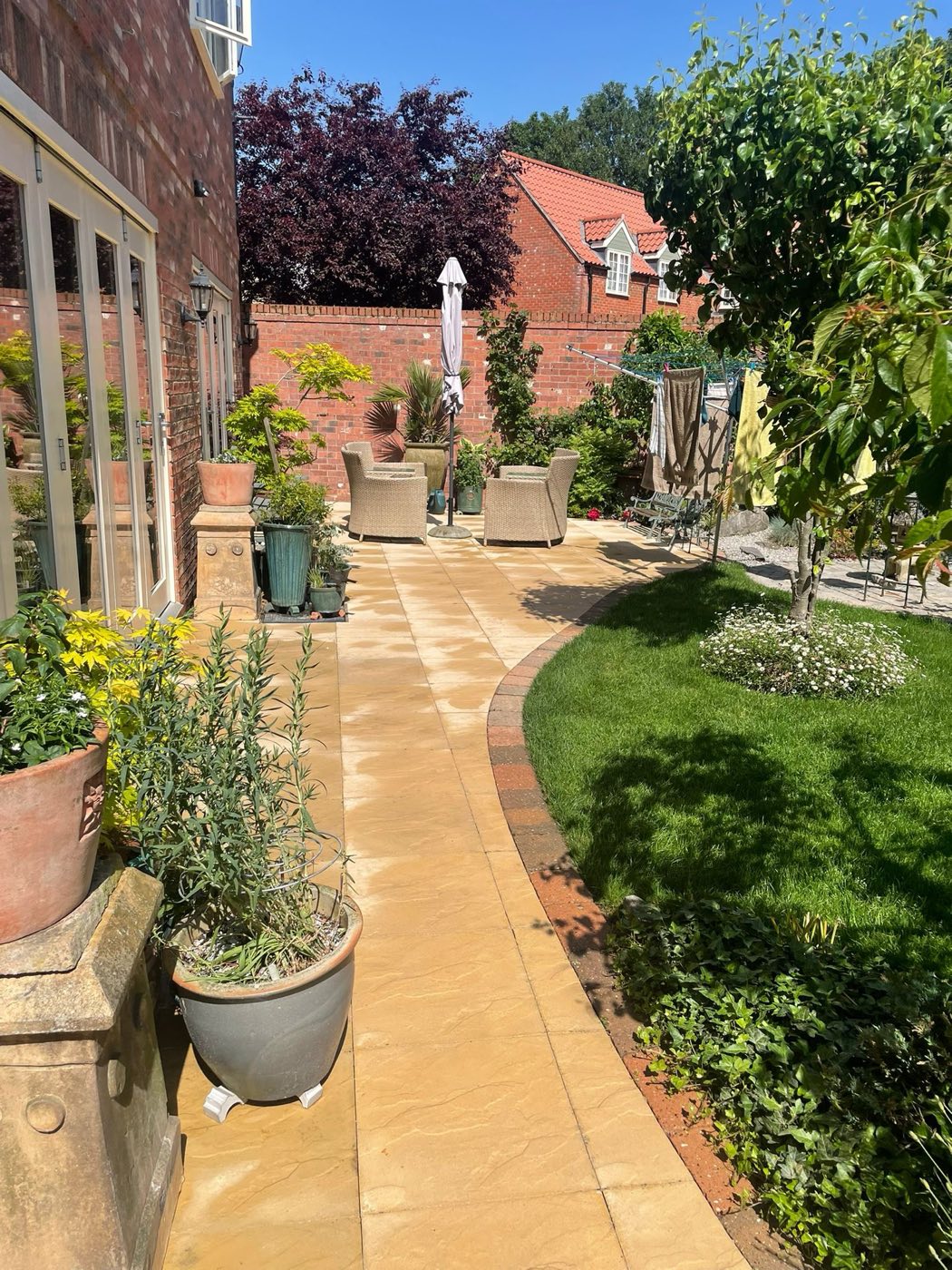
How to clean a shaded patio that stays damp
A permanently damp, shaded patio is the hardest surface to keep clean — here's what actually shifts the green and keeps it away longer.
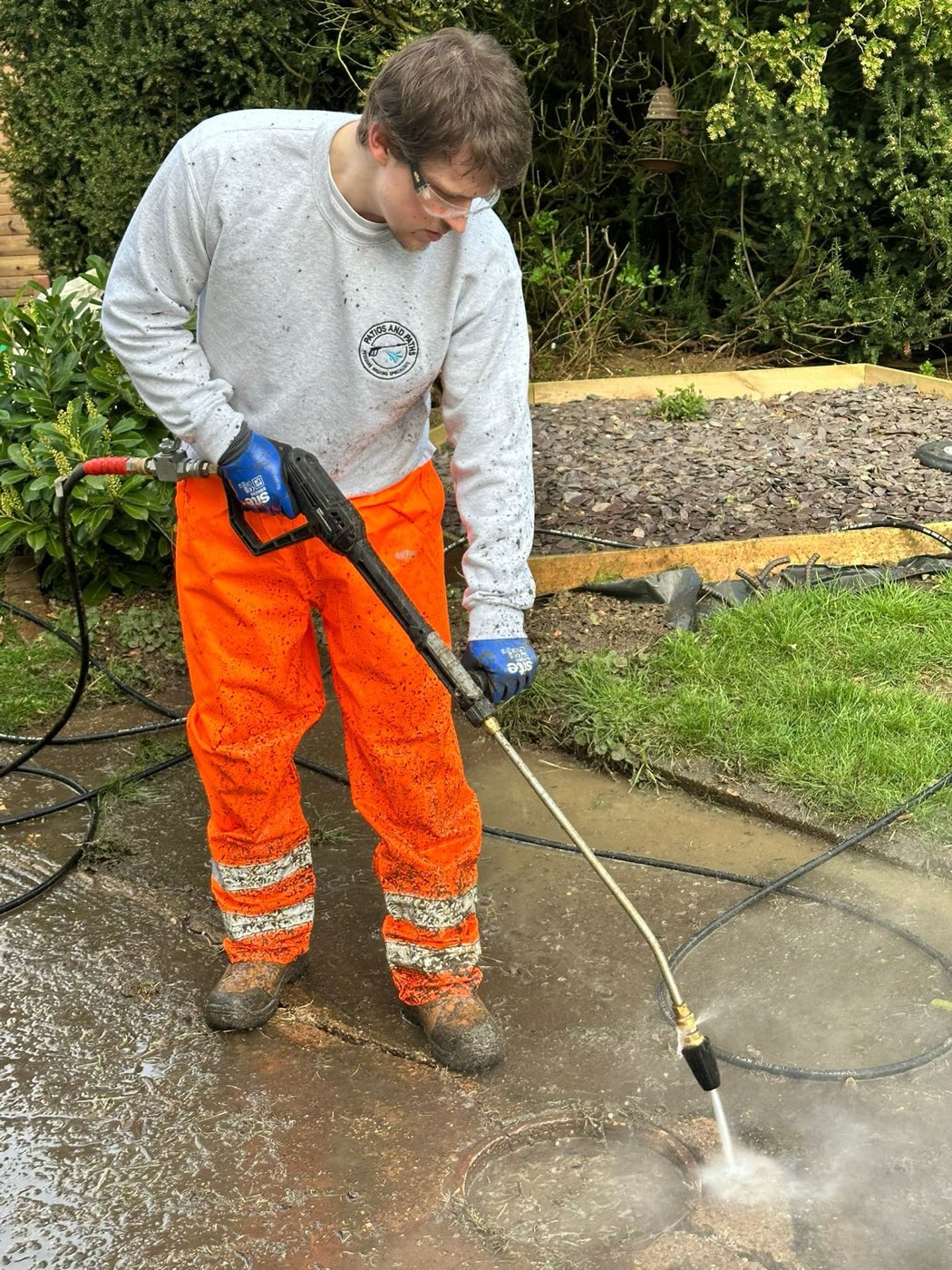
How to clean a patio with a pressure washer safely
Pressure washing a patio is satisfying — but the wrong settings or technique can cause real damage. Here's how to do it properly.
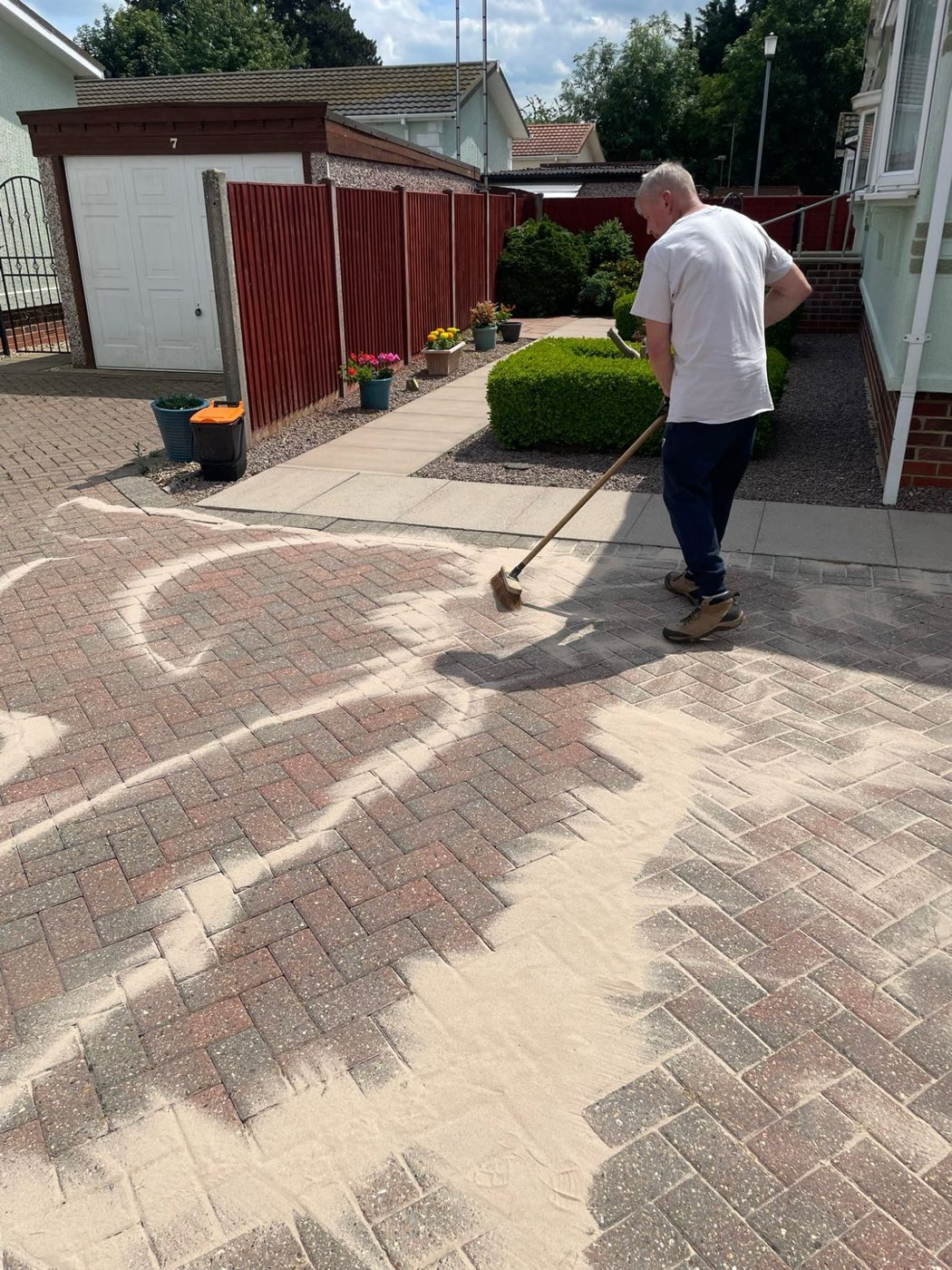
How to clean a wet pour rubber path properly
Wet pour rubber paths are low-maintenance — but they do get dirty, mossy and slippery. Here's how to clean them safely without causing damage.