
20 June 2026 · Patios and Paths
How to clean Indian sandstone paving properly
Indian sandstone is one of the most popular choices for patios across Lincolnshire — and it's easy to see why. The warm, varied tones look beautiful when they're fresh. The problem is that natural stone is porous, which means it picks up algae, moss, and dark staining faster than porcelain or concrete, and it can be damaged if you clean it the wrong way.
So if you're wondering how to clean Indian sandstone paving without wrecking it, here's a straightforward guide.
Why Indian sandstone needs careful cleaning
Unlike porcelain, Indian sandstone has a naturally open surface full of tiny pores. Water, soil, and organic matter get in and settle there. On north-facing or shaded patios — common in gardens around Nettleham or Washingborough where trees block the morning sun — this happens even faster because the stone stays damp for longer.
The risk with cleaning is going too hard. A high-pressure lance blasted straight at sandstone can:
- Erode the surface texture and leave it looking pale and scoured
- Open up cracks and accelerate frost damage
- Strip any previous sealant in patches, leaving an uneven finish
Gentle and consistent is the right approach.
What you'll need before you start
Gather your kit before you begin. You don't need anything expensive or specialised:
- A stiff-bristle brush (natural bristle or plastic — avoid metal)
- A bucket and garden hose or a low-pressure washer setting
- A pH-neutral or sandstone-specific stone cleaner (widely available at builders' merchants)
- Eye protection and gloves
Avoid bleach, patio black spot removers marketed for concrete, and anything strongly acidic or alkaline. These can permanently discolour Indian sandstone and eat into the surface. Always check the label says safe for natural stone.
Step-by-step: how to clean Indian sandstone paving
1. Clear the surface and pre-wet the stone
Remove furniture, pots, and loose debris. Give the whole area a good soak with a hose. Pre-wetting helps prevent the cleaning solution from soaking in too fast and leaving tide marks.
2. Apply your stone cleaner
Mix your cleaner to the dilution on the bottle — don't be tempted to go stronger. Apply it evenly across the slabs and leave it to dwell for 10–15 minutes. On a warm day, keep it damp so it doesn't dry on the surface.
3. Scrub methodically
Work your way across the patio in sections, scrubbing with your brush. Pay extra attention to the joints and any patches where green or black staining has built up. This is the step most people rush — proper dwell time and elbow grease do more work than pressure.
4. Rinse thoroughly
Rinse with a hose or a washer on its lowest, wide-fan setting. Keep the lance at least 30 cm from the surface and work at a low angle. Go over the whole area twice to make sure no cleaner residue is left behind — residue can attract new dirt quickly.
5. Allow to dry fully
Leave the patio to dry for at least 48 hours before replacing furniture or considering a sealant. Indian sandstone needs to be genuinely dry all the way through before anything is applied on top.
How often should you clean Indian sandstone?
Once a year is usually enough to keep it looking good — ideally late spring when the weather is reliably mild and dry. If your patio is heavily shaded or sits in a low spot where water collects, you might find it needs attention every 6 months. A good sealant applied after cleaning can extend the gap between washes significantly. You can read more about our full range of patio and path services to see how sealing fits into the picture.
When a pressure washer is appropriate
Pressure washing Indian sandstone is fine — if done correctly. The key is using the right nozzle (a 25-degree or wider fan, never a zero-degree pencil jet), keeping the pressure below 100 bar for domestic machines, and keeping the lance moving at all times. Never hold it in one spot.
For most homeowners, the risk of getting this wrong on expensive natural stone means it's worth having a professional handle it. We work regularly across Lincolnshire — from patios in Lincoln and Branston through to properties in Saxilby and Cherry Willingham — and Indian sandstone is one of the surfaces we see most often. Done right, it comes up looking as close to new as natural stone can get.
The difference between a DIY clean and a professional result
A thorough DIY clean with the right products will make a real difference. But a professional service uses hot-water pressure washing, rotary surface cleaners, and trade-grade treatments that reach deeper into the stone and shift staining that a domestic machine simply can't touch. If your sandstone has heavy lichen, deep-set black spot, or hasn't been cleaned in several years, professional cleaning followed by sealing is usually the most cost-effective route — because it stays cleaner for longer.
You can browse the areas we cover across Lincolnshire to check whether we work near you.
A quick word on aftercare
Once your sandstone is clean, keep on top of it:
- Brush off fallen leaves quickly in autumn — rotting leaves stain sandstone badly
- Clear standing water where you can
- Reapply sealant every 2–3 years
- Give it a light scrub with a diluted stone cleaner each spring before serious growth takes hold
For more practical guides like this, take a look at our patio cleaning advice hub.
If your Indian sandstone patio is past what a weekend DIY session can fix, we're happy to take a look. Get a free, no-obligation quote and we'll let you know exactly what's involved and what it'll cost.
Frequently asked questions
Can I use bleach to clean Indian sandstone?
No — bleach can permanently bleach or discolour natural sandstone and damage the surface structure. Always use a pH-neutral cleaner specifically labelled as safe for natural stone.
Will pressure washing damage my Indian sandstone patio?
It can if done incorrectly. Using too high a pressure, the wrong nozzle, or holding the lance too close can erode the surface. Keep pressure below 100 bar, use a wide fan nozzle, and keep the lance moving at all times.
Why does my Indian sandstone patio go green so quickly?
Indian sandstone is porous, so algae and moss get into the surface easily — especially in shaded or damp spots. Regular cleaning and a good sealant will slow regrowth significantly.
How do I get rid of black stains on Indian sandstone?
Black staining is usually algae or lichen that has settled deep into the stone's pores. A specialist stone cleaner with a decent dwell time and firm scrubbing will shift most of it; stubborn cases often need hot-water professional treatment.
Need a hand with yours? We cover Lincolnshire for patios, driveways, paths and more — see the areas we cover or browse our services. Get a free quote or call 07874 010739.
Keep reading
More on patio cleaning
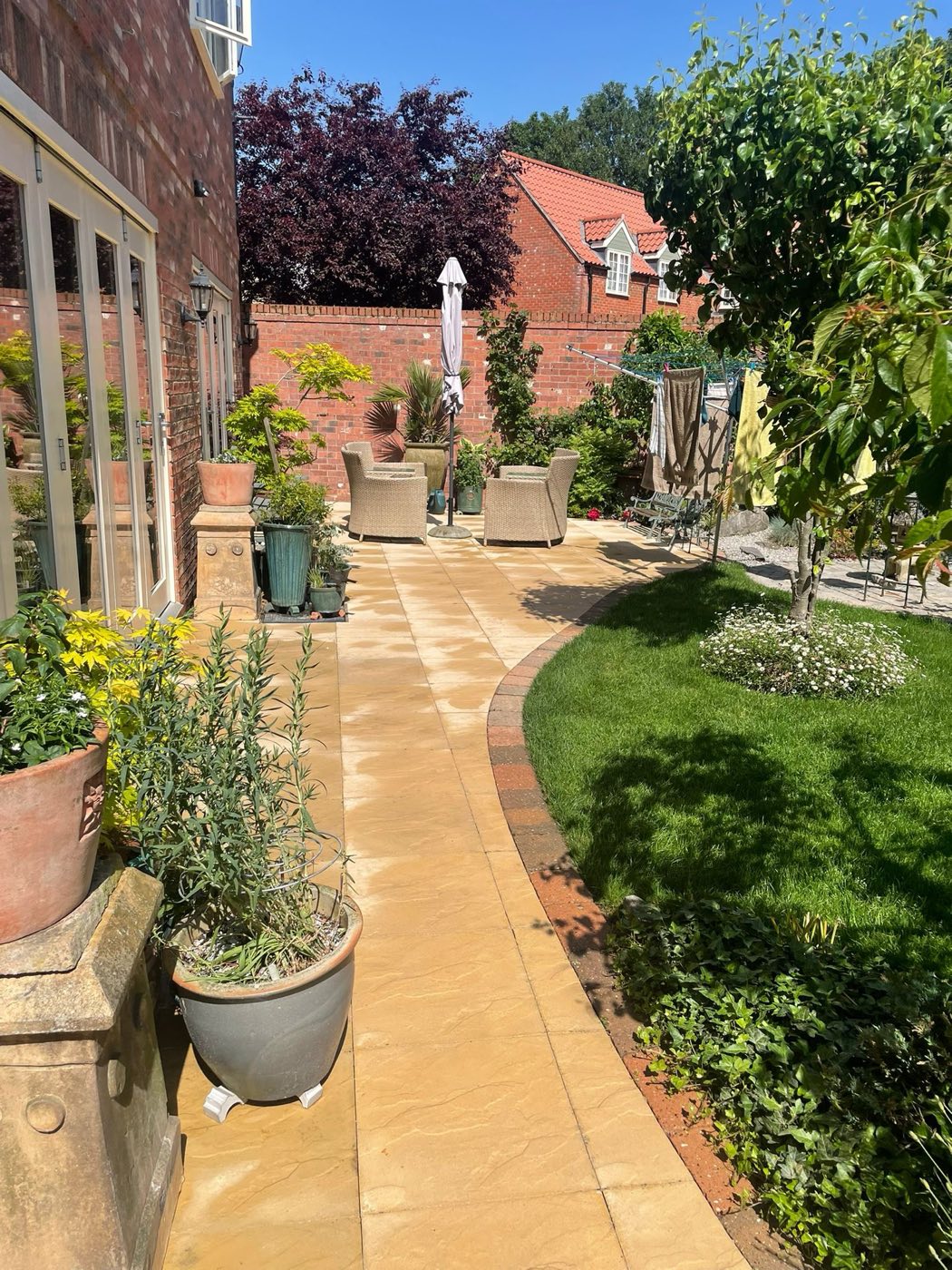
How to clean a shaded patio that stays damp
A permanently damp, shaded patio is the hardest surface to keep clean — here's what actually shifts the green and keeps it away longer.
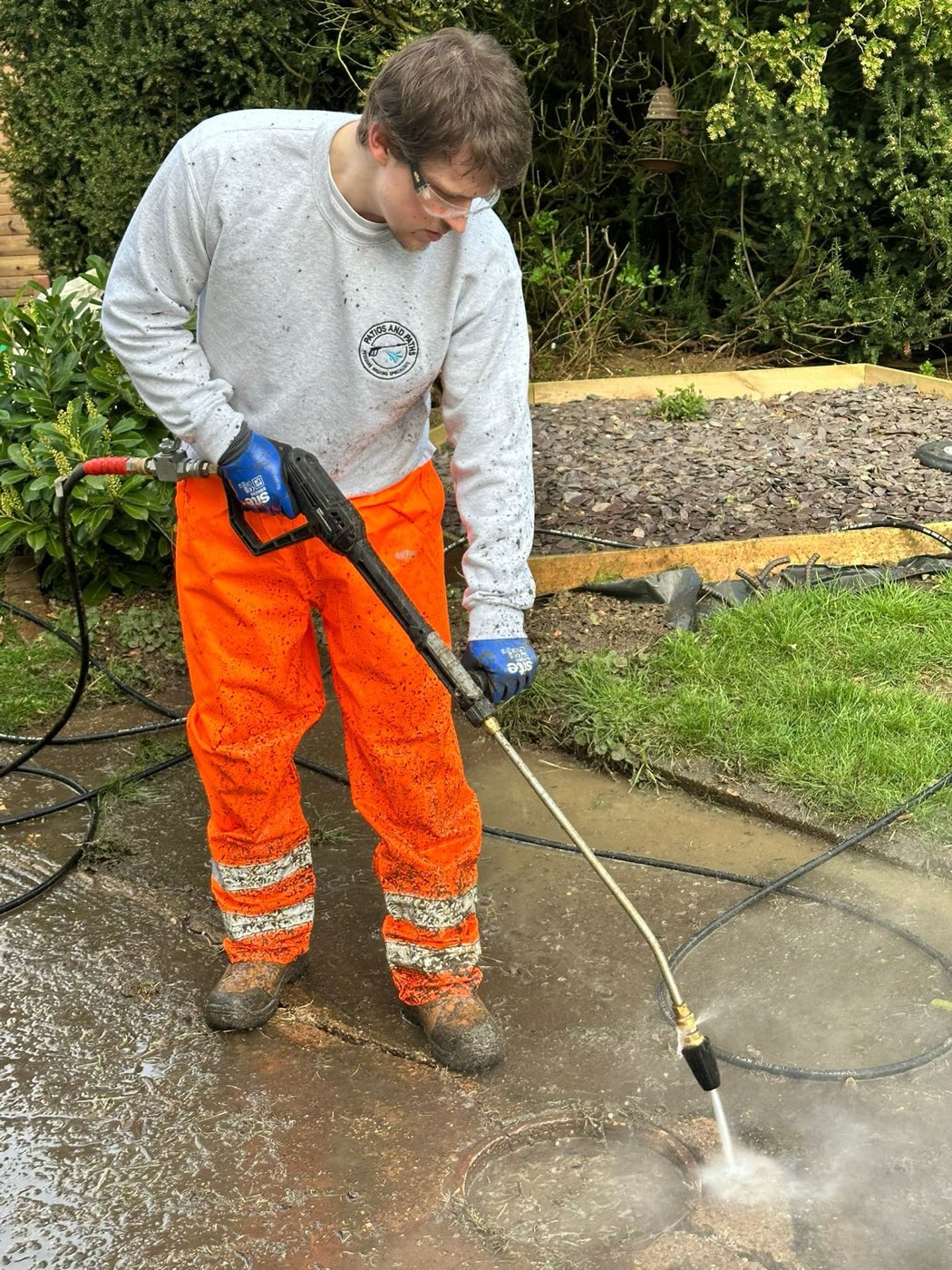
How to clean a patio with a pressure washer safely
Pressure washing a patio is satisfying — but the wrong settings or technique can cause real damage. Here's how to do it properly.
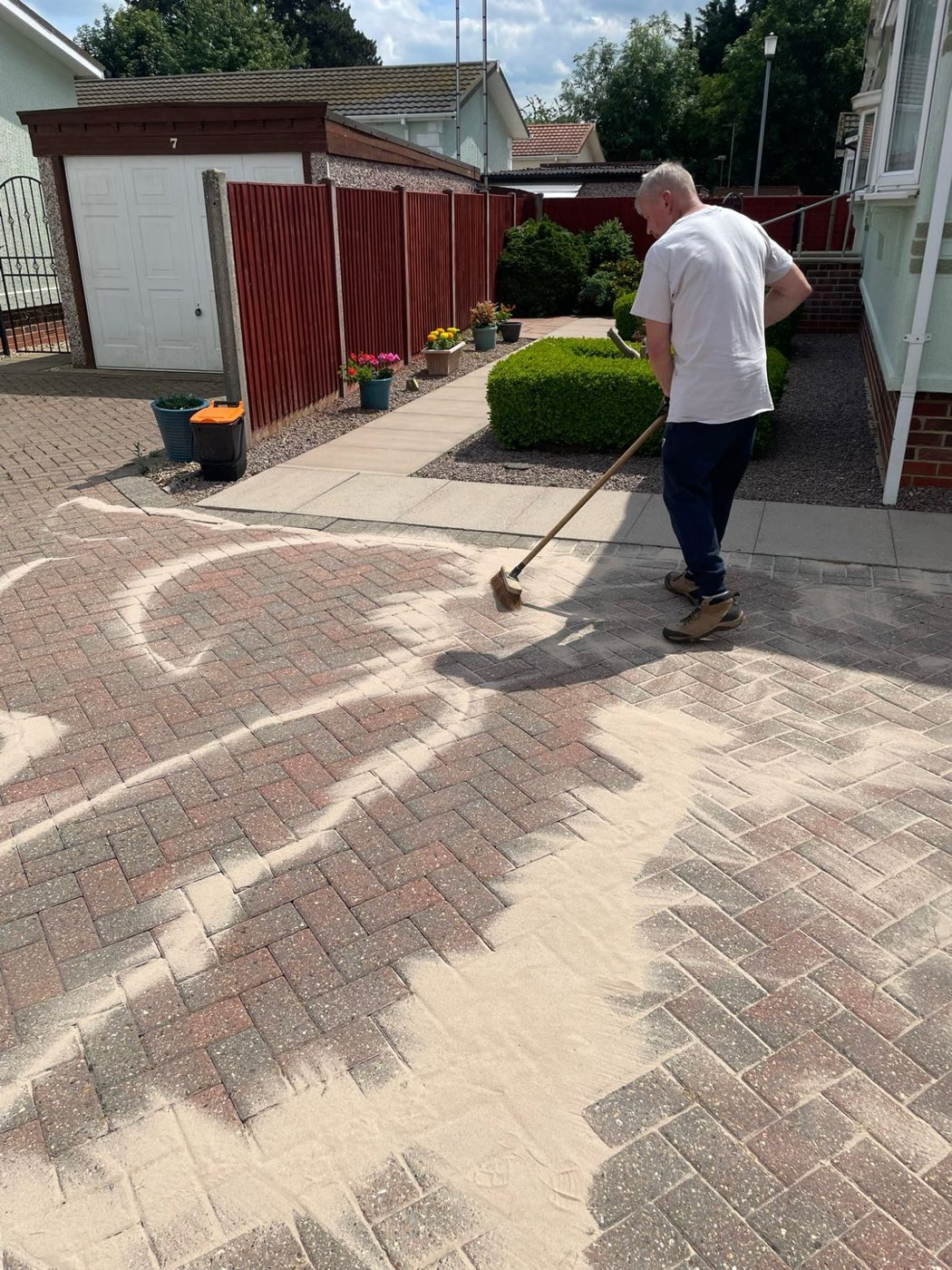
How to clean a wet pour rubber path properly
Wet pour rubber paths are low-maintenance — but they do get dirty, mossy and slippery. Here's how to clean them safely without causing damage.