
26 June 2026 · Patios and Paths
Removing moss from a patio: what actually works
Moss is one of the most common complaints we hear from homeowners across Lincolnshire. One season it's a faint green tinge between the slabs, the next it's a thick, spongy mat that makes your patio genuinely dangerous to walk on in the wet. The good news: removing moss from a patio isn't complicated when you know what you're doing — and a properly cleaned surface can look almost new again.
Here's what works, what wastes your time, and how to stop it coming back.
Why moss grows on patios in the first place
Moss doesn't need much: moisture, shade and something to grip onto. Patios that sit in the shadow of a fence, a house wall or a run of mature trees — as many do in older Lincolnshire gardens from Nettleham to Skellingthorpe — are the worst affected. Poor drainage makes it worse, because standing water soaks into the joints and the surface texture, giving moss the damp foothold it needs.
The spores are always present in the air. You can't stop them landing, but you can make your patio a less welcoming place for them to take hold.
The honest truth about chemical moss killers
You'll find plenty of moss-killer sprays and concentrates at garden centres and DIY sheds. They work — up to a point. A good quality patio moss and algae killer will turn moss brown and kill it off over a week or two, making it easier to remove mechanically. That's genuinely useful as a first step.
What they won't do is remove the dead matter, and that's where most DIY efforts fall short. Dead moss left on the surface:
- Retains moisture and encourages regrowth
- Leaves an unsightly brown stain
- Can block drainage channels and joints
- Provides a bed for new weed seeds to settle in
So the chemical is the pre-treatment, not the solution on its own.
Removing moss from a patio: the method that works
The most effective approach combines a moss treatment with thorough mechanical removal, followed by a proper wash-down. Here's the sequence:
- Apply a diluted moss or algae treatment to the whole patio surface. Leave it to work for 24–48 hours, or as directed on the label. Don't do this before rain is forecast — you'll wash the product away before it does anything useful.
- Brush off the dead moss using a stiff-bristled brush or a flat patio scraper. Work methodically across the surface. This is the unglamorous part — expect a barrow-load or two of material.
- Pressure wash the surface to remove the residue, clear the joints and lift any remaining growth. A decent domestic pressure washer will handle light moss; heavier build-up benefits from a surface cleaner attachment, which gives an even clean without the streaky lines a lance can leave behind.
- Re-sand any pointing joints in block paving or jointed slabs. Moss and the removal process both work the sand loose over time, and open joints are an open invitation for regrowth.
- Consider a sealant — particularly on more porous surfaces like natural stone. A good impregnating sealant reduces water absorption and makes the surface much harder for moss to colonise. We cover this in more detail in our patio cleaning guides.
A word on wire brushes and jet washing alone
A wire brush or metal scraper used too aggressively can score softer stone like sandstone or tumbled limestone. Pressure washing alone without killing the moss first just spreads the spores — you're rearranging the problem rather than fixing it. Getting the sequence right is what makes the difference between a surface that stays clean for a season and one that's green again by Christmas.
North-facing and shaded patios: the harder cases
If your patio faces north or spends most of the day in shade, moss will always be a recurring battle rather than a one-off job. That's simply the nature of the conditions. In areas like Washingborough and Bracebridge Heath, where mature garden planting often shades rear patios well into the afternoon, we see surfaces that are fully green by October every year.
For these situations, the practical answer is a combination of regular maintenance (a light treatment and brush-down each autumn) and, where possible, improving drainage so water doesn't sit on the surface. A professional clean every couple of years keeps it manageable.
What about DIY versus calling someone in?
If you have a small patio with light moss, a weekend afternoon and a decent pressure washer, you can absolutely tackle it yourself. Use a proprietary moss killer first, give it time to work, scrub and wash thoroughly, and you'll see a real improvement.
For larger areas, heavily textured or porous stone, block paving with deep-set moss in the joints, or any surface where you're not sure of the material, professional cleaning is the safer and more effective option. A rotary surface cleaner and professional-grade equipment gets into places a domestic machine struggles to reach, and a skilled operator knows how to clean different surfaces without causing damage.
We work across Lincolnshire — from Lincoln city gardens to village properties out in Welton and Saxilby — and removing moss from patios is one of the most common jobs we do. Most patios can be restored in a single visit.
How to keep moss from coming back
- Autumn treatment: Apply a preventative moss and algae inhibitor each September before the damp season sets in.
- Keep joints tight: Top up kiln-dried sand or pointing mortar when it looks thin. Solid joints leave less room for moss to grip.
- Improve drainage: If water regularly puddles on the surface, look at whether the fall (slope) is adequate and whether gullies are clear.
- Trim overhanging planting: More light and airflow means a drier surface.
- Seal the surface: Particularly worthwhile on natural stone and concrete slabs. See our areas we cover across Lincolnshire if you'd like us to handle the sealing as part of a clean.
Ready to get your patio clean?
If your patio is looking green and slippery, we can sort it. We'll assess the surface, use the right approach for your specific material, and leave it clean, safe and looking its best. Get a free no-obligation quote today — most jobs in Lincolnshire can be booked within a couple of weeks.
Frequently asked questions
Will pressure washing alone remove moss from a patio?
Pressure washing will shift surface moss but tends to spread live spores around rather than killing them, so regrowth often happens quickly. For lasting results, apply a moss or algae killer first, leave it to work, then pressure wash the dead material away.
How long does it take for moss killer to work on a patio?
Most patio moss treatments take 24–48 hours to kill off the moss, turning it brown or black. Some thicker infestations may need a second application. Once it's dead, you can brush and wash it off.
Is moss on a patio dangerous?
Yes — wet moss is extremely slippery and is a genuine slip hazard, especially for children and older people. Getting it removed promptly is a sensible safety measure as well as improving how your garden looks.
How often should I clean my patio to prevent moss building up?
For most Lincolnshire gardens, a thorough professional clean every one to two years combined with a DIY preventative treatment each autumn is enough to keep moss under control. North-facing or heavily shaded patios may benefit from annual attention.
Need a hand with yours? We cover Lincolnshire for patios, driveways, paths and more — see the areas we cover or browse our services. Get a free quote or call 07874 010739.
Keep reading
More on patio cleaning
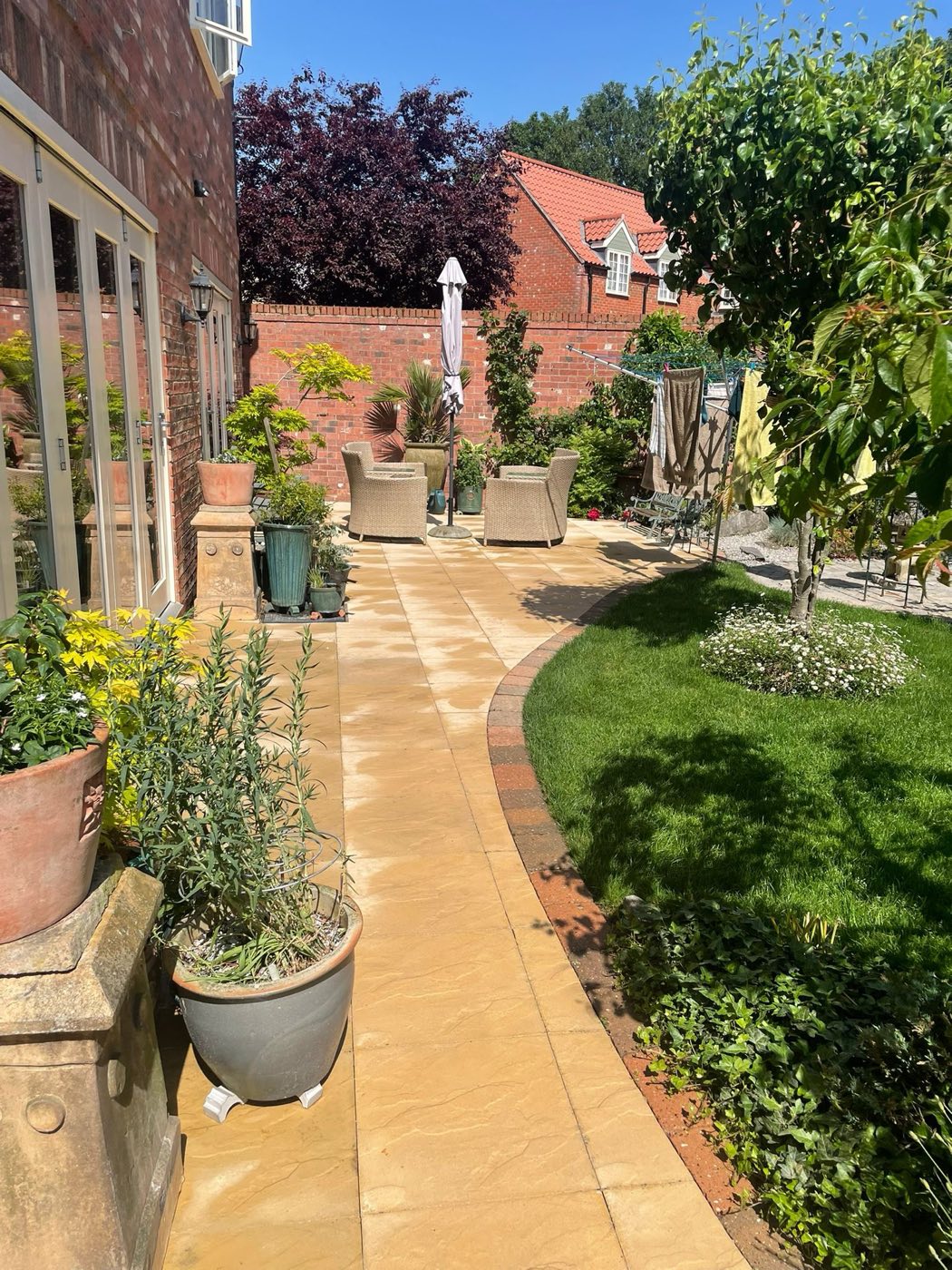
How to clean a shaded patio that stays damp
A permanently damp, shaded patio is the hardest surface to keep clean — here's what actually shifts the green and keeps it away longer.
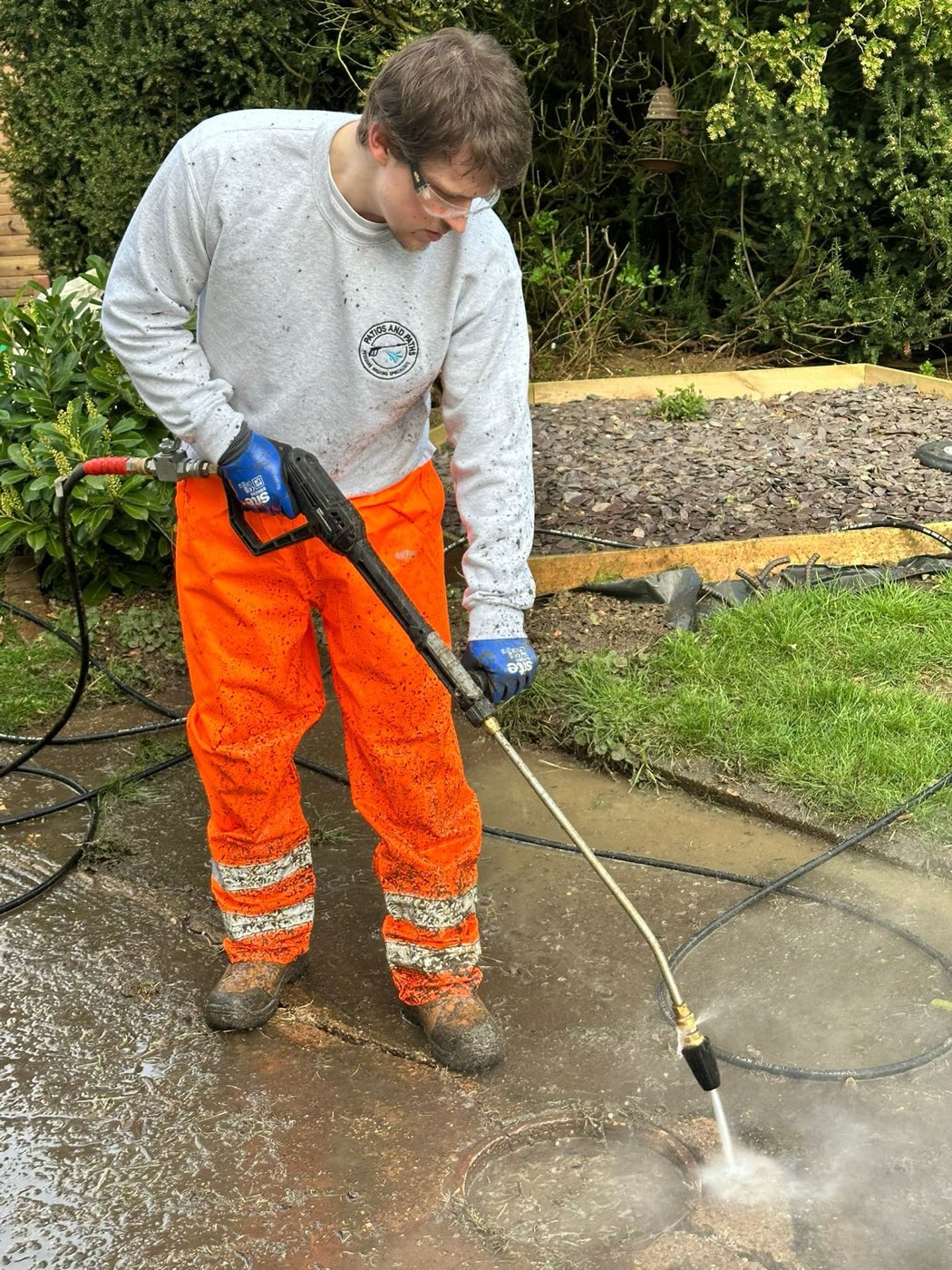
How to clean a patio with a pressure washer safely
Pressure washing a patio is satisfying — but the wrong settings or technique can cause real damage. Here's how to do it properly.
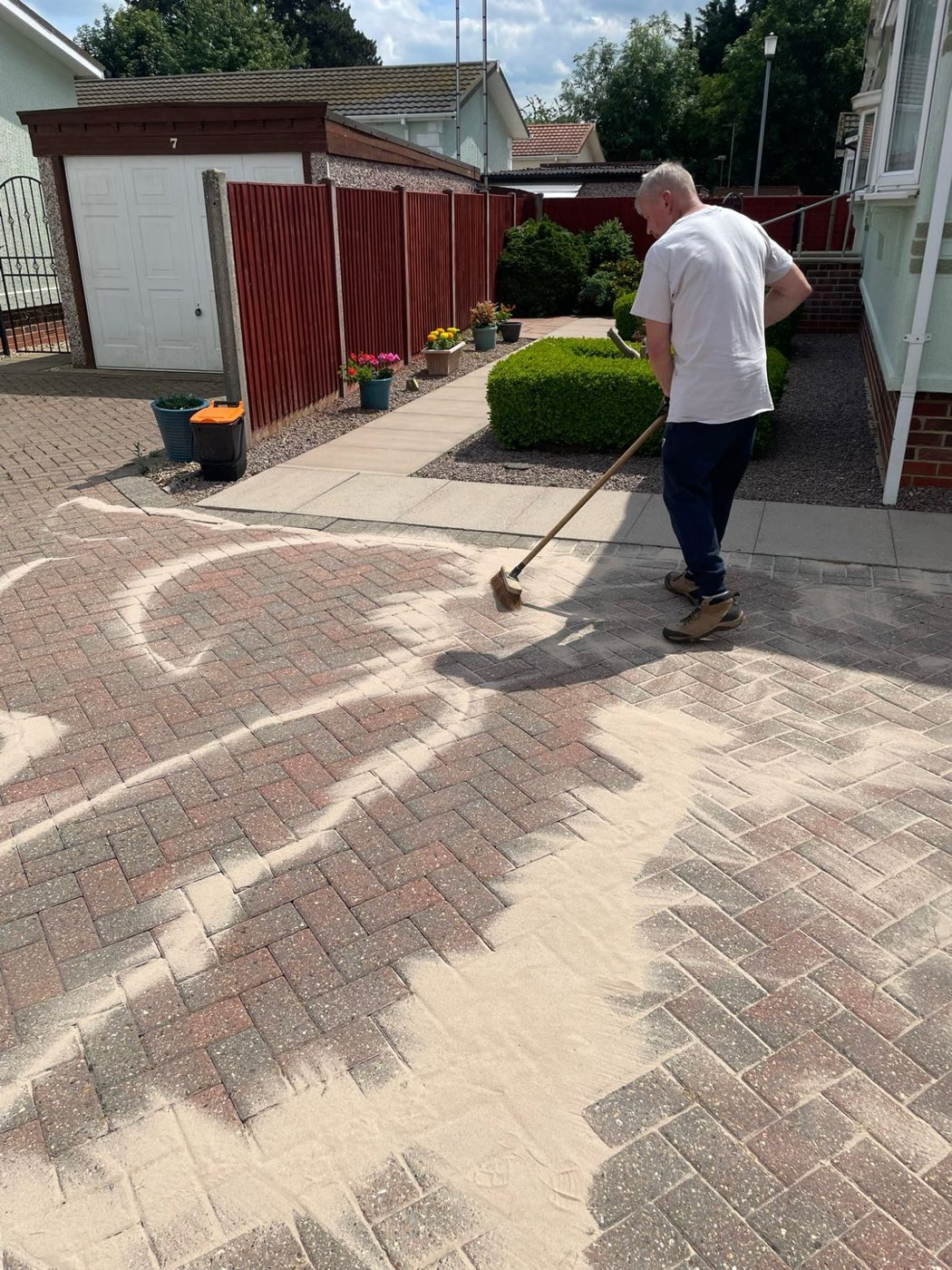
How to clean a wet pour rubber path properly
Wet pour rubber paths are low-maintenance — but they do get dirty, mossy and slippery. Here's how to clean them safely without causing damage.