
24 June 2026 · Patios and Paths
Cleaning porcelain paving: the safe way to do it
Porcelain paving has become one of the most popular choices for patios across Lincolnshire over the last few years, and it's easy to see why — the tiles are sleek, low-maintenance and hold their colour well. But cleaning porcelain paving safely does require a slightly different approach to natural stone or concrete. Get it wrong and you risk etching the surface, loosening the grout or cracking a tile. Get it right and the patio looks brand new again with very little effort.
Here's everything you need to know.
Why porcelain needs a different cleaning approach
Unlike Indian sandstone or concrete, porcelain is a dense, non-porous tile fired at very high temperatures. That's great news for stain resistance, but it also means:
- Acidic cleaners (some patio sprays, vinegar-based products) can attack the grout and, on some finishes, dull the tile itself
- Excessive pressure from a washer can work water into the bed beneath the tiles if joints aren't in perfect condition
- Rotary or turbo nozzles can chip the edges of tiles, especially on textured or lightly sanded finishes
The surface looks tough — and it is — but the installation around it is often more vulnerable than people realise.
What you'll need before you start
If you're planning to tackle a small porcelain patio yourself, gather the following first:
- A stiff brush (nylon or natural bristle — not wire)
- A pH-neutral patio cleaner labelled safe for porcelain
- A garden hose or low-pressure washer (below 100 bar for DIY machines)
- A flat-surface cleaner attachment if using a pressure washer
- A pointing tool or grout brush for the joints
Avoid anything that advertises itself as a 'patio restorer' or 'deep stone cleaner' without checking the pH first. When in doubt, contact the tile manufacturer — most have a recommended cleaning product.
How to clean porcelain paving safely, step by step
- Clear the surface — remove furniture, pots and any loose debris with a stiff brush or leaf blower.
- Pre-wet the tiles — rinse the whole area with a hose. This stops cleaning solution drying too quickly in warm weather.
- Apply a pH-neutral cleaner — follow the dilution on the label. Let it dwell for five to ten minutes, but don't let it dry.
- Scrub with a stiff brush — work the cleaner into the joints and over any stained areas. Green algae usually lifts with moderate effort.
- Rinse thoroughly — use a hose or low-pressure washer, working from one end to the other so dirty water flows away cleanly.
- Check the joints — if any sand or mortar has washed out, repoint once the surface is fully dry.
For stubborn stains like rust marks or dried cement, a specialist porcelain stain remover is worth using — but always test in an inconspicuous corner first.
Dealing with green algae and moss
Green algae is the most common problem on porcelain patios in Lincolnshire, especially on north-facing gardens in places like Nettleham or Washingborough where shade and moisture combine. The smooth tile surface can look clean but still be surprisingly slippery underfoot when algae builds up.
A good biocidal cleaner applied after the initial wash will kill the spores and slow regrowth significantly. Leave it to work for 20–30 minutes before a final rinse. You won't need to scrub hard — the chemistry does most of the work.
What about pressure washing?
Yes, you can pressure wash porcelain paving — but with care. Keep the lance at least 20–25 cm from the surface and use a wide fan nozzle (40–degree is ideal) rather than a concentrated jet. A flat-surface cleaner attachment gives the most even result and reduces the risk of 'tramline' marks across the tiles.
If your patio is larger than about 20 square metres, a professional machine with proper flow control will do a noticeably better job than a domestic washer. It also means you're not spending a whole Saturday bent over a hose. You can see the range of outdoor surface work we cover at [/#services].
Sealing porcelain paving — is it necessary?
In most cases, no. Because porcelain is already non-porous, a topical sealer won't soak in and protect the tile the way it does with sandstone. Some people apply a grout sealer to the joints, which is worthwhile if the grouting is light-coloured, but the tiles themselves rarely need sealing.
If someone's trying to sell you a sealing package for your porcelain patio, ask exactly what product they're using and what it's protecting against. For more on when sealing genuinely adds value, take a look at our other patio cleaning guides.
How often should you clean a porcelain patio?
Once a year is usually enough for most gardens in Lincolnshire — ideally in late spring when the worst of the winter algae has taken hold but before outdoor furniture goes out for the season. A light brush-down and hose-off every month or so between cleans keeps things tidy without any chemicals.
If your patio is under trees (common in older Saxilby or Skellingthorpe gardens), you may need two cleans a year — one after leaf fall and one in spring.
When it's worth calling a professional
Some jobs genuinely are quicker and better done by a professional:
- Large porcelain patios (30 m² or more) where consistent coverage matters
- Patios where tiles have started to feel gritty or the grout is crumbling
- Heavily stained areas from BBQ grease, rust or building materials
- Any surface where you're not confident about the tile finish and want to avoid risk
We work across Lincolnshire — from Lincoln city suburbs to villages like Branston, Heighington and Cherry Willingham — and we're used to handling all the main porcelain brands. We always check the tile type before we start and adjust our equipment and products accordingly.
If you'd like a no-obligation quote for your porcelain patio, get in touch today. We'll give you a straight answer on what's needed and what it'll cost.
Frequently asked questions
Can I use a pressure washer on porcelain paving?
Yes, but keep the pressure moderate (below 150 bar) and use a wide fan nozzle or flat-surface cleaner. Avoid concentrated jets close to the tile edge, as these can chip textured finishes and force water into the joints.
What's the best cleaner for porcelain paving?
A pH-neutral cleaner specifically labelled as safe for porcelain is the safest choice. Avoid acidic or alkaline patio cleaners, as these can attack the grout over time even if the tiles themselves seem unaffected.
Why does my porcelain patio go green so quickly?
Green algae thrives on any damp outdoor surface, even non-porous ones. Shaded patios or those near lawn edges are especially prone. An annual clean with a biocidal rinse significantly slows regrowth.
Does porcelain paving need sealing?
The tiles themselves don't need sealing because porcelain is already non-porous. You may want to apply a grout sealer to light-coloured joints to prevent staining, but tile sealers generally offer little benefit on porcelain.
Need a hand with yours? We cover Lincolnshire for patios, driveways, paths and more — see the areas we cover or browse our services. Get a free quote or call 07874 010739.
Keep reading
More on patio cleaning
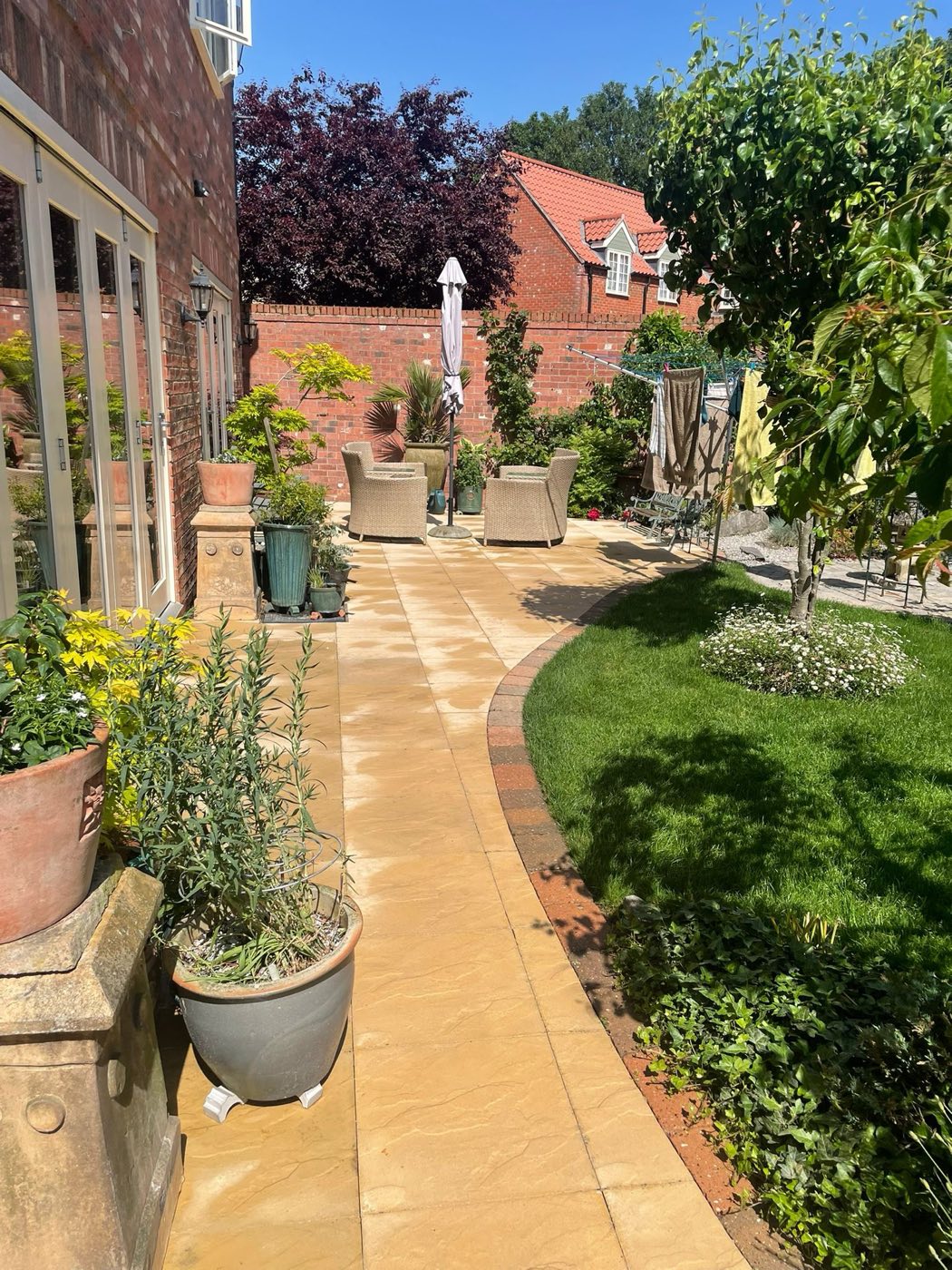
How to clean a shaded patio that stays damp
A permanently damp, shaded patio is the hardest surface to keep clean — here's what actually shifts the green and keeps it away longer.
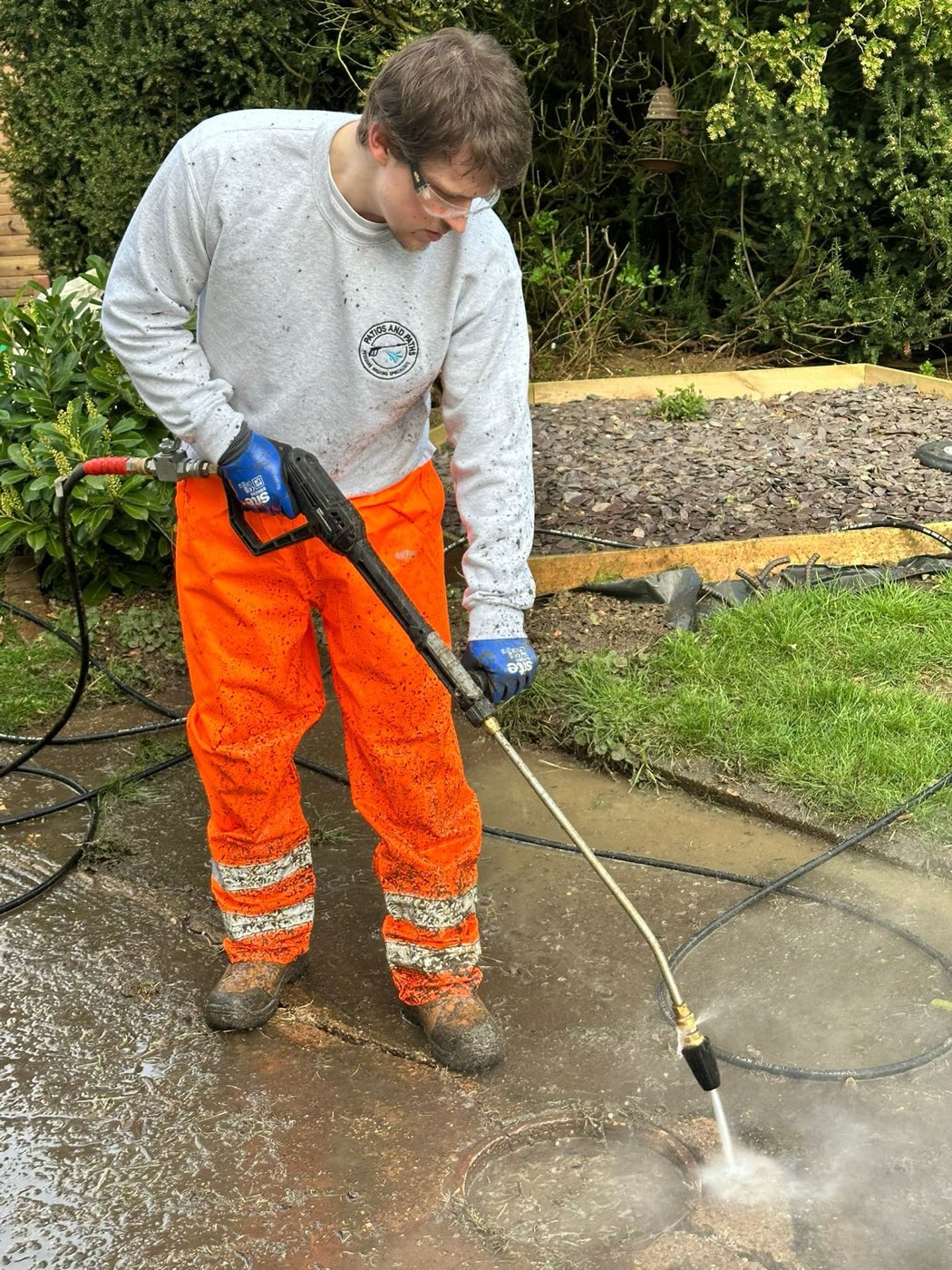
How to clean a patio with a pressure washer safely
Pressure washing a patio is satisfying — but the wrong settings or technique can cause real damage. Here's how to do it properly.
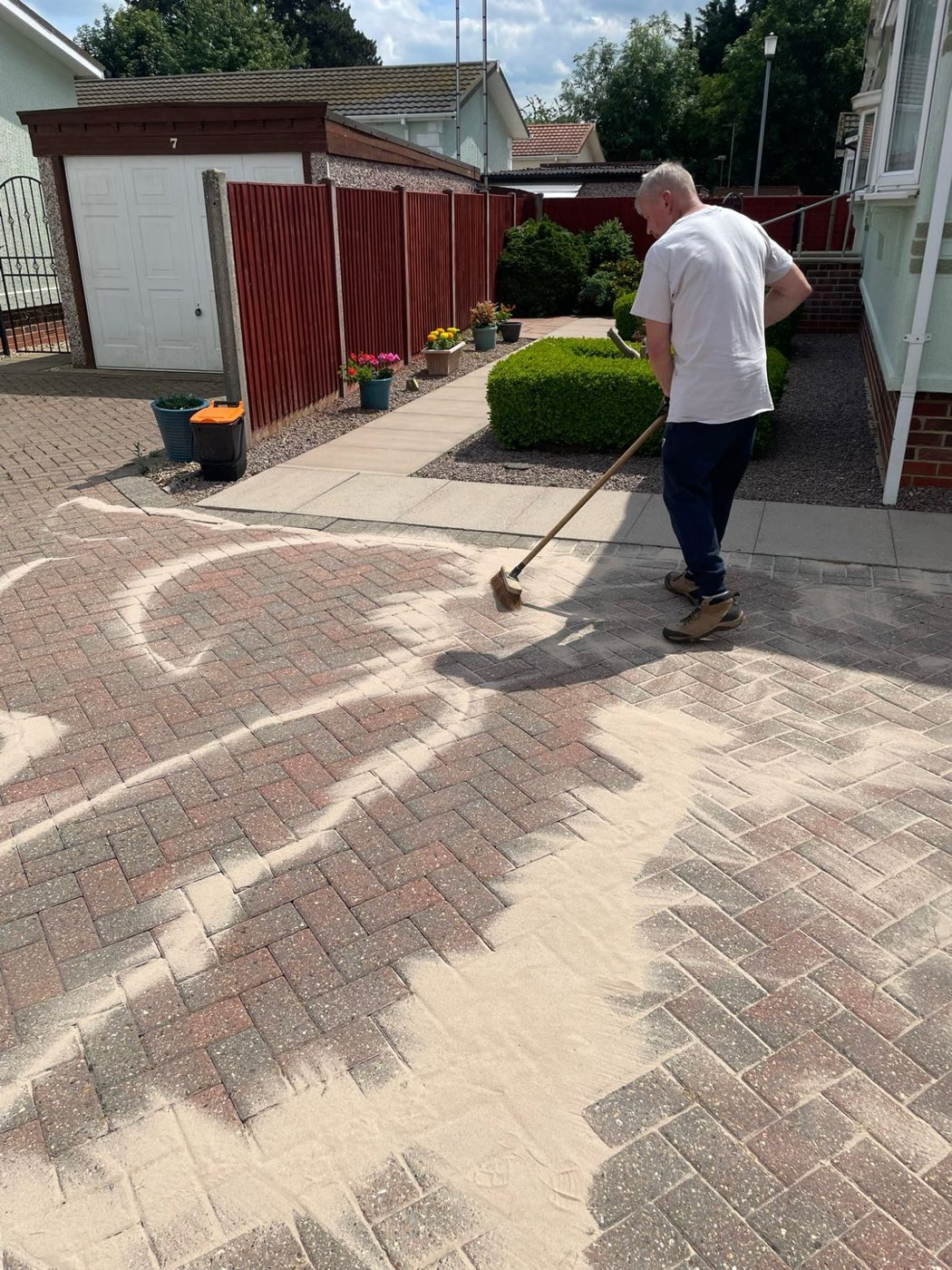
How to clean a wet pour rubber path properly
Wet pour rubber paths are low-maintenance — but they do get dirty, mossy and slippery. Here's how to clean them safely without causing damage.