18 June 2026 · Patios and Paths
Patio sealing: is it worth it for your garden?
Patio sealing is one of the most common things homeowners ask us about — and also one of the most misunderstood. The short answer is: yes, sealing is often worth it, but only on a properly cleaned surface, and only with the right product for your paving type. Done well, it can protect your patio for several years. Done badly, it can trap moisture, turn white, and leave you with a bigger headache than you started with.
Here's what you need to know before you commit.
What patio sealing actually does
A quality sealer forms a barrier on or just below the surface of your paving. Depending on the type, it can:
- Repel water and prevent it soaking into porous stone
- Slow the return of algae, moss and green growth
- Lock in the colour of natural stone or restore a faded finish
- Make the surface easier to sweep and wash down
- Help keep weeds from pushing up through joints
It won't make your patio indestructible, and it won't fix cracks or crumbling pointing. But as part of a proper maintenance routine, it genuinely extends the life of a surface and keeps it looking better between cleans.
What sealing won't do
This is where expectations can go wrong. Sealing is not a substitute for cleaning. If you seal over an algae-covered or dirty patio, you're locking that contamination in — and you'll likely end up with a patchy, discoloured mess that's difficult to reverse.
It also won't make a neglected patio look new again. That part is down to a thorough pressure wash and, where needed, a re-sand of the joints. Sealing is the final step, not the first one.
And no sealer lasts forever. Most need reapplying every three to five years, depending on foot traffic, weather exposure and the product used.
Which paving types benefit most from sealing
Not all surfaces respond the same way, so it's worth thinking about what you've got before you buy anything.
Natural stone (sandstone, limestone, slate)
Indian sandstone and similar natural stones are highly porous. They soak up rainwater, which encourages algae and can cause frost damage over winter — something Lincolnshire patios face every year from around November onwards. A good impregnating sealer soaks into the stone and repels water without changing the look of it. This is probably where sealing gives you the most obvious benefit.
Block paving
Sealing block paving helps stabilise the kiln-dried sand in the joints, which discourages weeds and ants. It can also enhance the colour of the blocks. One caution: if your block paving has any existing efflorescence (white salt deposits), those need treating first or they'll show straight through the sealer.
Porcelain paving
Here's the thing with porcelain — it's almost completely non-porous, so it doesn't absorb water or staining the way natural stone does. Most porcelain tiles don't actually need sealing, and some sealers won't bond to them properly anyway. If you have porcelain, regular cleaning is usually enough. We work with a lot of porcelain patios across Lincolnshire, and sealing rarely comes up as a recommendation.
Concrete and concrete pavers
Concrete can benefit from sealing, particularly if it's showing signs of weathering or you want to protect a decorative finish. A surface sealer (rather than an impregnating one) gives concrete a slightly sheen appearance, which some people like and others don't. Worth thinking about before you go ahead.
The most important step: cleaning before you seal
We can't say this enough — the condition of the surface before sealing determines everything. A professional pressure wash removes algae, dirt, moss residue and surface contaminants that would otherwise be sealed in permanently. The paving also needs time to dry fully before any sealer goes on; usually 24–48 hours in dry weather, longer in autumn.
If there are loose or crumbling joints, those should be re-sanded or repointed first. Sealing over failing joints doesn't fix them — it just delays the moment you have to deal with them properly.
We offer full preparation and sealing as part of our patio and driveway services across the county, so if you're in or around Lincoln, Nettleham, Welton or Washingborough, we can assess what your surface actually needs before recommending anything.
Choosing the right sealer: a quick guide
Walk into any builders' merchant and you'll find a wall of sealer products. Here's how to cut through it:
- Impregnating (penetrating) sealers — soak into the stone and protect from within without changing the surface look. Best for natural stone and sandstone.
- Surface (topcoat) sealers — sit on top of the paving and give a wet-look or satin finish. Best for block paving if you want enhanced colour.
- Matt finish sealers — protect without any sheen. Good if you want a natural, unchanged appearance.
- Colour-enhancing sealers — deepen the tone of natural stone. Popular on faded Indian sandstone.
Always check compatibility with your specific paving type before applying. When in doubt, test on a small, hidden area first.
How long does patio sealing last?
In our experience, a properly applied sealer on a well-prepared surface typically lasts three to five years before it needs reapplying. High-traffic areas and surfaces fully exposed to weather will be at the lower end. A sheltered patio in Cherry Willingham that gets light use might comfortably go five years between treatments.
You'll usually know it's time to reseal when you notice water soaking into the surface rather than beading on top — that's the clearest sign the protection has worn off.
Is it worth having a professional apply the sealer?
You can do it yourself, but there are a few reasons people choose to leave it to us. Getting an even coat without streaks or lap marks takes practice, especially on larger areas. Using the wrong dilution or applying in damp conditions can lead to a cloudy or patchy result that's very hard to fix. And if the surface hasn't been cleaned thoroughly beforehand, you'll have sealed in the problem rather than solved it.
If you're already having your patio cleaned, it makes sense to have the sealing done at the same time — the surface is in the right condition and the cost is usually very reasonable as part of the same visit. You can browse the areas we cover across Lincolnshire or get a free quote today.
Ready to protect your patio properly? Whether you've got Indian sandstone, block paving or a tired concrete path, we'll tell you honestly whether sealing makes sense for your surface — and we'll do the preparation work to make sure it lasts. Request a free quote and we'll get back to you quickly.
Frequently asked questions
Do I need to clean my patio before sealing it?
Yes — this is essential. Sealing over dirt, algae or moss traps the contamination beneath the surface and leads to a patchy, discoloured finish that's very difficult to reverse. The patio must be thoroughly cleaned and allowed to dry completely before any sealer is applied.
How long does patio sealing last?
A good quality sealer applied to a properly prepared surface typically lasts three to five years. High-traffic areas or fully exposed patios may need reapplying closer to the three-year mark. Water beading on the surface is a sign the sealer is still working; when it starts soaking in instead, it's time to reseal.
Does porcelain paving need sealing?
Usually not. Porcelain is almost entirely non-porous, so it doesn't absorb water or staining the way natural stone does. Most porcelain patios are best maintained with regular cleaning rather than sealing, and some sealers won't bond to porcelain surfaces properly anyway.
Can sealing a patio prevent weeds coming back?
It helps, but it's not a complete solution on its own. Sealing block paving stabilises the jointing sand, which makes it harder for weed seeds to get a foothold. Combined with proper cleaning and re-sanding, it significantly reduces weed growth — but some maintenance will still be needed over time.
Need a hand with yours? We cover Lincolnshire for patios, driveways, paths and more — see the areas we cover or browse our services. Get a free quote or call 07874 010739.
Keep reading
More on patio cleaning
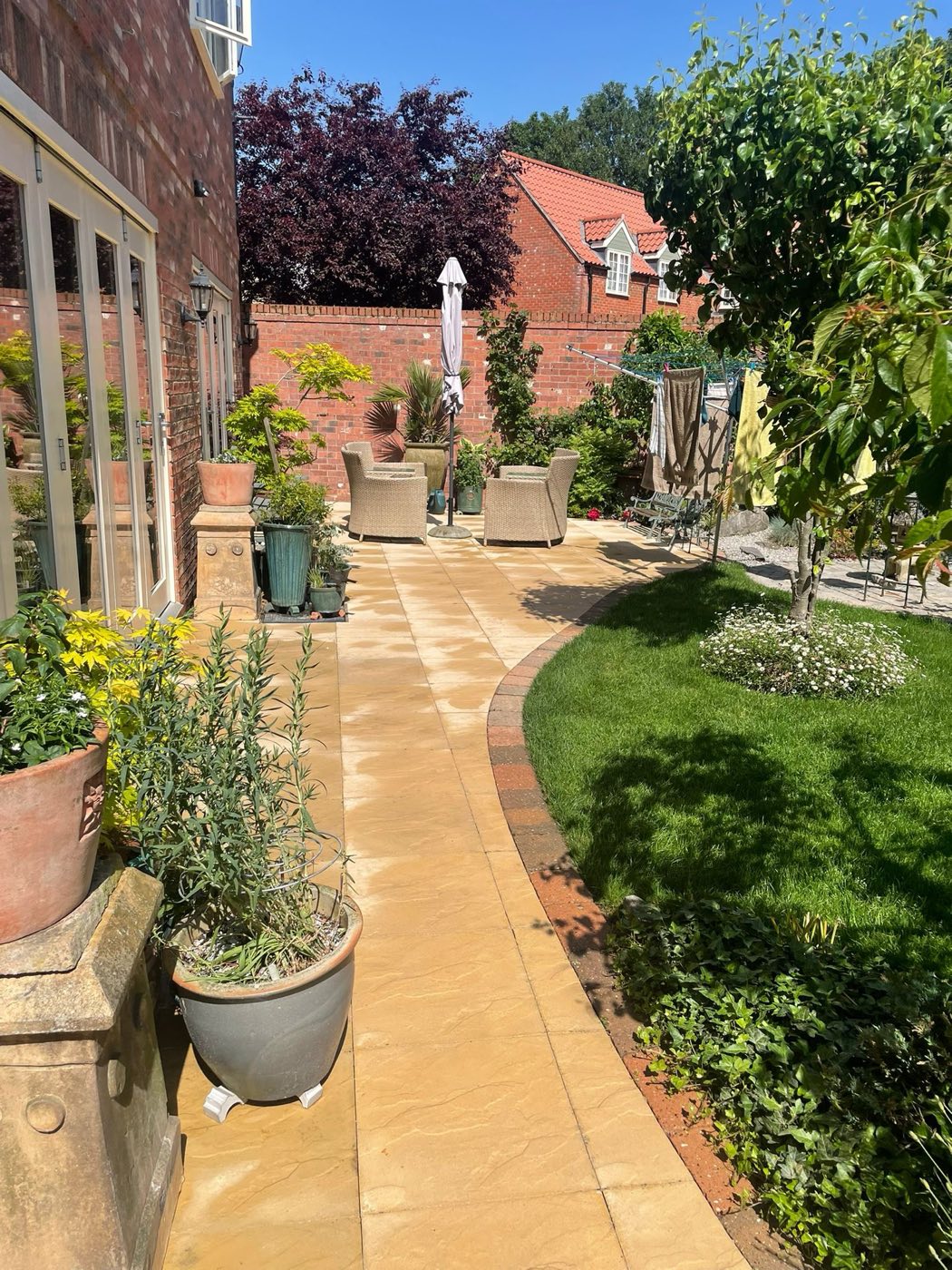
How to clean a shaded patio that stays damp
A permanently damp, shaded patio is the hardest surface to keep clean — here's what actually shifts the green and keeps it away longer.
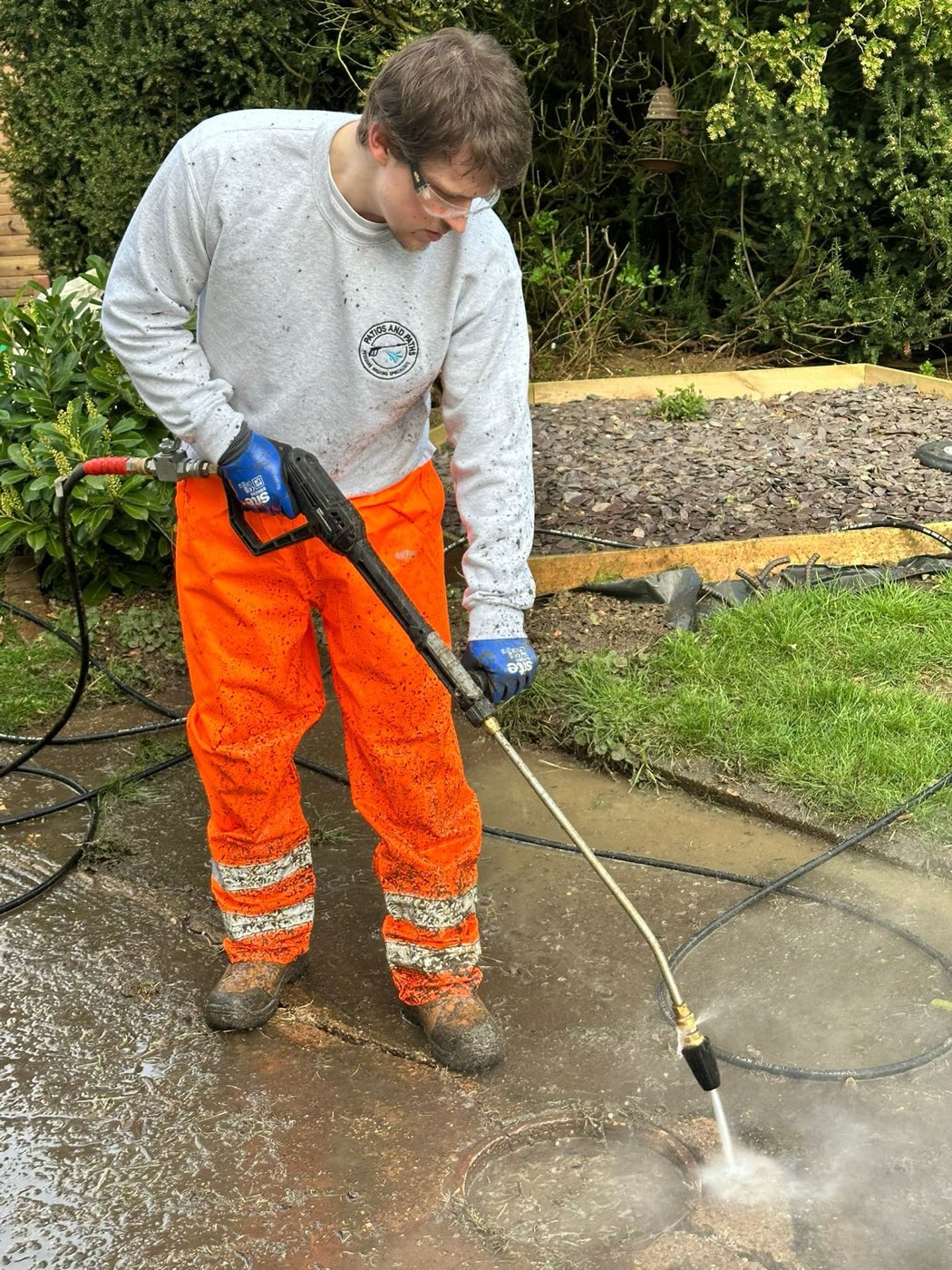
How to clean a patio with a pressure washer safely
Pressure washing a patio is satisfying — but the wrong settings or technique can cause real damage. Here's how to do it properly.
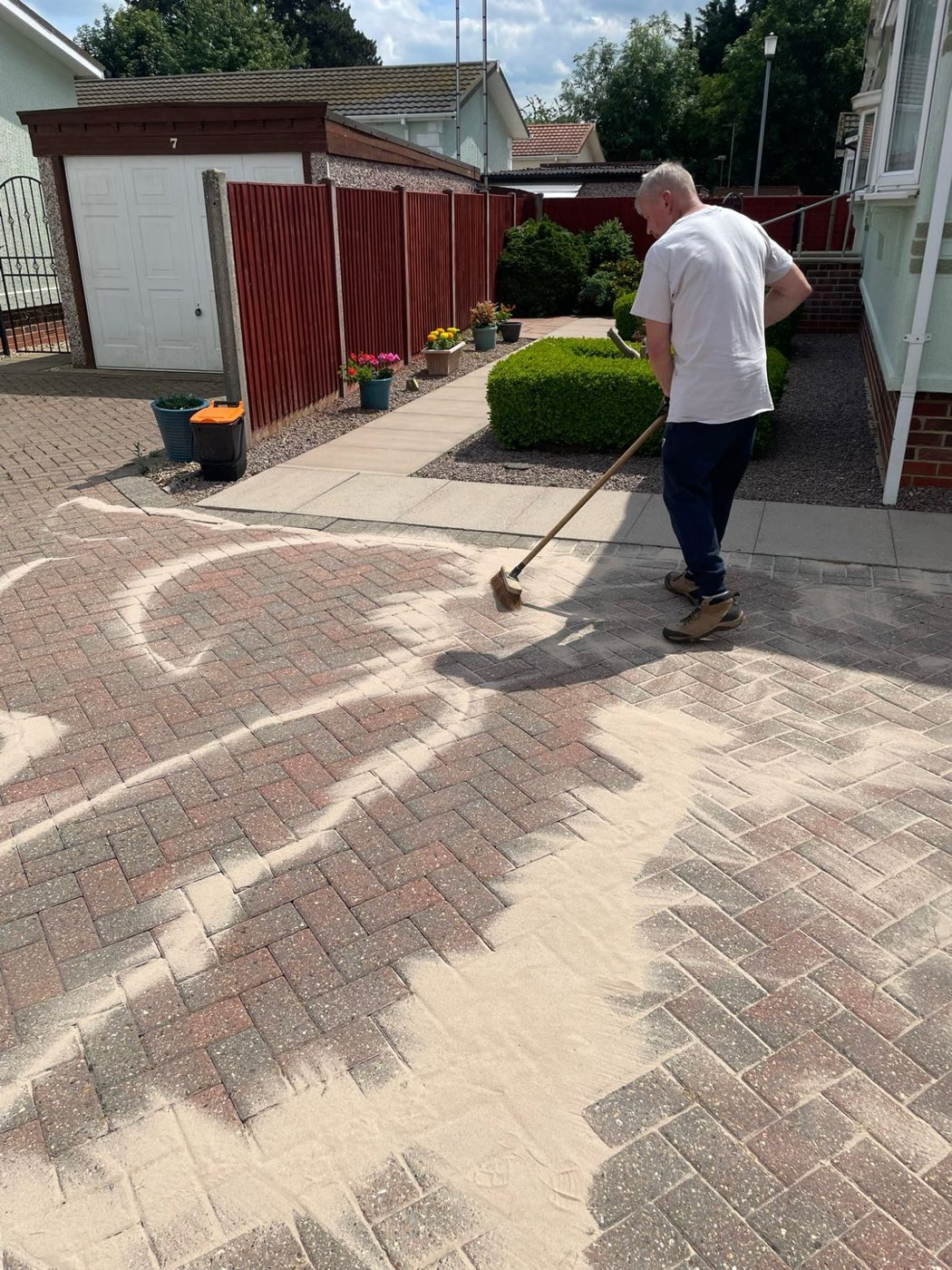
How to clean a wet pour rubber path properly
Wet pour rubber paths are low-maintenance — but they do get dirty, mossy and slippery. Here's how to clean them safely without causing damage.