22 September 2026 · Patios and Paths
How to remove rust stains from paving and paths
Rust stains on paving and paths are one of the more frustrating things a homeowner has to deal with. They look terrible, they resist a standard pressure wash, and scrubbing them harder often just spreads them further. The good news is that knowing how to remove rust stains from paving and paths properly — using the right chemistry and a bit of patience — means most stains can be lifted without damaging the surface underneath.
Here's what we've learned from treating rust stains across Lincolnshire, from garden patios in Nettleham to block-paved drives in Branston.
Why rust stains appear on outdoor paving
Before you treat a stain, it helps to know where it came from. Rust on paving almost always traces back to one of three sources:
- Metal garden furniture — chair legs and table bases that sit in the same spot season after season
- Plant pots with metal drainage dishes or wire frames — these are a surprisingly common culprit
- Fixings, screws or nails in nearby timber, fencing or raised beds that have corroded and washed onto the surface
- Old metal tools or equipment left on the path after a job in the garden
Rainwater picks up the iron oxide, carries it into the paving surface and — depending on how porous the material is — it bonds surprisingly quickly. On natural stone like sandstone or limestone, it can penetrate deeply within a few weeks.
What you're actually trying to do when you treat rust
Rust stains aren't just sitting on top of the surface — they're chemically bonded into it. That's why bleach, detergent and even a powerful pressure washer often make little difference. What shifts rust is acid, specifically something that reacts with iron oxide and converts or dissolves it.
The key is using the right acid at the right strength for the surface you're working on. Get this wrong and you can etch natural stone, strip the colour from impregnated paving or damage jointing compound in block paving.
Safe removal methods by surface type
Concrete and poured surfaces
Concrete is the most forgiving surface for rust treatment. A diluted oxalic acid solution (sold as wood bleach or deck brightener in most hardware shops) applied to a wet surface, left for 10–15 minutes and scrubbed with a stiff brush will lift most rust stains. Rinse thoroughly — oxalic acid leaves a residue that can make surfaces slippery if it dries.
For more stubborn stains, phosphoric acid-based cleaners (often labelled as rust removers for masonry) work well on concrete without causing damage.
Block paving
Block paving can handle mild acid-based rust removers, but test a small hidden area first. The pigment in some blocks can be sensitive, and you don't want to bleach a patch lighter than the rest of the drive. Apply the product carefully, avoid getting it into the sand-filled joints (it can displace the sand), and rinse off fully.
See our full guide to block paving cleaning for more on maintaining this type of surface.
Natural stone — sandstone, limestone, Indian stone
This is where you need to be most careful. Natural stone is porous and acid-sensitive. Oxalic acid used carefully — well diluted, applied briefly and rinsed immediately — can work on sandstone, but on limestone it can cause etching. For limestone and marble, use a specialist iron stain remover designed for stone, which works through a different chemical process (chelation rather than acidic reaction).
Never use hydrochloric (muriatic) acid on natural stone. It will permanently etch and discolour the surface.
Porcelain and ceramic paving
Good news here: porcelain is non-porous, so rust stains sit on the surface rather than soaking in. A rust-removing gel or cream cleaner, a brief dwell time and a stiff scrub will usually shift it. A follow-up rinse with a pressure washer on a medium setting finishes the job. Because the surface is so hard, you have a lot more latitude with products.
Common mistakes that make rust stains worse
- Bleaching the area — chlorine bleach does nothing useful to rust and can leave secondary staining on stone
- Scrubbing dry — always wet the surface first and keep it wet; dry scrubbing can grind the stain deeper into porous materials
- Using a wire brush — metal bristles leave tiny iron fragments in the surface that rust immediately and create new stains
- Skipping a patch test — always try any product on a small, hidden area first, especially on natural stone or coloured block paving
When it's worth calling a professional
If the stain is old, deeply set or covering a large area — or if you're dealing with expensive natural stone — it's usually worth getting a professional in rather than risking permanent damage with trial-and-error DIY.
We carry commercial-grade rust removers and application equipment that allow us to treat larger areas quickly and safely. We also know which products are right for which surfaces — something that's hard to judge without experience.
We cover a wide area across Lincolnshire, including Lincoln, Saxilby, Welton and Washingborough. If you're not sure whether we cover your postcode, take a look at our areas page for a full list.
Preventing rust stains from coming back
Once you've shifted the stain, a few simple habits keep them from returning:
- Put rubber feet or protective pads on metal garden furniture legs
- Move plant pots off the paving in autumn and check for metal fittings underneath
- Treat any rust on nearby timber fixings or raised bed frames before it washes onto the surface
- Sealing porous natural stone makes it far less likely to absorb rust staining in future
A good-quality impregnating sealant on sandstone, limestone or Indian stone can make a significant difference to how easily any type of stain — rust included — is cleaned off in future.
Ready to get your paving looking right again?
If you've got rust stains on a patio, path or driveway in Lincolnshire that aren't shifting with DIY methods, we're happy to take a look. We'll give you an honest assessment and a no-obligation quote.
Request a free quote today — we'll get back to you promptly and can usually visit within a few days.
You can also browse our full range of outdoor cleaning services to see everything we cover.
Frequently asked questions
Can I use vinegar to remove rust stains from paving?
White vinegar is mildly acidic and can lift very fresh, light rust marks on concrete or porcelain. However, it's not strong enough for older or deeper stains, and on natural stone like limestone it can cause etching. Purpose-made rust removers are safer and more effective.
Will a pressure washer remove rust stains from a patio?
Pressure washing alone won't remove rust stains because the stain is chemically bonded into the surface rather than sitting loose on top. You need a chemical treatment first — once the stain is broken down, a pressure wash helps rinse it away cleanly.
How do I stop my metal garden furniture staining the patio?
Fit rubber or plastic protective pads to any metal legs that sit directly on the paving. These are cheap, widely available and prevent both rust transfer and scratching. Moving furniture onto a mat or rug during wet months is even better.
Is it safe to use rust remover on block paving?
Most phosphoric or oxalic acid-based rust removers can be used on block paving, but always test on a small hidden area first as some products can lighten the block colour. Keep the product away from the sand-filled joints and rinse thoroughly once done.
Need a hand with yours? We cover Lincolnshire for patios, driveways, paths and more — see the areas we cover or browse our services. Get a free quote or call 07874 010739.
Keep reading
More on patio cleaning
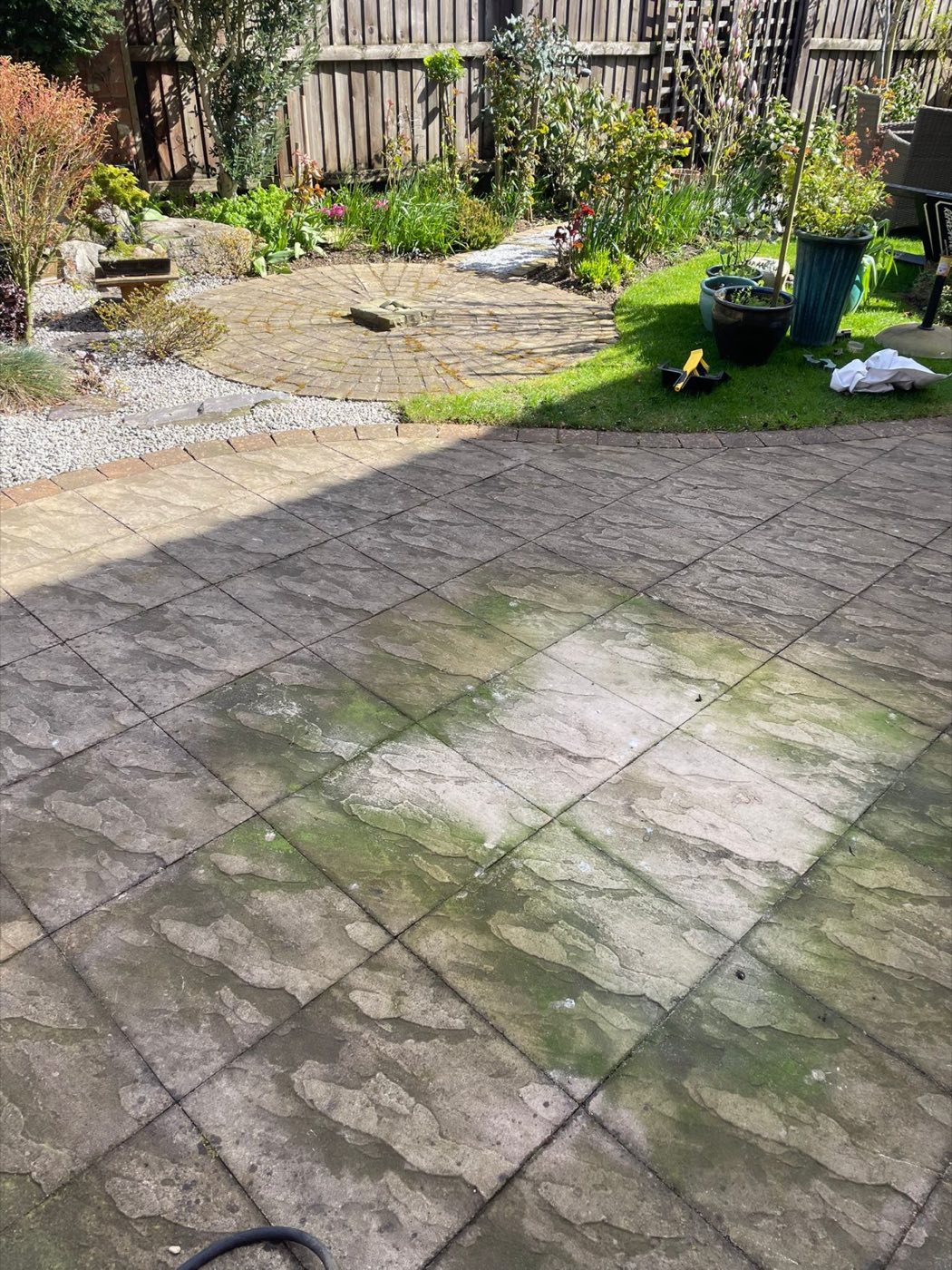
How to clean a patchy, stained concrete path properly
Concrete paths go patchy, green and grimy faster than most surfaces — here's how to get yours looking sharp again without causing damage.
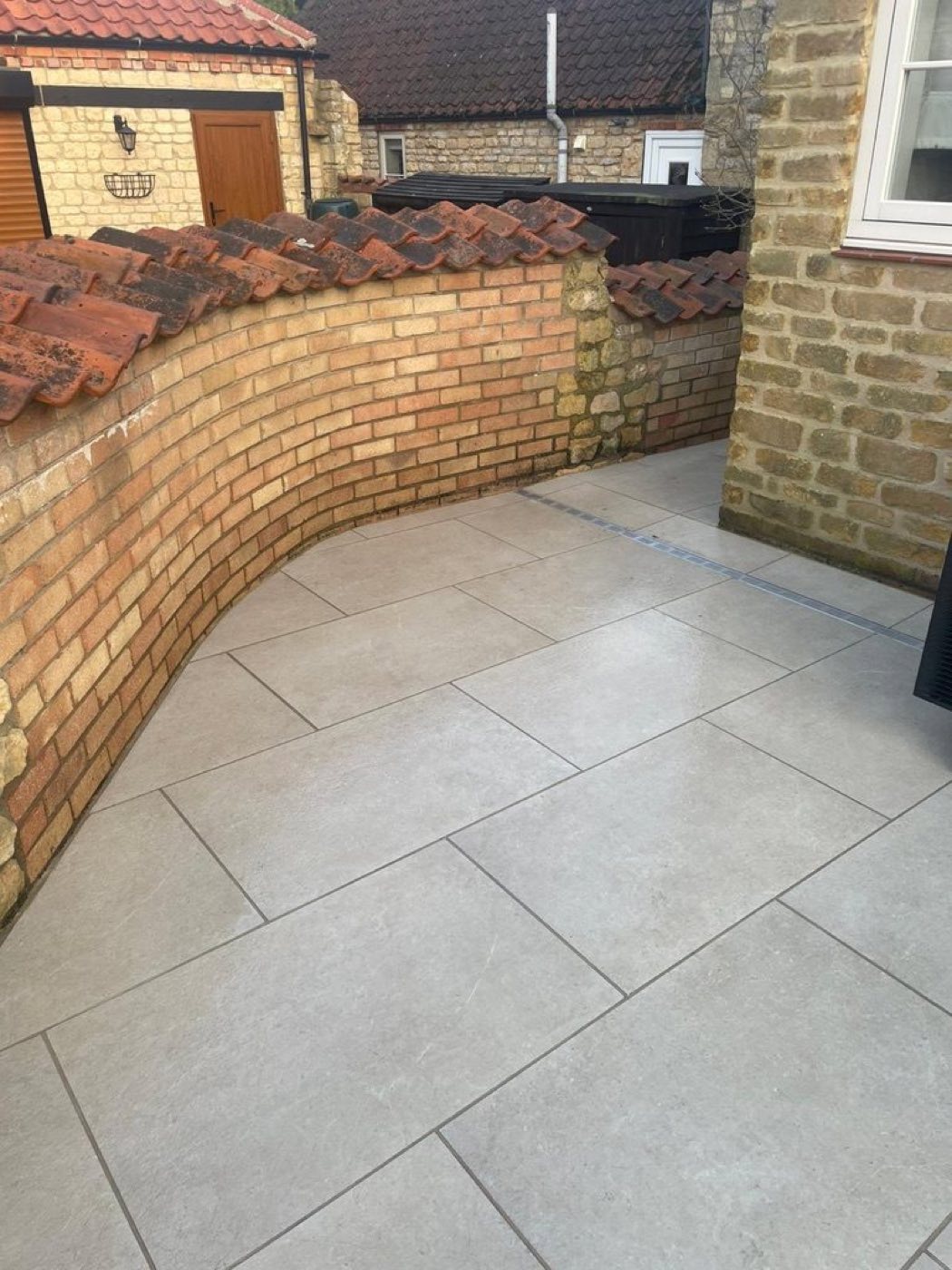
How to clean natural stone paving the right way
Natural stone paving needs a gentler touch than concrete — here's exactly how to clean it without causing damage or streaks.
How to clean a sandstone patio without damage
Sandstone is beautiful but easy to ruin with the wrong cleaner — here's exactly how to clean it safely and keep it looking great.