
20 September 2026 · Patios and Paths
How to clean a patchy, stained concrete path properly
Concrete paths take a beating. Rain, frost, foot traffic, and the relentless Lincolnshire damp mean they go green, patchy and stained faster than almost any other outdoor surface. If yours looks more grey-brown-green than the clean slab you laid or inherited, this guide will show you exactly how to clean a patchy, stained concrete path — and keep it that way.
The short answer: a proper clean involves removing loose debris, treating biological growth, applying a suitable cleaner, and then rinsing with a pressure washer at the right pressure. Get the process right and the result is remarkable. Get it wrong and you can etch the surface, push dirt deeper, or make the patchiness worse.
Why concrete paths go patchy in the first place
Concrete is porous. Water soaks in, organic matter settles in that moisture, and algae, moss and lichen take hold — especially in shaded spots or low-lying areas where water sits. Different patches of your path age at different rates depending on sun exposure, drainage and original mix quality, which is why you end up with uneven colouring.
Common culprits include:
- Green algae and moss — the most common cause of slippery, discoloured patches
- Black spot — a stubborn fungal growth that roots into the surface
- Rust stains — from metal furniture, gate hinges or pipes
- Oil and grease — often near back gates, bins or parking areas
- Efflorescence — white chalky salts that leach out of the concrete itself
Knowing what you're dealing with changes how you clean it, so have a good look before you start.
What you'll need before you start
For a DIY approach, you'll need:
- A stiff outdoor broom
- A garden hose or pressure washer (1,200–1,800 PSI is usually enough for standard concrete paths)
- A patio or path cleaner suitable for concrete — look for one that tackles both biological growth and general grime
- A specialist stain treatment for oil, rust or efflorescence if relevant
- Protective gloves and eye protection
If the path is long, heavily stained or bordered by planting you want to protect, it's worth thinking about whether this is a job you want to take on yourself. More on that below.
How to clean a patchy, stained concrete path: step by step
1. Clear the area and sweep thoroughly
Remove any furniture, pots or mats. Sweep away loose debris, leaves and surface moss. This matters more than people realise — pressure washing over loose organic matter just spreads it around.
2. Pre-treat stubborn stains
Before applying any general cleaner, tackle specific stains first:
- Oil stains: apply an absorbent (cat litter or sawdust) to fresh oil, then use a degreaser. Old oil stains need a dedicated concrete degreaser left to dwell for 15–20 minutes.
- Rust stains: use an oxalic acid-based rust remover. Apply carefully, don't let it run onto neighbouring surfaces, and rinse thoroughly.
- Efflorescence: a diluted solution of white vinegar can help lift lighter salt deposits. For heavy efflorescence, a dedicated concrete cleaner works better.
3. Apply your path cleaner
Follow the manufacturer's dilution instructions. Apply evenly across the path and let it dwell for the recommended time — usually 10–20 minutes. Don't let it dry on the surface. On a windy day, work in sections.
4. Pressure wash at the right setting
This is where most DIY jobs go wrong. Too low and you're just rinsing; too high and you can damage the surface, especially on older or softer concrete. A fan nozzle at 1,500 PSI, held 20–30 cm from the surface, works well for most domestic paths.
Work in consistent, overlapping strokes going in one direction. Avoid circular motions — they create uneven results and can leave swirl marks on softer concrete.
5. Rinse and inspect
Rinse the whole path thoroughly with clean water. Once it dries — allow 24–48 hours — inspect the result. Some deep stains need a second treatment. Black spot in particular often needs retreating.
What about sealing the path afterwards?
Once your path is clean and fully dry, sealing it is well worth considering. A good concrete sealer locks out moisture, slows biological regrowth and makes future cleaning much easier. It won't change the look dramatically but it will keep that clean finish for longer. We cover this in more detail in our patio cleaning guides.
When to call in a professional
Some concrete paths genuinely need a professional touch. If yours has deep-set black spot across a large area, persistent rust or chemical staining, if it's adjacent to sensitive planting, or if it's heavily algae-covered and slippery, a professional pressure wash will give you a far better result — faster and with less risk of damage.
We clean concrete paths right across Lincolnshire, from Nettleham and Cherry Willingham to Branston and Skellingthorpe. We carry commercial-grade equipment, know the right pressures for different concrete types, and treat the whole surface evenly so you don't end up with worse patchiness than you started with. Have a look at the areas we cover to see if we're near you.
How often should you clean a concrete path?
For most Lincolnshire homes, once a year is the right rhythm — ideally in spring after the damp winter months, or in early autumn before leaves start to mat down. Shaded paths facing north will need attention more often, sometimes twice a year, because biological growth never really gets a chance to dry out.
A quick sweep every few weeks through autumn makes a real difference to how quickly growth takes hold. And keeping gutters and downpipes clear so water doesn't constantly splash across the path helps too.
Ready for a clean, even-looking path again?
If the job feels bigger than a weekend afternoon or you'd just rather have it done properly, we're happy to take a look. Check out our full range of cleaning services or get a free, no-obligation quote — we'll come out, assess the surface and tell you exactly what's involved.
Frequently asked questions
Can I use bleach to clean a concrete path?
Diluted bleach can kill surface algae and moss, but it doesn't clean the underlying grime and can damage nearby planting. A dedicated patio or path cleaner is safer and more effective for concrete surfaces.
Why does my concrete path look patchy after pressure washing?
Patchiness after washing usually means the surface was cleaned unevenly, or that some areas had deeper staining that needs a second treatment. Using consistent, overlapping strokes and the same pressure throughout helps, as does pre-treating stubborn spots before the main wash.
How long does it take for a concrete path to dry after cleaning?
Allow at least 24 hours before walking on it normally, and 48 hours before sealing. In cooler or damp Lincolnshire weather, err on the side of a full 48 hours.
Is it safe to pressure wash old or cracked concrete?
You need to be careful. High pressure can widen existing cracks or dislodge loose sections. Use a lower pressure setting and a wider fan nozzle, and avoid directing the jet directly into any cracks.
Need a hand with yours? We cover Lincolnshire for patios, driveways, paths and more — see the areas we cover or browse our services. Get a free quote or call 07874 010739.
Keep reading
More on patio cleaning
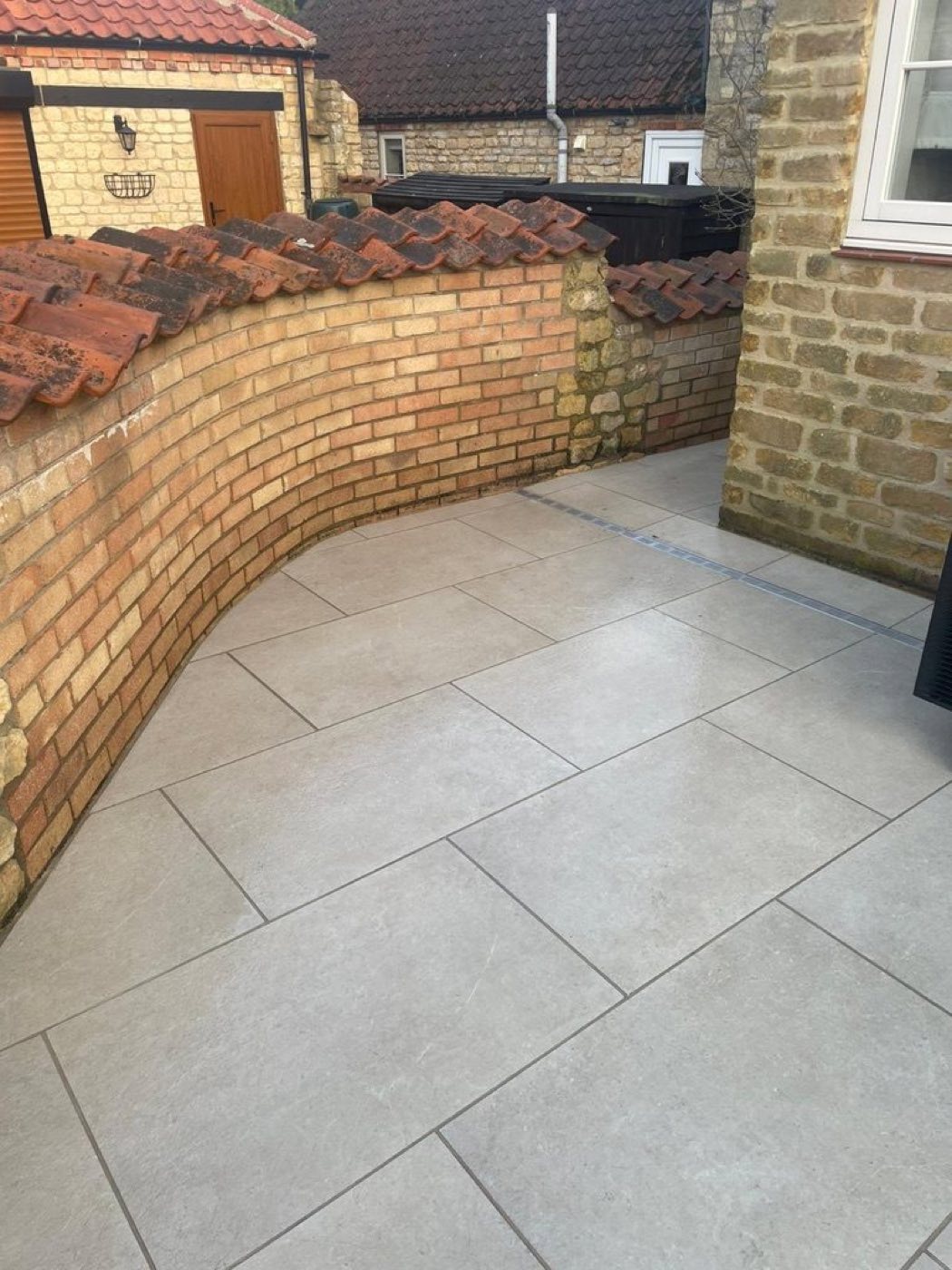
How to clean natural stone paving the right way
Natural stone paving needs a gentler touch than concrete — here's exactly how to clean it without causing damage or streaks.
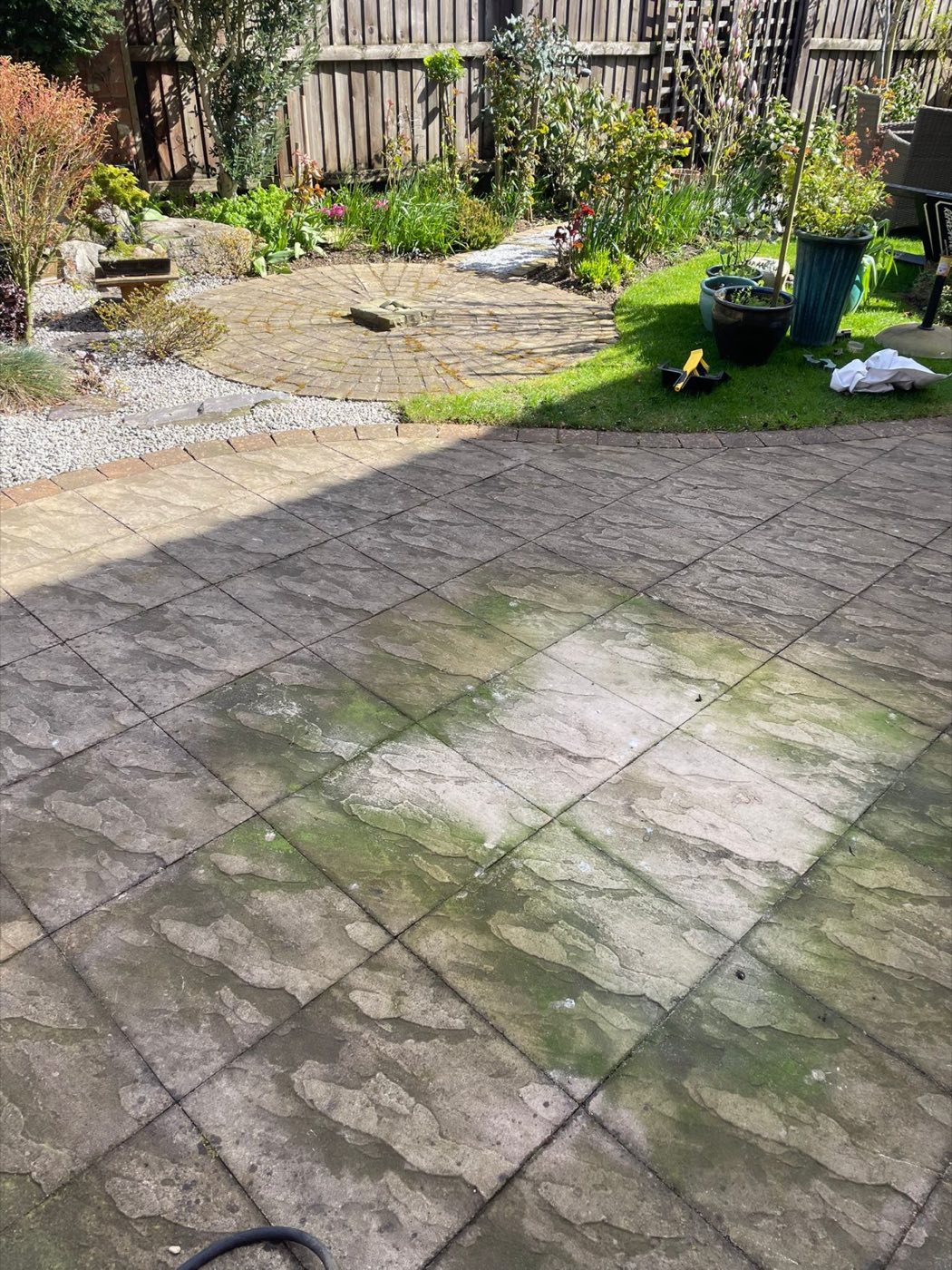
How to clean a sandstone patio without damage
Sandstone is beautiful but easy to ruin with the wrong cleaner — here's exactly how to clean it safely and keep it looking great.
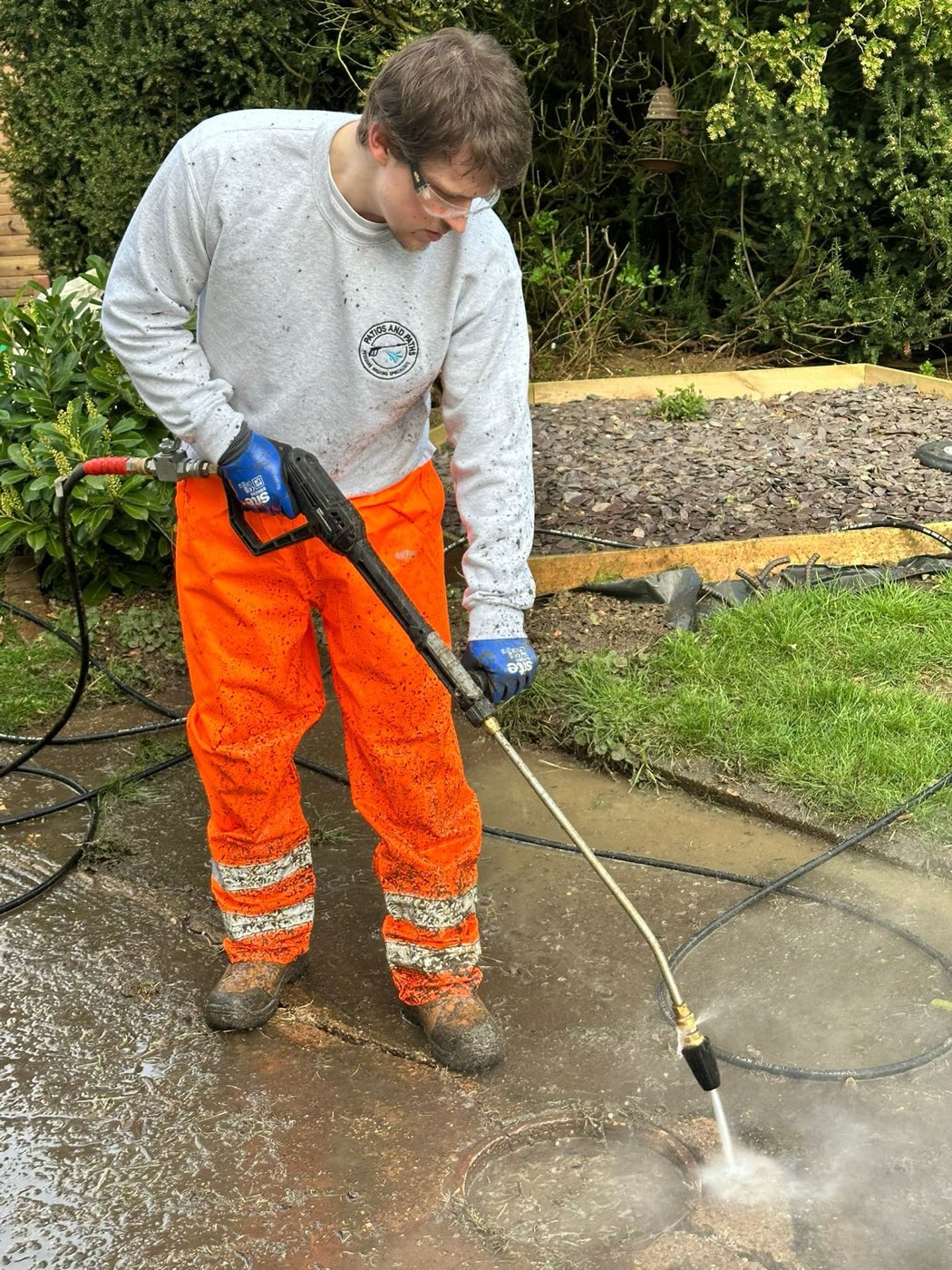
How to clean a patio with stubborn stains properly
Not all patio stains shift with a quick blast — here's how to tackle rust, tannin, grease and more without wrecking your slabs.