
14 September 2026 · Patios and Paths
How to clean a sandstone patio without damage
Sandstone patios look stunning when they're well looked after — warm, earthy tones that suit almost any garden. But sandstone is one of the more unforgiving surfaces to clean. Get it wrong and you can bleach the colour, open up the pores, or cause permanent surface etching. Here's how to clean a sandstone patio without damage, whether you're doing it yourself or thinking about bringing in a professional.
Why sandstone needs careful handling
Unlike porcelain or concrete, sandstone is a natural, porous stone. It absorbs water, cleaning products, and staining agents readily. That porosity is part of what gives it its character — but it also means harsh chemicals sink straight in rather than sitting on the surface where you can rinse them away.
Acid-based cleaners are the most common mistake. Some homeowners reach for patio cleaner from a DIY shed, not realising it contains hydrochloric acid. On sandstone, this strips the surface, attacks the iron compounds that give the stone its colour, and can leave permanent pale patches or a rough, sandy texture. The same goes for bleach — it can fade the stone unevenly and weaken the material over time.
What to use instead
The good news is that the right approach is straightforward.
pH-neutral stone cleaner
A pH-neutral cleaner designed specifically for natural stone is your safest option. These are widely available online and at stone suppliers. They lift organic matter — algae, moss, soil — without attacking the stone itself. Always follow the dilution instructions; using it neat won't clean better, it just risks a residue.
Warm water and a stiff brush
For light soiling or a patio that just needs a refresh, warm water and a firm-bristled brush (not a wire brush — that will scratch) can do more than people expect. Work in sections, scrub well, and rinse thoroughly.
Low-pressure washing
A pressure washer can be used on sandstone, but pressure matters enormously. Keep it below 100 bar, use a wide fan tip rather than a pencil jet, and hold the lance at least 30 cm from the surface. A pencil jet at close range will cut into the stone surface and leave visible lines. Soft washing — using lower pressure and a suitable cleaning solution — is often a better approach for sandstone than blasting it at full power.
How to clean a sandstone patio without damage: step by step
- Clear the area — move furniture, pots, and anything else off the patio.
- Brush off loose debris — sweep away leaves, soil and grit before wetting anything.
- Pre-soak the surface — wet the stone thoroughly with plain water first. This helps prevent the cleaner soaking straight in.
- Apply a pH-neutral stone cleaner — dilute as directed, apply evenly, and allow it to dwell for 5–10 minutes (not longer — don't let it dry on).
- Scrub in sections — use a stiff brush, working with the grain of the stone where you can see one.
- Rinse thoroughly — this is critical. Any residue left on sandstone will attract dirt faster and can cause streaking. Rinse with plenty of clean water.
- Allow to dry fully — before considering sealing or inspecting for remaining stains.
Dealing with stubborn stains
Algae and green growth
Green algae is the most common issue on sandstone, especially in shadier Lincolnshire gardens — north-facing plots in places like Nettleham or Washingborough can green over quickly in a damp autumn. A pH-neutral algaecide applied and left to dwell, then scrubbed and rinsed, usually sorts this. A soft wash treatment is particularly effective because the dwell time does the work, not raw water pressure.
Rust marks
Sandstone often has a naturally high iron content, and orange or rust-coloured marks can appear from moisture reacting with iron in the stone, or from metal furniture left on the surface. Specialist iron stain removers for natural stone exist — but read the label carefully. If the product mentions acid, don't use it on sandstone.
Efflorescence (white powdery marks)
This white bloom appears when salts migrate to the surface as moisture evaporates. It's common on newer sandstone or after a wet winter. A dry stiff brush often clears mild efflorescence; for heavier deposits, a specialist efflorescence remover formulated for natural stone is the right tool.
What not to do
- Never use acid-based cleaners — this includes many branded patio cleaners, vinegar, and anything containing hydrochloric acid
- Don't use bleach — it fades sandstone unevenly
- Avoid wire brushes or scouring pads — these scratch the surface
- Don't use a pressure washer at full power or with a pencil jet
- Don't leave cleaning products to dry on the stone
Should you seal sandstone after cleaning?
Sealing is worth considering once the stone is clean and fully dry. A good impregnating sealer designed for natural stone won't change the look dramatically but will make the surface significantly easier to keep clean — water and staining agents bead on the surface rather than soaking in. It also slows down biological growth. If you're thinking about this, it's worth reading more in our patio cleaning guides before choosing a product.
You can also browse our full range of outdoor surface services to see how cleaning and sealing work together as part of a proper restoration.
When it's worth calling a professional
If your sandstone is heavily stained, covered in thick algae or lichen, or has been damaged by a previous cleaning attempt, a professional soft wash treatment will get better results than DIY — and with far less risk of causing further damage. We work across Lincolnshire, including Lincoln, Branston, Heighington, and the surrounding villages, and we know how local conditions — the damp winters, the clay-heavy soil — affect outdoor stone.
If you're not sure what state your patio is in, or just want it done properly without the guesswork, get a free quote and we'll come and take a look.
Frequently asked questions
Can I use a pressure washer on sandstone?
Yes, but keep the pressure below 100 bar and use a wide fan tip held at least 30 cm from the surface. High pressure or a pencil jet can cut into the stone and leave permanent marks.
What cleaning products are safe on sandstone?
Use a pH-neutral cleaner specifically formulated for natural stone. Avoid anything acid-based, including many branded patio cleaners and vinegar, as these can permanently damage sandstone.
Why does my sandstone patio keep going green?
Sandstone is porous and holds moisture, which encourages algae and moss to grow — particularly in shaded or north-facing areas. Regular cleaning and sealing after drying helps slow regrowth significantly.
How often should I clean a sandstone patio?
A thorough clean once a year is usually enough for most sandstone patios, ideally in spring after the winter damp has done its worst. Spot-treating stains as they appear helps reduce the build-up between full cleans.
Need a hand with yours? We cover Lincolnshire for patios, driveways, paths and more — see the areas we cover or browse our services. Get a free quote or call 07874 010739.
Keep reading
More on patio cleaning
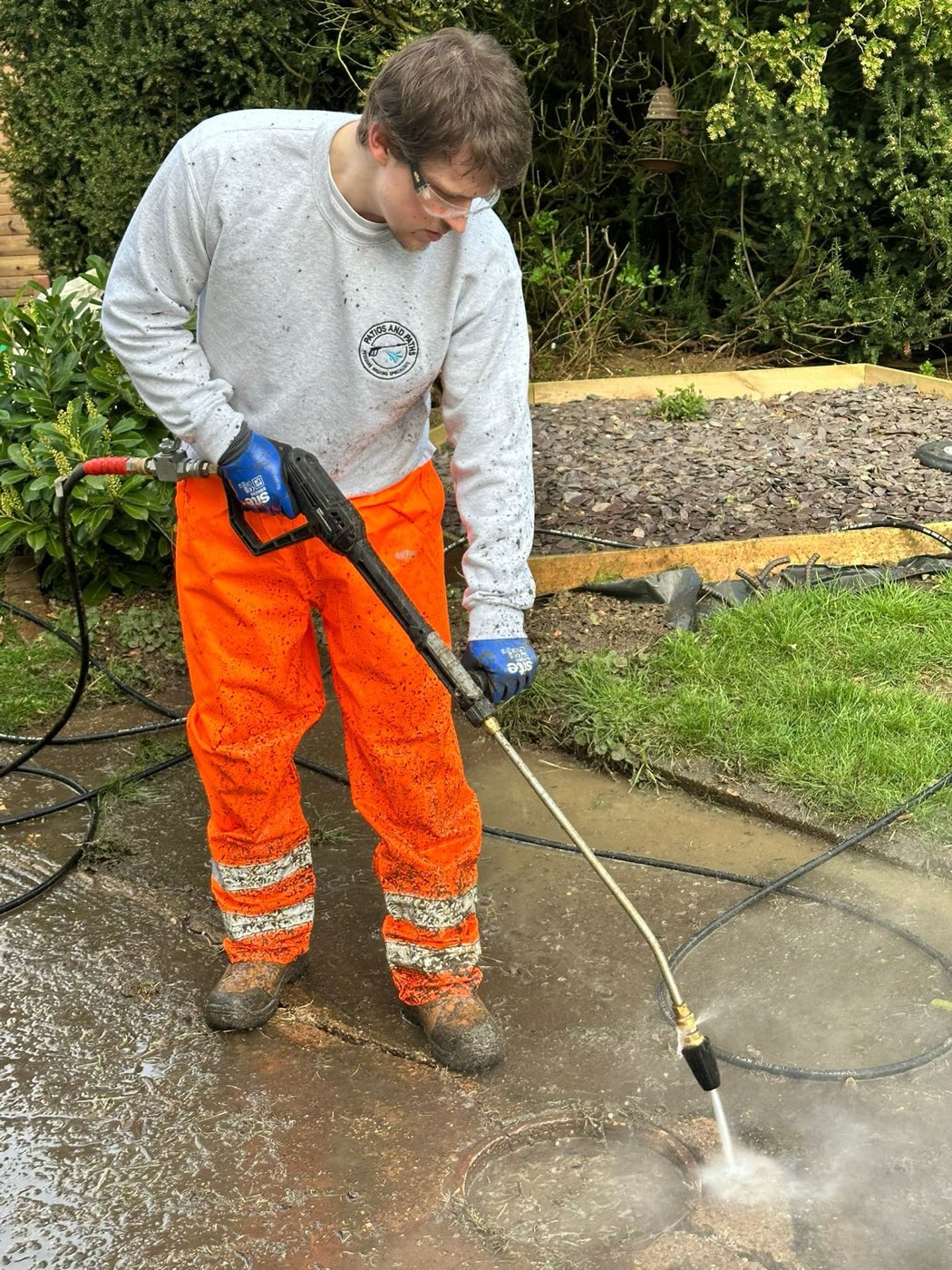
How to clean a patio with stubborn stains properly
Not all patio stains shift with a quick blast — here's how to tackle rust, tannin, grease and more without wrecking your slabs.
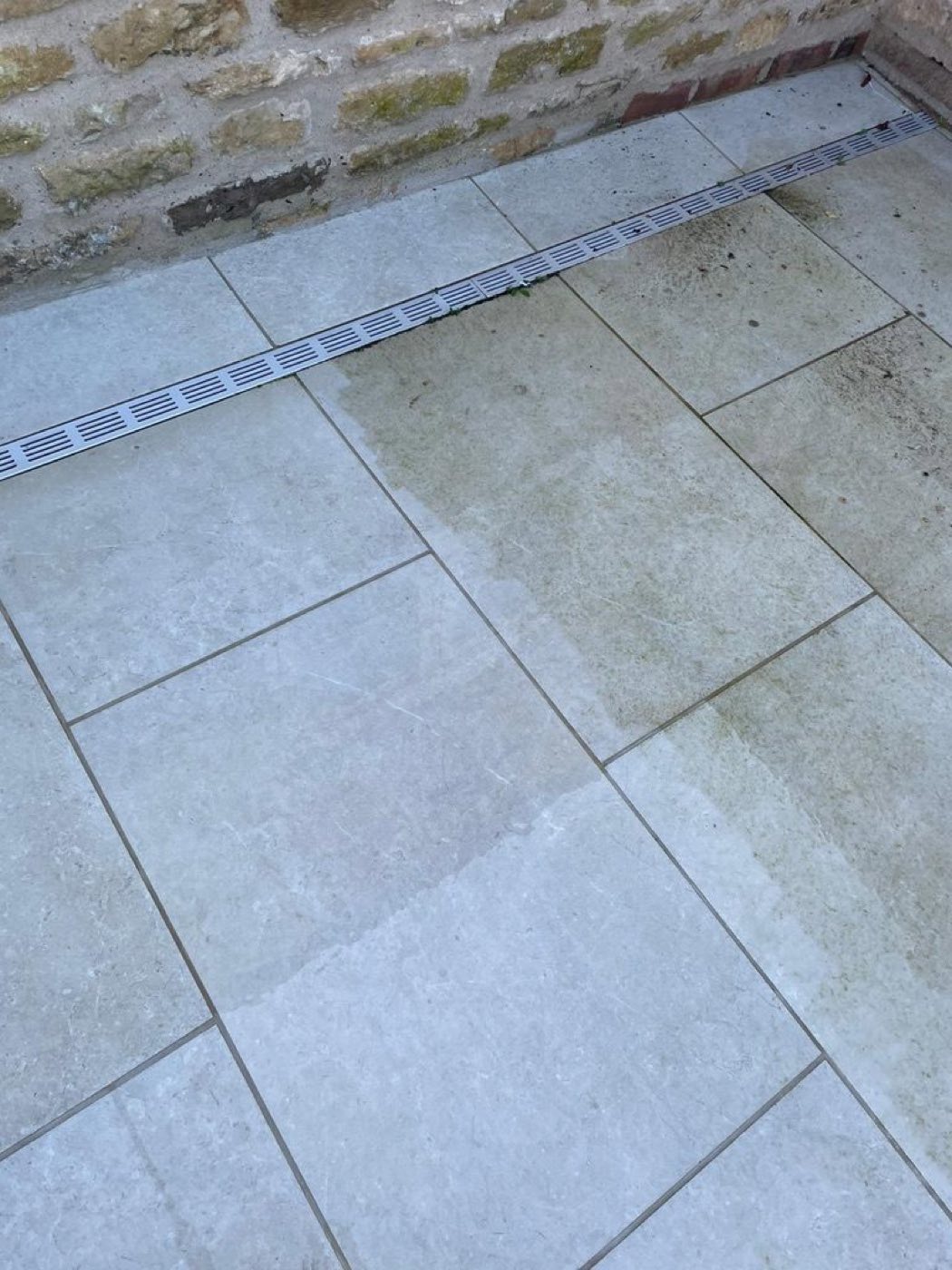
How to clean patio furniture pads and cushions
Mouldy cushions and green-stained pads can make even a spotless patio look neglected — here's how to bring them back to life properly.
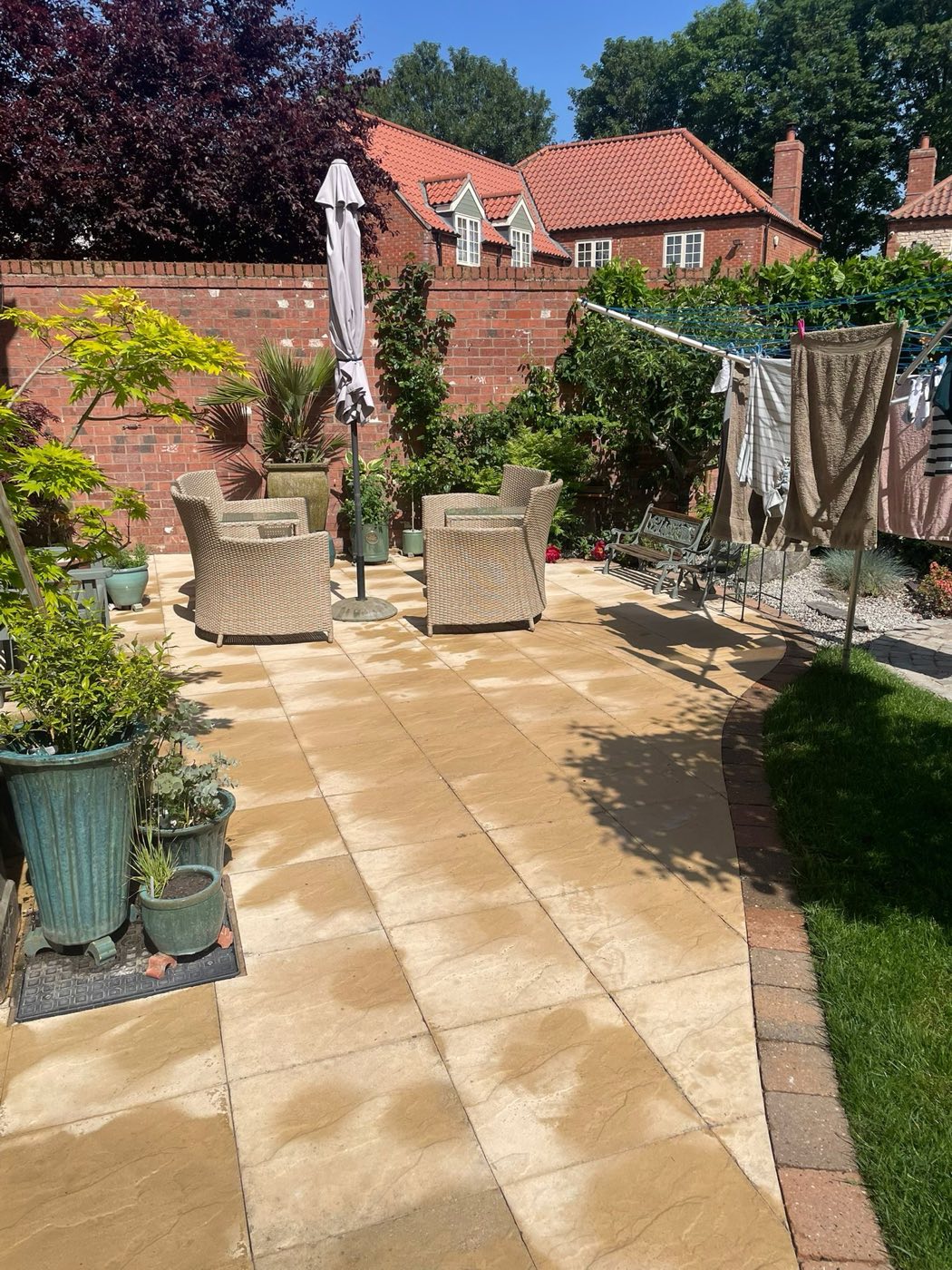
How to restore weathered patio pointing properly
Crumbling joints are the hidden reason your patio looks tired — here's how to fix them properly and stop weeds and water getting back in.