18 September 2026 · Patios and Paths
How to clean natural stone paving the right way
Natural stone paving looks beautiful when it's clean — but get the approach wrong and you can etch the surface, bleach the colour, or drive moisture deep into the stone. If you're wondering how to clean natural stone paving without causing lasting harm, the short answer is: low pressure, the right cleaning product, and a bit of patience. Here's everything you need to know.
Why natural stone needs a different approach
Concrete slabs are tough. You can hit them with a high-pressure washer, scrub hard, and they'll shrug it off. Natural stone — think sandstone, limestone, slate, granite, and Indian sandstone — is more porous and more sensitive. The wrong cleaner can strip the surface. Too much pressure can open up the pores or dislodge pointing. Even plain tap water left to pool can encourage the green algae that makes stone slippery within weeks.
It's a material that rewards care, not force.
The right way to clean natural stone paving
Step one: sweep and prepare
Before any water touches the stone, sweep off loose debris, dead leaves, and surface dirt. Wet leaves are a particular problem in Lincolnshire — they break down quickly and leave tannin stains that are much harder to shift once they've had time to set in.
If there's heavy moss or algae growth, gently loosen it with a stiff-bristled brush before you wet anything down. Don't use a metal scraper — it scratches the surface.
Step two: choose the right cleaning product
This is where most DIY attempts go wrong. Avoid:
- Bleach — it strips colour and kills the pointing
- Acidic cleaners (including some patio cleaning products) — these etch limestone, sandstone, and marble
- Washing-up liquid or household detergents — they leave a residue that encourages regrowth
What you want is a pH-neutral stone cleaner or, for greener growth, a specialist algaecide designed for natural stone. These are widely available online and from builders' merchants. Mix to the dilution on the bottle — stronger is not better.
Step three: apply, dwell, and rinse
Apply the cleaning solution with a garden sprayer or a soft brush. Let it dwell for the time the manufacturer recommends — usually 10–20 minutes. Don't let it dry on the surface.
Then scrub gently with a stiff-bristled deck brush (not wire) and rinse thoroughly with clean water. A garden hose on a strong setting is usually enough. If you're using a pressure washer, keep the pressure below 100 bar and use a wide fan nozzle — never a pencil jet on natural stone.
Common problem stains on natural stone
Different stains need different approaches:
- Green algae and moss — a biocidal wash left to dwell, then scrubbing and rinsing
- Black spot (a specific type of algae) — needs a targeted black-spot treatment; ordinary cleaning won't shift it
- Rust marks — usually from metal garden furniture; use an oxalic-acid-based rust remover, but test in a hidden area first
- Tannin stains (leaf marks) — diluted hydrogen peroxide can help, but works slowly
- Oil and grease — a poultice treatment draws oil out of porous stone over 24–48 hours; degreasers alone often just push it deeper
If you're dealing with several of these at once, it's usually more efficient to get a professional in — trying multiple products on the same area without knowing how they interact can leave the stone looking worse.
How often should you clean natural stone paving?
In Lincolnshire's climate — plenty of shade, damp winters, and heavy leaf fall — most patios benefit from a thorough clean once a year, ideally in spring once the worst of the wet weather is past. A lighter rinse and brush-over in autumn before leaves build up is also worth doing.
North-facing or shaded patios in places like Nettleham or Welton can go green very quickly — sometimes within a few months of cleaning. If that sounds familiar, a post-clean application of a stone sealant can make a real difference to how long the results last.
Should you seal natural stone after cleaning?
Sealing isn't always necessary, but for porous stones like sandstone and limestone it's usually a good idea. A good impregnating sealant sits below the surface, doesn't change the look of the stone, and makes future cleaning much easier — water and dirt sit on top rather than soaking in.
The key rule: the stone must be completely clean and bone dry before you seal it. Sealing over damp or dirty stone locks the problem in. For more on our cleaning services, take a look at what we cover across Lincolnshire.
When it's worth calling a professional
If your stone is heavily stained, extensively mossy, or has never been cleaned since it was laid, a professional pressure washing service will get a result you simply can't match with a garden hose and a bucket. We use commercial-grade, low-pressure rotary cleaning heads that clean evenly without damaging the surface — ideal for the kind of large natural stone patios common in villages around Branston, Heighington, and Washingborough.
We also re-sand joints after cleaning where needed, so the surface is properly finished rather than just wet and clean. You can see the full range of our outdoor surface services to get a sense of what's involved.
For more guides like this one, browse our patio cleaning articles — there's plenty of detail on different stone types and situations.
Get a free quote for natural stone cleaning
If your natural stone paving has seen better days, we'd love to help. We work across Lincolnshire and can usually turn around a quote quickly. Request a free, no-obligation quote and we'll get back to you with an honest price and a realistic idea of what's achievable.
Frequently asked questions
Can I use a pressure washer on natural stone paving?
Yes, but with care. Keep the pressure below 100 bar and always use a wide fan nozzle rather than a pencil jet. High-pressure pencil jets can pit the surface and blast out the jointing sand between slabs.
Why does my natural stone patio go green so quickly after cleaning?
Green algae thrives in damp, shaded conditions — which Lincolnshire provides plenty of. Sealing the stone after a thorough clean slows regrowth significantly by reducing how much moisture the surface absorbs.
Is bleach safe to use on natural stone paving?
No — bleach can strip the colour from sandstone and limestone, damage the mortar pointing, and harm surrounding plants. Use a pH-neutral stone cleaner or a specialist biocide designed for natural stone instead.
How long does it take to clean a natural stone patio professionally?
A typical patio up to around 40 square metres usually takes two to four hours, depending on the level of soiling and the stone type. We'll give you a realistic timeframe when we quote.
Need a hand with yours? We cover Lincolnshire for patios, driveways, paths and more — see the areas we cover or browse our services. Get a free quote or call 07874 010739.
Keep reading
More on patio cleaning
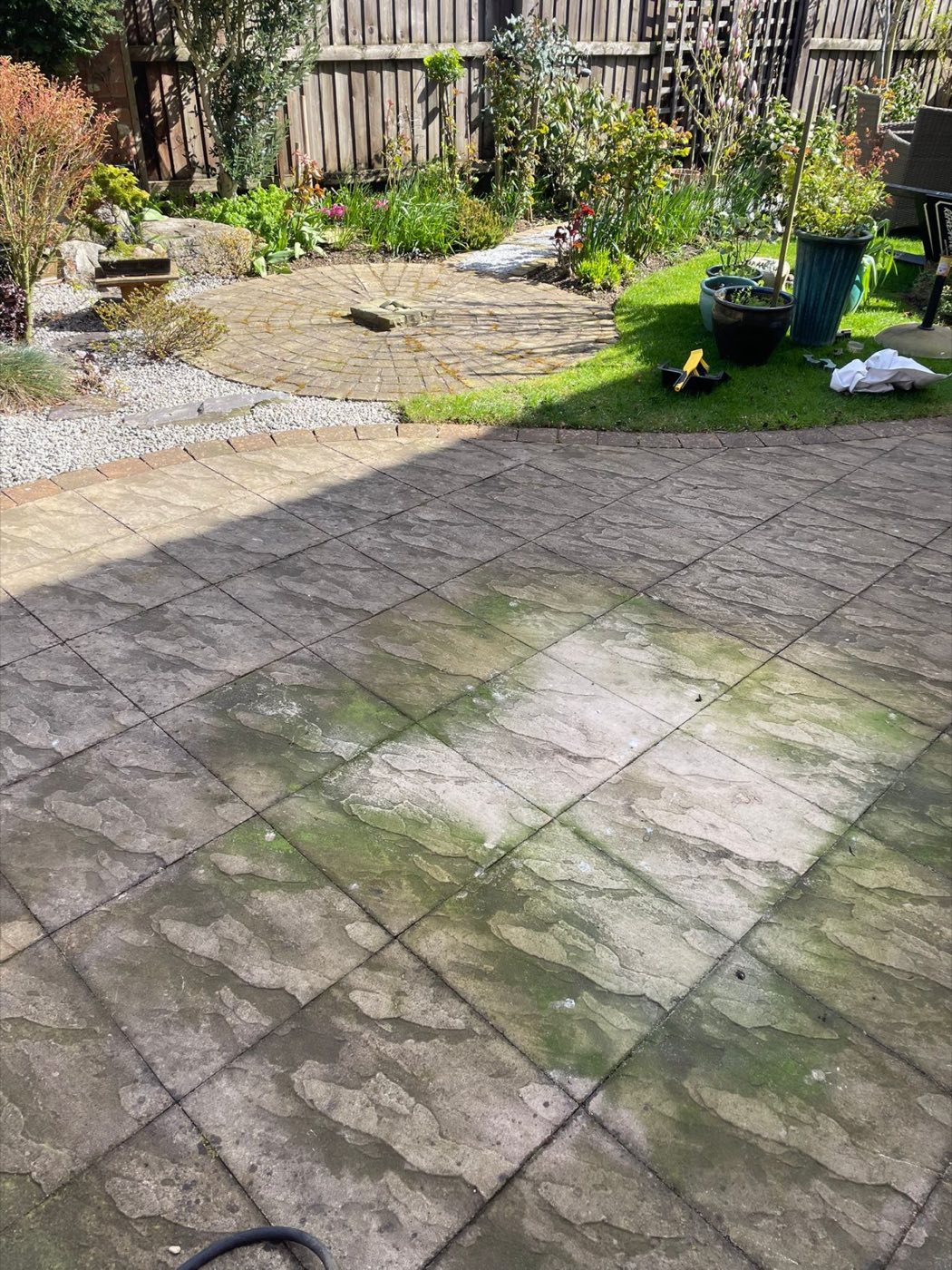
How to clean a sandstone patio without damage
Sandstone is beautiful but easy to ruin with the wrong cleaner — here's exactly how to clean it safely and keep it looking great.
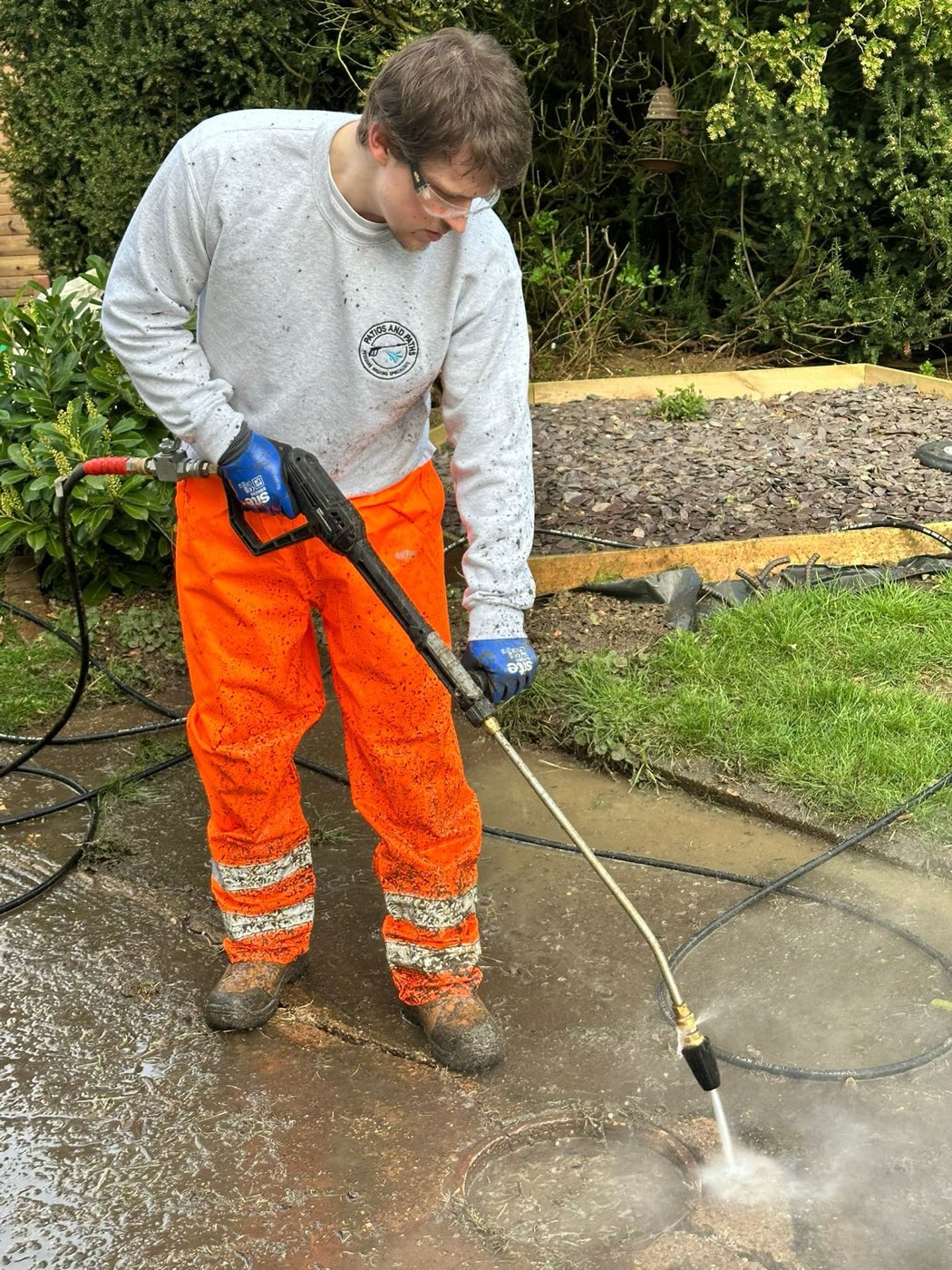
How to clean a patio with stubborn stains properly
Not all patio stains shift with a quick blast — here's how to tackle rust, tannin, grease and more without wrecking your slabs.
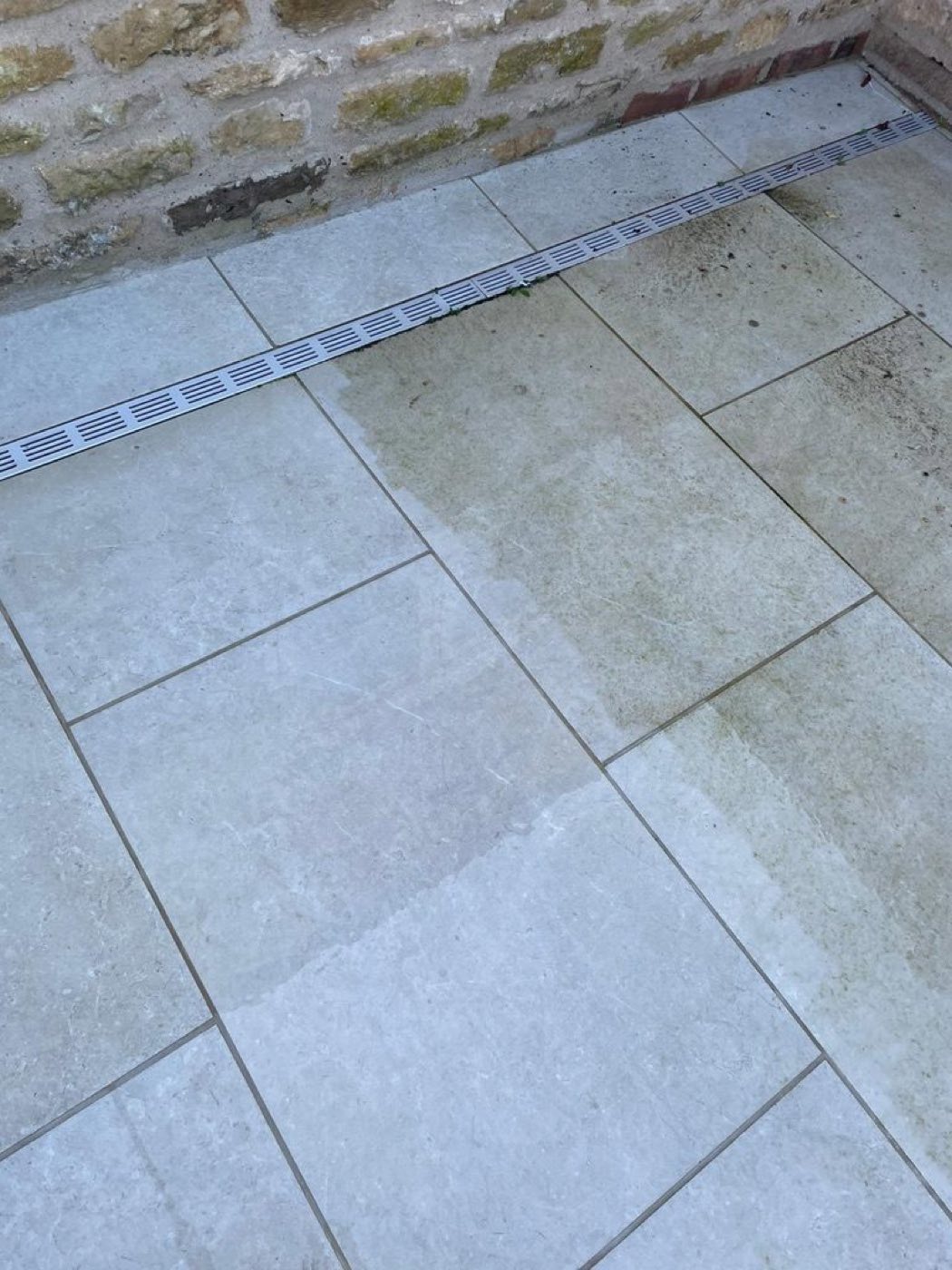
How to clean patio furniture pads and cushions
Mouldy cushions and green-stained pads can make even a spotless patio look neglected — here's how to bring them back to life properly.