2 September 2026 · Patios and Paths
How to remove black algae from block paving
Black algae is one of the most stubborn things that can take hold on a block-paved driveway or path. If you're trying to remove black algae from block paving, the short answer is this: a proper biocidal treatment followed by pressure washing at the right pressure will clear it — but skipping either step usually means it's back within a season.
Here's what you need to know to do the job properly, whether you're tackling it yourself or deciding whether to call someone in.
Why black algae is worse than the green stuff
Green algae is the furry, slippery coating that creeps across paving every damp winter. Black algae is a different beast. It typically shows up as dark grey or near-black streaking and staining, often in the joints or across the face of the blocks themselves. It has a waxy outer layer that protects it from water and many surface cleaners — which is why hosing it down or using a basic patio cleaner often does very little.
Because of that waxy coating, black algae grips onto porous surfaces like concrete block paving extremely well. Left untreated, it etches into the surface over time and becomes progressively harder to remove.
What you'll need to remove it
For a DIY attempt, you'll need:
- A good-quality biocidal patio or driveway cleaner (look for ones that list black algae specifically)
- A stiff-bristled brush or a push-along scrubbing brush for large areas
- A pressure washer — ideally 150 bar or more for block paving
- A surface cleaner attachment if you have access to one (gives a far more even result than a lance alone)
- Protective gloves and eye protection
- Time — most biocidal treatments need a dwell time of 20–30 minutes before washing off
Choosing the right cleaner
Not all patio cleaners are equal. Some are little more than diluted bleach, which can temporarily lighten algae but won't kill the root structure — so it comes back fast. Look for products that contain quaternary ammonium compounds or similar biocidal agents. These penetrate the waxy layer and break down the algae properly.
If you're in a hard-water area — which most of Lincolnshire is — rinse products off thoroughly, as limescale residue can dull the surface.
How to remove black algae from block paving: step by step
- Clear the area. Move pots, furniture and cars off the drive or path.
- Apply the biocidal cleaner. Follow the product instructions — most require diluting with water and applying with a watering can or garden sprayer.
- Work it in. Use a stiff brush to scrub the cleaner into the worst-affected joints and patches. Don't let it dry out.
- Leave it to dwell. Allow 20–30 minutes minimum. On a hot dry day, keep the surface slightly damp so the product stays active.
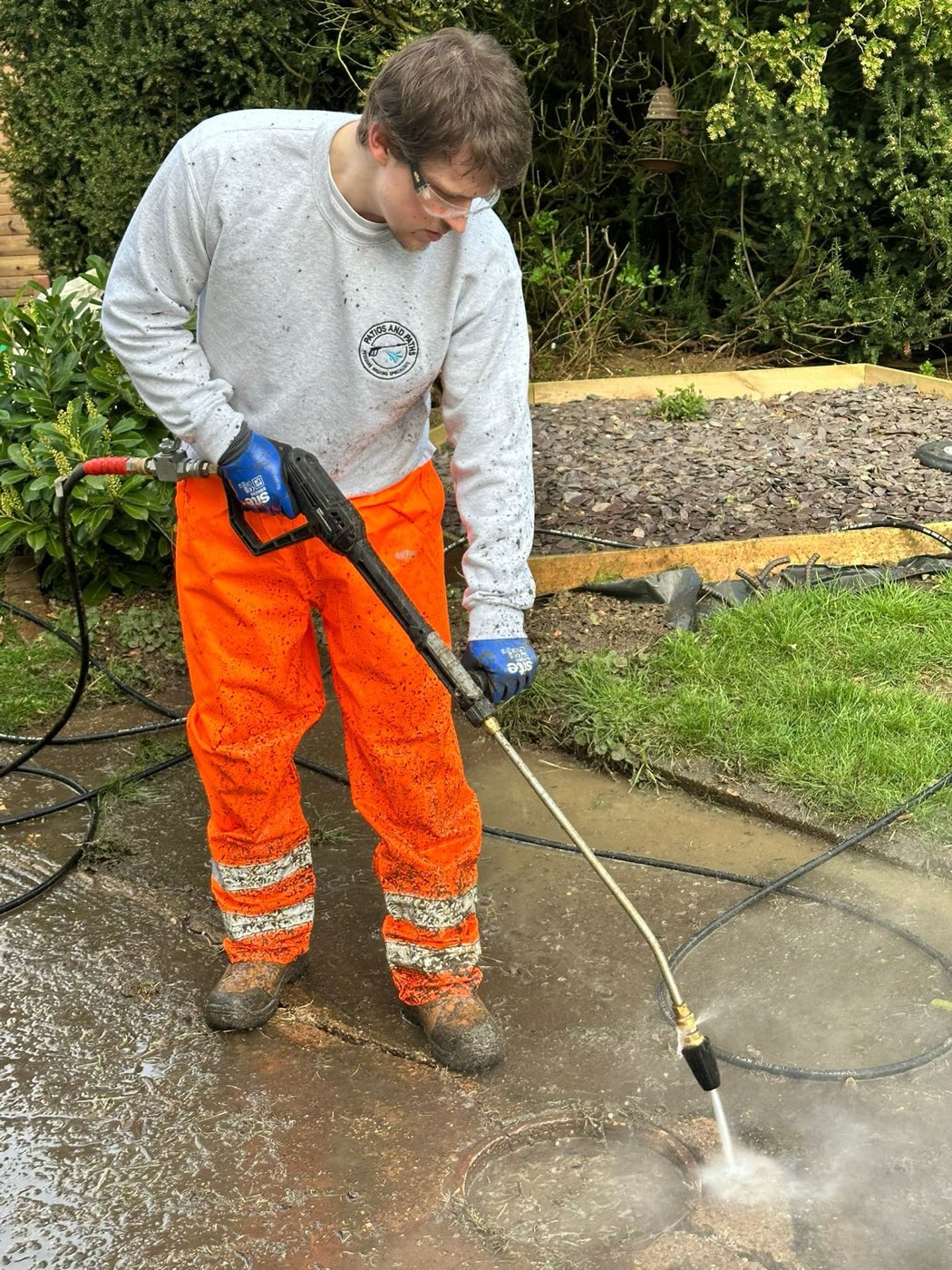
- Pressure wash. Work methodically in sections with your lance or surface cleaner, keeping the angle consistent. For block paving, around 90–120 bar is usually enough — going harder risks blasting out the kiln-dried sand from the joints.
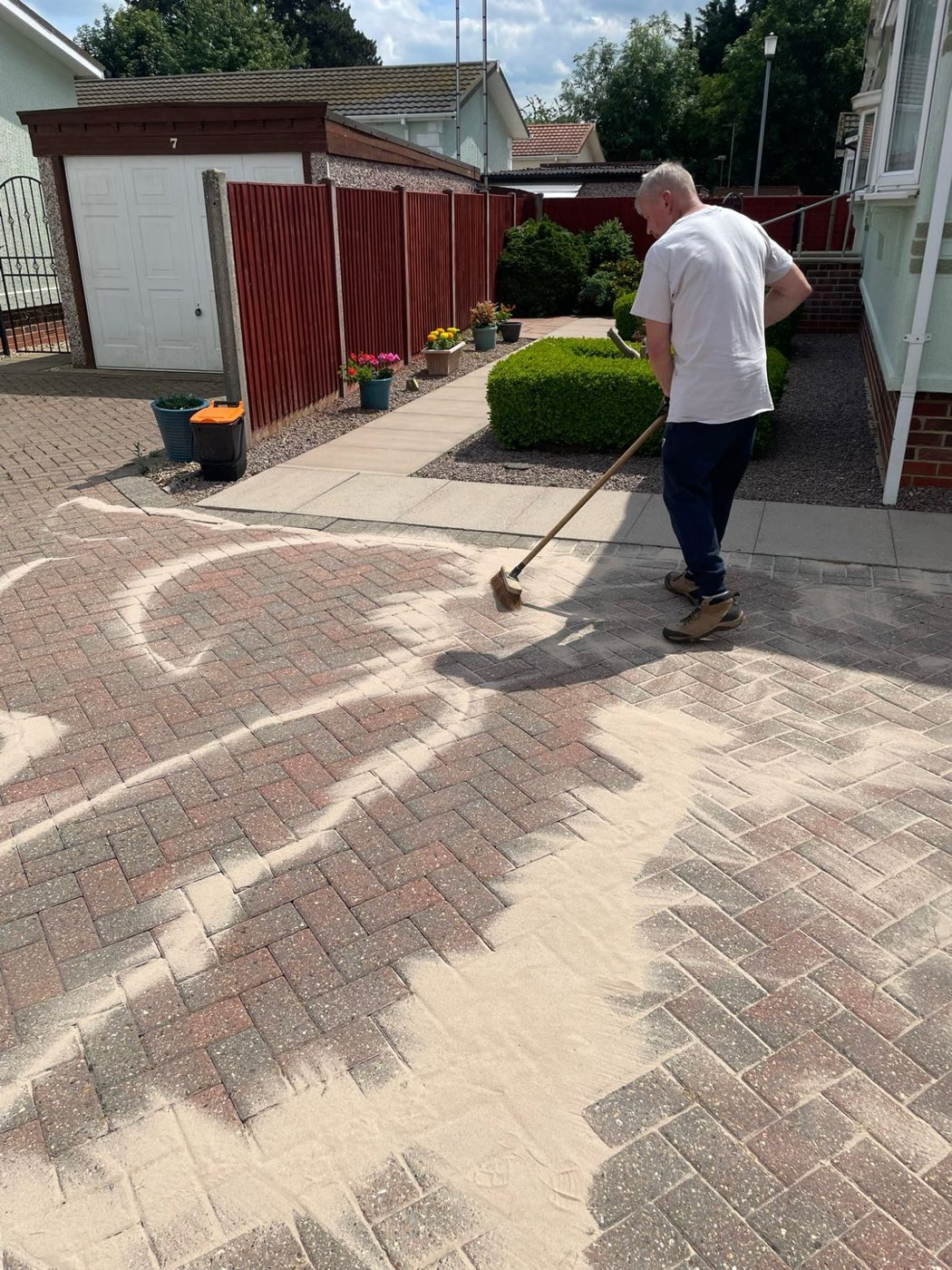
- Re-sand the joints. Pressure washing always removes some jointing sand. Top up with kiln-dried sand and brush it in before the surface gets walked or driven on.
- Apply a sealant or inhibitor. This is optional but significantly slows re-growth — more on this below.
The Lincolnshire factor: why it comes back so quickly
If you're in villages like Nettleham, Welton or Washingborough, you'll know how quickly garden surfaces go green and dark in damp months. Lincolnshire's flat, often shaded suburbs mean driveways and paths don't always get enough sun to dry out properly between rain events — which is exactly the damp, still environment that black algae thrives in.
North-facing drives and paths with overhanging trees are the worst affected. If that's your situation, a one-off clean is never really enough — you need a maintenance plan.
Will sealing block paving stop algae coming back?
A quality impregnating sealer won't make your block paving algae-proof, but it does make a significant difference. It closes up the micro-pores in the surface so algae has less to grip onto, and it makes future cleaning quicker and easier.
The key is to seal after cleaning — never on top of algae or dirt. If you seal dirty paving, you're locking the problem in rather than keeping it out. Take a look at our guide to driveway cleaning for more on surface prep before sealing.
How long does sealing last?
A well-applied sealant on block paving typically lasts three to five years before it needs re-applying. In high-traffic areas or where algae growth is persistent, you might get closer to two to three years before it's worth retreating the surface.
When to call in a professional
If you've tried a biocidal treatment and pressure washing and the black algae has still left deep staining, or if the area is large — a full driveway rather than a path — it's often more cost-effective and faster to bring in a professional. The right commercial-grade equipment and treatments get results that a domestic pressure washer typically can't match.
We cover driveways and paths across Lincolnshire, including areas like Cherry Willingham, Branston, Bracebridge Heath and Heighington. If you'd like us to take a look and give you an honest assessment, you can see the areas we cover or check our full range of surface cleaning services — then get in touch for a no-obligation quote.
Black algae is a problem we deal with every week. In most cases, a proper clean and treatment sets the surface back a good few years — and the difference in how your drive looks is usually dramatic.
Get a free quote today and we'll let you know exactly what's involved.
Frequently asked questions
Can I remove black algae from block paving with just a pressure washer?
Pressure washing alone will shift the surface layer but won't kill the root structure of black algae, so it tends to come back quickly. A biocidal treatment applied before washing gives far longer-lasting results.
Will bleach kill black algae on block paving?
Household bleach can temporarily lighten black algae but doesn't penetrate the waxy outer layer effectively, and it can discolour or damage the blocks and surrounding soil. A proper biocidal patio cleaner is a safer and more effective choice.
How long does it take for black algae to come back after cleaning?
On an untreated surface in a damp or shaded spot, algae can start returning within six to twelve months. Applying a sealant after cleaning and using an annual biocidal inhibitor spray can extend that significantly.
Does pressure washing remove the sand from block paving joints?
Yes, some jointing sand is always displaced during pressure washing. Once the surface is clean and dry, top up the joints with kiln-dried sand and brush it in — this also helps prevent weeds taking hold.
Need a hand with yours? We cover Lincolnshire for patios, driveways, paths and more — see the areas we cover or browse our services. Get a free quote or call 07874 010739.
Keep reading
More on driveway cleaning
How to clean a resin driveway without causing damage
Resin driveways look stunning when clean — here's exactly how to keep yours that way without lifting the surface or voiding your warranty.
How to clean a driveway after heavy rain
Heavy rain leaves driveways muddy, stained and slippery — here's exactly how to clean yours back to a smart finish.
How to clean a driveway edging and border properly
Weedy, mossy joints can ruin an otherwise tidy driveway — here's how to clean block paving joints properly and stop the problem coming back.