
26 October 2026 · Patios and Paths
How to clean a resin driveway without causing damage
A resin driveway is one of the smarter investments you can make for the front of your home. The surface is smooth, permeable, and far more forgiving than concrete or tarmac in heavy rain. But knowing how to clean a resin driveway without causing damage is genuinely important — get it wrong and you can loosen the aggregate, strip the binder, or leave unsightly patches that are expensive to put right.
The good news: cleaning resin is straightforward once you understand a few ground rules.
Why resin driveways need careful cleaning
Resin-bound surfaces are made from small stones or aggregates set into a polyurethane or epoxy binder. That binder is tough, but it isn't indestructible. High-pressure washing at the wrong angle, harsh chemicals, and petrol or oil spills can all degrade it over time. The surface also sits close to the ground, so leaves, organic matter, and standing water make green algae and black mould a regular visitor — especially through a Lincolnshire winter.
Regular, gentle maintenance is far better than one aggressive clean every few years.
What you'll need before you start
- A stiff-bristled brush (not wire)
- A garden hose or pressure washer with a wide-fan nozzle
- A pH-neutral cleaner or a resin-safe biocide
- A leaf blower (optional but useful)
- Clean water for rinsing
Avoid anything acid-based — products sold for natural stone or concrete are often too aggressive for resin. Bleach in high concentrations can also discolour the binder over time, so dilute it heavily if you use it at all, or choose a dedicated resin-safe product instead.
Step-by-step: cleaning a resin driveway safely
1. Clear the surface first
Remove leaves, twigs, and loose debris with a brush or leaf blower. Wet leaves left to sit on resin will stain it, and they block drainage channels in the surface. This step takes five minutes and makes everything else easier.
2. Rinse with a hose or low-pressure wash
A garden hose is enough for light dirt. If you use a pressure washer, keep the nozzle at least 30 cm from the surface and use a wide fan setting — never a pencil jet, which can dislodge individual stones from the binder. Work in one direction rather than sweeping back and forth randomly.
3. Apply a resin-safe cleaner for stubborn grime
For green algae, mould, or ground-in dirt, apply a pH-neutral cleaner or resin-safe biocide and let it dwell for the time stated on the label — usually 10 to 15 minutes. Agitate gently with a stiff brush, then rinse thoroughly. Don't let the product dry on the surface.
4. Tackle oil and fuel stains quickly
Oil is the biggest enemy of a resin driveway. If a car leaks fuel or oil, blot it up immediately with an absorbent material — cat litter or sand works well. Apply a degreaser designed for resin surfaces and work it in gently. Old, set-in oil stains are much harder to shift and may need professional attention. Check our driveway cleaning guides for more on oil stain removal.
5. Rinse and let it dry
A final rinse with clean water removes any cleaner residue. Resin dries quickly in dry weather — usually within an hour or two in a Lincolnshire spring or summer. In cooler months, allow longer.
How often should you clean a resin driveway?
As a general rule:
- Every 3–6 months — a light brush-down and hose rinse
- Once a year — a full clean with a biocide or pressure washer
- Immediately — any time oil, fuel, or bird droppings land on it
If your driveway is in a shaded spot — common on north-facing properties in villages like Nettleham or Saxilby where trees overhang the drive — you may find green algae returns faster than average. A preventative biocide treatment once a year makes a real difference.
What to avoid on a resin driveway
- Pencil-jet pressure washing — it lifts aggregate from the binder
- Acid cleaners or patio treatments — damage the binder over time
- Wire brushes or metal scrapers — scratch the surface and loosen stones
- Undiluted bleach — can discolour certain aggregates
- Salt for de-icing — can degrade the binder; use sand or a resin-safe de-icer instead
When it's worth calling a professional
Some jobs are better left to someone with the right kit. If your resin driveway has:
- Deep-set oil staining that hasn't shifted with degreasers
- Widespread green or black algae across the whole surface
- Areas where aggregate is starting to lift
- A general dullness that a rinse won't fix
…then a professional low-pressure hot-water clean with the correct products will restore it properly without risking damage. We work across Lincolnshire — including areas like Welton, Heighington, and Branston — and we see resin driveways that have been over-washed with a domestic pressure washer far too often. The repair bill is always more than the clean would have been.
Take a look at our services or find out if we cover your area before you book.
Keep it looking new for longer
A well-maintained resin driveway can last 15–25 years. The single biggest thing you can do to extend that life is clean it regularly and gently — don't wait until it looks bad before you act. A quick hose-down every couple of months takes ten minutes and keeps organic growth from getting a foothold.
If you'd rather hand it over to someone who knows resin surfaces inside out, we're happy to take a look and give you an honest quote — no obligation, no pressure.
Frequently asked questions
Can I pressure wash a resin driveway?
Yes, but carefully. Use a wide-fan nozzle, keep the lance at least 30 cm from the surface, and avoid pencil jets entirely. Too much pressure too close will dislodge the aggregate stones from the binder, which can't easily be undone.
What's the best cleaner for a resin driveway?
A pH-neutral cleaner or a dedicated resin-safe biocide is the safest choice. Avoid acid-based patio cleaners and undiluted bleach, both of which can degrade the polyurethane binder over time.
How do I get oil stains off a resin driveway?
Blot up fresh oil immediately with an absorbent material, then apply a resin-safe degreaser and work it in gently with a stiff brush. Old, set-in stains often need professional treatment to remove fully without damaging the surface.
Why does my resin driveway keep going green?
Green algae thrive on any damp surface with organic matter — especially in shaded spots or after a wet Lincolnshire winter. A yearly application of a resin-safe biocide after cleaning will slow regrowth significantly.
Need a hand with yours? We cover Lincolnshire for patios, driveways, paths and more — see the areas we cover or browse our services. Get a free quote or call 07874 010739.
Keep reading
More on driveway cleaning
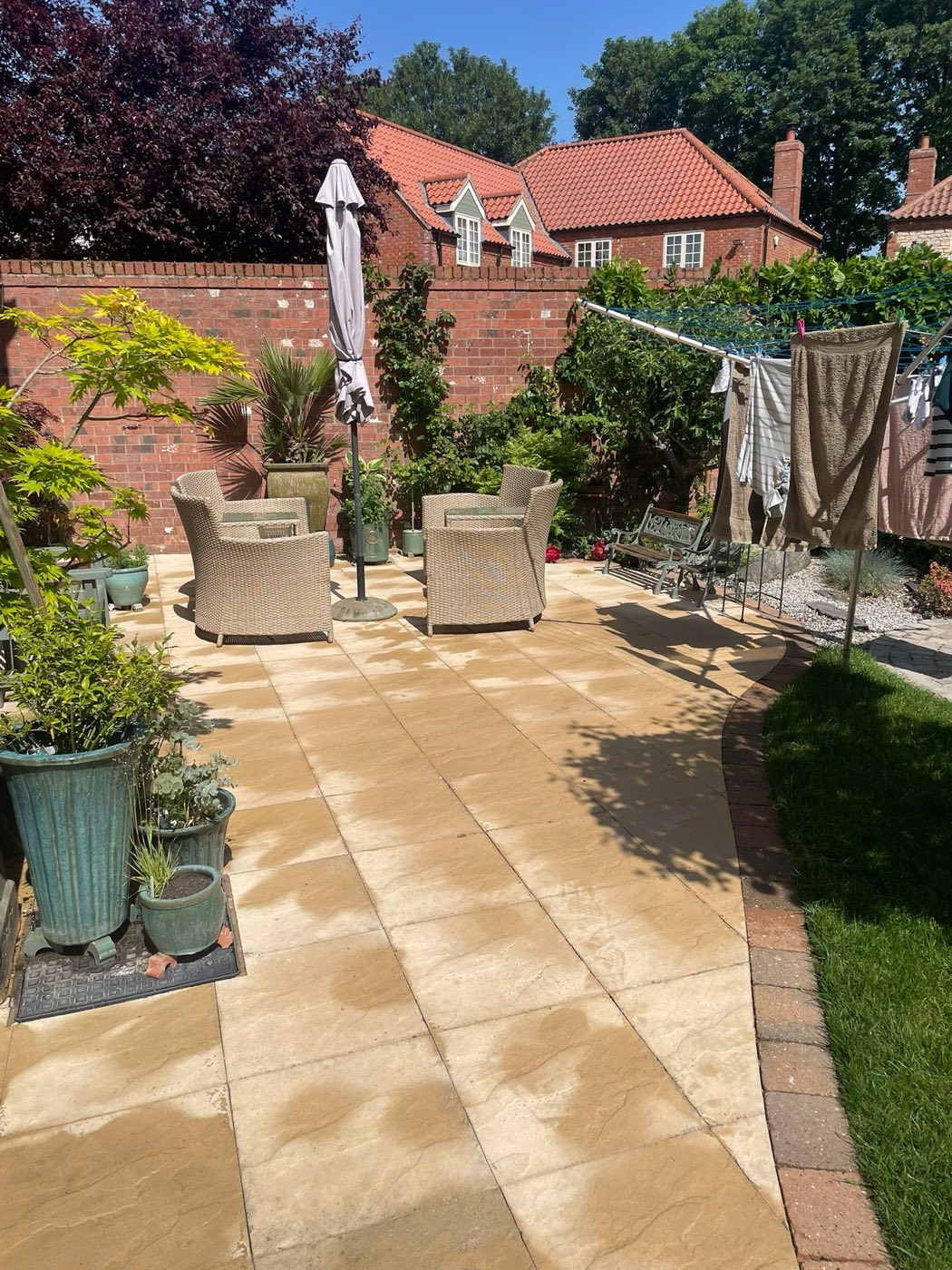
How to clean a driveway after heavy rain
Heavy rain leaves driveways muddy, stained and slippery — here's exactly how to clean yours back to a smart finish.
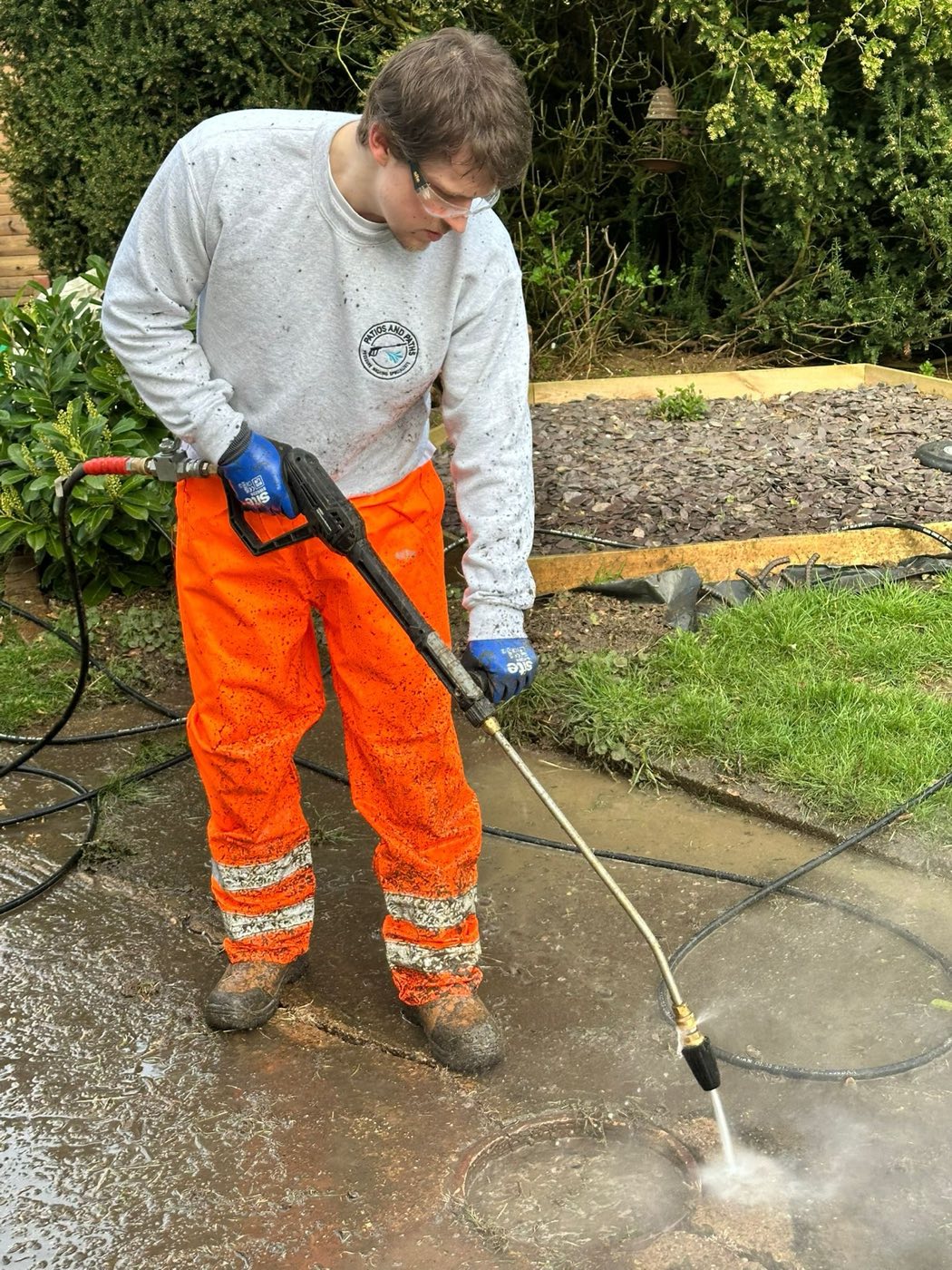
How to clean a driveway edging and border properly
Weedy, mossy joints can ruin an otherwise tidy driveway — here's how to clean block paving joints properly and stop the problem coming back.
How to clean a driveway edging and border properly
Driveway edging collects the worst of the grime — here's how to clean it properly and get that crisp, finished look back.