
10 October 2026 · Patios and Paths
How to clean a driveway edging and border properly
Block paving joints are where most driveways quietly fall apart. Moss creeps in, weeds push up, and before long a once-smart surface looks tired and neglected. If you're wondering how to clean block paving joints properly — and how to stop them filling up again — this guide covers everything you need to know.
The short answer: you need to clear the joints mechanically, treat any biological growth, re-sand, and then apply a jointing compound or weed-inhibiting sand to stop the cycle repeating.
Why block paving joints cause so many problems
The joints between your blocks aren't just cosmetic. They lock the whole surface together, allowing it to flex slightly without cracking. When they fill with organic material — soil blown in by wind, decomposed leaves, moss spores — the paving starts to shift, and weeds find a ready-made growing medium.
In Lincolnshire, where we get a fair amount of rain and some genuinely gloomy stretches of weather, moss and algae establish themselves quickly in damp joints. Driveways in Nettleham, Welton, and Cherry Willingham that sit under mature trees can find their joints completely clogged within a single season.
What you'll need before you start
Gather these before you begin:
- A stiff hand brush or rotary brush attachment for a drill
- A jointing scraper, plugging chisel, or oscillating multi-tool
- A pressure washer (ideally 100–150 bar — not a cheap domestic model)
- A moss and algae treatment
- Kiln-dried sand or a polymeric jointing compound
- A plate compactor (hirable from most tool-hire shops)
Don't skip the plate compactor. Re-sanding without compacting the blocks first means the sand won't bed in properly and you'll be back to square one within months.
How to clean block paving joints: step by step
1. Clear the surface first
Before you touch the joints, sweep the whole driveway thoroughly. Remove leaves, loose grit, and any large weed growth by hand. The cleaner the surface, the more effective the next steps will be.
2. Remove the old jointing material
This is the most labour-intensive part. Use a jointing scraper or the oscillating tool to rake out the old sand, moss, and compacted debris from each joint. You don't need to go right to the bottom — clearing the top 20–30 mm is usually enough — but you do need to get all the organic material out or it will keep feeding weed growth.
For a large driveway, a rotary wire brush on a drill speeds this up considerably.
3. Pressure wash the joints carefully
Once the joints are raked out, wash the entire surface with a pressure washer. Use a fan or rotary nozzle and work in the direction of the joints rather than across them — this flushes debris out rather than packing it in. Keep the lance moving and don't linger in one spot, or you risk eroding the block edges.
Leave the surface to dry for at least 24–48 hours before the next step. In a Lincolnshire summer that's usually fine; in autumn or spring, give it longer.
4. Apply a moss and algae treatment
If there's any green or black biological growth left, apply a diluted moss and algae killer according to the manufacturer's instructions. Leave it to dwell, then rinse. This kills the spores at the root rather than just removing visible growth — it's the difference between a surface that looks clean and one that stays clean.
5. Re-compact and re-sand
Once the surface is fully dry, run a plate compactor over the whole driveway. This re-seats any blocks that have shifted and prepares the joints to accept new sand evenly.
Brush kiln-dried sand across the surface, working it into the joints with a stiff broom. Compact again, then repeat the brushing. You usually need two or three passes to get the joints properly filled.
Polymeric jointing compound is worth the extra cost if weeds are a recurring problem. It sets firm when wetted down, binding together and creating a much harder barrier that weed roots struggle to penetrate. It isn't completely weed-proof, but it significantly slows re-colonisation.
How often should you do this?
For most driveways, a proper joint clean and re-sand every two to three years is realistic. If your drive is heavily shaded or surrounded by trees — common in villages like Saxilby or Skellingthorpe — you may need to treat moss annually and do a full re-sand every couple of years.
A good patio and driveway cleaning routine elsewhere on the surface buys you time in the joints too. Check out our driveway cleaning guides for more on keeping the whole surface in good shape.
When it's worth calling a professional
Joint cleaning on a small driveway is a reasonable DIY job if you have the time and the right kit. On a large drive — or one that hasn't been touched in five or more years — it becomes a full day's work with heavy equipment.
A professional will have a commercial-grade pressure washer, the right jointing compounds, and the experience to spot problems like sinking blocks or failed edges that need fixing before re-sanding. Getting it done right once is cheaper than doing it yourself twice.
We work across Lincolnshire and the surrounding area — from Lincoln and Bracebridge Heath out to Heighington, Branston, and Washingborough. If your block paving joints are overdue a proper clean, we can take care of the whole job and leave the surface looking right again.
Get a free quote today — no obligation, just an honest price for the work involved.
Frequently asked questions
Can I just pressure wash block paving joints without raking them out first?
You can, and it will remove loose debris, but it won't clear compacted moss and old sand from deep in the joint. Raking first means the pressure washer actually flushes everything out rather than just washing the surface.
What's the difference between kiln-dried sand and polymeric jointing compound?
Kiln-dried sand is loose and can wash out or be disturbed by weeds over time. Polymeric compound sets firm when activated with water, creating a more durable barrier that slows weed and moss growth significantly — it costs more but lasts longer.
How do I stop weeds coming back in my block paving joints?
Use a polymeric jointing compound rather than plain kiln-dried sand, apply a moss and algae inhibitor after cleaning, and keep the surface swept regularly so organic debris doesn't build up and give weeds a foothold.
Will pressure washing damage my block paving?
Not if it's done correctly. Use a fan or rotary nozzle at a sensible pressure — around 100 to 150 bar — and keep the lance moving. The risk comes from holding the lance too close or too long in one spot, which can erode block edges and blast sand from joints.
Need a hand with yours? We cover Lincolnshire for patios, driveways, paths and more — see the areas we cover or browse our services. Get a free quote or call 07874 010739.
Keep reading
More on driveway cleaning
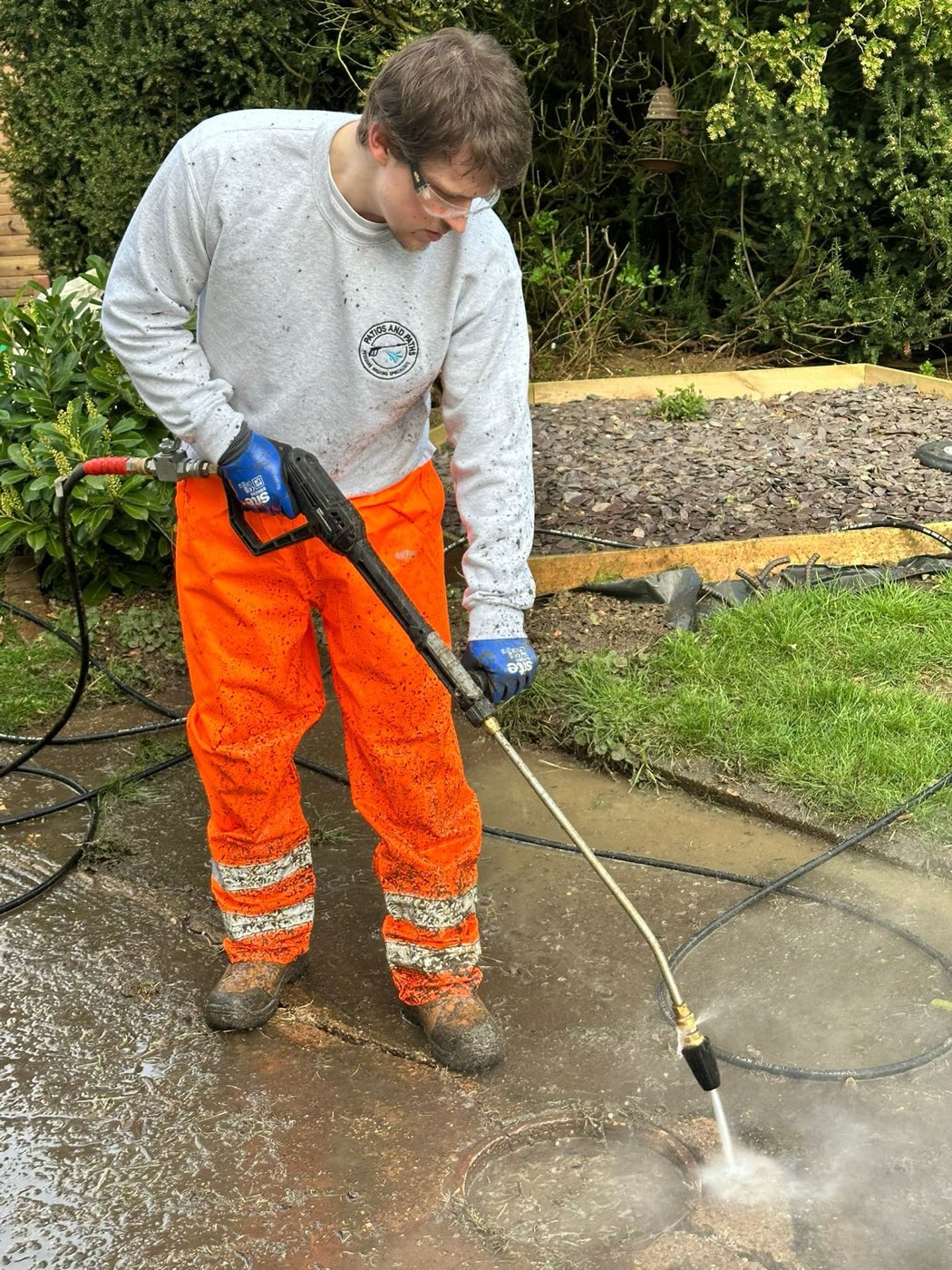
How to clean a driveway edging and border properly
Driveway edging collects the worst of the grime — here's how to clean it properly and get that crisp, finished look back.
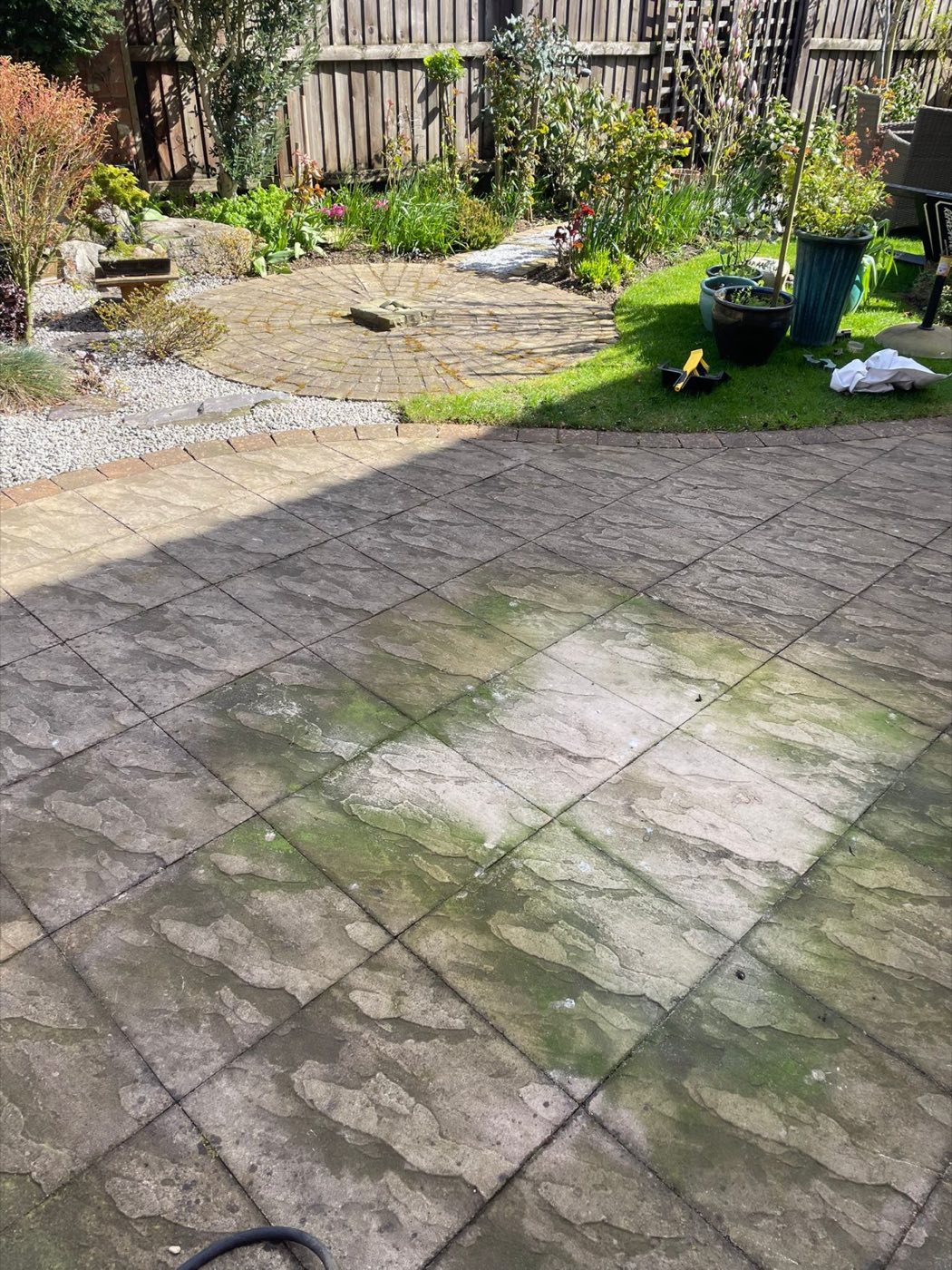
How to clean a tarmac driveway without damage
Tarmac needs a gentler touch than concrete — here's how to clean it properly without lifting the surface or leaving it looking worse than before.
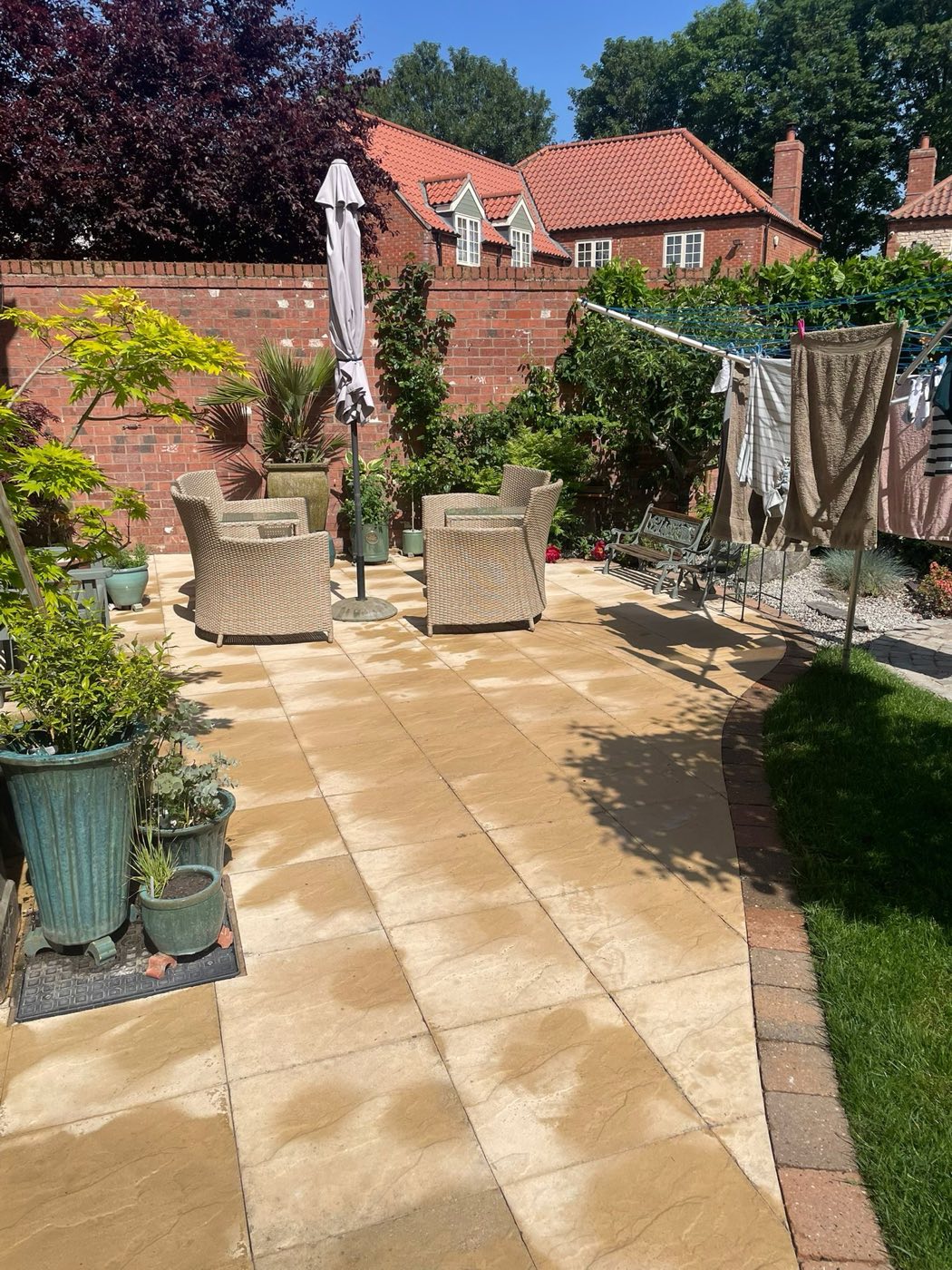
How to clean a driveway with oil stains properly
Oil stains are one of the toughest driveway problems — here's exactly what works, what doesn't, and when to call in a professional.