
12 October 2026 · Patios and Paths
How to clean a driveway after heavy rain
Heavy rain doesn't just leave puddles — it drags mud, silt and organic debris across your driveway, works grime into the joints of block paving, and kick-starts fresh algae and moss growth almost overnight. Knowing how to clean a driveway after heavy rain the right way means you get a genuinely clean result rather than smearing the mess around.
The short answer: let the surface dry for 24–48 hours first, then sweep or blow away loose debris, treat any biological growth, pressure-wash from the top down, and re-sand or re-seal if needed. The sections below go into proper detail.
Why heavy rain makes driveways so dirty
When it rains hard, water channels across every surface it can find. On a driveway it picks up dust, soil, tyre rubber, leaf tannins, bird mess and organic spores, then deposits them as a thin film when the water sits or evaporates. In Lincolnshire, where clay-heavy soils are common around villages like Branston, Heighington and Nettleham, that film is often a pale brown-grey mud that dries to a stubborn crust.
Worse, wet conditions are exactly what moss, algae and lichen need to colonise. Even a week of damp weather after a storm can see green growth spreading across paving joints and tarmac edges.
Step 1: wait for the surface to dry out
This step gets skipped more often than any other, and it causes most of the problems. Pressure-washing or scrubbing a surface that's still waterlogged just redistributes the mud rather than lifting it. Wait at least a day after the rain stops — two days if the weather stays overcast.
The only exception is if you have standing water that won't drain. In that case, brush the bulk of the muddy water off first, let it dry, then clean properly.
Step 2: sweep and clear loose debris
Before any water or detergent touches the driveway:
- Sweep off all loose grit, leaves, twigs and dried mud with a stiff outdoor broom
- Use a leaf blower on block paving if you have one — it clears debris from joints without disturbing the sand
- Bag up any significant organic material (wet leaves especially) — these rot and stain if left
- Check drainage gullies and edges are clear so wash-off water has somewhere to go
This stage alone can make a remarkable difference to how the finished job looks.
Step 3: treat biological growth before you wash
If you can see any green, black or orange growth — algae, moss or lichen — apply a patio and path biocide or algaecide at this point, before pressure-washing. Following the product directions, most need 15–30 minutes to begin killing the growth. Washing first and treating second is less effective because you remove the surface layer before the treatment can penetrate.
For block paving driveways with heavy joint moss, a dedicated block paving cleaner that contains a weed-inhibiting agent will do double duty here.
What about salt deposits and tide marks?
After very heavy rain you sometimes get white tide marks — these are calcium or mineral deposits carried up from the base material. A diluted solution of patio-safe acid cleaner (follow the label carefully, always wet the surface first) will dissolve them. Don't use undiluted bleach — it can bleach colour from some block paving and is harmful to garden edges.
Step 4: pressure-wash properly
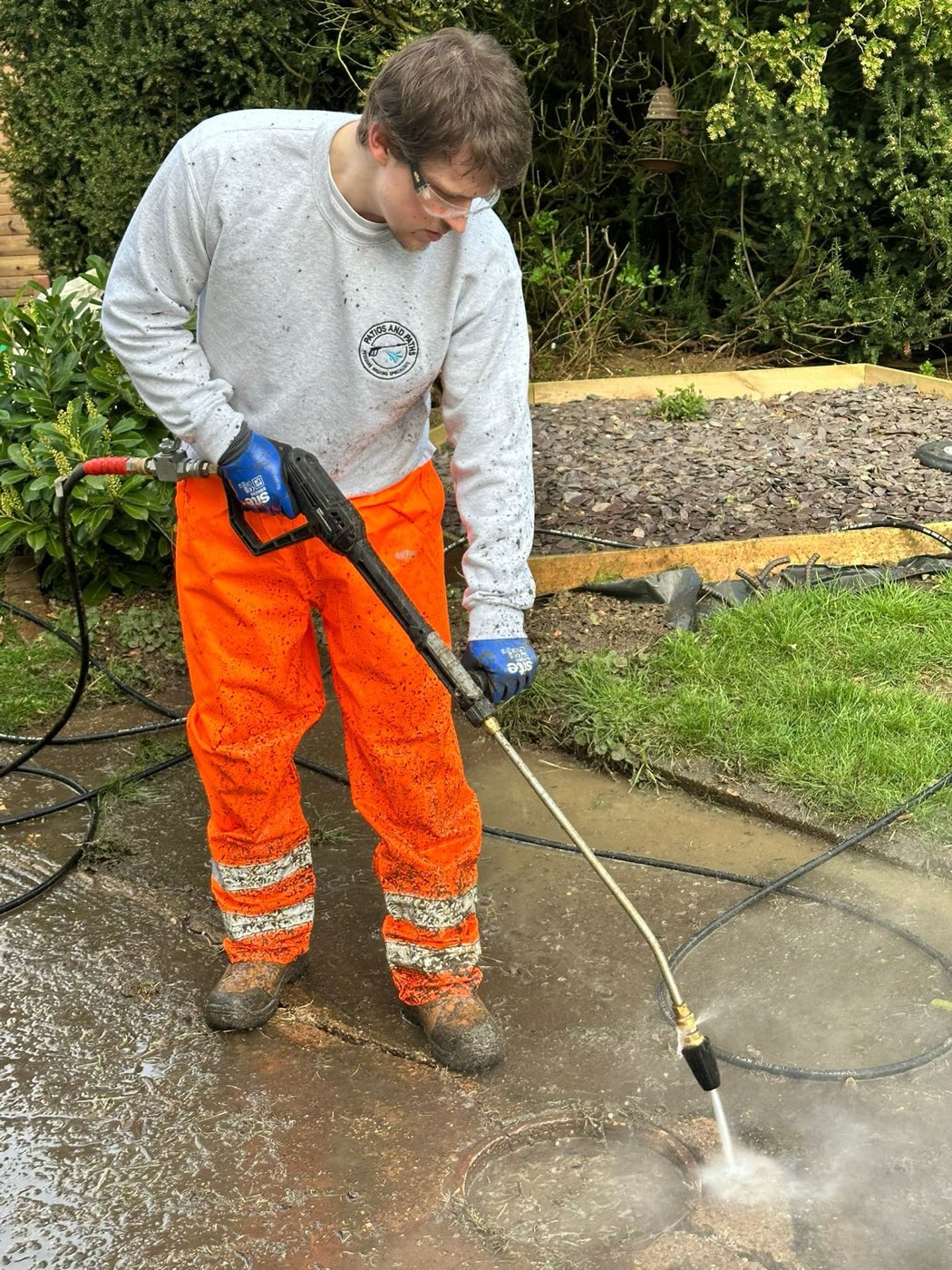
Work from the highest point of the driveway down toward the drainage point. Keep the lance moving — a slow, back-and-forth sweeping motion rather than hovering in one spot, which can erode jointing sand or score softer surfaces.
- Block paving: use a rotary surface cleaner attachment if you have one. It keeps the pressure even and doesn't disturb joint sand as aggressively as a lance
- Tarmac: a wide fan nozzle at medium pressure (around 1,500–2,000 PSI) is plenty — tarmac doesn't need hammering and high pressure can loosen the stone aggregate
- Resin-bound and resin-bonded: keep pressure lower still and avoid holding the lance close. These surfaces are relatively fragile compared to concrete or block paving
- Concrete: can handle higher pressure, but watch for any existing cracks — forcing water into them makes them worse
Our driveway cleaning guides go into more detail on individual surface types if you want to dig deeper.
Step 5: re-sand block paving joints if needed
Pressure-washing almost always displaces some kiln-dried sand from block paving joints. Once the surface is completely dry (usually the following day), brush kiln-dried jointing sand across the surface and work it into the joints with a stiff broom. This isn't optional — open joints allow weeds to germinate and water to undermine the bedding layer over time.
If your joints were already thin or weedy before the rain, this is a good moment to use a polymeric jointing sand, which sets firmer and resists weed germination better than standard kiln-dried sand.
Step 6: consider a sealer to make next time easier
A quality driveway sealer — the right type for your surface material — forms a barrier that makes mud and algae far easier to shift next time. It won't stop rain, but it dramatically reduces how deeply grime penetrates. If you've just done a thorough clean, you're already at the ideal starting point to seal. Take a look at our services overview to see what we cover across Lincolnshire.
How often should you do a full post-rain clean?
After unusually heavy or prolonged rainfall, a proper clean is worth doing. For routine Lincolnshire weather, a scheduled annual or biannual clean is usually enough to keep surfaces in good shape — though high-traffic driveways in areas like Saxilby or Skellingthorpe with clay surrounds may benefit from twice-yearly attention.
When it's worth calling a professional
If the driveway has heavy biological staining, the jointing has deteriorated significantly, or you're dealing with a large area, a professional clean will save you a full day's work and deliver a more thorough result. We cover driveways across Lincolnshire — from Lincoln city to the surrounding villages — and we carry the right equipment for every surface type.
If you'd like us to take care of it, get a free quote today. We'll assess the surface, use the right approach for your driveway material, and leave it looking genuinely clean — not just wet.
You can also browse the areas we cover to check we work in your part of Lincolnshire.
Frequently asked questions
How long should I wait to clean my driveway after it rains?
Ideally wait 24–48 hours for the surface to dry out. Cleaning while the driveway is still waterlogged just spreads mud around rather than removing it.
Can heavy rain damage block paving joints?
Yes, sustained heavy rainfall can wash out kiln-dried jointing sand over time, leaving joints open to weeds and water ingress. Topping up with fresh jointing sand after a clean is good practice.
Why does my driveway go green so quickly after rain?
Algae and moss spores are always present in the air and on the surface. Wet, damp conditions after rainfall give them the moisture they need to grow rapidly, especially on shaded or north-facing driveways.
Is pressure washing safe for all driveway types after heavy rain?
Not at the same settings. Block paving, concrete and tarmac all need different pressure levels and nozzle types. Resin-bound surfaces in particular need lower pressure to avoid surface damage.
Need a hand with yours? We cover Lincolnshire for patios, driveways, paths and more — see the areas we cover or browse our services. Get a free quote or call 07874 010739.
Keep reading
More on driveway cleaning
How to clean a driveway edging and border properly
Weedy, mossy joints can ruin an otherwise tidy driveway — here's how to clean block paving joints properly and stop the problem coming back.
How to clean a driveway edging and border properly
Driveway edging collects the worst of the grime — here's how to clean it properly and get that crisp, finished look back.
How to clean a tarmac driveway without damage
Tarmac needs a gentler touch than concrete — here's how to clean it properly without lifting the surface or leaving it looking worse than before.