
18 July 2026 · Patios and Paths
How to clean a resin-bound driveway safely
Resin-bound driveways have become one of the most popular choices for homes across Lincolnshire over the last few years, and it's easy to see why — they look smart, drain well, and stay relatively weed-free. But knowing how to clean a resin-bound driveway safely is where a lot of homeowners come unstuck. Use the wrong pressure or the wrong chemicals and you can lift stones, bleach the colour, or crack the resin matrix itself.
The good news is that resin surfaces are actually straightforward to maintain once you know what you're doing. Here's what works, what to avoid, and when it's worth calling in a professional.
Why resin-bound surfaces need special care
Unlike concrete or block paving, a resin-bound surface is made from small aggregate stones bound together with a clear UV-stable resin. That resin is tough, but it's not indestructible. High-pressure water jets aimed at the wrong angle can dislodge individual stones, leaving bald patches. Harsh chemicals — bleach in particular — can break down the binder over time and cause colour fade or surface brittleness.
Moss, algae, and general grime still build up on resin surfaces, especially in shaded spots or during a wet Lincolnshire winter. So the surface does need regular attention — just gentle attention.
What you can safely use to clean a resin-bound driveway
Warm water and a stiff brush
For routine maintenance — removing loose dirt, dust, and light grime — a stiff-bristled outdoor brush and warm water is all you need. Work in sections and rinse with a garden hose. This is also a good habit to get into a couple of times a year to stop organic matter building up in the pores of the surface.
A low-pressure wash
If your resin driveway needs a more thorough clean, a pressure washer can be used — but with care:
- Keep the pressure below 1,500 PSI (many domestic machines run too high straight out of the box)
- Use a wide fan nozzle (40-degree or higher) — never a pencil jet
- Hold the lance at least 30–40 cm from the surface
- Keep the jet moving — don't dwell in one spot
- Work with the direction of the surface, not against it
If you're not confident about your machine's pressure settings, it's genuinely worth getting a pro in. One slip with a turbo nozzle and you'll have loose stones across your drive.
Approved resin-safe cleaning solutions
For stubborn algae or green staining, use a cleaning product that's specifically marked as safe for resin-bound or resin-bonded surfaces. These are pH-neutral and won't attack the binder. Apply, leave to dwell for the time on the label, then rinse off gently.
Never use:
- Household bleach or sodium hypochlorite
- Solvent-based cleaners
- Acidic stone cleaners (designed for natural stone — they'll damage resin)
- Weed killers containing glyphosate directly on the surface
Dealing with weeds in a resin-bound driveway
A properly installed resin-bound surface is permeable and largely weed-resistant — but seeds blown in from outside can germinate in organic debris that gathers on top of the surface. If you spot weeds, don't pull them aggressively or use a scraper, as you can dislodge surrounding stones.
Instead, use a handheld weeder to lift the root cleanly, or spot-treat with a diluted, surface-safe weed control product. Regular brushing to remove leaf litter and debris in autumn is the best prevention — keeping the surface clear stops seeds getting a foothold in the first place.
For more on keeping driveways weed-free, see our driveway cleaning guide at /blog/topic/driveway-cleaning/.
Removing oil and fuel stains
Oil stains on resin are best dealt with quickly — the longer they sit, the deeper they penetrate. Blot up fresh oil with an absorbent material (cat litter or sawdust works well), then apply a dedicated resin-safe degreaser. Rinse carefully with low pressure.
Old, set-in oil stains are harder to shift without professional equipment. A specialist can use a heated low-pressure wash combined with a dwell treatment to lift deep staining without risking the surface. If you're in the Lincoln or Nettleham area and you've got a stubborn stain, we're happy to take a look.
How often should you clean a resin-bound driveway?
For most driveways in Lincolnshire, a proper clean once a year — ideally in spring after the worst of the winter damp — keeps things looking their best. If you have overhanging trees or a north-facing aspect, you may need attention twice a year as algae and organic debris build up faster in shade.
Between professional cleans, a quick brush-down every few weeks and a rinse with the hose after heavy leaf fall will go a long way.
When to call a professional
If your resin driveway has significant green or black algae coverage, oil staining, or patches of loose stones, it's worth having a professional clean and assessment rather than risking further damage yourself. We work with resin-bound surfaces regularly across Lincolnshire — from Cherry Willingham to Saxilby — and we know exactly how much pressure the surface will take.
A professional clean also gives you a chance to spot any areas where the resin bond is beginning to fail, so you can address repairs before they spread.
You can see the full range of surfaces we work with on our services page, and check whether we cover your area on our areas page.
Keep it looking good for years
Resin-bound driveways are a real investment — they typically cost significantly more than standard tarmac or concrete. Looking after the surface properly means it stays looking sharp for 15–25 years rather than becoming patchy, stained, or overgrown within five.
The rules are simple: low pressure, no harsh chemicals, regular brushing, and a proper professional clean once a year. Get those habits right and your drive will still be turning heads a decade from now.
Ready to get your resin driveway looking like new? Request a free quote and we'll come and assess the surface with no obligation.
Frequently asked questions
Can I use a pressure washer on a resin-bound driveway?
Yes, but you need to keep the pressure below 1,500 PSI and use a wide fan nozzle held at least 30–40 cm from the surface. Using a turbo or pencil jet at close range can dislodge the stones and damage the surface permanently.
Will bleach damage a resin-bound driveway?
Yes — bleach and other harsh chemicals can break down the resin binder over time, leading to colour fade, surface brittleness, and loose stones. Always use a pH-neutral cleaner that's specifically marked as safe for resin-bound surfaces.
How do I get rid of green algae on my resin driveway?
Use a resin-safe biocidal wash or algae remover — apply it, leave it to dwell as directed, then rinse off gently with low-pressure water. Avoid bleach-based products, which will cause more harm than the algae itself.
How long does a resin-bound driveway last if properly maintained?
A well-installed and properly maintained resin-bound driveway can last 15–25 years. Regular gentle cleaning, prompt attention to stains, and an annual professional wash all help it stay in good condition for the long term.
Need a hand with yours? We cover Lincolnshire for patios, driveways, paths and more — see the areas we cover or browse our services. Get a free quote or call 07874 010739.
Keep reading
More on driveway cleaning
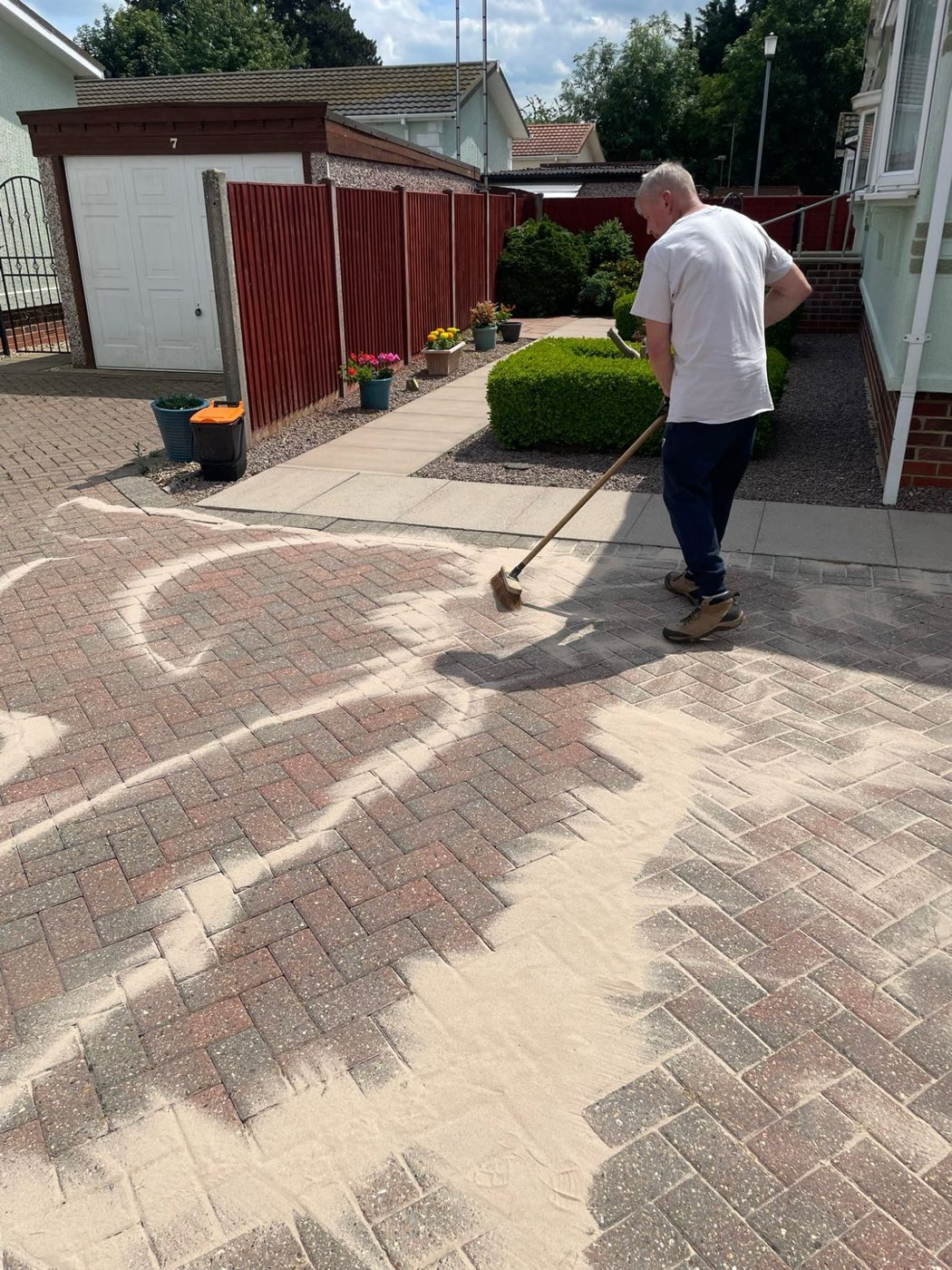
How to clean a resin driveway without causing damage
Resin driveways look stunning when clean — here's exactly how to keep yours that way without lifting the surface or voiding your warranty.
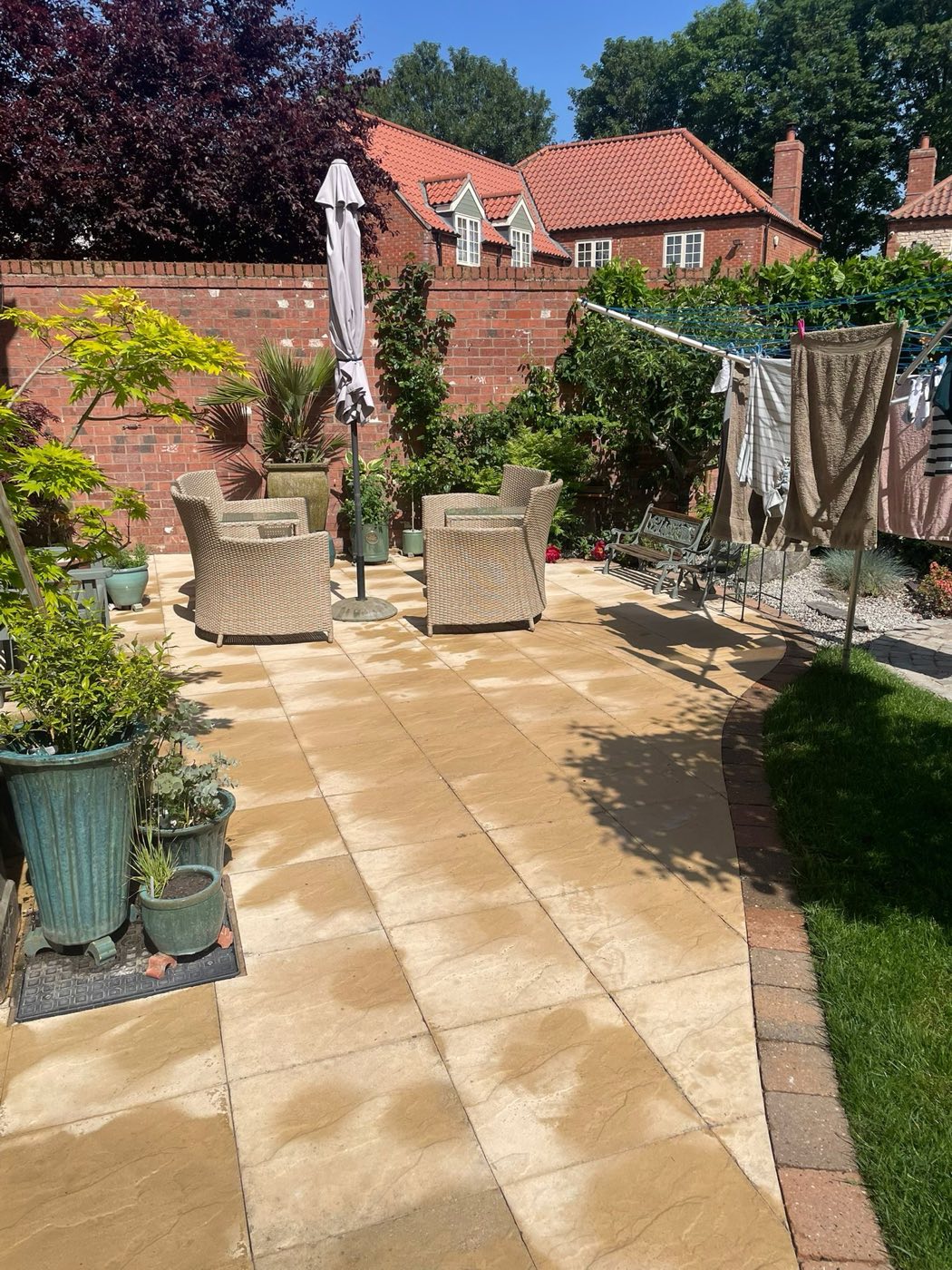
How to clean a driveway after heavy rain
Heavy rain leaves driveways muddy, stained and slippery — here's exactly how to clean yours back to a smart finish.
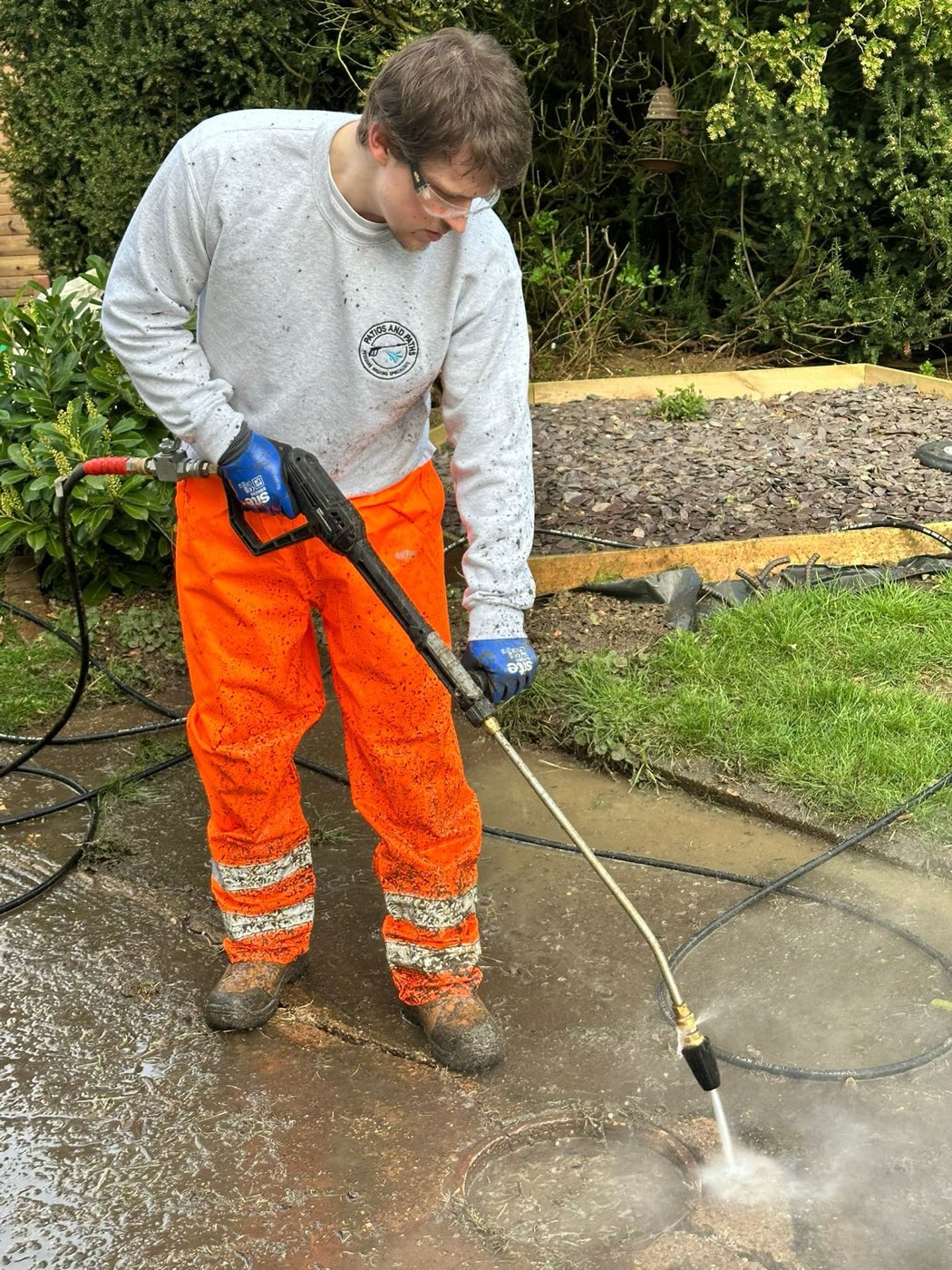
How to clean a driveway edging and border properly
Weedy, mossy joints can ruin an otherwise tidy driveway — here's how to clean block paving joints properly and stop the problem coming back.