
2 July 2026 · Patios and Paths
Preventing weeds in block paving: what actually works
Weeds pushing through block paving are one of the most common frustrations we hear about from homeowners across Lincolnshire. Preventing weeds in block paving isn't complicated, but it does require tackling the actual cause rather than just pulling them out by hand every few weeks. Get it right once and you can keep your driveway or path looking sharp for years.
Why weeds keep coming back
Here's the thing — the weeds growing in your block paving aren't usually rooting deep into the ground beneath. Most of them are germinating in the jointing sand between the blocks. Wind-blown seeds, bird droppings, and organic debris settle into those gaps, find a bit of moisture, and off they go.
Pulling them out leaves the root behind, and scraping them off at the surface just sets up the next generation. Until the joints themselves are dealt with, weeds will keep returning — often faster after rain or through autumn and winter when conditions are perfect for them.
Step one: a proper clean first
Before you do anything else, the surface needs to be clean. Any treatment — whether that's new jointing sand, a weed killer, or a sealant — will fail if it's applied over dirt, algae, or existing weed matter.
A professional pressure wash removes:
- Existing weeds and root matter from the joints
- Green algae and biological growth
- Compacted dirt and debris
- Loose or degraded old jointing sand
This is where we start with every block paving job we do across Lincolnshire, whether that's in Nettleham, Branston, or on the outskirts of Lincoln itself. You can browse our driveway and patio services here to get a sense of what's involved.
The most effective long-term solutions
Polymeric jointing sand
Once the surface is cleaned and the old sand has been cleared out, refilling the joints with polymeric sand is one of the best things you can do. Unlike standard kiln-dried sand, polymeric sand contains binding agents that harden when activated with water — effectively locking the joint closed.
This leaves very little room for seeds to settle and germinate. It also resists wash-out from rain far better than ordinary sand, so the joints stay full and stable. Applied correctly, polymeric sand can last several years before it needs refreshing.
Block paving sealant
Sealing block paving after cleaning and re-sanding adds another layer of protection. A good quality sealant:
- Binds the surface of the jointing sand further
- Makes the blocks themselves easier to clean
- Reduces the rate at which organic debris sticks and breaks down
- Gives the paving a refreshed, often enhanced appearance
Sealing isn't a permanent fix on its own — the joints still need to be in good condition first — but combined with polymeric sand it significantly reduces weed growth and makes ongoing maintenance much easier.
We go into more detail on the pros and cons of sealing in our driveway cleaning advice articles, which are worth a read if you're weighing up your options.
Regular maintenance between professional cleans
Even with the best preparation, a small amount of weed growth can occur over time — especially in areas with heavy tree cover or lots of birds. Keeping on top of it early means a quick brush or spot treatment rather than a full clearance job.
A few simple habits help:
- Sweep the surface regularly to stop organic matter building up in the joints
- Use a path weed killer on any early growth before it establishes
- Avoid power-hosing the joints yourself with a narrow lance — this strips out the sand and undoes the work
- Book a professional clean every couple of years to reset the surface properly
What doesn't work (and wastes your time)
Salt is sometimes suggested as a home remedy. It can kill weeds short-term but it damages the blocks over time, can affect nearby soil and plants, and washes away quickly. It's not a solution worth pursuing.
Boiling water works in the same limited way — it kills what's visible but doesn't prevent regrowth from seed, and it does nothing to address the joint conditions that allowed weeds in the first place.
Weed membrane laid under block paving during installation can help, but by the time you're dealing with an existing driveway it's not a practical retrofit option. And as mentioned above, it doesn't stop the weeds that grow in the joints from above anyway.
When is the best time to treat block paving?
Late spring or early autumn are the best times for a full clean, re-sand, and seal. The weather is generally settled enough for sealants to cure properly, and you're either getting ahead of the summer growing season or closing things down before winter wet sets in.
That said, we work through most of the year across Lincolnshire — places like Washingborough, Heighington, and Saxilby tend to have a lot of block-paved driveways that benefit from this kind of treatment, and we're often booked weeks in advance through spring and summer. If you're thinking about it, don't leave it too late in the season.
Ready to stop fighting the weeds?
A properly cleaned, re-sanded, and sealed block paving driveway or path is genuinely satisfying — and the difference in how often weeds return is dramatic. We cover homes and properties right across Lincolnshire, so if you'd like us to take a look at your block paving, get in touch for a free quote or use the quick quote form below.
No hard sell, no obligation — just honest advice on what your paving needs.
Frequently asked questions
Does polymeric sand really stop weeds in block paving?
Yes, it's one of the most effective solutions available. Polymeric sand hardens when wet, locking the joints and leaving very little room for seeds to take hold. It works best when applied after a thorough professional clean that removes all existing weed matter and old loose sand.
How often should block paving be professionally cleaned to keep weeds under control?
Every two to three years is a reasonable guide for most driveways, though shaded or heavily used areas may benefit from more frequent attention. Regular sweeping between cleans also makes a big difference.
Can I just use a weed killer instead of getting the paving cleaned?
Weed killer will clear what's growing but won't address the root cause — degraded or empty joints where seeds can settle. For lasting results, cleaning, re-sanding, and optionally sealing the surface is far more effective than weed killer alone.
Will sealing block paving prevent weeds completely?
Sealing helps significantly by stabilising the jointing sand and making the surface less hospitable to seeds, but it works best alongside polymeric sand rather than as a standalone treatment. No method eliminates weeds entirely, but the right combination reduces them dramatically.
Need a hand with yours? We cover Lincolnshire for patios, driveways, paths and more — see the areas we cover or browse our services. Get a free quote or call 07874 010739.
Keep reading
More on driveway cleaning
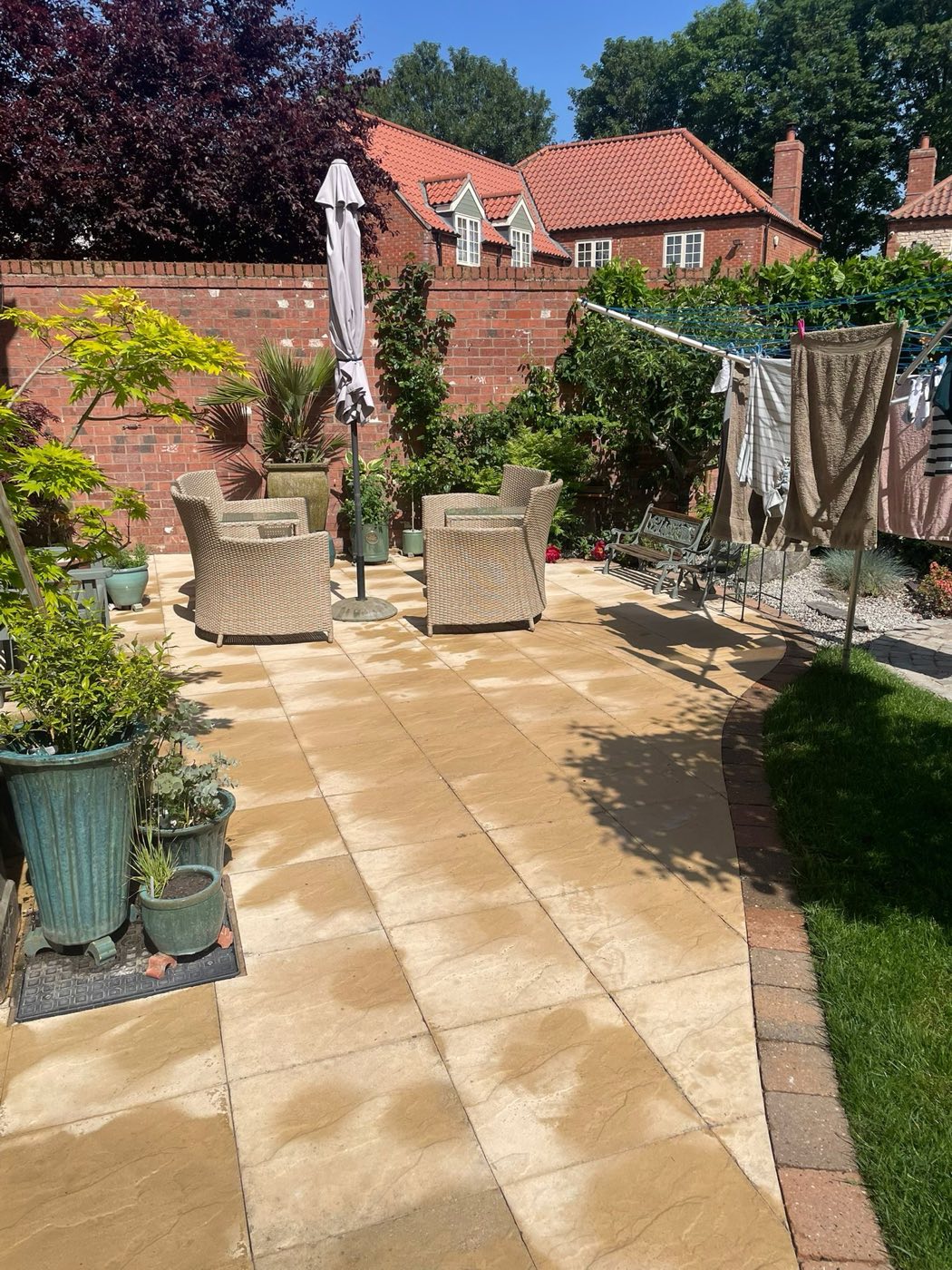
How to clean a driveway after heavy rain
Heavy rain leaves driveways muddy, stained and slippery — here's exactly how to clean yours back to a smart finish.
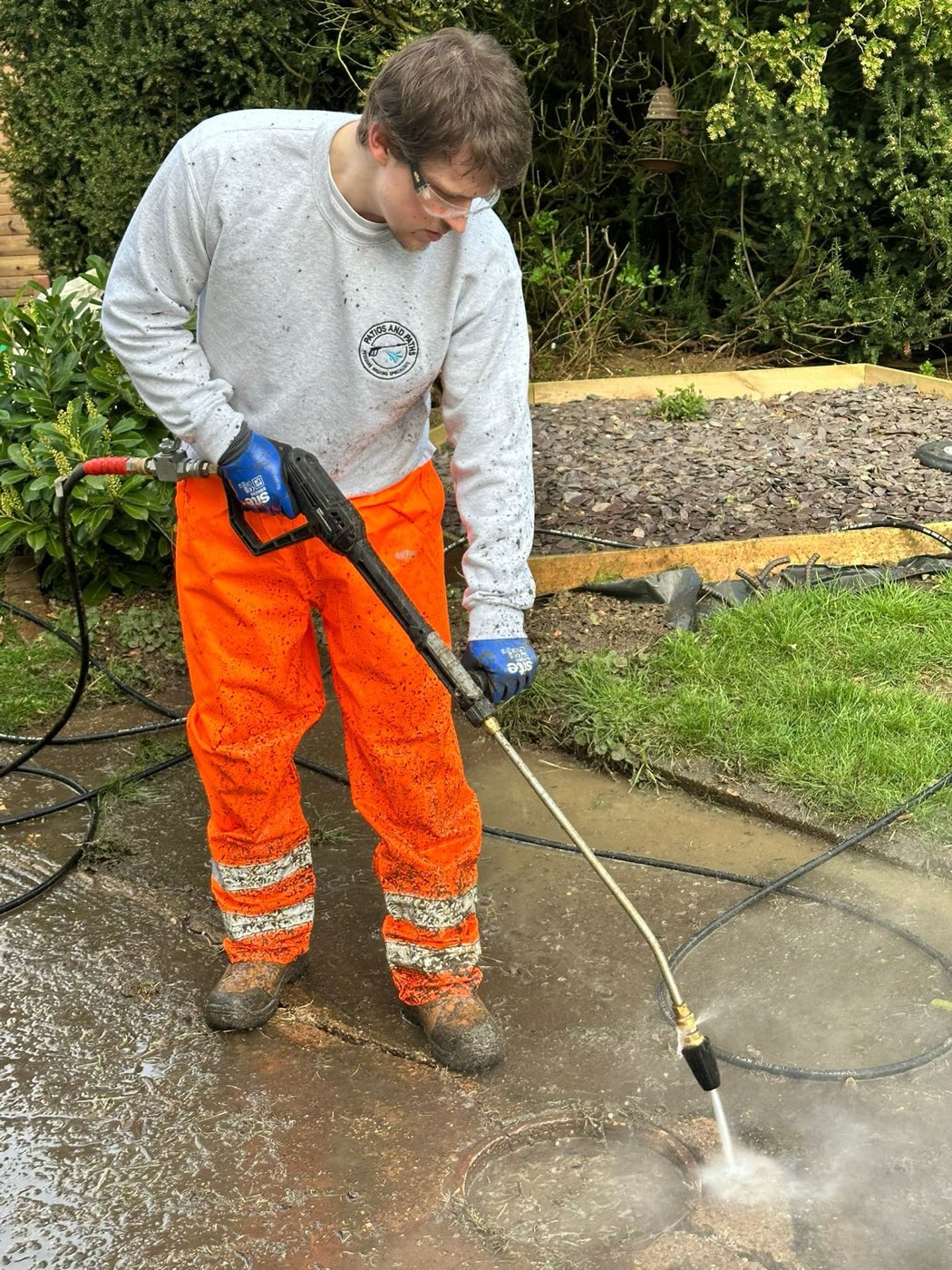
How to clean a driveway edging and border properly
Weedy, mossy joints can ruin an otherwise tidy driveway — here's how to clean block paving joints properly and stop the problem coming back.
How to clean a driveway edging and border properly
Driveway edging collects the worst of the grime — here's how to clean it properly and get that crisp, finished look back.