10 July 2026 · Patios and Paths
How often should you pressure wash your driveway?
Most driveways in Lincolnshire need a thorough pressure wash once a year — typically in spring or early autumn. That said, how often to pressure wash your driveway really depends on what it's made of, how much shade it gets, and how hard it works. A heavily used block-paved driveway in a damp, tree-lined spot will need more attention than a sunny concrete one with light traffic.
The good news is that once you know the signs to look for, timing a clean becomes straightforward.
How often to pressure wash your driveway: the honest answer
For most homes, once a year is the sweet spot. An annual clean keeps moss, algae and grime from building up to the point where they become genuinely hard to shift — or start causing damage. Leave it two or three years and you're often looking at more time, more effort, and sometimes a surface that's been stained or eroded by what's been sitting on it.
If your driveway is sealed, a yearly clean also protects the sealant and keeps it working properly for longer.
Signs your driveway is overdue a clean
Don't go purely by the calendar. Let the surface tell you when it's ready:
- Green or black patches — algae and moss are taking hold
- A general grey or brown film — traffic grime and organic debris have built up
- Weeds pushing through joints — especially in block paving, this means the surface hasn't been cleared in a while
- Slippery feel underfoot — wet algae is a real slip hazard, particularly in autumn
- Oil stains or tyre marks — these bond into the surface over time if left untreated
- Dull, flat colour — a well-cleaned driveway looks noticeably brighter and more defined
If you're ticking more than two or three of those boxes, it's time.
Does the surface type change how often you should clean?
Yes — different materials have different needs.
Block paving
Block paving is porous and the joints collect debris, seeds and moisture. It tends to green up quickly, especially in wetter years. Most block-paved driveways benefit from a clean every 12 months, with a re-sand of the joints every couple of years to keep weeds at bay. You can find more about our driveway cleaning services and what's involved for different surfaces.
Concrete and tarmac
These denser surfaces are more forgiving — every 12–18 months is usually enough unless there are heavy oil deposits or the driveway is heavily shaded.
Resin-bound and pattern-imprinted
These surfaces can look fantastic when clean and tired when dirty. Annually is sensible, and always check that the cleaning method suits the surface — high-pressure jets can damage pattern-imprinted coatings if used carelessly.
Gravel
Gravel doesn't get pressure washed in the traditional sense, but the edging, borders and any hard-standing sections around it still benefit from an annual clean.
How Lincolnshire's climate affects your cleaning schedule
Living in Lincolnshire means damp autumns and winters that really do encourage biological growth. Villages like Nettleham, Welton and Heighington — with older mature trees and hedges nearby — tend to see driveways green up faster than open, sunny plots closer to the city. In Lincoln itself, north-facing driveways in terraced streets can look visibly green by February if they weren't cleaned the previous autumn.
As a rough rule: if your driveway is shaded for most of the day, move to annual cleans as a minimum and consider a biocide treatment afterwards to slow regrowth.
The best time of year to pressure wash a driveway
Two windows work well:
Spring (March–May) — clears away winter's moss, grime and debris, and leaves your driveway looking its best for summer. Good timing if you're thinking about selling, hosting, or just want to enjoy a tidy front of house.
Early autumn (September–October) — removes the summer's accumulated traffic grime before damp conditions set in. A clean surface going into winter is slower to green up than a dirty one.
Avoid cleaning in hard frost — water can freeze in joints and cause damage — and be aware that a freshly cleaned driveway will look wet and slightly pale for a day or two while it dries fully.
What happens if you leave it too long?
Beyond the visual side, neglected driveways can develop real problems:
- Moss holds moisture against the surface and can work into cracks over time
- Algae makes surfaces slippery, which is a liability on a driveway with regular foot traffic
- Stains become permanent — oil and leaf tannins in particular bond into porous surfaces if left for months
- Joint sand washes away in block paving, letting weeds establish more easily
A regular clean is cheaper than repointing, resurfacing or dealing with a slip accident.
Should you seal your driveway after cleaning?
For block paving and some natural stone driveways, sealing after a clean is a smart move. It locks out moisture, slows biological regrowth and makes future cleans easier. It's not essential every year — typically every two to three years after a thorough clean is enough — but it does stretch the time between necessary washes.
If you're unsure whether your driveway would benefit from sealing, we're happy to have a look and give you an honest opinion when we quote.
Ready to get your driveway sorted?
Whether you're in Saxilby, Branston, Cherry Willingham or anywhere else across Lincolnshire, we offer free no-obligation quotes for driveway cleaning. Take a look at our full range of outdoor surface services or check which areas we cover — and when you're ready, get in touch for a quote. Most jobs can be booked within a week or two, and you'll see the difference the same day.
Frequently asked questions
How often should I pressure wash my block paving driveway?
Once a year is the standard recommendation for most block paving driveways. If your driveway is heavily shaded or surrounded by trees, you may find it greens up faster and benefits from a clean every 9–12 months rather than waiting a full year.
Is it bad to pressure wash a driveway too often?
Cleaning too frequently isn't usually a problem with a professional-grade machine set at the right pressure, but aggressive DIY pressure washing done repeatedly can wear down block paving joints and some coatings over time. Once or twice a year is plenty for most surfaces.
What time of year is best to pressure wash a driveway?
Spring and early autumn are both ideal. Spring clears winter growth before summer, while an autumn clean removes accumulated grime before damp conditions encourage moss and algae over winter. Avoid cleaning in freezing temperatures.
Will my driveway go green again quickly after cleaning?
All outdoor surfaces will eventually regrow algae and moss, especially in Lincolnshire's damp climate. Applying a biocide treatment after cleaning significantly slows regrowth — many customers find their driveway stays clean for 12–18 months longer as a result.
Need a hand with yours? We cover Lincolnshire for patios, driveways, paths and more — see the areas we cover or browse our services. Get a free quote or call 07874 010739.
Keep reading
More on driveway cleaning
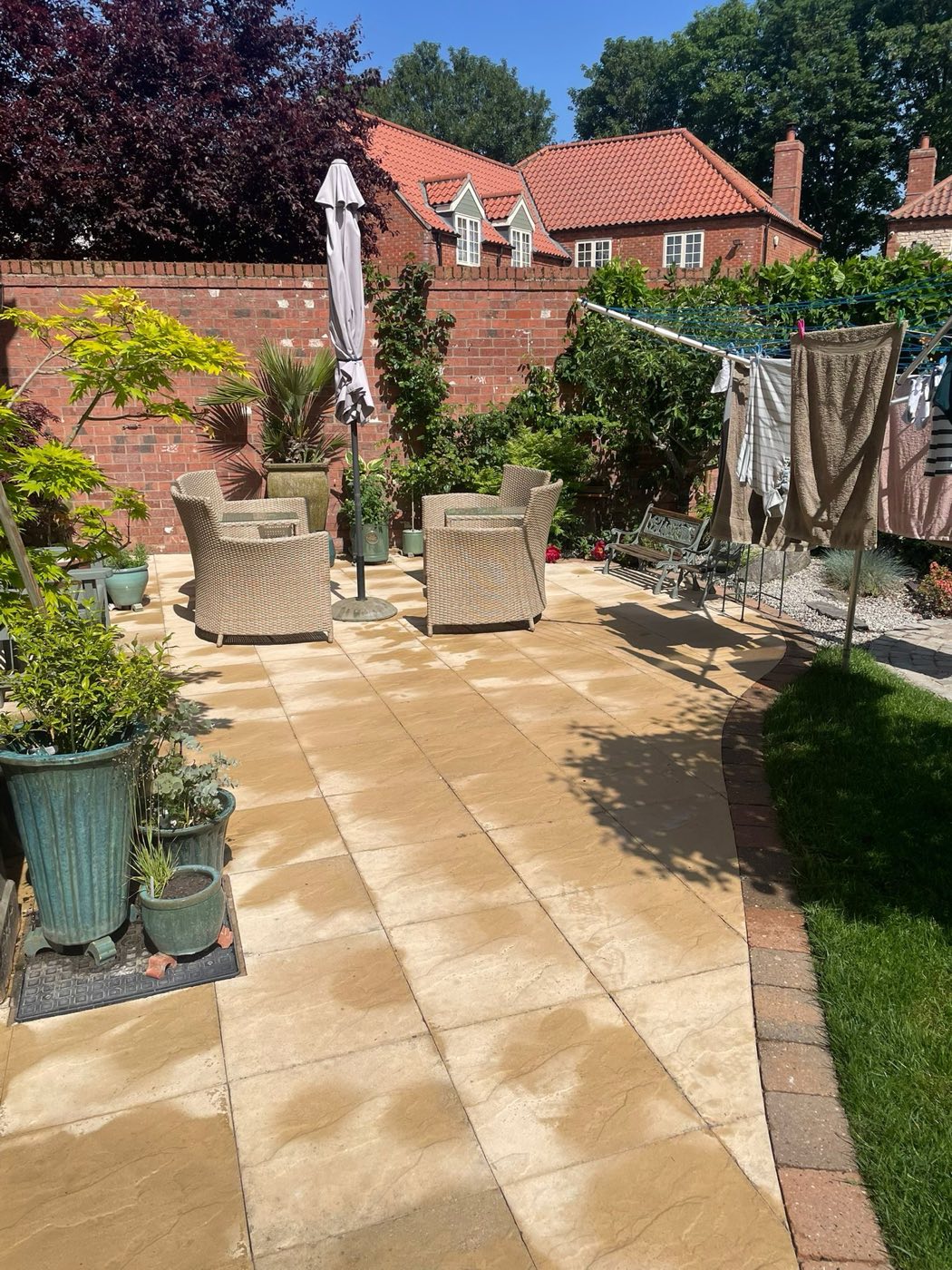
How to clean a driveway after heavy rain
Heavy rain leaves driveways muddy, stained and slippery — here's exactly how to clean yours back to a smart finish.
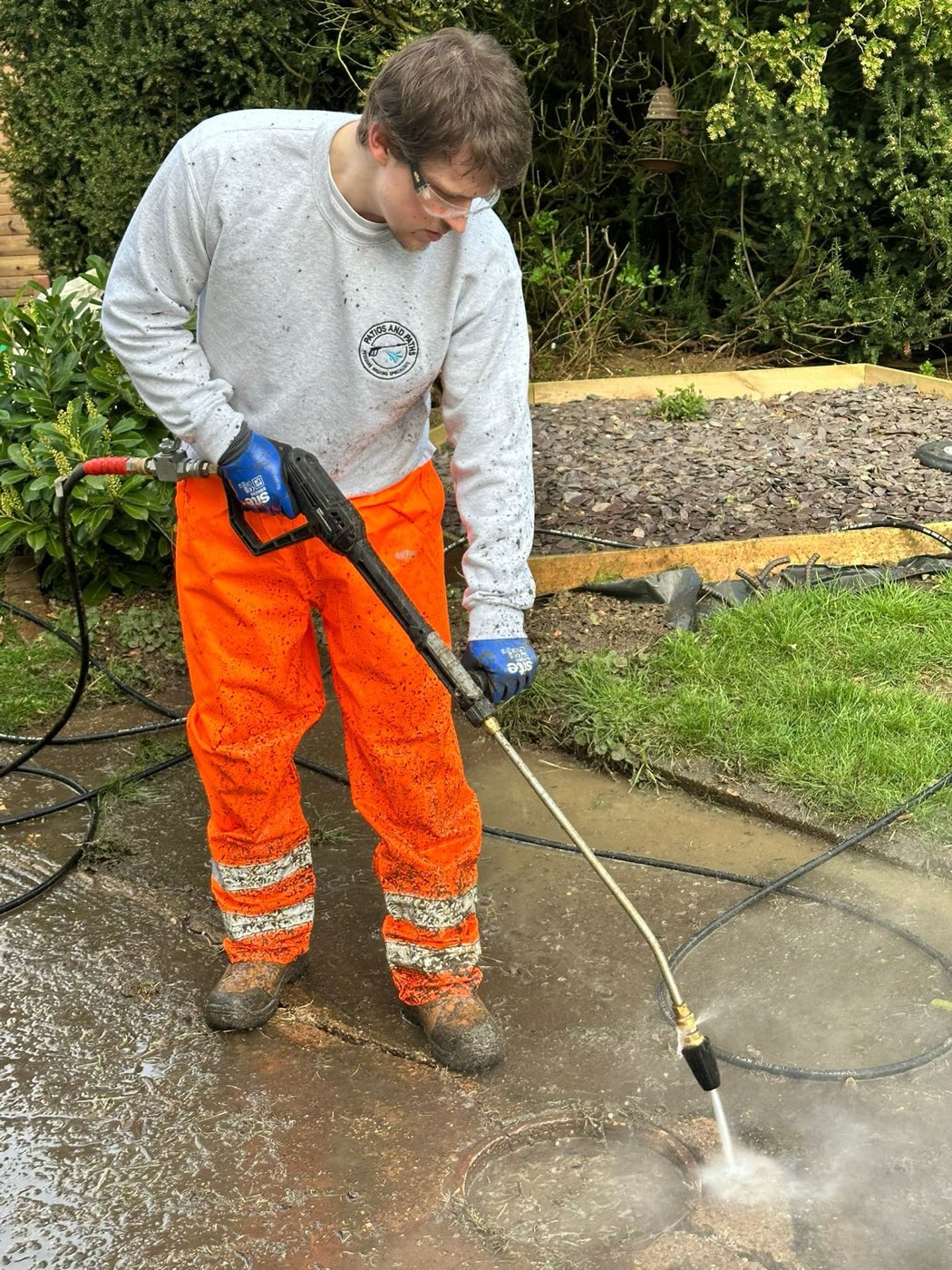
How to clean a driveway edging and border properly
Weedy, mossy joints can ruin an otherwise tidy driveway — here's how to clean block paving joints properly and stop the problem coming back.
How to clean a driveway edging and border properly
Driveway edging collects the worst of the grime — here's how to clean it properly and get that crisp, finished look back.