
8 September 2026 · Patios and Paths
How to clean a patio with stubborn stains properly
A freshly cleaned patio can transform the whole feel of your garden — but if you've tried hosing yours down and still can't shift those dark marks, you'll know that not every stain responds to the same treatment. Knowing how to clean a patio with stubborn stains means identifying what you're dealing with first, then using the right approach for that particular problem. Get it wrong and you risk bleaching your slabs, spreading the stain deeper, or etching the surface permanently.
Here's what we've learned from cleaning hundreds of patios across Lincolnshire — from Lincoln city gardens to the newer estates around Branston and Heighington.
Why stubborn stains are different from general dirt
General grime — green algae, soil, leaf debris — sits on the surface and lifts away with a pressure washer and the right detergent. Stubborn stains are different. They've either bonded chemically with your paving material, penetrated into its pores, or been left long enough to cure hard.
The most common culprits we see are:
- Rust stains — orange-brown streaks from metal furniture, pots with drainage holes, or iron compounds in the stone itself
- Tannin stains — dark brown marks from fallen leaves, especially oak and walnut, left wet over winter
- Grease and cooking oil — grey-black patches under barbecues or near outdoor kitchen areas
- Efflorescence — white powdery deposits caused by soluble salts rising through concrete or mortar
- Paint and filler splashes — from decorating work on adjacent walls or fences
- Red wine and food — more common than you'd think, especially on lighter sandstone or concrete slabs
Each of these needs a different fix. Applying a generic bleach product to a rust stain, for example, can actually make it darker and harder to shift.
Treating rust stains on paving
Rust responds to acid-based treatments — specifically oxalic acid or proprietary rust removers formulated for stone and concrete. Apply carefully, leave for the stated dwell time, then rinse thoroughly. Always test on a hidden corner first, particularly on natural stone like sandstone or limestone, which can etch or discolour if the product is too strong or left too long.
If the rust is coming from within the stone itself (iron inclusions), surface treatment helps temporarily but the stain may return. Sealing after cleaning can slow this down.
Removing tannin and leaf stains
Tannin marks are some of the trickiest because they look similar to algae but don't respond to the same treatments. An alkaline cleaner (rather than an acid) works best here — sodium hypochlorite-based products or specialist patio degreasers with a high pH. Apply, allow to dwell, agitate with a stiff brush, then rinse.
For very stubborn tannin on Indian sandstone or similar porous surfaces, a light hot-water pressure wash after chemical treatment usually finishes the job cleanly. Cold water alone rarely lifts deep tannin staining once it's set.
Dealing with grease and cooking oil
What not to do
Pressure washing a grease stain without pre-treating it just spreads the oil further into the paving. The same goes for scrubbing with washing-up liquid — it may lift the surface layer but leaves a residue that attracts dirt faster than before.
What actually works
Use a dedicated alkaline degreaser, applied neat or at a strong dilution, directly to the stain. Leave it to emulsify the grease — usually 10 to 20 minutes — then scrub with a hard-bristled brush. Rinse well with hot water if you have it, or a pressure washer set to a medium fan. Repeat for old, deep-set oil marks. Two or three treatments on a serious stain is normal.
For patios near Saxilby or Welton where we often see older concrete slabs, a poultice method (an absorbent paste mixed with solvent, left overnight under plastic sheeting) can draw grease out of dense concrete that won't otherwise respond.
Clearing efflorescence and salt deposits
Efflorescence looks like a chalky white haze or crust, usually on newer block paving or concrete. It's actually soluble salts migrating upward through the material — often worse in the first year or two after installation, or after a very wet Lincolnshire winter.
Dilute hydrochloric (muriatic) acid solutions will dissolve efflorescence, but this is not a job for guesswork — the concentration needs to be right for your surface, and brick or natural stone can be permanently damaged by getting it wrong. Proprietary efflorescence removers are safer for a DIY attempt. Always neutralise and rinse thoroughly afterwards.
In many cases, efflorescence does reduce on its own over time as salts exhaust themselves. Sealing the surface after removal helps prevent recurrence.
Paint splashes and dried filler
For small splashes, a plastic scraper is your first tool — not metal, which scratches. Specialist paint removers formulated for exterior masonry work on many paints once the bulk is scraped away. For larger areas of spilled paint, professional removal is usually the safer route, particularly on textured or natural stone surfaces where aggressive chemicals can alter the finish.
When DIY isn't enough
Some stains — particularly deep rust, extensive tannin on porous stone, or years of ingrained grease — genuinely need professional-grade hot-water pressure washing combined with the right chemicals, applied in the right order. We carry the equipment and the right products to deal with most stains safely, without risking damage to your slabs.
If you're in the Lincoln area, Cherry Willingham, Washingborough or anywhere else across Lincolnshire, we're happy to take a look and give you an honest view on what's achievable before you commit to anything.
For more on the full range of surfaces we clean, see our services overview or browse our areas we cover across Lincolnshire. You can also read more in our patio cleaning guides if you want to go deeper on a specific surface type.
Ready to get those stains shifted?
If you've tried what you can and the marks are still there — or you'd simply rather not risk making things worse — we're here to help. Get a free quote and we'll let you know exactly what we can do for your patio.
Frequently asked questions
Can I use bleach to remove rust stains from my patio?
No — bleach won't remove rust and can actually darken the stain or damage certain stone types. Use an oxalic acid-based rust remover or a proprietary product designed for paving instead.
Why does my patio still look stained after pressure washing?
Pressure washing shifts surface dirt and algae but won't break down chemical stains like rust, tannin or grease. Those need pre-treatment with the right chemical before washing.
Is it safe to use acid cleaners on sandstone or limestone?
Acid cleaners can etch and permanently damage calcareous stones like limestone and some sandstones. Always test a small hidden area first, and consider using a specialist pH-neutral or alkaline cleaner on these surfaces.
How long does it take to treat a stubborn grease stain on a patio?
Most grease stains need at least one dwell-and-scrub treatment of 15 to 20 minutes, often followed by a second application. Heavily set stains may need a poultice treatment left overnight.
Need a hand with yours? We cover Lincolnshire for patios, driveways, paths and more — see the areas we cover or browse our services. Get a free quote or call 07874 010739.
Keep reading
More on patio cleaning
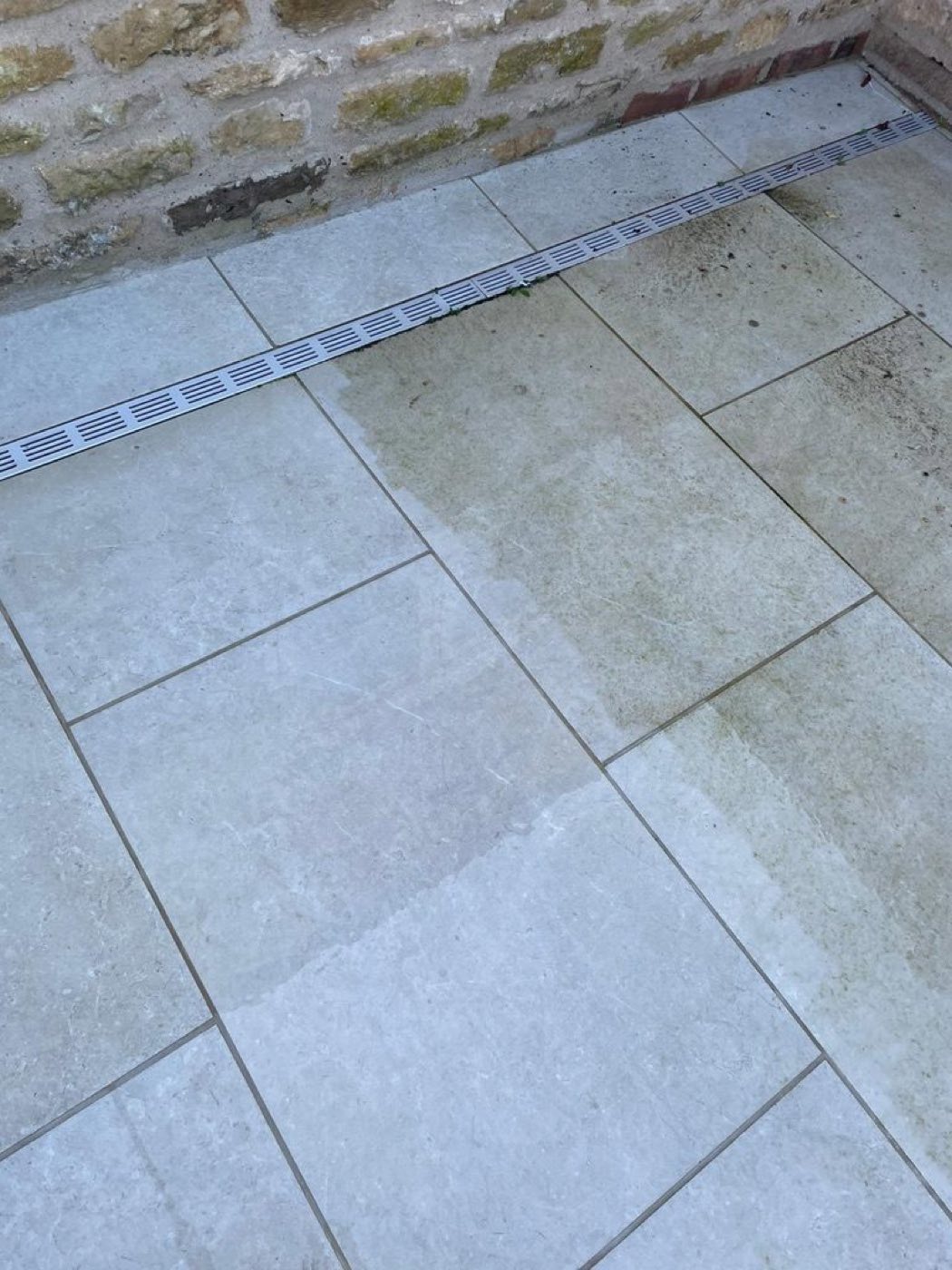
How to remove green algae from a patio or path
Green algae is the number-one reason patios and paths turn slippery — here's how to shift it properly and slow its return.
How to remove moss from a patio roof runoff
Roof runoff dumps moss spores straight onto your patio — here's how to clear it properly and stop it coming back.
How to clean a patio drain and gully properly
A blocked patio drain causes standing water, slippery surfaces and bad smells — here's how to clean it properly and keep it flowing all year.