
6 September 2026 · Patios and Paths
How to clean patio furniture pads and cushions
Knowing how to clean patio furniture pads and cushions properly makes a real difference to how your whole outdoor space looks and feels. You can pressure-wash every slab to perfection, but if the chair cushions are grey-green and mildewed, the garden still looks tired. The good news is that most outdoor cushions respond well to the right approach — no fancy products needed.
Why outdoor cushions go green and mouldy so fast
Lincolnshire's climate doesn't do outdoor furniture many favours. Long, damp winters followed by muggy springs create ideal conditions for mould, mildew, and green algae to colonise fabric and foam. Cushions stored slightly damp, or left out through autumn, are especially vulnerable.
Shaded spots — a north-facing terrace in Nettleham, a covered seating area in Skellingthorpe — stay wet for longer after rain, which speeds up the process. Even UV-resistant fabric isn't immune once moisture gets into the foam core.
Check the care label first
Before you start, flip each cushion over and check for a care label. Most modern outdoor cushions use solution-dyed acrylic fabric (brands like Sunbrella are common) or polyester with a water-resistant coating. These can take a mild scrub. Older foam-filled cushions with cotton covers need more caution — vigorous scrubbing or soaking can cause the fabric to shrink or the foam to break down.
If there's no label, treat it as if it's delicate.
How to clean patio furniture pads and cushions: step by step
This method works for the majority of standard outdoor cushions with synthetic covers.
- Brush off loose debris first. Take the cushion outside and use a stiff-bristled brush to remove dry dirt, leaves, and any loose mould spores. Do this before adding any water — wetting first turns dry mould into a smeared mess.
- Mix a mild cleaning solution. Combine one part washing-up liquid with one part white vinegar in a bucket of warm water. For heavier mould, add a small amount of non-bleach mould remover. Avoid chlorine bleach on coloured fabrics — it strips the dye and weakens the fibres.
- Scrub gently with a soft brush. Apply the solution with a scrubbing brush, working in circular motions. Pay attention to seams and piping where mould tends to sit deepest. Don't scrub so hard that you pull at the stitching.
- Rinse thoroughly. Use a garden hose to rinse the cushion completely. Any soap residue left in the foam will attract dirt faster once the cushion dries.
- Stand them on their edge to dry. Never lay cushions flat on concrete to dry — they'll stay damp underneath and grow mould again within days. Lean them against a wall or drape them over a railing so air can circulate on both sides.
- Allow 24–48 hours before using. Foam holds moisture longer than it looks. If you sit on a not-quite-dry cushion, you compress the foam and trap moisture inside.
Dealing with stubborn green algae stains
If green algae has really set in — common on cushions left out over a Lincolnshire winter — a diluted outdoor fabric cleaner or a specialist algae treatment (available at most garden centres) can help. Apply it, leave it for 10–15 minutes, then scrub and rinse. You may need two rounds for heavily stained foam pads.
Can you put outdoor cushion covers in the washing machine?
If the covers zip off, yes — most synthetic outdoor covers can go in on a cool, gentle cycle. Use a mild detergent and skip the fabric softener, which can clog the fabric's water-resistant coating. Air dry only; tumble drying breaks down UV-resistant treatments.
Cleaning hard seat pads and woven furniture
Plastic wicker or rattan furniture with fixed seat pads needs a different approach. Mix the same mild solution and use a soft brush to get into the weave. A low-pressure rinse from a garden hose works well here — avoid a full-power jet wash on wicker as it can crack or loosen the weave at the joints.
For aluminium or steel frames, wipe down with the same soapy water and dry off with a cloth to prevent water marks.
Keeping cushions cleaner for longer
A few simple habits make a big difference:
- Bring cushions in when rain is forecast, or invest in a garden storage box with drainage holes.
- Store completely dry at the end of the season. Damp cushions in a sealed bag or shed will be solid with mould by spring.
- Apply an outdoor fabric protector spray once the covers are clean and dry. It won't make them waterproof but it does slow moisture absorption significantly.
- Shake and air them weekly during summer to stop moisture building up in the foam.
For more advice on keeping your whole outdoor space in good shape, take a look at our patio cleaning guides — there's plenty there on tackling algae, moss, and seasonal grime on all kinds of surfaces.
When the cushions are clean but the patio isn't
It's worth pausing here — clean cushions on a green, slippery patio look odd, and the algae on your slabs will just re-colonise the fabric faster. If your patio or path surfaces need attention too, we cover all kinds of outdoor surfaces across Lincolnshire, from Indian sandstone in Branston to concrete slabs in Cherry Willingham.
You can see the full range of surfaces we restore on our services page.
Ready for a fresh start?
If the cushions are sorted but the patio, path or driveway still needs work, we'd be happy to help. We work across Lincolnshire and can usually turn around a quote quickly. Request a free quote and we'll get back to you promptly.
Frequently asked questions
Can I use a pressure washer on outdoor cushions?
It's best avoided. A pressure washer can force water deep into the foam core, making it very difficult to dry fully, and can damage fabric weave and stitching. A scrubbing brush and garden hose give much better results with far less risk.
Why do my patio cushions go mouldy even when I store them?
The most common reason is storing cushions before they're completely dry. Even cushions that feel dry on the outside can hold moisture in the foam core, and in a sealed storage box or bag that moisture has nowhere to go. Always allow 48 hours of airflow before storing.
Will bleach get rid of the green stains on my outdoor cushions?
Chlorine bleach can remove stains but it also strips colour from dyed fabrics and weakens synthetic fibres over time. A diluted white vinegar solution or a specialist non-bleach outdoor fabric cleaner is safer and usually just as effective.
How often should I clean outdoor cushions?
A thorough clean at the start and end of the season is the minimum. If cushions are used regularly or your garden is particularly shaded and damp, a mid-summer clean helps prevent mould from getting a foothold.
Need a hand with yours? We cover Lincolnshire for patios, driveways, paths and more — see the areas we cover or browse our services. Get a free quote or call 07874 010739.
Keep reading
More on patio cleaning
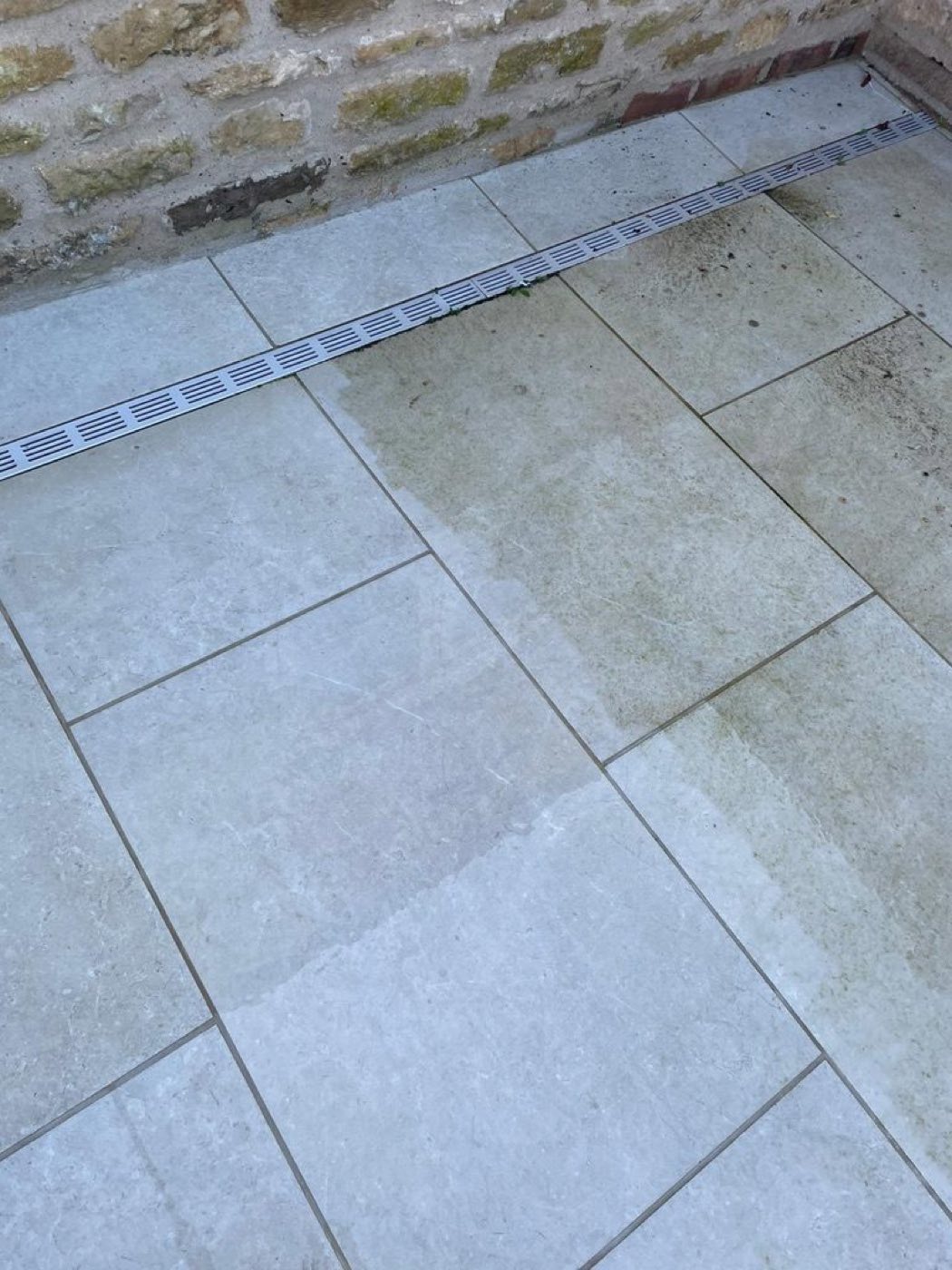
How to remove green algae from a patio or path
Green algae is the number-one reason patios and paths turn slippery — here's how to shift it properly and slow its return.
How to remove moss from a patio roof runoff
Roof runoff dumps moss spores straight onto your patio — here's how to clear it properly and stop it coming back.
How to clean a patio drain and gully properly
A blocked patio drain causes standing water, slippery surfaces and bad smells — here's how to clean it properly and keep it flowing all year.