20 July 2026 · Patios and Paths
How to clean block paving: a step-by-step guide
Block paving is one of the most popular driveway and path surfaces in Lincolnshire, and for good reason — it looks smart, it lasts for decades, and it handles heavy use well. But it does need looking after. If you're wondering how to clean block paving, the short answer is: remove the weeds, treat any stains, pressure wash from the right angle and distance, then re-sand the joints. Do it in that order and you'll get a result that looks genuinely like new.
Below we'll walk through each stage in detail, so you know what's involved whether you're tackling it yourself or deciding whether to call someone in.
Why block paving gets dirty so quickly
Block paving has a lot of joints — those thin sand-filled gaps between each brick. Those joints trap dirt, hold moisture, and give weeds and moss the perfect foothold. Add the fact that most driveways face the road (so they catch oil drips, rubber marks and general grime), and you can see why even a relatively new block paved driveway can look tired within a couple of seasons.
In wetter parts of Lincolnshire — around Washingborough, Branston and the lower-lying villages near the Witham — surfaces tend to stay damp longer, which speeds up green algae and moss growth. It's not a reflection of how well you look after the place; it's just the environment doing what it does.
What you need before you start
If you're doing this yourself, gather the following before you begin:
- A stiff-bristled broom or a long-handled brush
- A pressure washer (ideally 130–150 bar — a lightweight consumer machine under 100 bar will struggle)
- A rotary surface cleaner attachment, if you have one — this gives a much more even finish than a lance alone
- A patio or driveway cleaner solution suitable for block paving (avoid anything too acidic)
- Kiln-dried jointing sand
- A weed killer or a stiff narrow-bladed tool for the joints
- Eye protection and waterproof clothing
Have everything ready before you start. Stopping halfway through and leaving wet blocks to dry before you've finished is a common mistake — you end up with tide marks.
Step 1: clear the joints of weeds and debris
This is the part most people skip, and it's why their results disappoint them.
Start by running a stiff broom across the whole surface to dislodge loose moss, leaves and surface grit. Then deal with any weeds growing in the joints. You can use a purpose-made weed knife or a flat-head screwdriver to work along the gaps — or apply a path weedkiller a week beforehand and let it do the work for you. Either way, dead weed matter in the joints will block your pressure washer and make the re-sanding step harder.
Step 2: treat any stains
Oil stains, rust marks and tyre scuffs all need pre-treating before you pressure wash — the washer alone won't shift them.
- Oil and grease: Apply an alkaline degreaser, work it in with a brush and leave for 15–20 minutes before rinsing.
- Rust marks: A diluted oxalic acid solution works well on most block paving types — but test a small hidden area first.
- Tyre marks and general traffic grime: A dedicated block paving cleaner, left to dwell for 10 minutes, is usually enough.
For stubborn oil stains, you may need to repeat the treatment. We've written more about this in our guide to driveway cleaning across Lincolnshire.
Step 3: pressure wash the surface
This is where the transformation happens — but technique matters.
Use the right pressure and angle
Hold the lance at roughly 45 degrees to the surface and keep it moving steadily. Too close (under 15 cm) and you'll blast the sand out of the joints, widen the gaps and potentially pit the surface of softer blocks. Too far away and you won't lift the ingrained dirt.
A rotary surface cleaner makes this step much faster and gives a more consistent result. It also reduces the streaking you can get with a standard lance.
Work in sections
Don't try to do the whole driveway in one go without a plan. Work in overlapping passes from one end to the other, so you're always washing dirty water away from the area you've already cleaned. Rinse the whole surface once you're done and let it dry fully — ideally 24 hours in dry weather — before you move on.
Step 4: re-sand the joints
This step is essential and often missed by DIYers. Pressure washing removes a lot of the kiln-dried sand from the joints, which is what holds the blocks stable and helps keep weeds out.
Once the surface is completely dry, spread kiln-dried jointing sand across the whole area and brush it into the joints with a stiff broom. Work in multiple directions. Repeat the process once the first layer has settled — often you'll need two or three passes to fill the joints properly. Sweep off any excess sand before it gets wet.
If the joints are very deep or the blocks have shifted, it may be worth considering a polymeric jointing compound rather than plain kiln-dried sand — it sets harder and resists weeds better over time.
When to call a professional
Block paving cleaning is one of those jobs that sounds straightforward but takes a full day and the right equipment to do properly. If your driveway is large, heavily stained or has significant weed and moss growth — particularly if you're in an area like Nettleham or Cherry Willingham where shaded driveways tend to accumulate a lot of biological growth — getting a professional in is often the more cost-effective choice once you factor in time, equipment hire and materials.
We cover driveways, paths and patios across Lincolnshire and can usually give you a clear price after a quick look at photos.
Ready to get your block paving looking its best?
If you'd rather hand this job over to someone who does it every day, we'd be happy to help. We work throughout Lincolnshire — Lincoln, North Hykeham, Skellingthorpe, Heighington and the surrounding villages — and we can check what we offer and get in touch for a free quote.
Just head to the quote form below and tell us what you've got — we'll come back to you quickly with a straightforward price and no obligation.
Frequently asked questions
How often should block paving be cleaned?
Most block paved driveways benefit from a thorough clean every one to two years. If your driveway is shaded or in an area with heavy tree cover, you may need to clean it annually to stay on top of moss and algae growth.
Will pressure washing remove the sand from my block paving joints?
Yes, pressure washing does remove some jointing sand — which is why re-sanding with kiln-dried sand after cleaning is an important final step. Skipping it leaves the joints vulnerable to weeds and allows blocks to shift over time.
Can I use any pressure washer on block paving?
A consumer pressure washer under 100 bar can struggle to lift ingrained dirt effectively. Aim for 130–150 bar and use a rotary surface cleaner attachment if possible — it gives a more even clean and reduces the risk of streaking or pitting the block surface.
How long does block paving take to dry after cleaning?
In warm, dry weather, block paving is usually dry enough to re-sand within 24 hours. In cooler or overcast conditions, allow 48 hours to be safe — the surface needs to be completely dry before you apply kiln-dried jointing sand.
Need a hand with yours? We cover Lincolnshire for patios, driveways, paths and more — see the areas we cover or browse our services. Get a free quote or call 07874 010739.
Keep reading
More on driveway cleaning
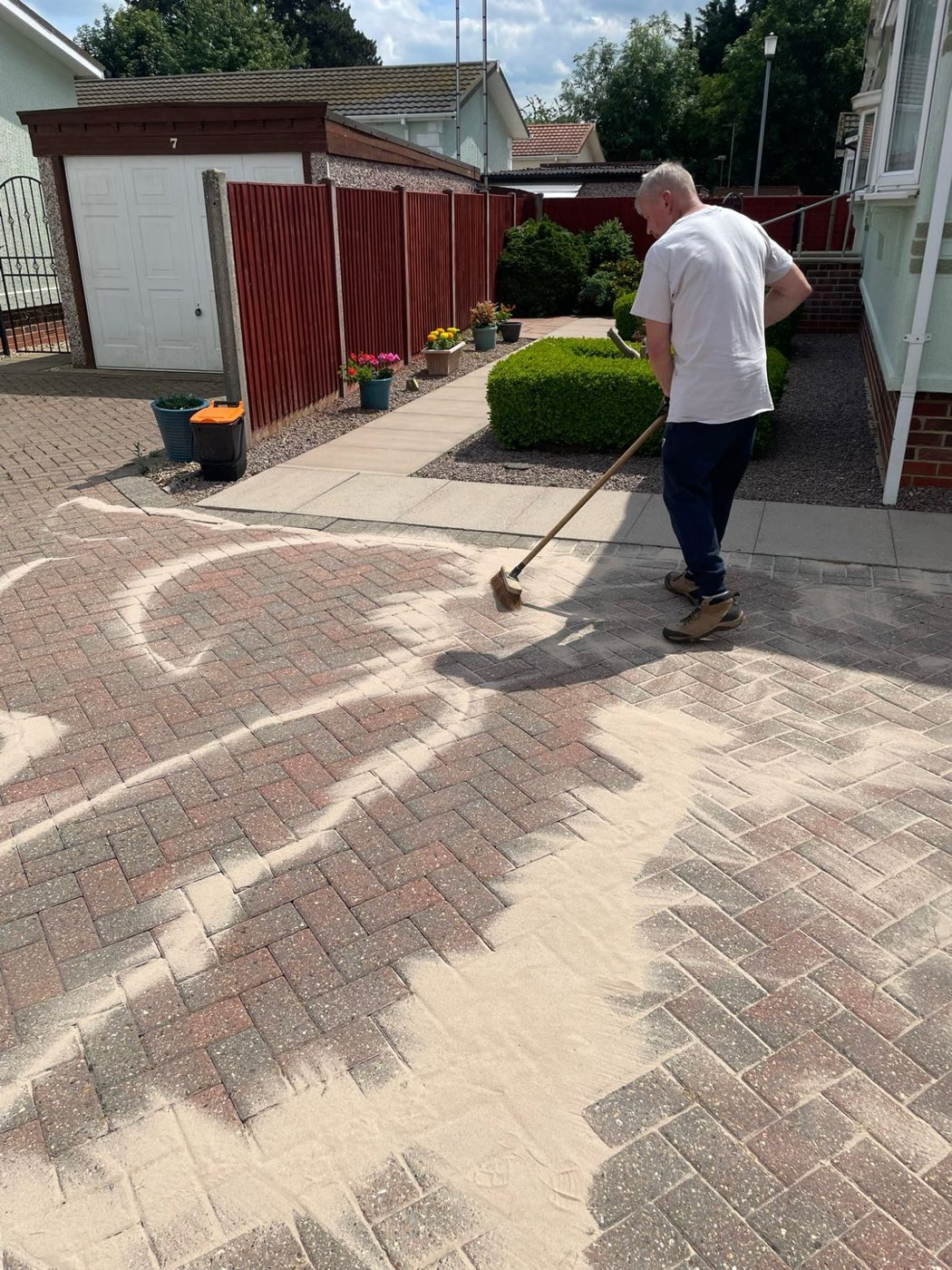
How to clean a resin driveway without causing damage
Resin driveways look stunning when clean — here's exactly how to keep yours that way without lifting the surface or voiding your warranty.
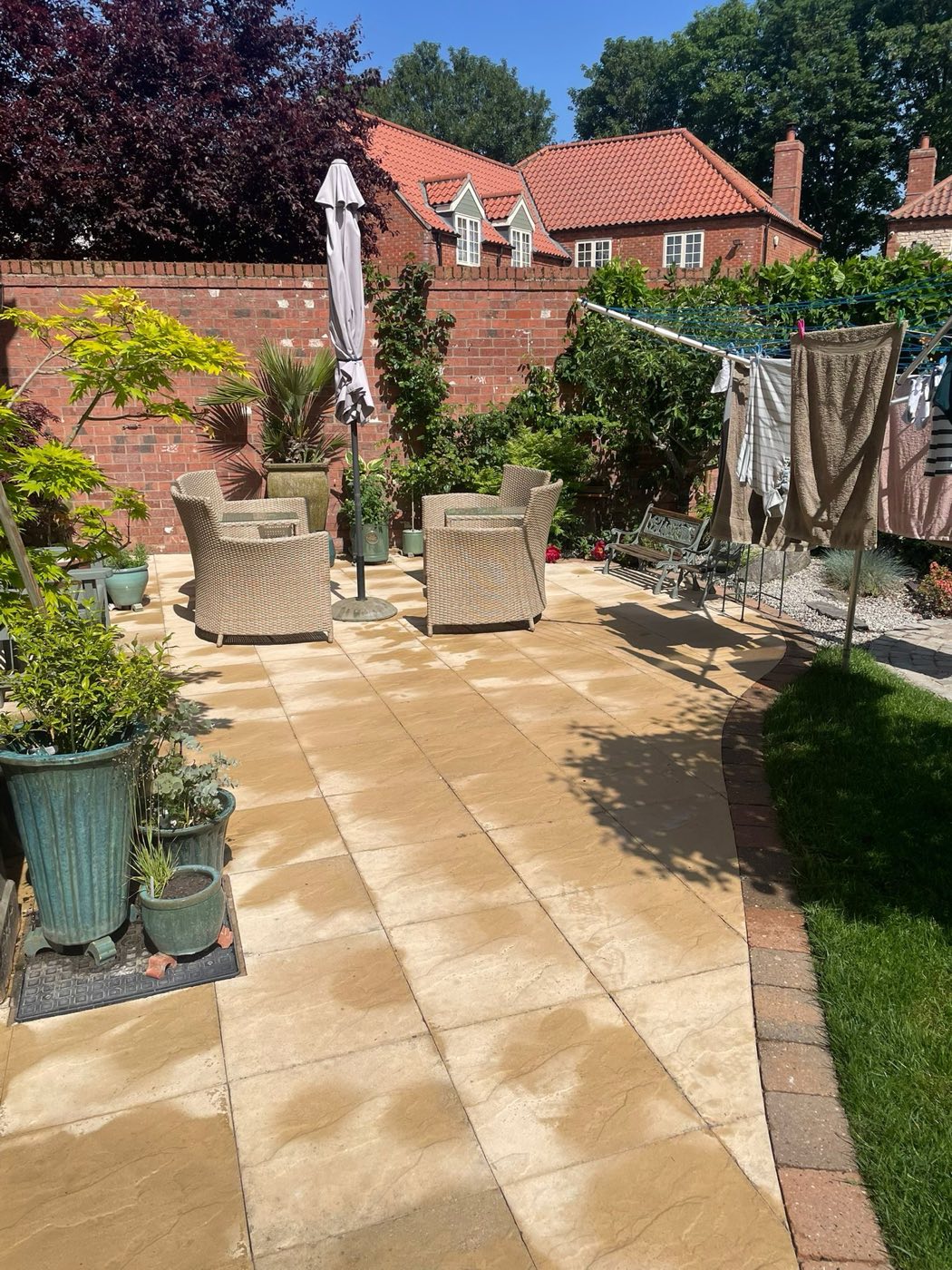
How to clean a driveway after heavy rain
Heavy rain leaves driveways muddy, stained and slippery — here's exactly how to clean yours back to a smart finish.
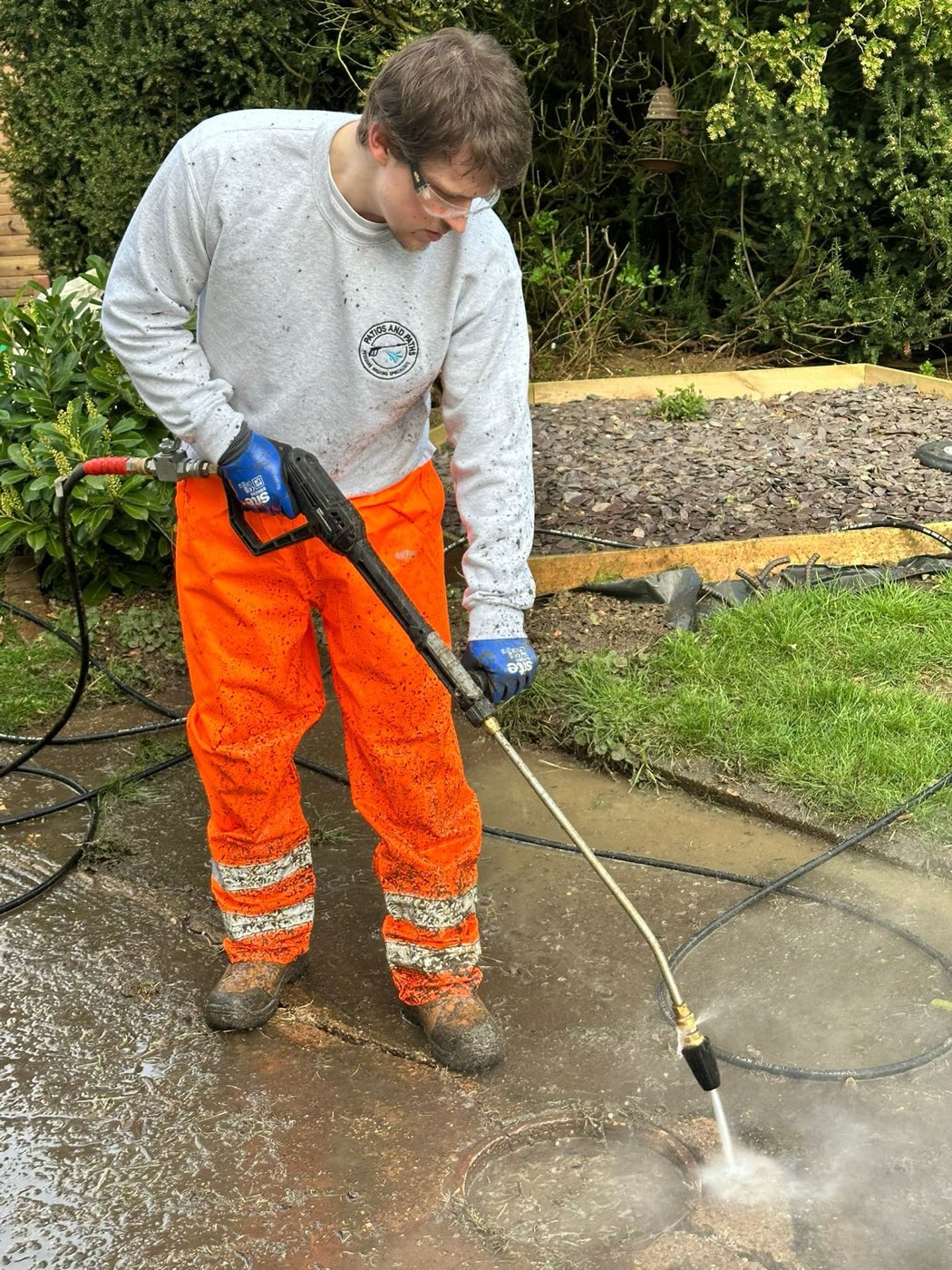
How to clean a driveway edging and border properly
Weedy, mossy joints can ruin an otherwise tidy driveway — here's how to clean block paving joints properly and stop the problem coming back.