
20 October 2026 · Patios and Paths
How to clean a patio drain and gully properly
Standing water on your patio after heavy rain is one of the most common complaints we hear from homeowners across Lincolnshire. More often than not, the culprit isn't the patio surface itself — it's a blocked or neglected drain or gully. Knowing how to clean a patio drain and gully properly can save you from slippery surfaces, waterlogged joints and a very unpleasant smell building up over time.
The good news: it's a straightforward job if you tackle it in the right order. Here's exactly what to do.
Why patio drains block up so quickly
Patio drains sit at the lowest point of your outdoor surface by design — which means everything washes into them. Leaves, moss fragments, silt, algae and even the sand from block paving joints gradually accumulate inside the gully pot beneath the drain cover. In Lincolnshire, where we get a reasonable amount of rainfall throughout the year, this build-up can happen faster than most people expect. North-facing gardens in places like Nettleham or Washingborough, where shade keeps surfaces damp, tend to see the worst accumulation of moss and algae washing into drains.
Over time a partially blocked drain slows to a trickle, water backs up across your patio, and you end up with the exact standing-water problem that good drainage is supposed to prevent.
What you'll need before you start
Gather these before you begin — it makes the job much cleaner and quicker:
- Rubber gloves (long-cuffed ones are far more comfortable for this job)
- A hand trowel or old plastic scoop
- A bucket
- A stiff-bristled brush
- A garden hose or pressure washer
- A drain rod or flexible bottle brush for deeper blockages
- Mild detergent or a diluted patio cleaner
- A flat-head screwdriver or drain-cover lifter
You don't need harsh chemicals. Genuinely stubborn organic build-up responds well to hot water and a biodegradable patio cleaner — and you won't risk damaging surrounding paving or harming garden plants.
Step-by-step: cleaning the drain cover and grate
- Lift the drain cover. Use a flat-head screwdriver or a dedicated cover lifter. Some covers are stiff after years of sitting undisturbed — gentle leverage usually does the trick.
- Remove loose debris by hand. Put on your gloves and lift out any obvious leaf matter, moss clumps or silt sitting on top of the grate or just inside the channel. Drop it straight into your bucket.
- Scrub the grate. Use your stiff brush and a little diluted patio cleaner to scrub both sides of the grate. Rinse thoroughly — you'd be surprised how much embedded algae hides in the mesh.
- Rinse with a hose. A firm jet of water from a garden hose is often enough to flush the grate clean. If you have a pressure washer, use a low-to-medium setting — you're cleaning a drain, not blasting a spacecraft.
Cleaning out the gully pot below
This is the part most people skip, and it's usually where the real blockage lives.
The gully pot is the chamber beneath the drain cover. It's designed to trap debris before it enters your main drainage run — but it needs emptying periodically or it simply overflows back up.
How to clear a gully pot
- Scoop out the accumulated silt, leaves and debris using your trowel or scoop, again depositing it into your bucket. Don't flush this material into the drain — you'll just push it further down.
- Once the bulk of material is removed, pour a bucket of hot water mixed with a small amount of biodegradable drain cleaner into the pot. Let it sit for five minutes.
- Scrub the inside walls of the pot with a long-handled brush if you can reach, then flush through with the hose.
- Check the outlet at the base of the pot is clear by pouring water in steadily and watching it drain away freely. If it backs up, you may have a blockage further down the run and a drain rod will be needed to clear it.
When to call in a professional
If water still won't shift after you've cleared the pot and rodded the outlet, the blockage is likely beyond the gully — in the main drain run itself. At that point it's worth calling a drainage specialist rather than pushing the problem further down the pipe.
Keeping your patio drain clear all year
A few simple habits make a big difference:
- Clear leaves in autumn. This is the highest-risk period for drain blocking, especially under trees. A quick sweep every week or two from October onwards keeps the volume manageable.
- Jet the drain when you pressure wash the patio. If you're already cleaning the surface, take two minutes to flush the drain at the same time. It keeps things ticking over between deeper cleans.
- Fit a leaf guard or drain filter. These sit inside or over the grate and catch coarse debris before it reaches the pot. They need emptying regularly but they significantly reduce the amount of silt build-up.
- Don't brush sand and debris toward the drain. When sweeping your patio, aim to collect waste rather than directing it into the gully.
For block paving patios especially — which are common in areas like Cherry Willingham and Branston — the kiln-dried sand used to fill joints gradually washes toward drains over time. Occasional re-sanding helps keep joints stable and reduces the load on your drainage.
When professional patio cleaning makes sense
Cleaning a patio drain is a manageable DIY task. But if you're dealing with a patio that's been neglected for several years — heavy moss growth, stained surfaces, compacted silt in the gully and blocked joints all at once — a professional clean handles everything in one visit and leaves the surface looking genuinely refreshed.
We work on patios, paths and driveways right across Lincolnshire. Take a look at our patio and surface cleaning services to see what's included, or browse our coverage across Lincolnshire to check we cover your area.
For more useful guides like this one, head over to our patio cleaning advice hub where we cover everything from removing moss to sealing and restoration.
If your patio drain is giving you grief — or if your whole outdoor surface is due a proper clean — get a free, no-obligation quote and we'll come and take a look.
Frequently asked questions
How often should I clean my patio drain and gully?
A quick check and flush every three to four months is a good habit, with a more thorough clean-out in autumn once leaves have fallen. If your patio sits under trees or in a shaded spot, you may need to clear the gully pot more frequently.
Why does my patio drain smell bad?
A bad smell usually means organic matter — leaves, algae, silt — is rotting inside the gully pot or further down the drain run. Clearing the pot and flushing with hot water and a mild drain cleaner normally resolves it. If the smell persists, the blockage may be deeper in the system.
Can I use bleach to clean a patio drain?
Bleach can help kill algae and bacteria inside a gully, but it's harsh on surrounding plants and some paving materials. A diluted biodegradable drain cleaner or even very hot water is usually effective enough and much safer for your garden.
My patio drain drains slowly but isn't fully blocked — what should I do?
A slow drain nearly always means the gully pot is partially full of silt and debris. Scoop out the pot, flush it thoroughly, and check the outlet is clear. In most cases that's all it takes to restore normal flow.
Need a hand with yours? We cover Lincolnshire for patios, driveways, paths and more — see the areas we cover or browse our services. Get a free quote or call 07874 010739.
Keep reading
More on patio cleaning
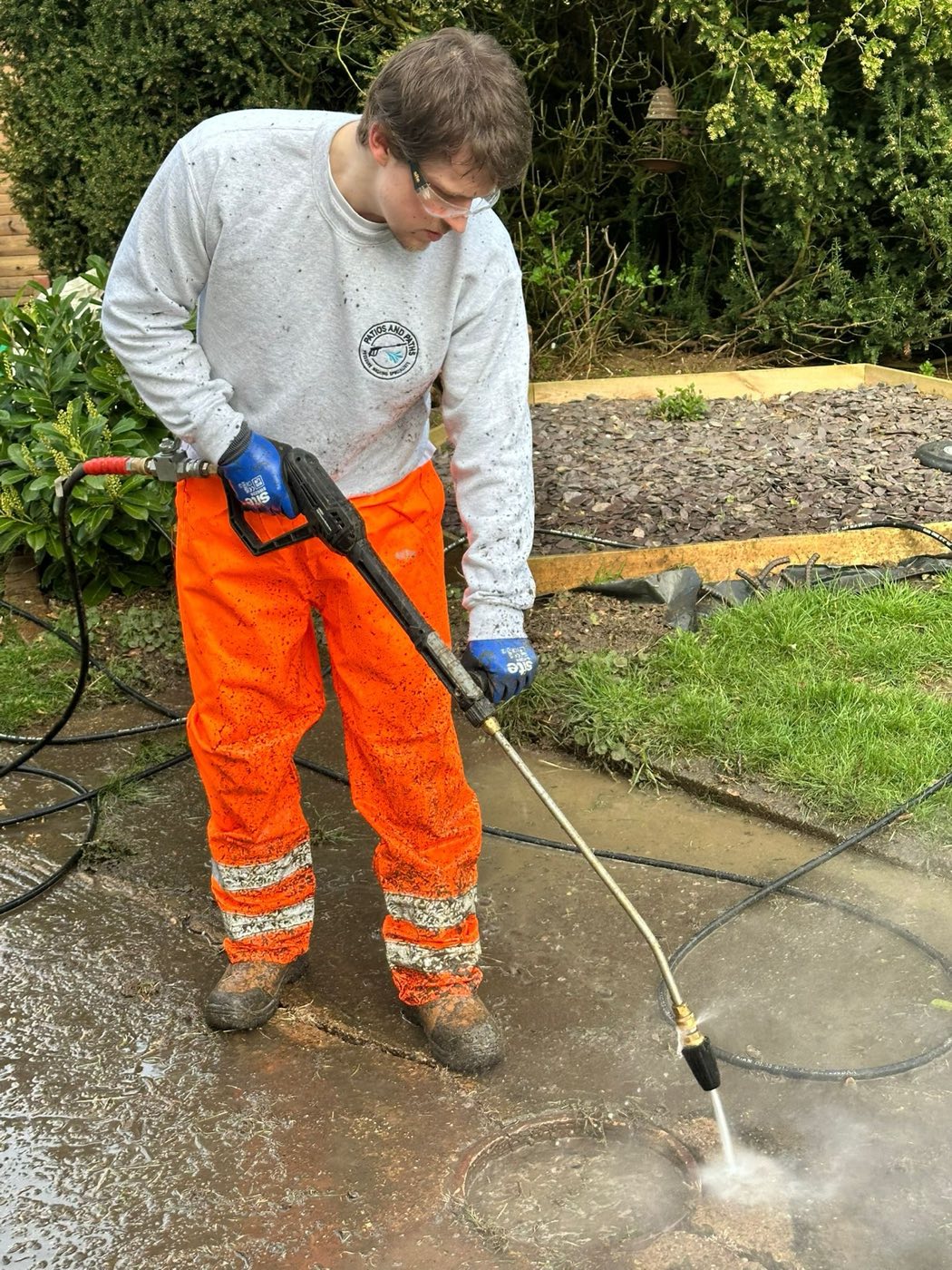
How to clean a block paving patio properly
Block paving patios are tough, but they need the right approach to come up clean without washing away the jointing sand — here's how to do it properly.
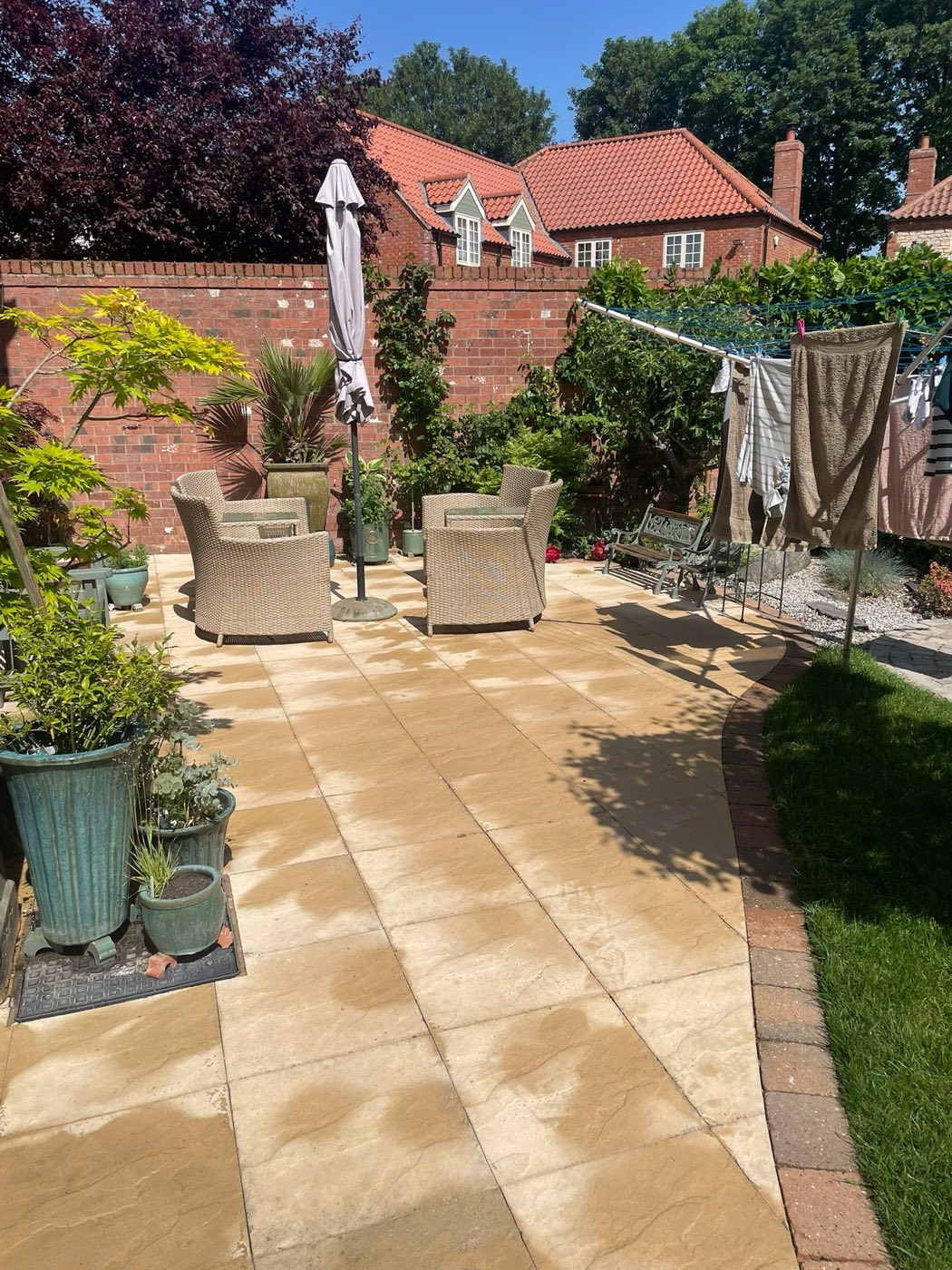
How to clean a patio grout line properly
Grubby grout lines can make an otherwise clean patio look tired — here's how to tackle them properly without damaging your slabs.
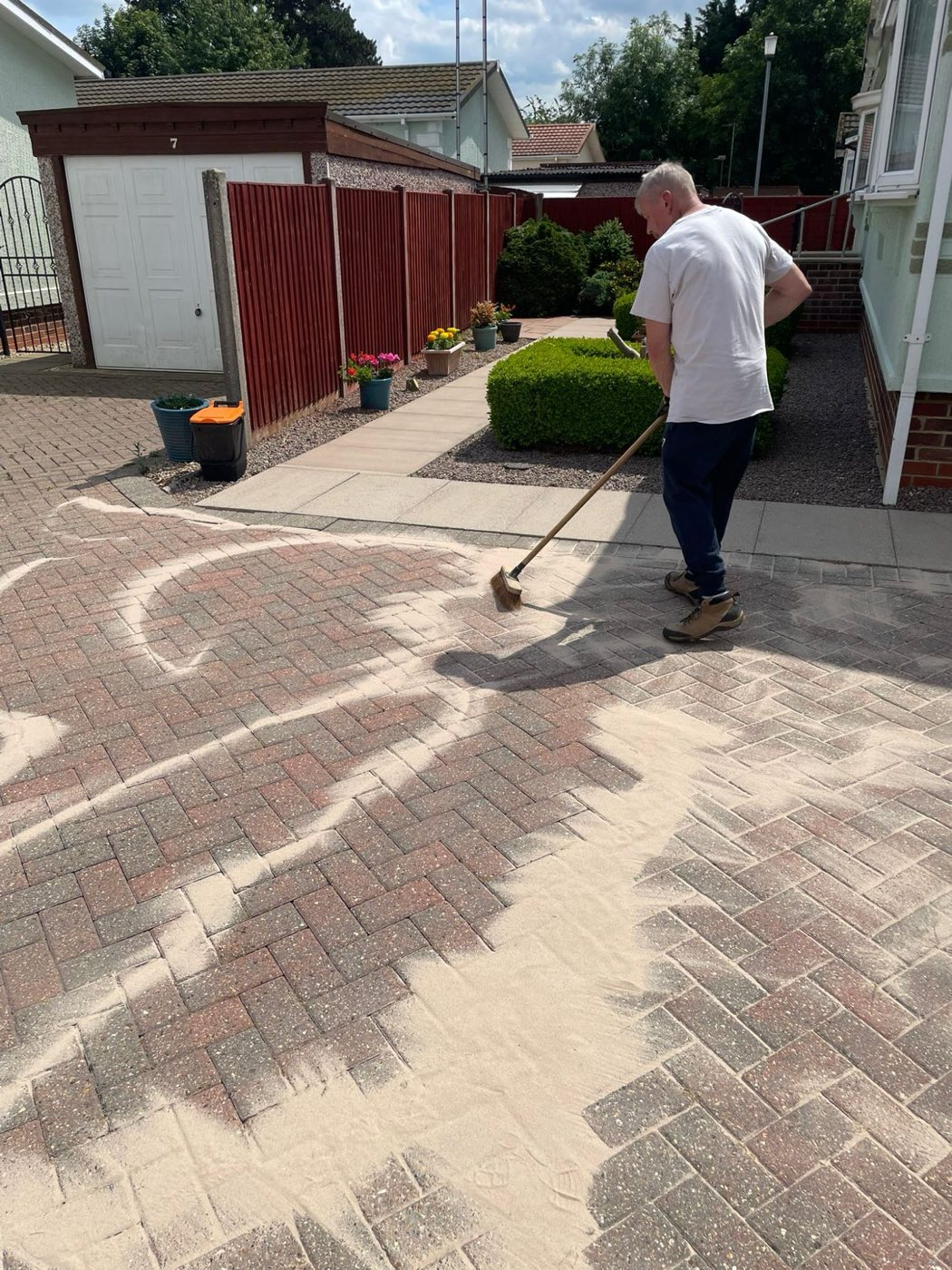
How to clean a concrete path without streaks
Streaky concrete paths are usually caused by the wrong pressure-washing technique — here's how to get an even, clean finish every time.