
18 October 2026 · Patios and Paths
How to clean a block paving patio properly
Block paving patios look great when they're well-kept, but left to the Lincolnshire weather they quickly turn green, weedy and dull. If you're wondering how to clean a block paving patio properly — without blasting out the jointing sand or leaving streaky patches — this guide will walk you through everything, step by step.
The short answer: sweep off loose debris, treat moss and algae with a suitable solution, pressure wash carefully at a low angle, then re-sand and seal if needed. The detail is in how you do each stage.
Why block paving gets dirty so fast
Block paving has a lot of surface texture and dozens of joints — which means plenty of places for moss, algae, weeds and dirt to get a foothold. In wetter parts of Lincolnshire, like the low-lying areas around Washingborough and Branston, patios can go from clean to visibly green in a single season. North-facing patios are particularly prone because they stay damp long after the sun's moved on.
The joints between blocks also collect organic matter — leaves, soil, bird droppings — which breaks down and feeds the very growth you're trying to remove.
What you'll need before you start
Getting the right kit together first saves time and stops you doing the job twice.
- A stiff-bristle brush or outdoor broom
- A garden sprayer or watering can
- A moss and algae treatment (proprietary or diluted bleach — more on this below)
- A pressure washer, ideally 110–150 bar with a rotary or fan nozzle
- Kiln-dried jointing sand
- A patio sealant (optional but recommended)
- Safety gloves and eye protection
If you don't own a pressure washer, hiring one is an option — but do read our thoughts on DIY pressure washing vs hiring a pro before you commit.
Step 1: clear the surface and treat growth first
Don't go straight in with the pressure washer. That just scatters moss and algae spores around rather than killing them.
Start by sweeping the whole patio with a stiff broom to remove loose leaves, soil and debris. Then apply a moss and algae killer across the whole surface. You can use a specialist patio treatment from a garden centre, or a diluted solution of sodium hypochlorite (household bleach at around 5–10% dilution works well on block paving).
Leave it to dwell for the time recommended on the product — usually 20–30 minutes. You'll see the green growth start to brown off. This makes it far easier to shift with the washer.
One caution: keep pets and children off the surface until it's been rinsed clean.
Step 2: pressure washing — the right technique
This is where most DIY jobs go wrong. Too high a pressure or pointing the lance straight down blasts the jointing sand out from between the blocks, leaving gaps that weeds fill within weeks.
Here's how to do it properly:
- Use a fan or rotary nozzle — never a pencil jet on block paving
- Keep the lance at a shallow angle, roughly 45 degrees
- Work in straight lines, following the joint pattern
- Keep the nozzle moving steadily — don't dwell on one spot
- Rinse from the highest point of the patio downward so dirty water flows away
A pressure of around 110–130 bar is usually enough for block paving. Higher than that and you risk eroding the surface of the blocks themselves, particularly older or softer ones.
Dealing with stubborn stains
If you've got oil stains, rust marks or deep-set dirt that won't shift with the washer alone, treat those spots before you rinse. A degreaser applied and scrubbed in with a stiff brush will loosen most oil and grease. For rust, a proprietary rust remover for masonry is worth the few pounds it costs.
Step 3: re-sanding the joints
Once the paving has dried fully — allow at least 24 hours in dry weather — inspect the joints. Even careful pressure washing removes some sand, and you'll almost certainly need to top up.
Brush kiln-dried jointing sand across the whole surface, working it into the joints with a soft broom or your boot. Repeat the process until the joints are flush with the top of the blocks. Don't leave this step out — open joints are an open invitation for weeds and ants.
Step 4: should you seal it?
Sealing block paving isn't essential, but it does make a real difference to how long it stays clean. A good block paving sealant:
- Locks in the jointing sand
- Makes moss and algae harder to establish
- Repels oil and staining
- Gives a natural or wet-look finish depending on the product
If you're in a leafy area like Nettleham or Welton where autumn brings a lot of organic matter onto the patio, sealing is especially good value. Apply it on a dry day when no rain is forecast for at least 48 hours.
See our full patio cleaning services for details on what we include when we take on a block paving job.
When it makes sense to call a professional
If the patio is large, heavily stained or the jointing has broken down significantly, a professional clean is often quicker, cheaper in the long run and gives a much more consistent result. We cover most of Lincolnshire — from Lincoln and Heighington to Cherry Willingham, Saxilby and beyond. Check whether we cover your postcode on our areas page.
A professional setup also means commercial-grade machines, the right chemicals for each surface type and proper disposal of waste water — things that are hard to replicate with a hired washer and a bottle of bleach.
A clean patio is easier to maintain than you think
Once a block paving patio has been properly cleaned and re-sanded, keeping it that way isn't much work. A biannual treatment with a moss inhibitor, a sweep every few weeks and a proper clean every year or two is usually all it takes. Do the hard work once, do it right, and the patio looks after itself.
If you'd rather hand that job over, we're happy to help. Get a free quote and we'll come and have a look at what's needed.
Frequently asked questions
Can I pressure wash block paving without losing the jointing sand?
Yes, if you use the right technique. Keep the lance at a 45-degree angle rather than pointing straight down, use a fan or rotary nozzle rather than a pencil jet, and keep the pressure below 150 bar. You'll still need to top up the sand afterwards, but you won't strip the joints bare.
How often should I clean a block paving patio?
Most block paving patios benefit from a thorough clean once a year, ideally in spring after the worst of the damp weather. If your patio is shaded or in a leafy area, a mid-autumn treatment with a moss inhibitor as well will keep it looking good year-round.
Is bleach safe to use on block paving?
Diluted bleach (sodium hypochlorite at around 5–10%) is widely used on block paving and is generally safe for the surface itself. Keep it off plants and grass, rinse thoroughly once it's done its job, and keep pets away until the patio is fully rinsed and dry.
Do I need to seal block paving after cleaning?
It's not compulsory, but sealing after a clean does protect the surface, lock in the jointing sand and slow down the return of moss and algae. It's particularly worth doing on patios that get heavy shade or a lot of leaf fall.
Need a hand with yours? We cover Lincolnshire for patios, driveways, paths and more — see the areas we cover or browse our services. Get a free quote or call 07874 010739.
Keep reading
More on patio cleaning
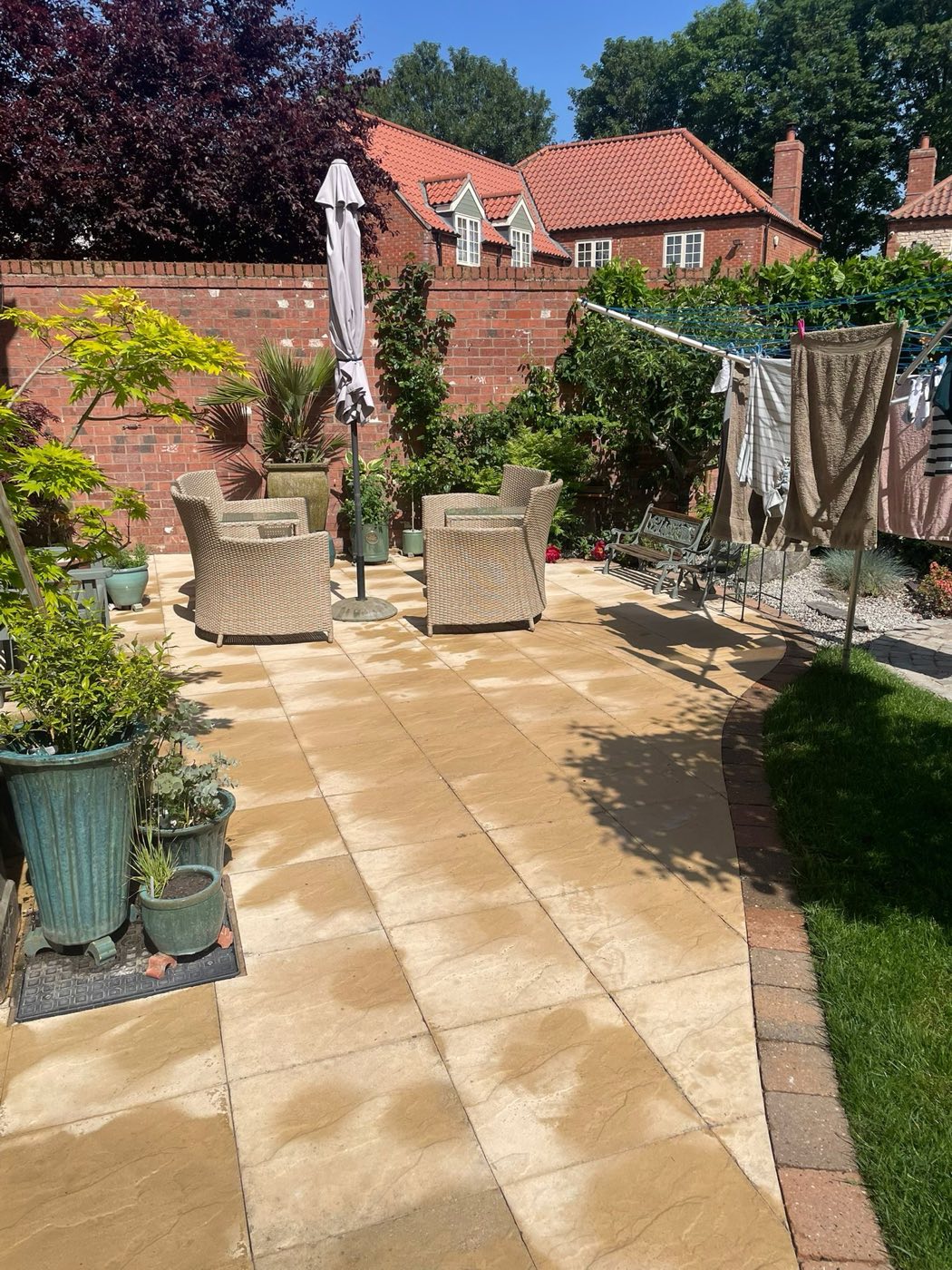
How to clean a patio grout line properly
Grubby grout lines can make an otherwise clean patio look tired — here's how to tackle them properly without damaging your slabs.
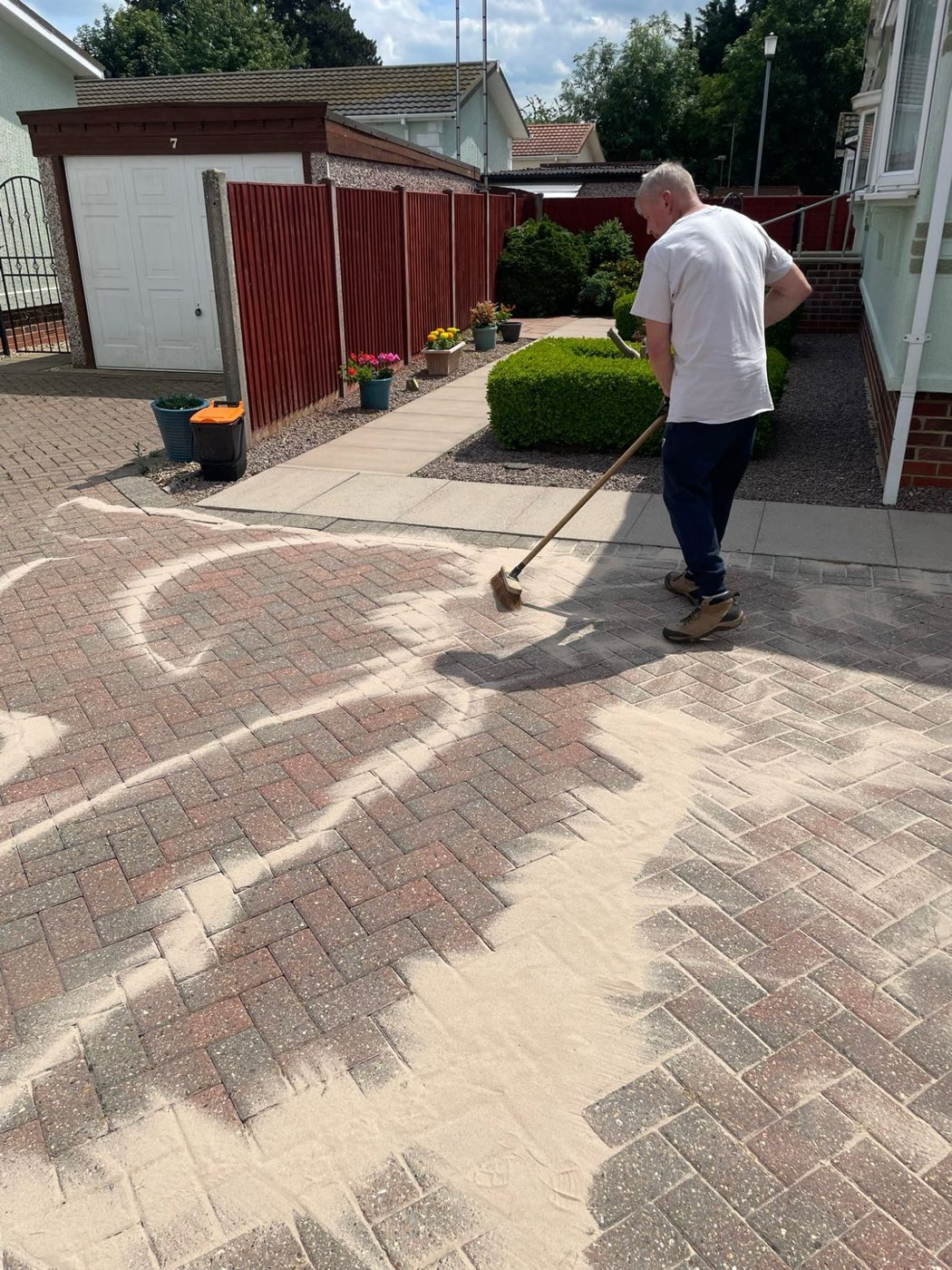
How to clean a concrete path without streaks
Streaky concrete paths are usually caused by the wrong pressure-washing technique — here's how to get an even, clean finish every time.
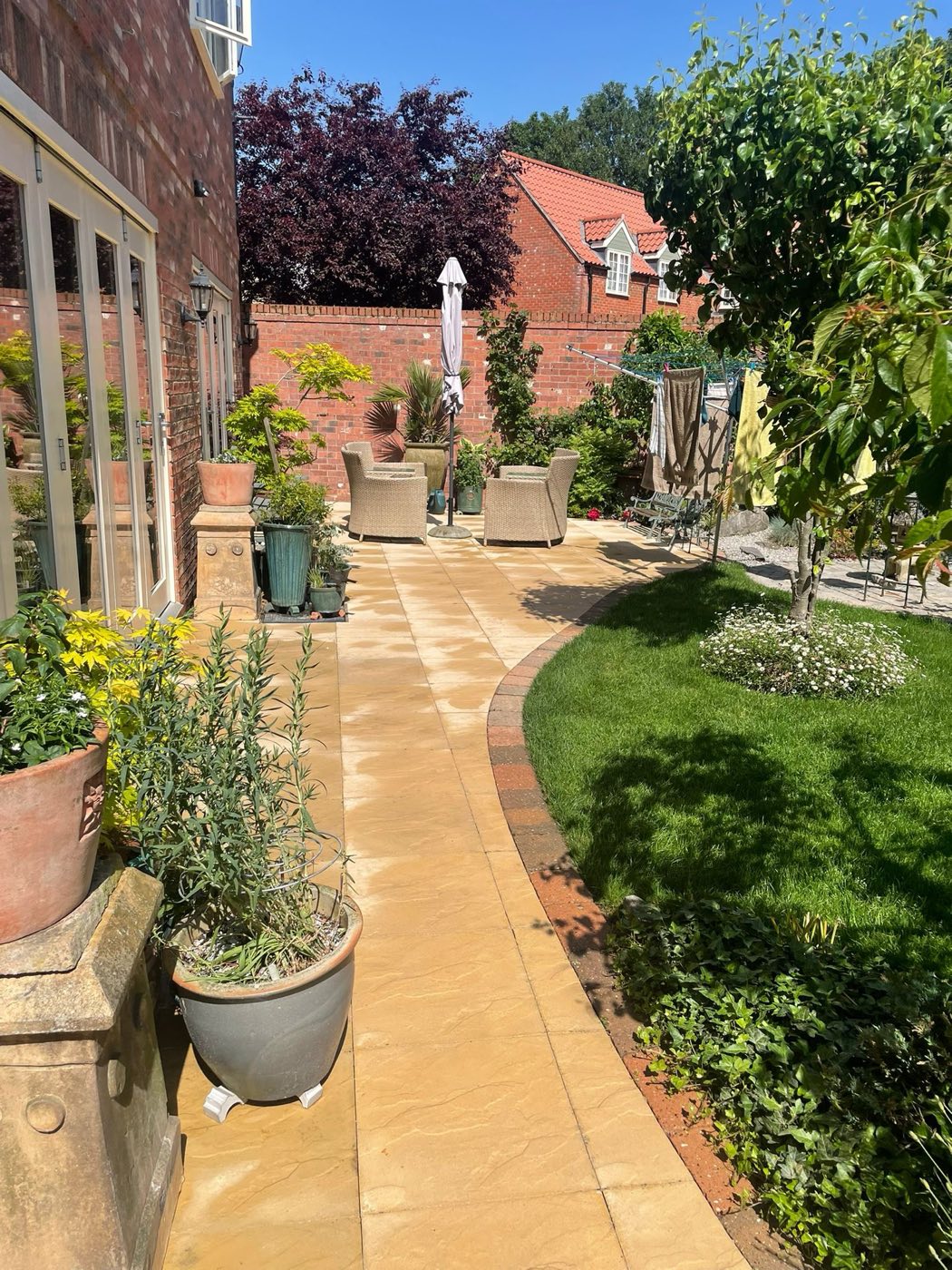
How to clean a shaded patio that stays damp
A permanently damp, shaded patio is the hardest surface to keep clean — here's what actually shifts the green and keeps it away longer.