14 October 2026 · Patios and Paths
How to clean a concrete path without streaks
A freshly cleaned concrete path should look even, bright and consistent — not covered in tide marks and fan-shaped streaks. If you've ever pressure washed a path and ended up with it looking worse than before, you're not alone. Knowing how to clean a concrete path without streaks comes down to preparation, the right equipment settings, and a steady, methodical technique. Get those three things right and you'll have a result you're genuinely pleased with.
Why concrete paths streak in the first place
Streaks usually happen for one of a few reasons:
- Uneven pressure — moving the lance too fast in some places and too slowly in others leaves light and dark bands across the surface.
- Wrong nozzle choice — a narrow, high-intensity nozzle cuts into the surface rather than cleaning it evenly.
- Detergent drying before rinsing — if you apply a cleaning solution on a hot day and don't rinse quickly enough, it leaves a residue.
- Dirty water running back over clean sections — working up a slope or into a corner traps dirty run-off on parts you've already done.
- Lifting biological growth unevenly — algae and moss don't always let go at the same rate, so patches of green can remain even after a wash.
Understanding the cause makes it much easier to avoid.
Prepare the path before you start
Sweep the path thoroughly first. Remove loose grit, leaves and any debris sitting in cracks or joints. This stops you pushing material into the surface as you wash, which would leave dark spots and lines.
If the path has a heavy build-up of moss, algae or black spot, apply a diluted patio or path cleaner and let it dwell for 15–20 minutes before you pick up the pressure washer. This pre-treatment loosens biological growth so the washer can clear it in one consistent pass rather than working harder in some patches than others.
Check where water will drain. On a flat or slightly sloped path, plan your direction of work so dirty run-off always flows away from sections you've already cleaned. Working from the high end to the low end of the path is the cleanest approach.
Choosing the right pressure and nozzle
For most concrete paths, a pressure washer running at around 1,500–2,000 PSI is plenty. Going higher risks etching the surface — particularly on older or slightly crumbly concrete — which creates a rough texture that traps dirt faster in future.
Use a 25-degree fan nozzle (often colour-coded green). This spreads the water across a wider area and gives an even clean without the aggressive cutting action of a red (0-degree) or yellow (15-degree) nozzle.
A surface cleaner attachment — a flat, spinning head — is even better for paths. It keeps the spray consistent and contained, which almost entirely eliminates the fan-shaped streak marks you get from a handheld lance. If you're hiring equipment or asking a professional to quote, it's worth asking whether they use one.
How to clean a concrete path without streaks: the technique
This is where most people go wrong. Even with the right kit, poor technique causes streaking.
Work in consistent, overlapping passes
Hold the lance at a steady height — around 20–30 cm from the surface — and move at a slow, consistent walking pace. Overlap each pass by about a third. If you're using a handheld lance, keep the nozzle moving at the same speed throughout; pausing over one spot, even briefly, leaves a bright mark that stands out against the rest.
Keep the path wet throughout
Don't let one section dry before you move to the next. On warm days in Lincolnshire, this can happen faster than you'd expect, especially on an exposed south-facing path. Wet sections butt up against each other cleanly; dry edges create visible lines.
Rinse thoroughly at the end
Once you've worked the whole path, do a final rinse pass from the top end to the bottom. This clears any remaining detergent or loosened debris and gives you the chance to spot any patches that need a second pass before everything dries.
Common mistakes to avoid
- Starting on a bone-dry surface on a hot day — the detergent bakes on before you can rinse it.
- Spraying at a steep angle — this pushes dirt sideways into the edges rather than lifting it cleanly off the surface.
- Using a domestic pressure washer for a large area — underpowered machines struggle to clear biological growth evenly, leaving patchy results.
- Skipping the pre-treatment on green or mossy sections — the washer works twice as hard and the result is uneven.
When to call in a professional
If the path is large, heavily stained, or has deeply embedded black algae, getting an even result with domestic kit is genuinely difficult. Professionals use commercial-grade surface cleaners and higher-flow machines that clear a path in consistent, overlapping rings without streaking.
We cover areas across Lincolnshire — from paths and drives in Nettleham and Welton through to Bracebridge Heath and Cherry Willingham — and we're used to dealing with the kind of stubborn damp-weather growth that builds up on north-facing and shaded surfaces in this part of the country.
You can see the range of surfaces and services we cover if you're not sure whether your path is a good candidate for a professional clean. We also cover a wide range of locations — check the areas we work across in Lincolnshire to see if we come to you.
For more guidance on cleaning concrete and stone surfaces, visit our patio cleaning advice hub.
Ready for a streak-free concrete path?
If you'd rather have the job done properly the first time, we're happy to take a look and give you a straightforward quote. No pressure, no obligation — just an honest assessment of what your path needs.
Get a free quote today and we'll get back to you quickly.
Frequently asked questions
Why does my concrete path look streaky after pressure washing?
Streaks are usually caused by uneven lance speed, the wrong nozzle, or dirty water running back over sections you've already cleaned. Using a surface cleaner attachment and working in consistent overlapping passes makes a big difference.
Can I use bleach to clean a concrete path?
Diluted bleach can kill algae and moss on concrete, but it needs to be rinsed off thoroughly before it dries or it will leave white residue. A purpose-made patio or path cleaner is usually safer and more effective, especially on stained or older concrete.
How long does a concrete path take to dry after pressure washing?
On a dry day with good airflow, most concrete paths are dry to walk on within a couple of hours. Full drying, especially in the joints and edges, can take 24 hours or more — particularly in the cooler, damper conditions common in Lincolnshire.
How often should a concrete path be cleaned?
Once a year is usually enough to keep a concrete path looking good and prevent biological build-up from getting a foothold. Shaded or north-facing paths may need attention more often as they stay damp for longer.
Need a hand with yours? We cover Lincolnshire for patios, driveways, paths and more — see the areas we cover or browse our services. Get a free quote or call 07874 010739.
Keep reading
More on patio cleaning
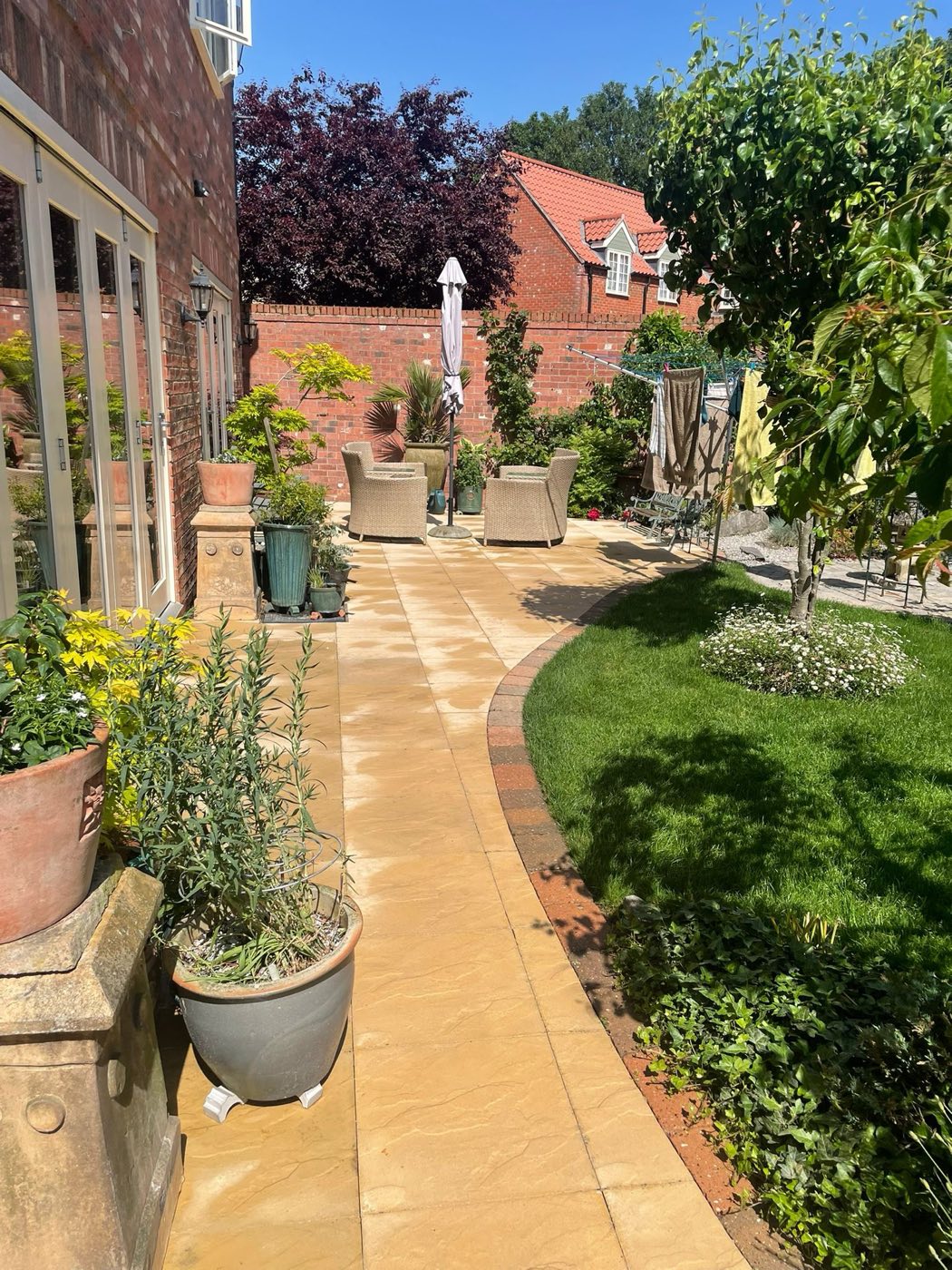
How to clean a shaded patio that stays damp
A permanently damp, shaded patio is the hardest surface to keep clean — here's what actually shifts the green and keeps it away longer.
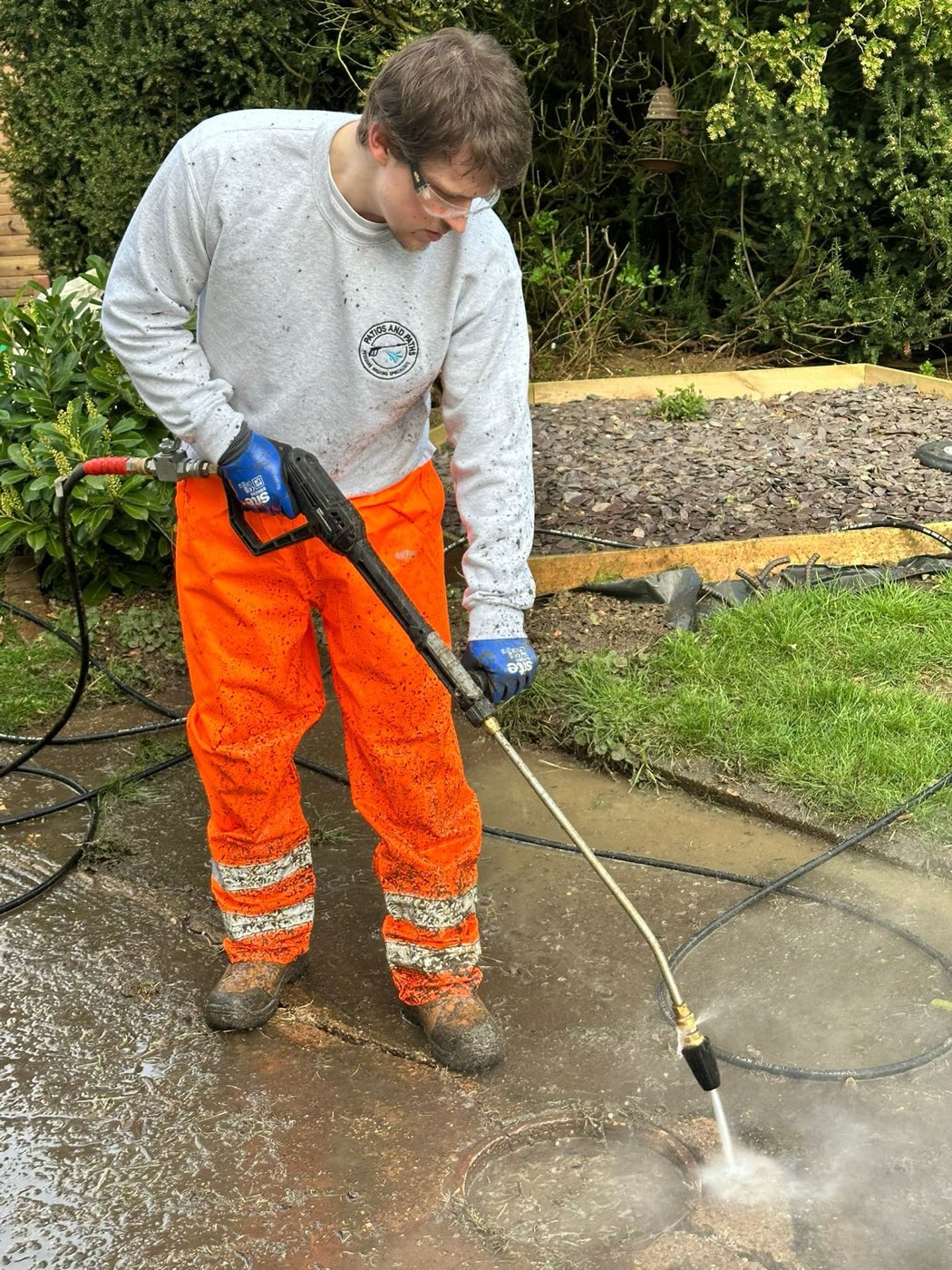
How to clean a patio with a pressure washer safely
Pressure washing a patio is satisfying — but the wrong settings or technique can cause real damage. Here's how to do it properly.
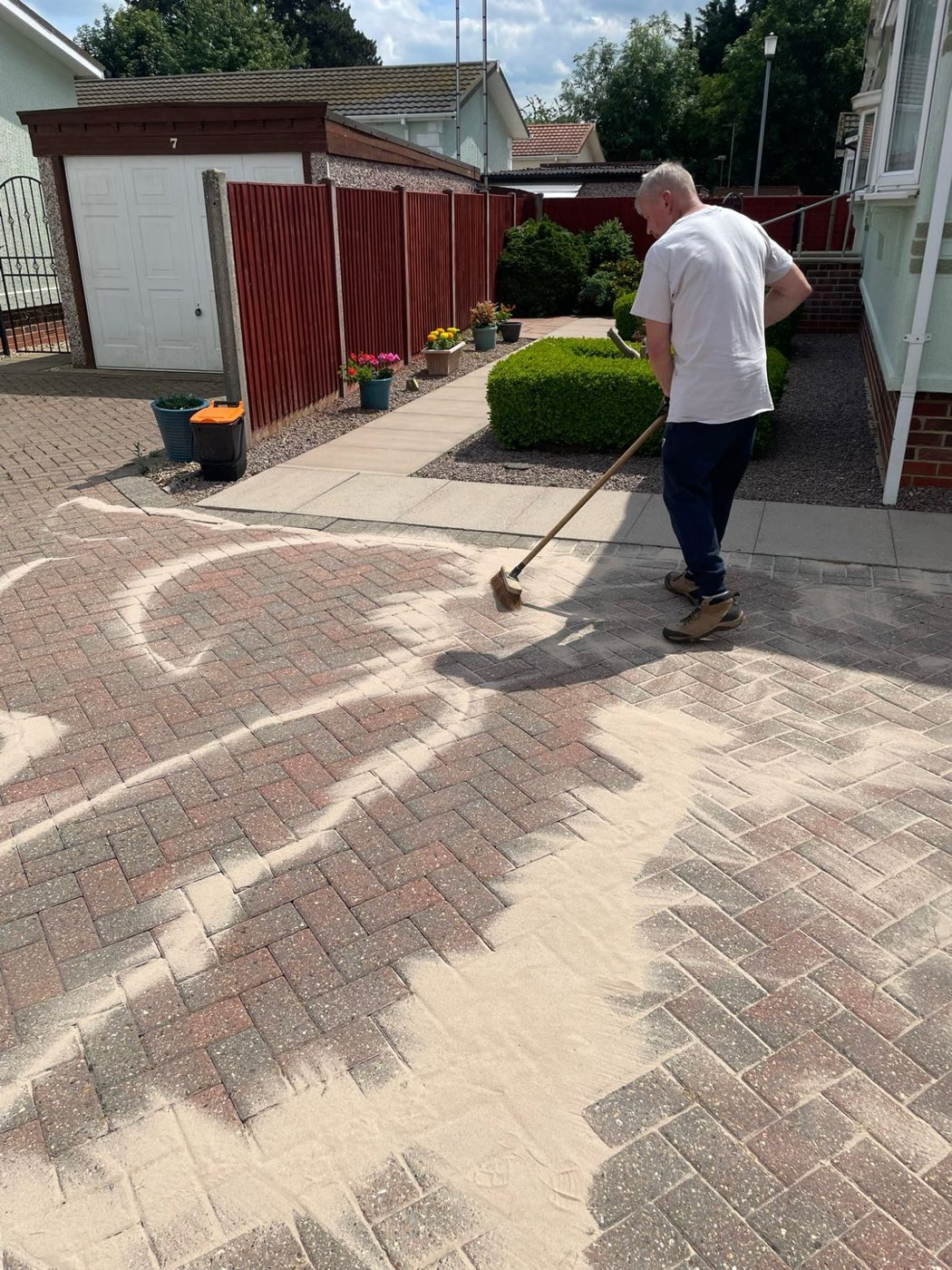
How to clean a wet pour rubber path properly
Wet pour rubber paths are low-maintenance — but they do get dirty, mossy and slippery. Here's how to clean them safely without causing damage.