
5 August 2026 · Patios and Paths
How to clean a granite patio without damage
Granite is one of the most durable patio surfaces you can lay, but that doesn't mean it's indestructible. Knowing how to clean a granite patio without damage comes down to choosing the right tools, the right products, and the right pressure — and steering clear of a few common mistakes that catch homeowners out every year.
The short answer: use a pH-neutral stone cleaner, a soft or medium brush, and if you're pressure washing, keep below 1,500 psi with a wide fan nozzle. Avoid anything acidic, and never use bleach directly on unsealed granite. Done right, granite cleans up beautifully and stays looking good for years.
Why granite needs careful handling
Granite feels indestructible underfoot, and compared with softer stones like limestone or sandstone, it genuinely is tougher. But it still has natural pores, and many granite patios in Lincolnshire gardens are either unsealed or have a sealant that's worn thin over time.
When pores are open, harsh chemicals soak in. Acidic cleaners — including some general-purpose patio products, white vinegar, and anything containing hydrochloric acid — can etch the surface, strip the natural sheen, and cause discolouration that's very difficult to reverse. Bleach, used neat or at high concentration, can cause patchy fading and may affect the grout or jointing compound around each slab.
The other risk is physical: too much pressure or a pencil-jet nozzle can chip or pit the surface, especially around edges or any existing micro-cracks.
What you'll need before you start
Gather these before you begin:
- A stiff-bristle brush or a soft deck brush (avoid wire brushes entirely)
- A garden hose or pressure washer (see settings below)
- A pH-neutral stone cleaner — available from builders' merchants and most tile shops
- A bucket of warm water for rinsing
- Optional: a pump sprayer for applying cleaner evenly
If you're unsure whether your granite is sealed, drop a few beads of water on it. If the water soaks in within a minute or two rather than sitting proud, the stone is porous and you need to be extra careful with any product you apply.
Step-by-step: cleaning granite safely
- Clear and sweep the area. Remove furniture, planters and debris. Brush away loose leaves and grit — grinding dirt into the stone during washing can cause fine scratches.
- Pre-wet the surface. Soak the slabs with clean water before applying any product. This stops the cleaner soaking straight into dry pores and helps it work on the surface where you actually need it.
- Apply your pH-neutral cleaner. Follow the dilution on the bottle. Spray or pour it evenly, let it dwell for five to ten minutes (don't let it dry), then scrub with your brush in a circular motion.
- Rinse thoroughly. A garden hose is fine for light cleaning. If you're pressure washing, use a 25–40 degree fan nozzle, keep the lance at least 30 cm from the surface, and work in overlapping passes. Stay below 1,500 psi.
- Check the joints. If the grout or polymeric sand between slabs has washed out in places, top it up once the patio is fully dry — open joints let weeds back in fast.
- Allow to dry completely before replacing furniture or applying any sealant.
Tackling moss, algae and black spot on granite
Granite patios in shaded spots — north-facing gardens in villages like Nettleham or Washingborough, for example — are prone to green algae and the darker black spot fungus (Gloeocapsa). These can make the surface genuinely slippery, not just unsightly.
A diluted specialist biocide (not bleach) applied after the initial clean and left to work for 24–48 hours is the most effective approach. The dead growth then rinses away easily. For stubborn black spot, a second treatment is usually needed.
For more on this, see our guides in the patio cleaning topic hub — we've covered black spot and algae in detail there.
What to avoid on granite
- Acidic cleaners (vinegar, citric acid, HCl-based products)
- Bleach applied neat or at full strength
- Wire brushes or scouring pads
- Pencil-jet or 0-degree nozzles on a pressure washer
- Leaving cleaning products to dry on the surface in sun
If someone has already used an acidic product on your granite and left dull or etched patches, the surface may need professional diamond grinding or re-polishing — it can be rescued, but it's not a DIY job.
Should you seal granite after cleaning?
Most granite benefits from a penetrating impregnator sealant applied once the patio is thoroughly clean and bone dry. Sealing doesn't change the look of honed or flamed granite, but it does reduce how readily the stone picks up stains and makes future cleaning much easier. A good quality sealant, properly applied, typically lasts three to five years in a UK climate.
We offer sealing as part of our restoration work across Lincolnshire — take a look at our full range of services if you'd like to combine a clean and seal in one visit.
When it's worth calling a professional
For a lightly soiled granite patio that's been maintained regularly, a careful DIY clean works fine. But there are times when professional equipment and experience make a real difference:
- Heavy moss or lichen that's been left for several seasons
- Black spot that keeps returning despite treatment
- A large area (anything over about 30–40 m²) where consistency of pressure and product matters
- Granite that's stained with oil, rust or tannins from leaves or planters
- A patio you're about to seal and want prepared properly
We work with granite patios across Lincolnshire — from Lincoln and North Hykeham to smaller villages throughout the county. If you're not sure what your patio needs, we're happy to take a look. Browse our service areas to see if we cover your postcode.
Get your granite patio looking its best
A well-cleaned granite patio is genuinely one of the most satisfying results we produce — the stone comes back to life, colours deepen, and the whole garden looks sharper for it. If you'd like a free, no-obligation quote, get in touch with us today. We'll take a look at what you've got and tell you honestly what it needs.
Frequently asked questions
Can I use a pressure washer on granite paving?
Yes, but keep the pressure below 1,500 psi and use a wide fan nozzle (25–40 degrees) held at least 30 cm from the surface. A pencil jet or very high pressure can chip and pit granite, especially around edges.
Is it safe to use bleach on a granite patio?
It's best avoided, particularly on unsealed granite. Neat bleach can cause patchy discolouration and may damage jointing compounds. A pH-neutral stone cleaner or a specialist biocide is much safer and just as effective for algae and moss.
How often should I clean my granite patio?
A thorough clean once a year — typically in spring after winter damp — is enough for most granite patios. If it's in a shaded spot prone to algae, a biocide treatment in autumn as well will stop the green returning over winter.
Why does my granite patio look dull after cleaning?
Dullness after cleaning is usually a sign that an acidic product has been used on polished or honed granite, or that the sealant has worn off. If it's a sealant issue, cleaning and re-sealing will restore the look. Etching from acid damage may need professional re-polishing.
Need a hand with yours? We cover Lincolnshire for patios, driveways, paths and more — see the areas we cover or browse our services. Get a free quote or call 07874 010739.
Keep reading
More on patio cleaning
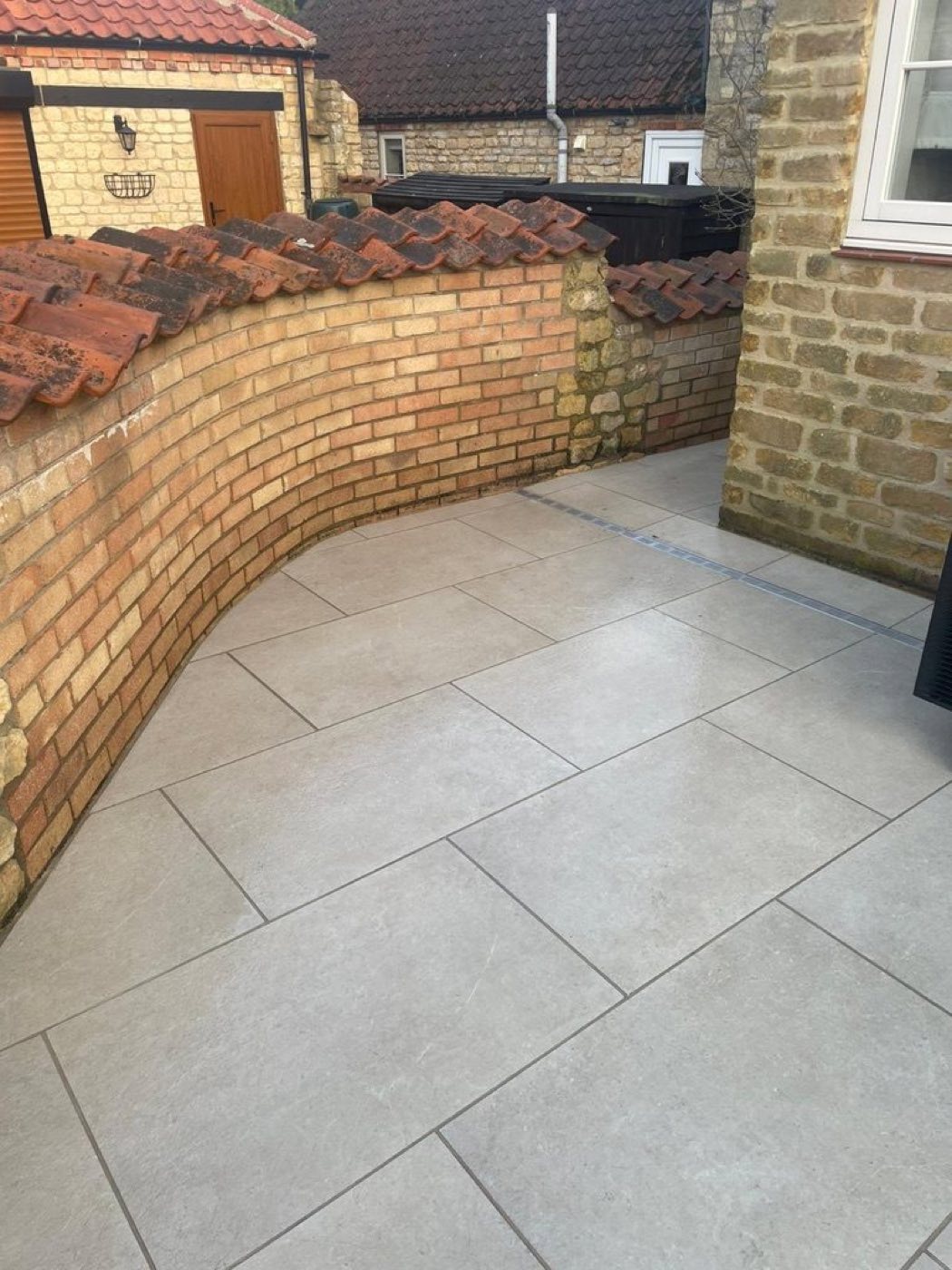
How to clean natural stone paving the right way
Natural stone paving needs a gentler touch than concrete — here's exactly how to clean it without causing damage or streaks.
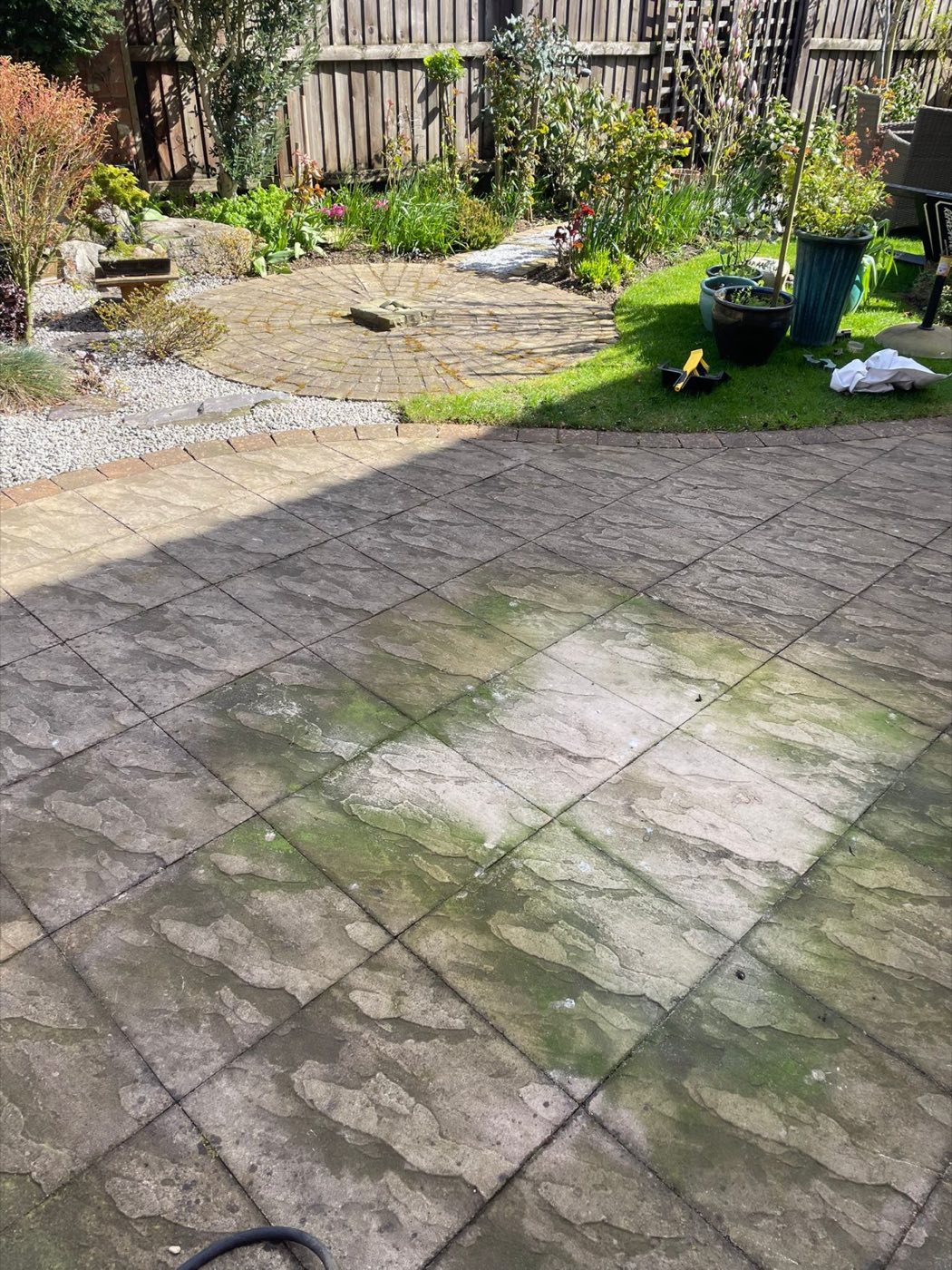
How to clean a sandstone patio without damage
Sandstone is beautiful but easy to ruin with the wrong cleaner — here's exactly how to clean it safely and keep it looking great.
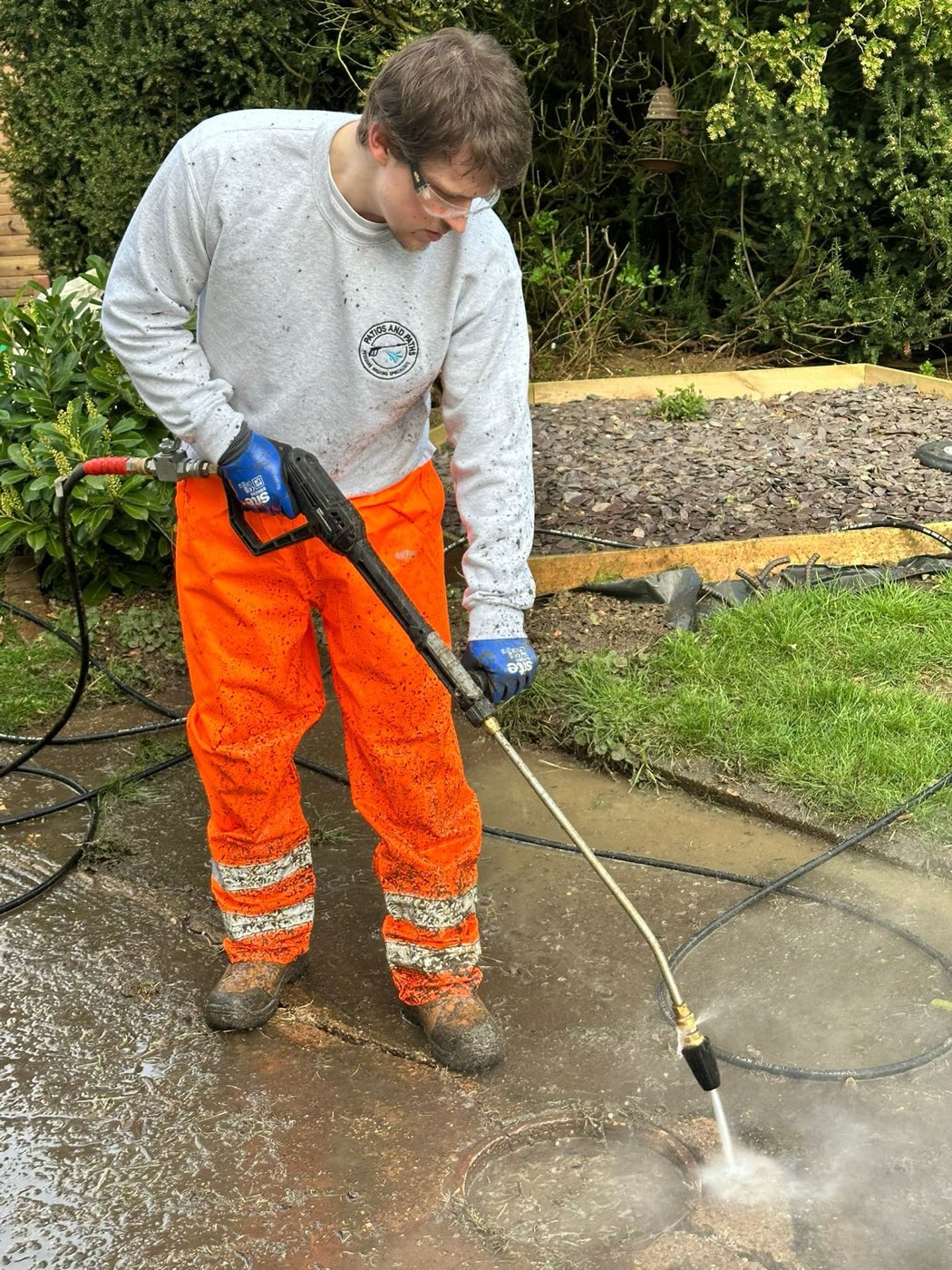
How to clean a patio with stubborn stains properly
Not all patio stains shift with a quick blast — here's how to tackle rust, tannin, grease and more without wrecking your slabs.