
10 September 2026 · Patios and Paths
How to clean a cobblestone driveway properly
Cobblestone driveways are one of the most attractive surfaces you can have outside your home. But those uneven rounded stones create dozens of tiny crevices where moss, algae, mud and weeds settle in — and once they do, a quick sweep won't shift them. If you're wondering how to clean a cobblestone driveway properly, the short answer is: carefully, with the right pressure and technique, and ideally with a surface cleaner rather than a bare lance.
Here's what you need to know before you start — and when it's worth calling someone in.
Why cobblestone driveways get so dirty so fast
Cobblestones — whether traditional granite setts, reclaimed stone or modern reproductions — have an irregular surface with deep joints between each stone. Water pools in those joints rather than running cleanly away. Add a bit of shade (common in older Lincolnshire properties with high walls or mature hedges) and you've got the perfect conditions for green algae, black lichen and moss to take hold.
The jointing material between stones — usually kiln-dried sand or a mortar mix — can also break down over time, creating even more space for organic growth and weeds to establish themselves.
What you'll need
Before you start, gather the right kit:
- A stiff-bristled brush or a long-handled scrubbing brush
- A garden hose or pressure washer (ideally 120–150 bar for stone, not full commercial power)
- A rotary surface cleaner attachment if using a pressure washer
- A patio and drive cleaning solution suitable for natural stone
- A weed puller or thin flat blade for deep joint weeds
- Jointing sand if you plan to re-sand after cleaning
Avoid undiluted bleach directly on cobblestones — it can lighten the stone and harm nearby plants.
How to clean a cobblestone driveway step by step
- Clear the surface. Move bins, plant pots and vehicles. Sweep away loose leaves and debris with a stiff broom.
- Pull out visible weeds. Use a weeding tool to clear the worst from the joints before wetting the surface — wet weeds are harder to grip cleanly.
- Pre-soak with a cleaning solution. Apply a diluted patio or drive cleaner and let it dwell for 10–15 minutes. This breaks down the bio-film (green or black slime) and makes the pressure wash much more effective.
- Pressure wash with a surface cleaner. A rotary surface cleaner keeps the water contained and gives an even clean across the uneven surface. Work in sections, overlapping slightly. Keep the head moving — don't hold it static over one spot or you risk blasting out the jointing sand.
- Rinse thoroughly. Work the rinse water away from the house and off the driveway edge.
- Inspect the joints. If cleaning has displaced significant sand, let the surface dry fully and then brush kiln-dried jointing sand back in, sweeping diagonally across the surface and compacting it in.
- Consider a sealant. Sealing cobblestones after cleaning helps repel future staining and slows biological re-growth significantly.
Getting into the joints
The biggest challenge with cobblestone is the depth of those gaps. A lance wand pushed too close will blast out the jointing material — but too far away and you won't shift the ingrained dirt. A rotary surface cleaner sits at a consistent height and does the job much more evenly. If you're hiring a pressure washer without this attachment, keep the lance at least 25–30 cm from the surface and use a wide fan tip, not a pencil jet.
Dealing with oil or rust stains
Cobblestones near a parking area often pick up oil drips and rust marks from metal gate posts or bike frames. Pre-treat these with a specialist degreaser (for oil) or an oxalic-acid based cleaner (for rust) before the main wash. Apply, leave for the recommended dwell time, then agitate with a stiff brush before rinsing. Don't skip this step — pressure alone rarely removes set-in oil from porous stone.
Common mistakes to avoid
- Using too high a pressure close to the surface, which strips out jointing sand and can fracture older or softer stones
- Skipping the pre-soak, which means you end up pushing dirt around rather than lifting it
- Leaving the surface without re-sanding, which lets weeds re-establish within weeks
- Pressure washing in freezing conditions — water trapped in the joints can freeze and cause cracking
When to call a professional
Cobblestone cleaning is one of those jobs where the results really do depend on experience and kit. Getting the pressure, angle and chemical combination right takes a bit of practice, and mistakes — blasted-out jointing, damaged stone edges — aren't always easy to fix.
We clean cobblestone and granite sett driveways across Lincolnshire, from older properties in Lincoln's West End to newer homes in Nettleham and Welton where reclaimed setts have been laid as part of a landscaping scheme. If the driveway is large, heavily soiled or the joints are already in poor shape, it's worth getting a professional eye on it before you start.
Take a look at our full range of driveway cleaning services to see what's included, and browse our Lincolnshire coverage to check we work in your area.
For more on keeping your driveway in good shape year-round, have a look at our driveway cleaning guides.
How often should you clean a cobblestone driveway?
In Lincolnshire's damp climate, most cobblestone driveways benefit from a professional clean every one to two years. If the driveway is shaded or the surface is sealed, you might stretch to two years. If it's open to the elements and sees heavy vehicle use, an annual clean keeps on top of staining and organic growth before it becomes a serious job.
Ready to get your cobblestone driveway looking its best again? Request a free quote and we'll come and take a look.
Frequently asked questions
Can I use a pressure washer on cobblestones without damaging them?
Yes, but use a rotary surface cleaner attachment rather than a bare lance, and keep the pressure at 120–150 bar. Too much direct pressure too close to the surface will blast out the jointing sand between stones.
How do I stop weeds coming back between cobblestones after cleaning?
After cleaning, re-sand the joints with kiln-dried jointing sand and consider applying a polymeric sand, which sets firmer and resists weed germination. Sealing the surface also helps by reducing the moisture weeds need to establish.
What's the best cleaner to use on cobblestone or granite sett driveways?
A pH-neutral or mildly alkaline patio and drive cleaner works well on most cobblestone. Avoid strong bleach or acidic cleaners on natural granite or limestone setts as they can etch or discolour the stone surface.
How long does it take for a cobblestone driveway to dry after pressure washing?
In dry weather, most cobblestone surfaces are dry enough to walk on within a couple of hours and ready for vehicle use within four to six hours. In cooler or overcast conditions, allow longer before re-sanding the joints.
Need a hand with yours? We cover Lincolnshire for patios, driveways, paths and more — see the areas we cover or browse our services. Get a free quote or call 07874 010739.
Keep reading
More on driveway cleaning
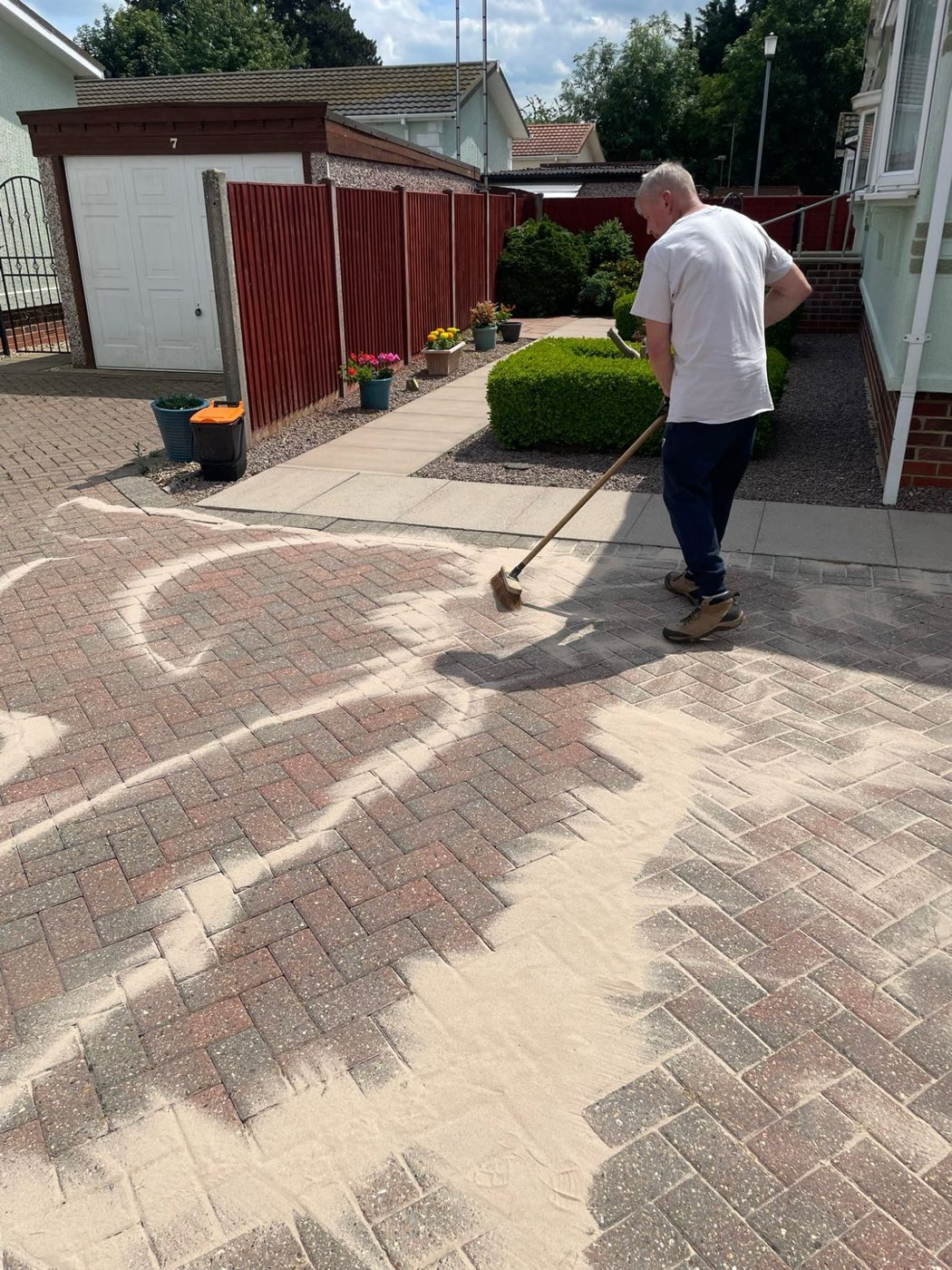
How to clean a resin driveway without causing damage
Resin driveways look stunning when clean — here's exactly how to keep yours that way without lifting the surface or voiding your warranty.
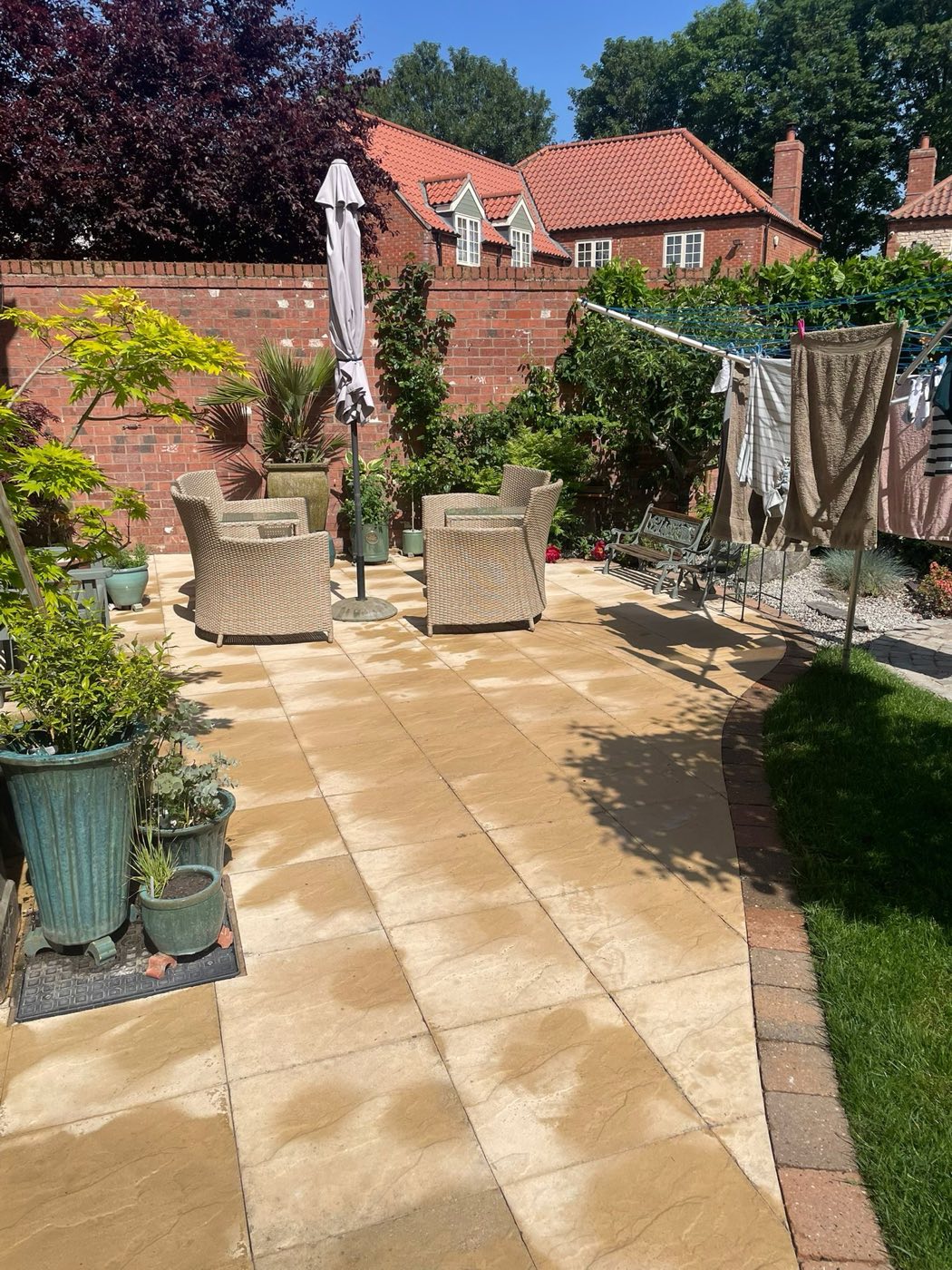
How to clean a driveway after heavy rain
Heavy rain leaves driveways muddy, stained and slippery — here's exactly how to clean yours back to a smart finish.
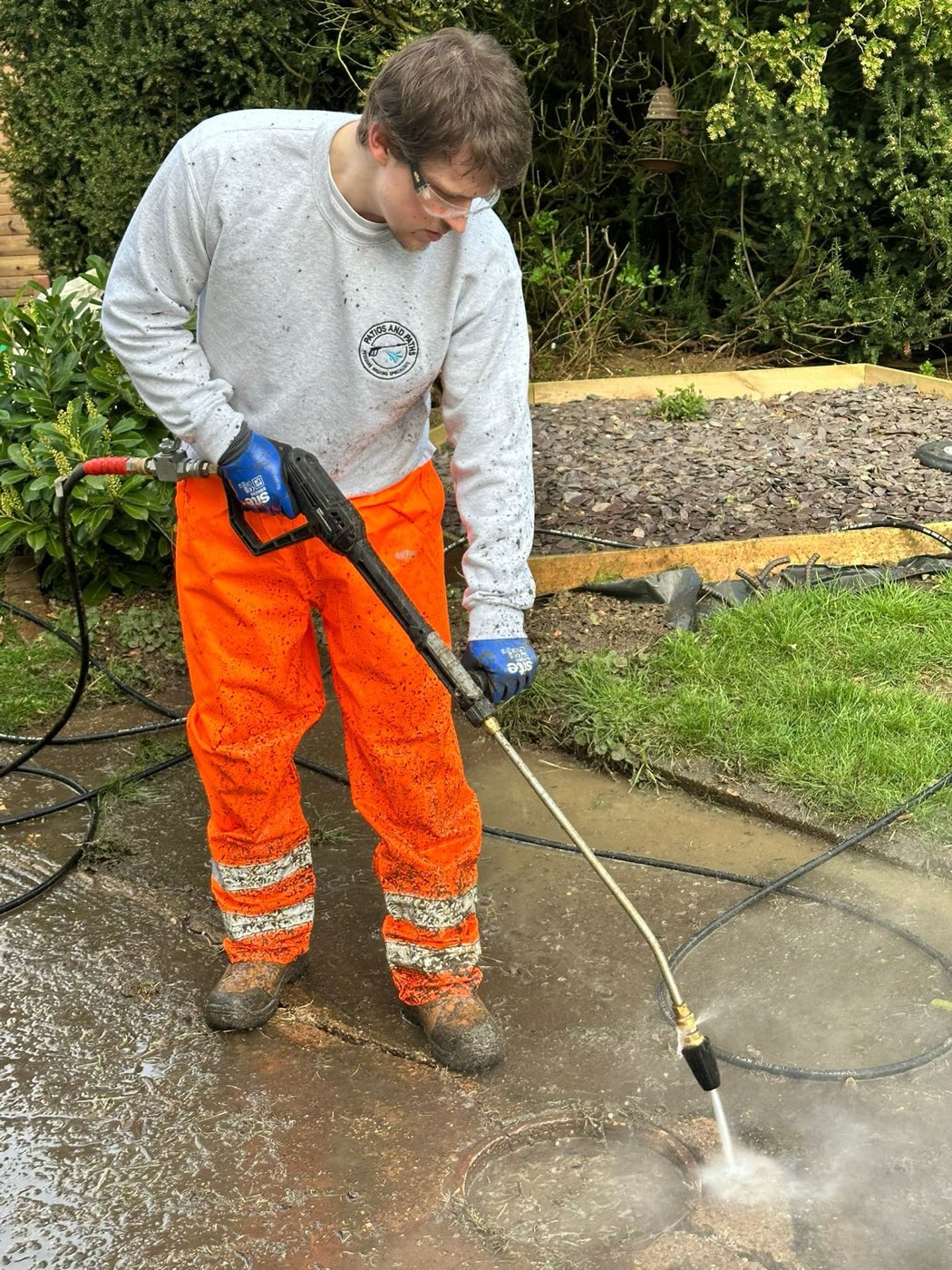
How to clean a driveway edging and border properly
Weedy, mossy joints can ruin an otherwise tidy driveway — here's how to clean block paving joints properly and stop the problem coming back.