
6 October 2026 · Patios and Paths
How to clean a shaded patio that stays damp
If you've got a patio tucked against a north-facing wall, overshadowed by a fence, or sitting under a large tree, you'll know the problem well. It never fully dries out, the surface turns green within weeks of a clean, and no amount of scrubbing with a yard brush seems to make a lasting difference. Learning how to clean a shaded patio that stays damp takes a slightly different approach from cleaning a sun-baked south-facing slab — but it's absolutely doable, and the results can be dramatic.
The short answer: you need the right chemical treatment combined with proper pressure washing, and ideally a follow-up biocide to slow regrowth. Here's how we do it.
Why shaded patios get so much worse
Moss, algae and black spot all thrive in damp, low-light conditions. A patio that dries quickly in direct sun gives these organisms far less chance to take hold. A shaded patio, by contrast, stays moist for longer after rain — sometimes for days — and that's exactly the environment that turns a light green tinge into a thick, slippery carpet of growth.
In Lincolnshire, where we get plenty of overcast, drizzly weather from autumn through to late spring, even patios with partial shade can turn green surprisingly fast. We regularly clean shaded patios in places like Nettleham and Saxilby where mature trees and close-set houses mean certain areas barely see direct sun for months at a time.
The other issue with shaded patios is organic debris — fallen leaves, bird mess, soil blown from borders — which settles, decomposes and feeds further biological growth. It becomes a self-reinforcing cycle if left unchecked.
What you're actually dealing with
Before you start cleaning, it's worth knowing what's growing on your patio:
- Green algae — the most common culprit. Slimy, slippery, and spreads rapidly in damp shade.
- Moss — builds up in joints and on rougher surfaces. Holds moisture, which makes the whole slab stay wetter for longer.
- Black spot (tar lichen) — darker, flatter patches that bond to the surface and are much harder to lift.
- Organic staining — the brown or grey discolouration left behind after biological growth is removed.
Each of these responds slightly differently to treatment, which is why a one-size approach often disappoints.
The right cleaning method for a damp, shaded patio
Step 1 — pre-treat with a suitable solution
For heavily shaded, perpetually damp patios, a good pre-treatment is essential. A diluted bleach-based solution or a proprietary patio biocide applied and left to dwell for 20–30 minutes will start to kill off the biological growth before any water or pressure is used. This makes the physical cleaning far more effective.
Avoid pouring neat bleach directly onto natural stone — it can discolour limestone, sandstone and Indian sandstone. For those surfaces, use a pH-neutral specialist cleaner instead.
Step 2 — pressure wash properly
Once the pre-treatment has done its work, pressure washing lifts the dead and dying growth from the surface. For a standard concrete or porcelain patio, a rotary surface cleaner gives a consistent, even clean without the streaking you can get from a lance alone.
For more delicate materials — natural stone, sandstone, slate — keep the pressure lower and keep the nozzle moving. The goal is to clean the surface, not blast it apart.
See our patio cleaning topic hub for more detail on cleaning specific surface types.
Step 3 — treat the joints
Shaded patios often have moss packed into the jointing. If you leave it there, it recolonises the slab surface very quickly. A lance or narrow nozzle can clear shallow joints, but deeply packed moss may need hand-raking first.
Once the joints are clear, re-sanding with kiln-dried jointing sand helps stabilise the surface and reduces the foothold for new growth.
Step 4 — apply a post-treatment biocide
This is the step that makes the real difference on a shaded patio. A post-clean biocide — sprayed on after washing and left to dry in — continues working for weeks, slowing the return of algae and moss significantly. It won't stop regrowth forever, but it can extend the time between cleans considerably.
How often does a shaded patio need cleaning?
For a well-lit patio, once every two to three years is often enough. For a permanently shaded, damp patio, you're more realistically looking at every 12–18 months if you want to keep it safe underfoot and presentable. A post-treatment biocide helps stretch that interval.
If slipperiness is a concern — particularly for older family members or if you have young children — an annual clean is a sensible precaution. A mossy patio in Lincolnshire's wet winters is a genuine slip hazard.
What doesn't work
- Jet washing alone without pre-treatment — you'll shift some growth but leave spores behind, and regrowth comes back faster.
- Household washing-up liquid or vinegar — won't kill biological growth. Vinegar can also etch some stones.
- Scrubbing brushes without any chemical — exhausting and largely ineffective on established algae and black spot.
- Ignoring it and hoping the sun sorts it out — if the area is genuinely shaded, it won't.
When to call in a professional
If your patio is large, the growth is thick, or you're unsure about the surface type and what it can handle, it's worth getting a professional in. We carry the right equipment and chemicals to clean safely without risking damage — and we do this across Lincolnshire, including Cherry Willingham, Welton, Branston and surrounding villages.
Check our areas we cover to see if we work in your part of Lincolnshire, or head straight to our services to find out what's included in a standard patio clean.
A clean, safe patio — even a shaded one — is well within reach. Get a free, no-obligation quote today and we'll tell you exactly what your surface needs.
Frequently asked questions
Why does my shaded patio go green so quickly after cleaning?
Shaded patios stay damp for longer after rain, which creates ideal conditions for algae and moss to return rapidly. Applying a post-clean biocide after washing slows regrowth significantly by continuing to work on the surface as it dries.
Is it safe to use bleach on a shaded patio?
Diluted bleach works well on concrete and porcelain, but should be avoided on natural stone surfaces like sandstone, limestone or Indian sandstone as it can cause discolouration. Use a pH-neutral specialist cleaner for those materials instead.
How often should I clean a north-facing or shaded patio?
Most shaded patios need cleaning every 12 to 18 months to stay safe and presentable. A post-treatment biocide after each clean can help extend that interval.
Can pressure washing damage a shaded patio surface?
Pressure washing at the wrong pressure or with the wrong nozzle can damage softer natural stones. A professional will adjust the pressure and technique to suit the specific surface, avoiding pitting, etching or joint erosion.
Need a hand with yours? We cover Lincolnshire for patios, driveways, paths and more — see the areas we cover or browse our services. Get a free quote or call 07874 010739.
Keep reading
More on patio cleaning
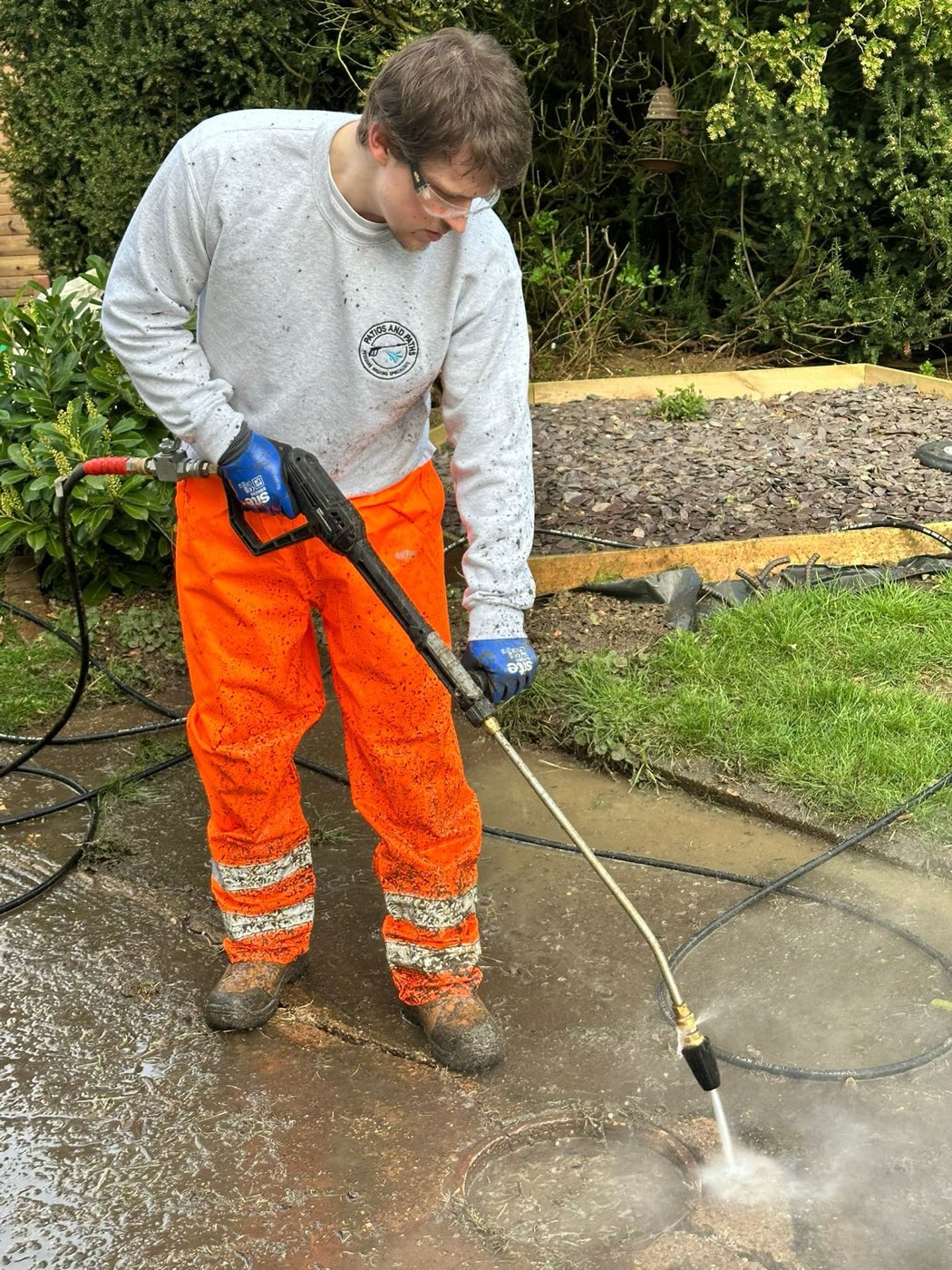
How to clean a patio with a pressure washer safely
Pressure washing a patio is satisfying — but the wrong settings or technique can cause real damage. Here's how to do it properly.
How to clean a wet pour rubber path properly
Wet pour rubber paths are low-maintenance — but they do get dirty, mossy and slippery. Here's how to clean them safely without causing damage.
How to remove rust stains from paving and paths
Rust stains on paving are stubborn, but with the right approach they don't have to be permanent — here's what actually works.