
16 July 2026 · Patios and Paths
Autumn patio prep: getting your garden ready for winter
As the nights draw in and the leaves start to fall, most of us stop thinking about our outdoor spaces until spring. But a bit of autumn patio prep now can make the difference between stepping out onto a clean, safe surface in March and facing a green, slippery mess that needs serious work.
Here's a straightforward guide to what's worth doing before winter — and what you can safely leave.
Why autumn is the best time to clean outdoor surfaces
Spring gets all the attention, but autumn is actually the smarter time to clean your patio, paths and block paving. Here's why: moss, algae and lichen all grow fastest in cold, damp conditions. If you go into winter with a surface that's already carrying spores or a thin green film, you'll come out the other side with a fully established colony that's far harder to shift.
Clean the surface in autumn — when it's dry enough to work properly but before the worst of the cold and damp sets in — and you slow that growth right down. It also means any sealant you apply bonds properly before it faces months of frost, rain and leaf mulch.
For homeowners in places like Nettleham, Branston and Washingborough, where gardens often sit in partial shade for large parts of the day, this matters even more. Shaded surfaces stay damp longer and green up faster.
What autumn patio prep actually involves
Done properly, getting your garden surfaces ready for winter breaks down into a handful of straightforward steps.
1. Clear debris properly
Leaves left sitting on paving are more damaging than they look. They trap moisture, block drainage channels and break down into a mulch that feeds algae and moss. Get them off the surface completely — not just swept to one side.
Pay particular attention to the gaps in block paving and the joints in natural stone, where debris gathers and holds moisture against the surface.
2. Pressure wash while conditions allow
Autumn gives you a narrower window than summer, but there are usually enough dry days between September and early November to pressure wash properly. You want the surface to have time to dry out fully after cleaning — ideally at least 24–48 hours before any rain or frost.
A thorough pressure wash at this time of year removes the thin layer of biological growth that's built up over summer before it can bed in over winter. It also lets you see the true condition of the surface — any cracks, loose joints or damaged areas are much easier to spot on a clean paving stone than a dirty one.
If you'd rather leave this to someone with the right equipment, we cover most of Lincolnshire — you can see the areas we work in or jump straight to a free quote.
3. Treat for moss and algae
If your patio or paths are prone to going green — particularly in shadier spots — autumn is a good time to apply a moss and algae treatment after cleaning. These work by leaving a residue that inhibits regrowth over the coming months.
Applied to a clean, dry surface, they last much longer than if you apply them over existing growth. This is one of those jobs where the prep genuinely determines the result.
4. Check and re-sand block paving joints
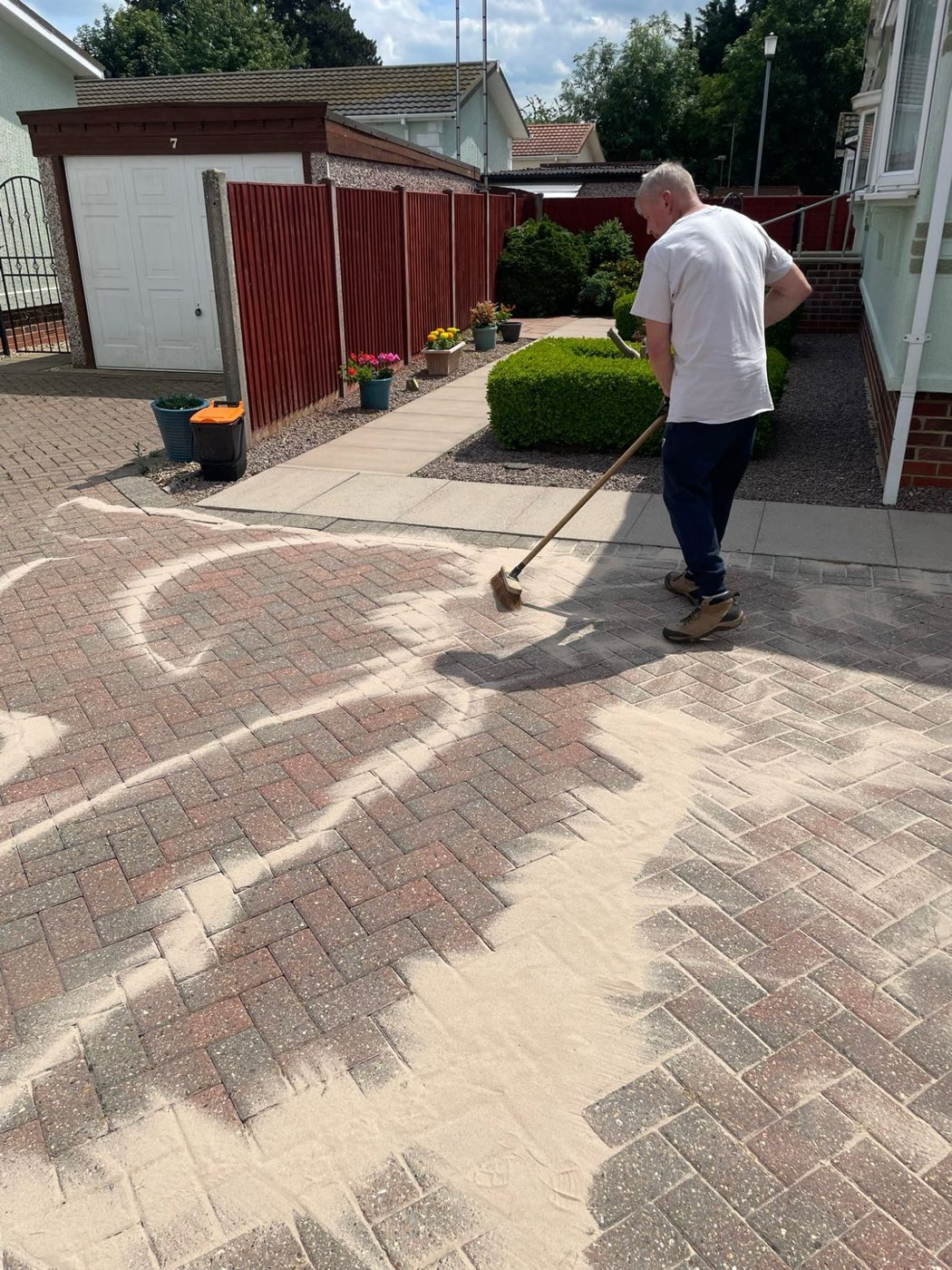
Winter rain and frost can work loose jointing sand out of block paving surprisingly quickly — but only if it's already been partially eroded. Autumn is a good time to top up any joints that are looking low or empty.
Kiln-dried sand brushed in and compacted before winter helps lock the blocks together and reduces the amount of water that can get underneath the surface and cause movement during freeze-thaw cycles.
5. Consider sealing — but only on a clean, dry surface
If your paving is looking good after a clean and you want to protect it through winter, a surface sealant is worth considering. It won't stop all biological growth, but it does make the surface easier to clean and slows the rate at which moss and algae take hold.
The critical rule: never seal a damp or dirty surface. The sealant will trap moisture and discolouration underneath and you'll end up with patchy, peeling results. Clean and dry first, seal second — or don't bother. Our patio cleaning guides go into more detail on when sealing makes sense.
What you don't need to do
- Cover your paving with sheeting. Most paving — including porcelain, concrete and natural stone — is designed to live outside year-round. Sheeting just traps moisture.
- Pressure wash in freezing conditions. Water forced into hairline cracks that then freeze can cause real damage. If it's forecast to drop below zero within 48 hours, wait.
- Apply any product to a wet surface. Moss treatments, sealants and joint sand stabilisers all need a dry surface to bond or work properly.
When to call us instead
If your patio or paths are heavily greened, stained or showing signs of damage — loose slabs, sunken block paving, deep black spot — a proper professional clean will do a better job than DIY at this time of year, and it sets you up properly for any sealing or treatment afterwards.
We work across Lincolnshire, including Lincoln, Skellingthorpe, Cherry Willingham, Heighington and the surrounding villages. Our full list of services covers everything from block paving and natural stone to paths, driveways and decking.
Get a free quote this autumn
If you'd like us to take care of your autumn patio prep — cleaning, treating and leaving your surfaces ready for whatever winter throws at them — get in touch for a free, no-obligation quote. We'll give you a straight price with no surprises.
Request a free quote and we'll get back to you quickly.
Frequently asked questions
When is the best time to clean a patio in autumn?
Aim for a dry spell between September and early November, while temperatures are still above 5°C. You need at least 24–48 hours of dry weather after cleaning for the surface to dry properly before rain or frost arrives.
Can I pressure wash my patio in autumn, or is it too late in the year?
Autumn is actually an ideal time to pressure wash, as long as you avoid freezing conditions. Cleaning before winter removes biological growth before it beds in, and gives any treatment or sealant the best chance to work.
Should I seal my patio before winter?
It's worth doing if the surface is in good condition after cleaning and fully dry. Never seal a damp or dirty surface — it will trap moisture and the results will be poor. If in doubt, clean this autumn and seal in spring.
How do I stop my patio going green over winter?
Clean the surface thoroughly in autumn to remove existing growth, then apply a moss and algae treatment to a dry surface. This residue inhibits regrowth through the cold, damp months when biological growth is at its worst.
Need a hand with yours? We cover Lincolnshire for patios, driveways, paths and more — see the areas we cover or browse our services. Get a free quote or call 07874 010739.
Keep reading
More on patio cleaning
How to clean a concrete path without streaks
Streaky concrete paths are usually caused by the wrong pressure-washing technique — here's how to get an even, clean finish every time.
How to clean a shaded patio that stays damp
A permanently damp, shaded patio is the hardest surface to keep clean — here's what actually shifts the green and keeps it away longer.
How to clean a patio with a pressure washer safely
Pressure washing a patio is satisfying — but the wrong settings or technique can cause real damage. Here's how to do it properly.