14 July 2026 · Patios and Paths
How to clean concrete paving slabs properly
Concrete paving slabs are one of the most common surfaces in Lincolnshire gardens, and for good reason — they're affordable, durable, and they last for decades. But they do get dirty. Knowing how to clean concrete paving slabs properly means you avoid damaging the surface, wasting your weekend, and ending up with patchy results that look worse than when you started.
The short answer: a pressure washer, a good detergent, and the right technique will transform most concrete slabs in a single afternoon. The long answer is a little more involved — and that's what this guide covers.
Why concrete slabs get so grubby
Concrete is porous. Rain, mud, algae, moss, and traffic all leave their mark over time. In shaded spots — the north-facing corner of a garden in Nettleham, or the back path of a semi in Saxilby — green algae and black mould can build up surprisingly quickly. Even in sunnier spots, you'll see general darkening from dirt and organic matter working into the surface.
The good news is that concrete responds brilliantly to a proper clean. Unlike some natural stones, it can handle both pressure washing and chemical treatments without much risk of damage — as long as you're sensible about it.
What you'll need before you start
Gather everything before you begin. Stopping halfway to hunt for equipment lets the detergent dry out and makes the job harder.
- A pressure washer (1,500–2,500 PSI is plenty for most domestic concrete)
- A rotary surface cleaner attachment (gives even results, avoids streaking)
- A stiff-bristled brush or deck scrubber
- A patio or path cleaning detergent — something with a biocide to kill algae
- A garden hose with decent pressure for rinsing
- Old clothes you don't mind getting soaked
- Safety glasses
You don't need expensive specialist kit. What matters more is technique.
How to clean concrete paving slabs: step by step
1. Clear the area and sweep first
Move pots, furniture, and anything else off the slabs. Then give the whole surface a thorough sweep. Leaves and loose debris just clog your pressure washer and turn into slippery mush underfoot.
2. Apply your detergent and let it dwell
Mix or apply your patio cleaner according to the instructions — most need to sit on the surface for 10–20 minutes to break down algae and surface grime. Don't let it dry out. If it's a hot day, work in sections.
For stubborn staining — oil, rust marks, or heavy black algae — you may want a dedicated concrete cleaner rather than a general patio detergent. Apply it with a brush, work it into the affected area, and give it time to act.
3. Pressure wash methodically
This is where most people go wrong. They wave the lance around randomly and end up with streaky, uneven results.
Instead:
- Use a rotary surface cleaner if you have one — it makes an enormous difference
- If using a standard lance, use a 25–40 degree fan tip, not a zero-degree pencil jet
- Work in consistent overlapping strips, moving steadily
- Keep the nozzle 15–20 cm from the surface — too close and you can pit the concrete
- Pay extra attention to the joints between slabs, where moss and weeds love to hide
4. Tackle the joints separately
The gaps between slabs often need a separate pass with the lance at a lower angle to flush out compacted debris and kill off weed roots. Be thorough here — this is usually where the most stubborn growth is hiding.
5. Rinse thoroughly
Once you've pressure washed the whole area, rinse off any remaining detergent with clean water. Work from the highest point down towards a drain or the lawn edge so dirty water flows away from cleaned sections.
6. Let it dry before you judge the results
Wet concrete always looks darker and a bit patchy. Give the slabs a full dry day before you decide whether you're happy with the result. On a decent day in Lincolnshire, most surfaces are dry enough to assess by early afternoon.
Common mistakes that ruin the finish
Using too much pressure too close to the surface. You can erode the surface layer of concrete, especially on older slabs. Keep your distance and let the detergent do the work.
Skipping the detergent. Pressure washing alone shifts surface dirt but won't kill algae. Within a few weeks the green will be back, because the spores are still there.
Working in the wrong direction. Always rinse dirty water away from already-cleaned areas, not across them.
Ignoring the edges and borders. Slabs that meet a wall, fence, or lawn edge are often the worst affected — and the easiest to miss.
When it's worth calling a professional
If your concrete slabs are heavily stained, very large in area, or you just don't have the equipment or time, a professional clean is often the most cost-effective answer. A good local contractor will have commercial-grade kit, proper surface cleaners, and the experience to tackle problem areas without risking damage.
Across Lincolnshire — from driveways in Branston to back-garden paths in Cherry Willingham — we see a lot of concrete that homeowners have struggled with for years, only to be amazed at what a single professional visit achieves. You can see the range of surfaces we work on at our services page, or find out whether we cover your area on the areas page.
For posts on related patio topics, take a look at our patio cleaning guides.
Should you seal concrete slabs after cleaning?
Sealing isn't essential, but it does help. A good concrete or patio sealer slows down the rate at which algae and dirt can penetrate the surface, which means it stays cleaner for longer between washes. If your slabs are in a shaded spot or on a north-facing aspect, sealing is particularly worthwhile.
Make sure the slabs are fully dry before applying any sealer — usually 24–48 hours after cleaning.
Ready to get your slabs looking their best?
If you'd rather leave it to us, we're happy to take a look and give you a straight, no-obligation quote. We cover most of Lincolnshire and we'll tell you honestly what's achievable. Get a free quote and we'll be in touch quickly.
Frequently asked questions
Can I clean concrete paving slabs without a pressure washer?
Yes, though it takes more effort. Apply a patio cleaning detergent with a biocide, let it dwell for 15–20 minutes, then scrub firmly with a stiff brush and rinse thoroughly with a hose. You won't get quite the same result as pressure washing, but it's effective for light to moderate grime.
How long does it take for concrete slabs to dry after cleaning?
In typical Lincolnshire weather, most concrete slabs are surface-dry within a few hours and fully dry within 24 hours. Shaded areas or damp conditions can take longer — always wait until fully dry before applying sealer.
Why do my concrete slabs keep going green so quickly after I clean them?
Green algae returns fast when the spores aren't fully killed during cleaning. Using a detergent with a biocide (rather than just water) deals with the root cause, not just the surface layer. Sealing the slabs afterwards also helps slow regrowth.
What PSI pressure washer do I need to clean concrete paving slabs?
For most domestic concrete slabs, 1,500–2,500 PSI is sufficient. Higher pressure isn't always better — going above 3,000 PSI risks pitting or eroding the surface, especially on older or lower-quality concrete.
Need a hand with yours? We cover Lincolnshire for patios, driveways, paths and more — see the areas we cover or browse our services. Get a free quote or call 07874 010739.
Keep reading
More on patio cleaning
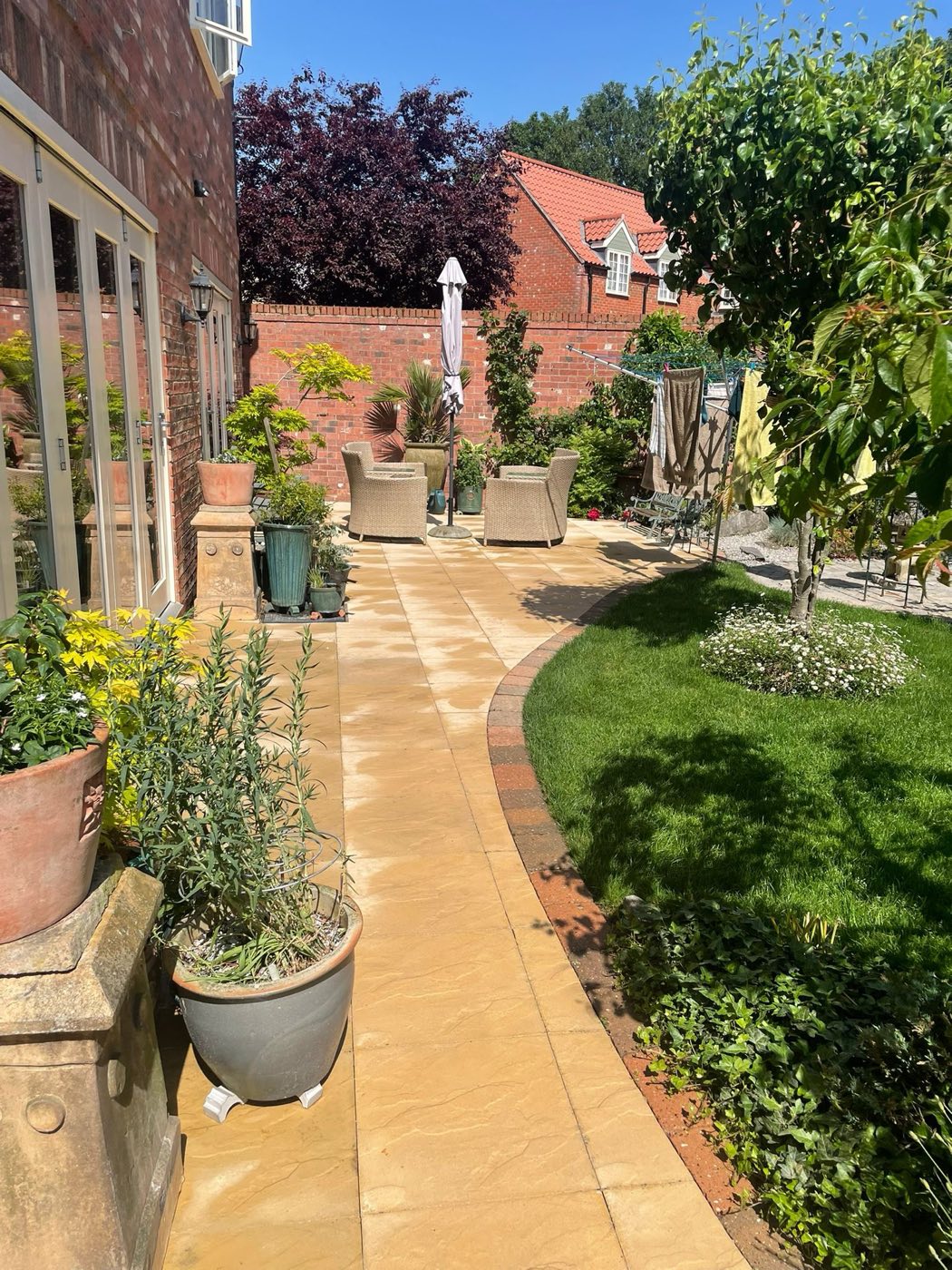
How to clean a shaded patio that stays damp
A permanently damp, shaded patio is the hardest surface to keep clean — here's what actually shifts the green and keeps it away longer.
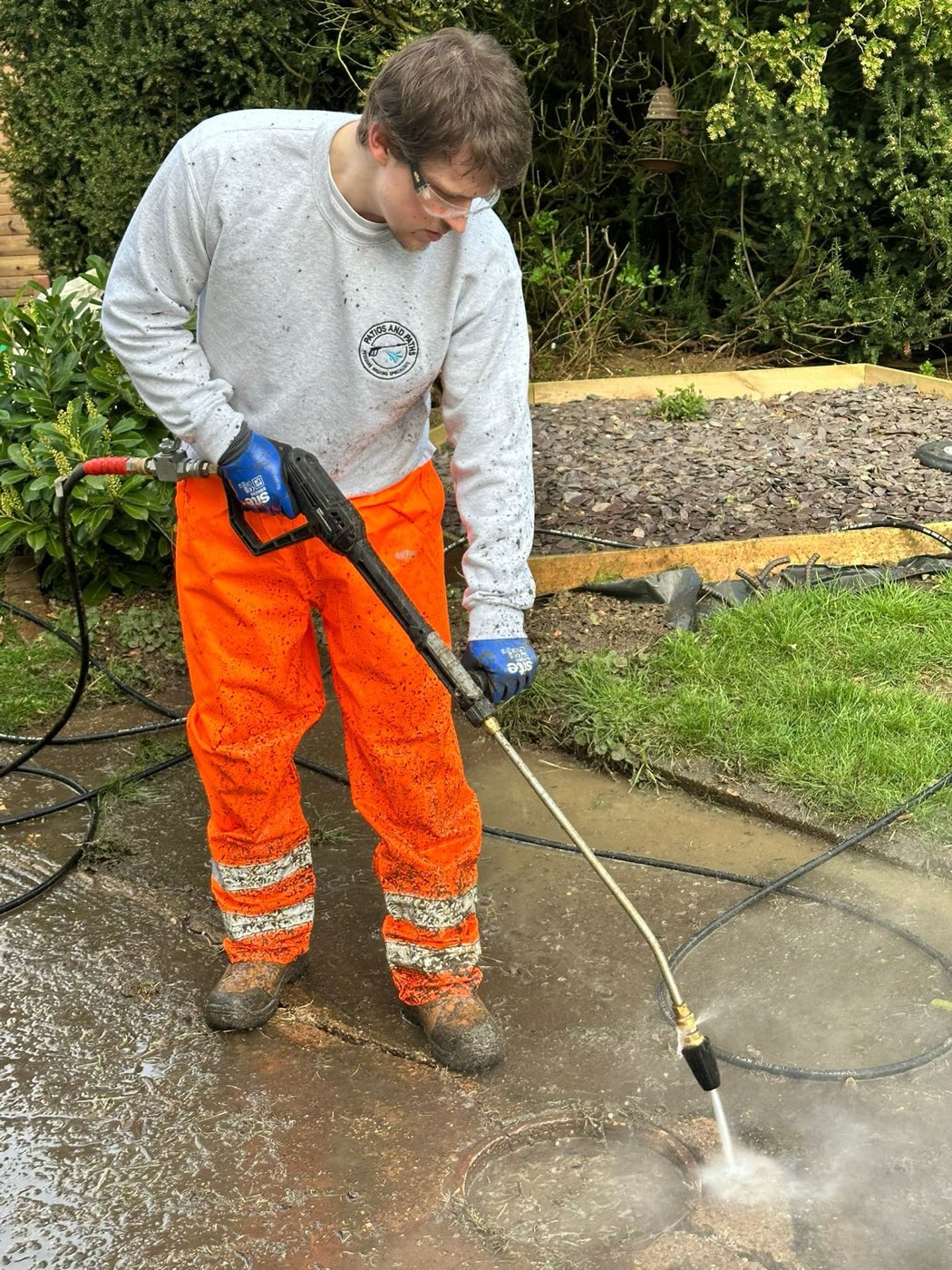
How to clean a patio with a pressure washer safely
Pressure washing a patio is satisfying — but the wrong settings or technique can cause real damage. Here's how to do it properly.
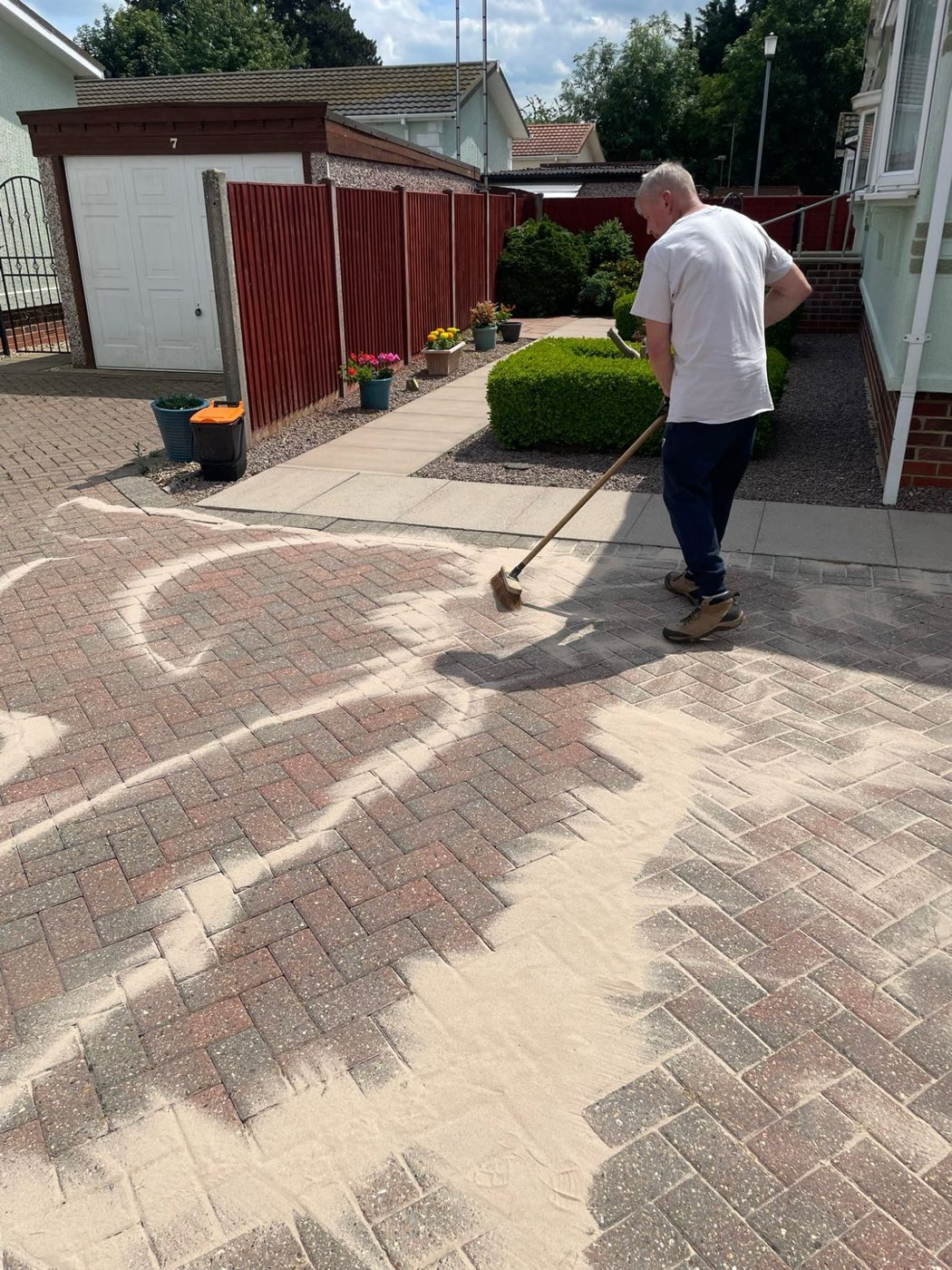
How to clean a wet pour rubber path properly
Wet pour rubber paths are low-maintenance — but they do get dirty, mossy and slippery. Here's how to clean them safely without causing damage.