
12 July 2026 · Patios and Paths
Cleaning a shaded north-facing patio: what works
If you've got a patio that barely sees the sun, you'll know the problem all too well. Cleaning a shaded north-facing patio is a different challenge from a bright south-facing one — the surface stays damp for longer, algae and moss take hold faster, and ordinary brushing or a quick jet-wash rarely gets to the root of it. The good news is that with the right method, even the darkest, most neglected patio in Lincolnshire can come back looking genuinely clean and safe underfoot.
Why north-facing patios suffer more than others
It comes down to moisture and light. A south-facing patio dries out quickly after rain because the sun hits it directly for much of the day. A north-facing one — or one tucked under a fence, overhanging tree or house wall — can stay damp for hours, sometimes days. That persistent moisture is exactly what algae, moss and black lichen need to colonise a surface.
The result is a patio that looks dark and grimy even in summer, with a slippery green or black film that builds up year on year. In places like Nettleham or Cherry Willingham, where gardens often have mature trees and hedging, this is an especially common complaint.
The three main culprits
Before you reach for the pressure washer, it helps to know what you're dealing with:
- Green algae — the most common. Appears as a thin, slippery green film, particularly on smooth or polished surfaces. It can colonise a clean surface surprisingly quickly in shaded spots.
- Moss — builds up in joints and on textured surfaces, holding moisture and accelerating the spread of other growth.
- Black spot and lichen — the stubbornest of the three. Lichen in particular roots into the surface of stone and porcelain, leaving dark stains that look like they're part of the material itself.
Each one responds differently to treatment, which is why a one-size-fits-all approach rarely gives a lasting result.
What actually shifts it
Pressure washing alone isn't enough
A pressure washer is a great tool, but on a heavily shaded patio it's usually only part of the answer. High-pressure water will blast off loose moss and surface algae, but it won't kill the organisms at the root — so regrowth happens faster than you'd expect. On some surfaces, such as Indian sandstone or older concrete, blasting at high pressure can also open up the surface texture and make it even more porous and prone to re-soiling.
For a shaded patio, the most effective approach combines a professional-grade biocide or algaecide treatment with controlled-pressure cleaning. The treatment penetrates and kills the growth at the source; the pressure wash then removes the dead material cleanly.
Treating joints separately
The joints between paving slabs are often where moss gets its real foothold. If the jointing compound has cracked or eroded, it creates a perfect refuge — damp, sheltered and largely untouched by any surface cleaning. Part of a thorough clean should include clearing and treating those joints, and if they're in poor condition, re-pointing them afterwards will make a significant difference to how quickly the patio dirties again.
Choosing the right cleaning agent for your surface
Different paving materials need different treatments:
- Concrete and porcelain — generally tolerant of stronger treatments and higher pressure, but check with a professional before applying anything acidic to porcelain.
- Indian sandstone and natural stone — needs a pH-neutral or alkaline cleaner; acidic products can etch or discolour the surface permanently.
- Block paving — responds well to biocide treatments, but high-pressure cleaning can dislodge jointing sand, so a sand refill and re-sealing is often worth doing at the same time.
If you're unsure what your patio is made from, a professional will be able to identify it and choose the right products accordingly. You can see the full range of surfaces we work with over on our patio cleaning topic hub.
After cleaning: slowing down the regrowth
Cleaning a shaded patio is only worthwhile if you can keep it cleaner for longer. A few steps make a real difference:
- Apply a post-clean biocide or algae inhibitor — this continues working for months after the clean, killing spores before they take hold.
- Seal the surface if appropriate — sealing closes down the micro-pores that algae colonise, and makes future cleaning much easier. It's not right for every surface, but for many patios it's a sound investment.
- Improve drainage where you can — water pooling on a patio because of a slight dip or blocked drain will always cause faster soiling. Pointing out drainage issues is something we flag up as part of any job.
- Trim back overhanging plants — more airflow and even a little more light reaching the surface will slow regrowth noticeably.
When to get it done
The honest answer is: whenever you want it done. We clean patios all year round across Lincolnshire, from Saxilby to Washingborough and beyond. That said, spring and early autumn are particularly good times — spring because you get to enjoy a clean patio through summer, autumn because cleaning before winter removes the algae and moss before they bed in deeper over the cold months.
If your patio has been neglected for several years, one good professional clean will reset the clock, and keeping on top of it with a biocide spray each spring and autumn is then much more manageable.
How we approach shaded patios
When we take on a north-facing or heavily shaded patio, we start with an assessment of the surface type, the extent of growth and the condition of the joints. We then apply the appropriate treatment, allow it to dwell, and clean at the right pressure for that surface. It's not a race — done properly, a neglected patio can take a couple of hours — but the result is a surface that looks genuinely clean rather than just wet.
You can see the areas we cover across the county on our areas page or check out what we offer across our range of services.
If your shaded patio is looking dark, slippery or just past its best, we'd be glad to take a look. Get a free quote today — no obligation, and we'll give you an honest assessment of what's achievable.
Frequently asked questions
Why does my north-facing patio go green so quickly after cleaning?
Shaded patios stay damp for longer, which creates ideal conditions for algae and moss to regrow rapidly. Using a post-clean biocide treatment and, where appropriate, sealing the surface will significantly slow regrowth between cleans.
Can I use a pressure washer on a shaded patio myself?
You can, but pressure washing alone won't kill the algae or moss at the root — it just removes the visible growth, which tends to come back quickly. A professional treatment that combines biocide application with controlled pressure cleaning gives a much longer-lasting result.
How often should a shaded patio be professionally cleaned?
Most shaded patios benefit from a professional clean every one to two years, combined with a biocide spray each spring and autumn. Heavy tree cover or poor drainage may mean annual cleaning is more appropriate.
Will cleaning damage my natural stone patio?
Not if the right method and cleaning agents are used. Natural stone such as Indian sandstone needs pH-neutral or alkaline cleaners — acidic products can cause permanent discolouration. A professional will identify your surface type and choose the correct treatment.
Need a hand with yours? We cover Lincolnshire for patios, driveways, paths and more — see the areas we cover or browse our services. Get a free quote or call 07874 010739.
Keep reading
More on patio cleaning
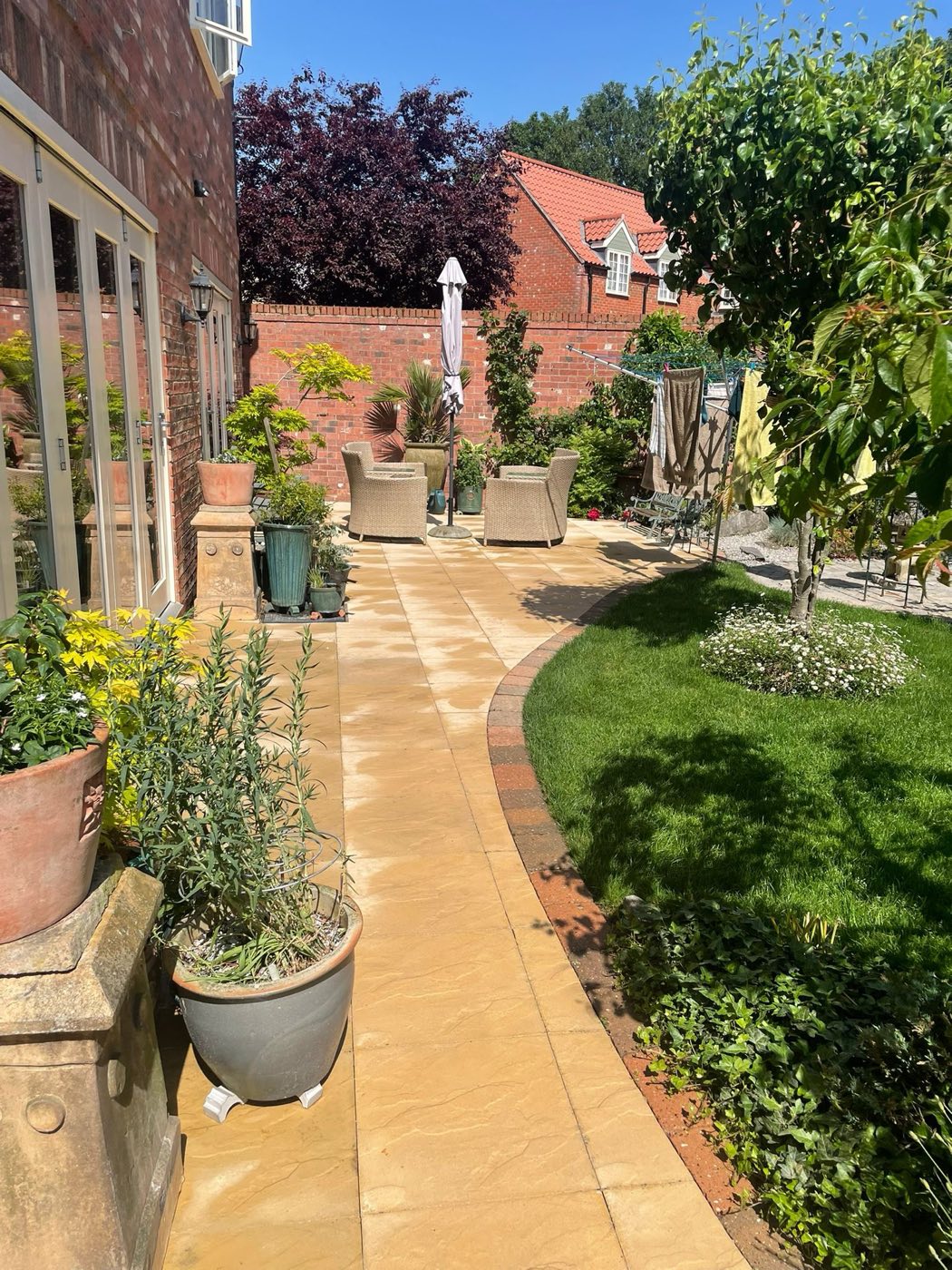
How to clean a shaded patio that stays damp
A permanently damp, shaded patio is the hardest surface to keep clean — here's what actually shifts the green and keeps it away longer.
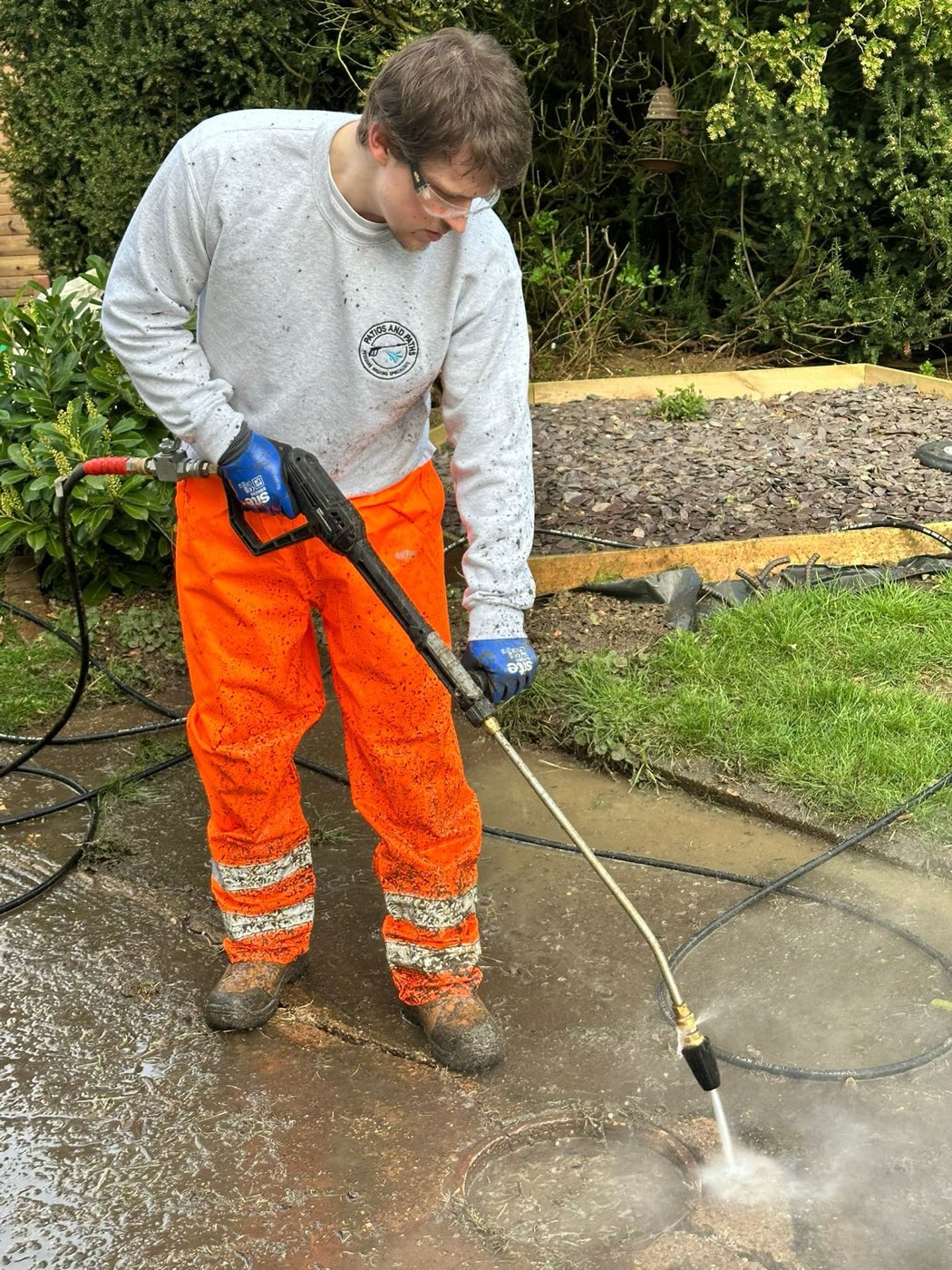
How to clean a patio with a pressure washer safely
Pressure washing a patio is satisfying — but the wrong settings or technique can cause real damage. Here's how to do it properly.
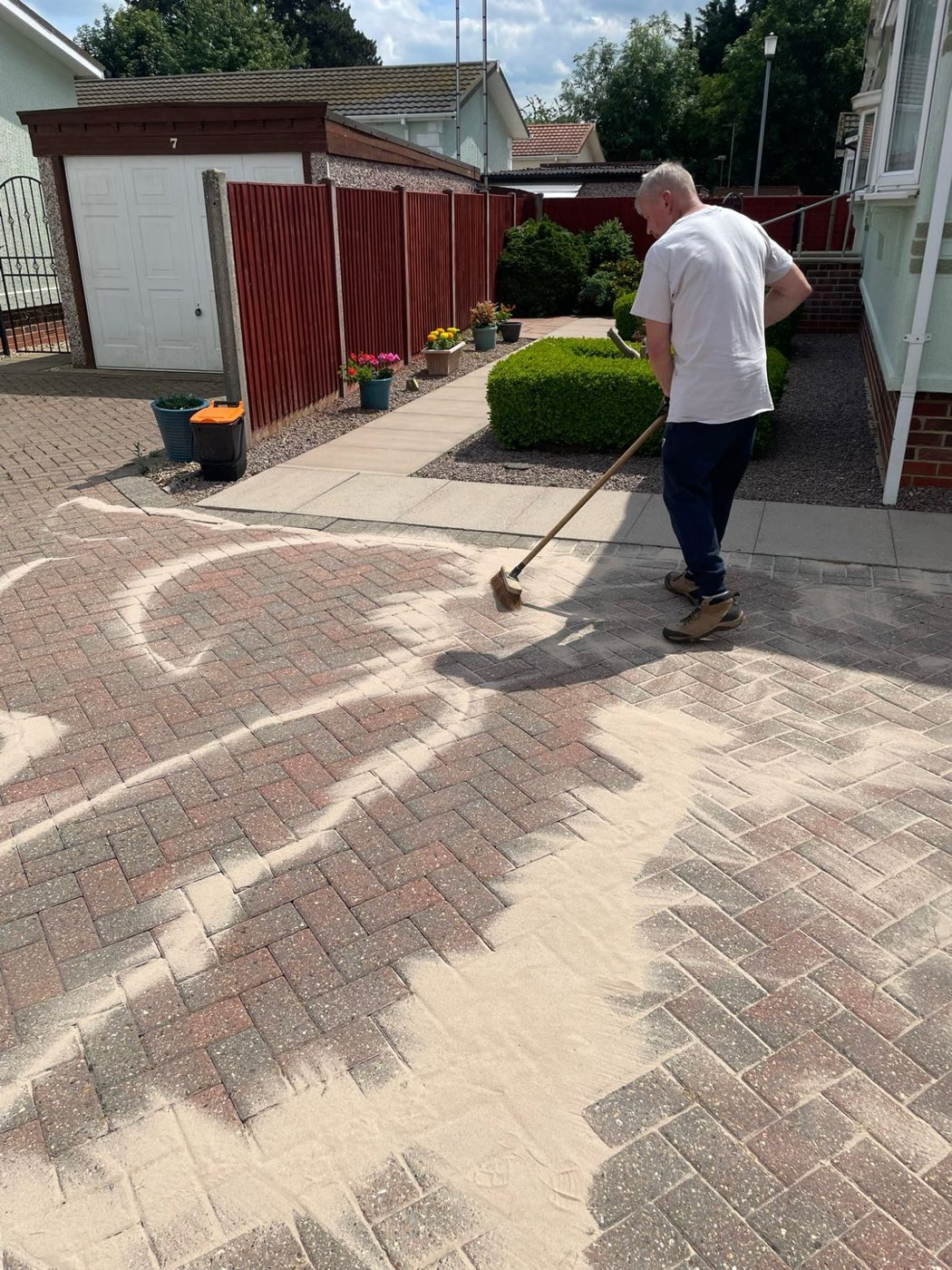
How to clean a wet pour rubber path properly
Wet pour rubber paths are low-maintenance — but they do get dirty, mossy and slippery. Here's how to clean them safely without causing damage.