
6 July 2026 · Patios and Paths
Why your patio goes green every winter (and how to stop it)
If you've ever looked out at your patio in November and wondered where the colour went, you're not alone. Why your patio goes green every winter is one of the most common questions we get from homeowners across Lincolnshire — and the answer is simpler than most people expect.
The short version: algae, moss and lichen love exactly the conditions that winter brings. Once you understand why, you can do something about it.
What is that green stuff, exactly?
The green film that appears on paving each autumn is almost always algae — microscopic plant-like organisms that form a thin, slippery biofilm on any hard surface. Moss is a step further: a thicker, spongy growth that takes hold once algae has prepared the ground. In shadier spots you may also see lichen, a greyish-green crust that bonds tightly to the surface and is noticeably harder to shift.
All three thrive in the same conditions: moisture, low light and cool temperatures.
Why winter makes it so much worse
Think about what happens to a patio between October and March:
- Daylight hours shrink, so the sun has less time to dry the surface each day
- Rainfall increases, keeping the paving damp for longer stretches
- Fallen leaves trap moisture and add organic matter that feeds algae
- Low sun angles mean north-facing or partially shaded patios barely see direct light at all
- Growth slows but doesn't stop — algae can colonise surfaces even at near-freezing temperatures
By the time spring arrives, what started as a faint green tinge has often turned into a genuinely slippery, discoloured surface. In areas like Nettleham or Cherry Willingham, where mature gardens cast long shadows over paving, this cycle repeats every single year without fail.
Why some patios are worse than others
Not every patio greens up at the same rate. The factors that make the problem worse include:
- Aspect — north- or east-facing patios stay damper and colder for longer
- Surface texture — rough or riven surfaces (like natural sandstone or old concrete slabs) have more microscopic pores and grooves for spores to grip
- Overhanging trees or fences — anything that limits airflow or drops organic debris accelerates growth
- Unsealed paving — bare stone and concrete are far more porous than sealed surfaces, giving algae an easier foothold
- Age of the surface — older, slightly worn paving has more surface area for biofilm to cling to
If your patio ticks several of these boxes, the annual green return will feel almost inevitable — but it isn't.
How to stop your patio going green every winter
1. Start with a proper clean
No treatment works well on a dirty surface. A thorough professional pressure wash removes the existing algae, moss and embedded grime right back to the paving material itself. This matters because applying a biocide or sealer on top of a contaminated surface just seals the problem in.
Our patio and driveway cleaning services cover all surface types across Lincolnshire — from block paving to natural stone to porcelain.
2. Apply a biocide or algaecide treatment
After cleaning, a diluted biocide (sodium hypochlorite-based or a proprietary patio treatment) applied to a dry surface will kill any remaining spores and create a hostile environment for regrowth. This is best done in late summer or early autumn, before the damp season really sets in. Some treatments have a residual effect that lasts several months.
3. Seal the surface
Sealing is one of the most effective long-term defences. A good quality impregnating sealer fills the surface pores, making it far harder for algae spores to get a grip. It also makes the surface easier to rinse clean during the winter months. Sealed paving simply doesn't go green as fast — or as badly.
For more guidance on which surfaces benefit most, take a look at our patio cleaning topic hub for related advice.
4. Manage the environment
A clean and sealed patio still benefits from a little practical help:
- Sweep leaves off promptly — don't let them sit and decompose
- Trim back overhanging shrubs or trees to improve airflow and light
- Avoid pooling water — check that the fall of the patio is directing water away from the surface, not sitting on it
- Give the patio a light rinse on milder winter days to wash away dust and debris before it becomes food for algae
5. A light annual treatment keeps things in check
Even with all the above in place, a quick biocide spray in September or October — before you see any visible growth — will knock back early-stage colonisation before it takes hold. This is far easier than trying to tackle established moss or lichen later.
When is the right time to get it cleaned?
Late summer to early autumn is ideal: the surface is warm enough for treatments and sealers to cure properly, and you get ahead of the damp season rather than chasing it. That said, a good professional clean can be done at almost any time of year — we work throughout Lincolnshire year-round, including in Waddington, Branston and Heighington.
If the surface is already heavily colonised, the most important thing is getting it cleaned thoroughly before you apply anything else. We can advise on the best approach for your specific surface type when we come out to take a look.
Ready to break the cycle?
If your patio goes green every winter without fail, it doesn't have to. A proper clean, the right treatment and a little maintenance goes a long way — and we can handle the hard work for you.
Get a free, no-obligation quote today and let's get your patio looking its best before the damp sets in. We cover the whole of Lincolnshire — see our full service areas to check we cover your postcode.
Frequently asked questions
Why does my patio go green every year even after I clean it?
Algae spores are always present in the air and will recolonise any damp, porous surface. Without treating the underlying cause — porosity, shade and moisture — the green will return each autumn. Sealing the surface and applying a preventative biocide in late summer breaks the cycle.
Is the green slime on my patio dangerous?
Yes, it can be. Algae forms a thin biofilm that becomes extremely slippery when wet, posing a real slip hazard — especially for older family members or in wet weather. Getting it removed promptly is both a practical and a safety priority.
Can I use bleach to stop my patio going green?
Diluted bleach (sodium hypochlorite) can kill algae and moss on many surfaces, but it needs to be used carefully — the wrong concentration or contact time can discolour natural stone like sandstone or limestone. A purpose-made patio biocide is safer and often more effective for long-term prevention.
How often should I have my patio professionally cleaned to prevent greening?
For most Lincolnshire gardens, a professional clean every one to two years keeps on top of algae and moss before they become deeply established. Patios in heavy shade or under trees may benefit from annual cleaning and a preventative treatment each autumn.
Need a hand with yours? We cover Lincolnshire for patios, driveways, paths and more — see the areas we cover or browse our services. Get a free quote or call 07874 010739.
Keep reading
More on patio cleaning
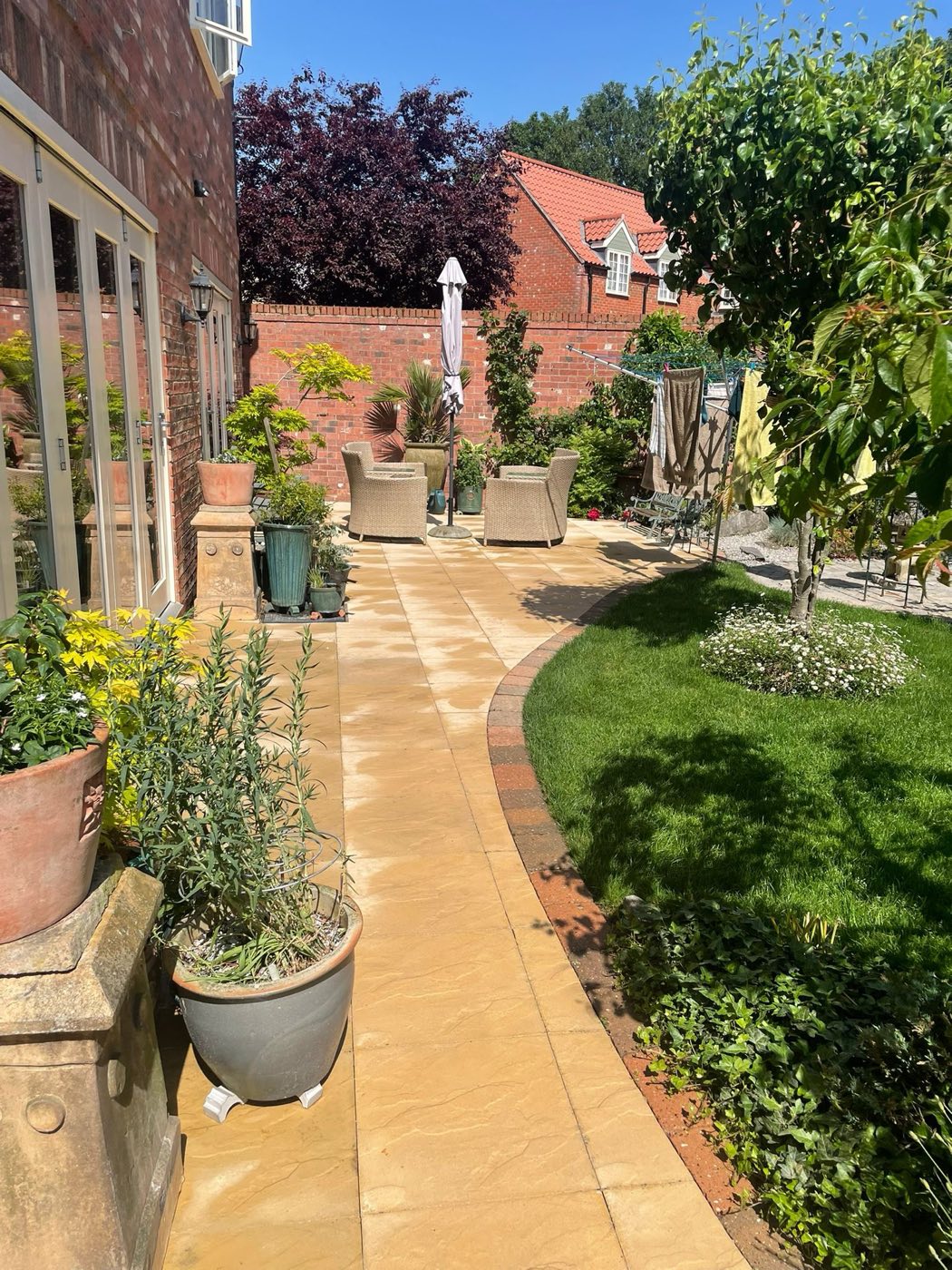
How to clean a shaded patio that stays damp
A permanently damp, shaded patio is the hardest surface to keep clean — here's what actually shifts the green and keeps it away longer.
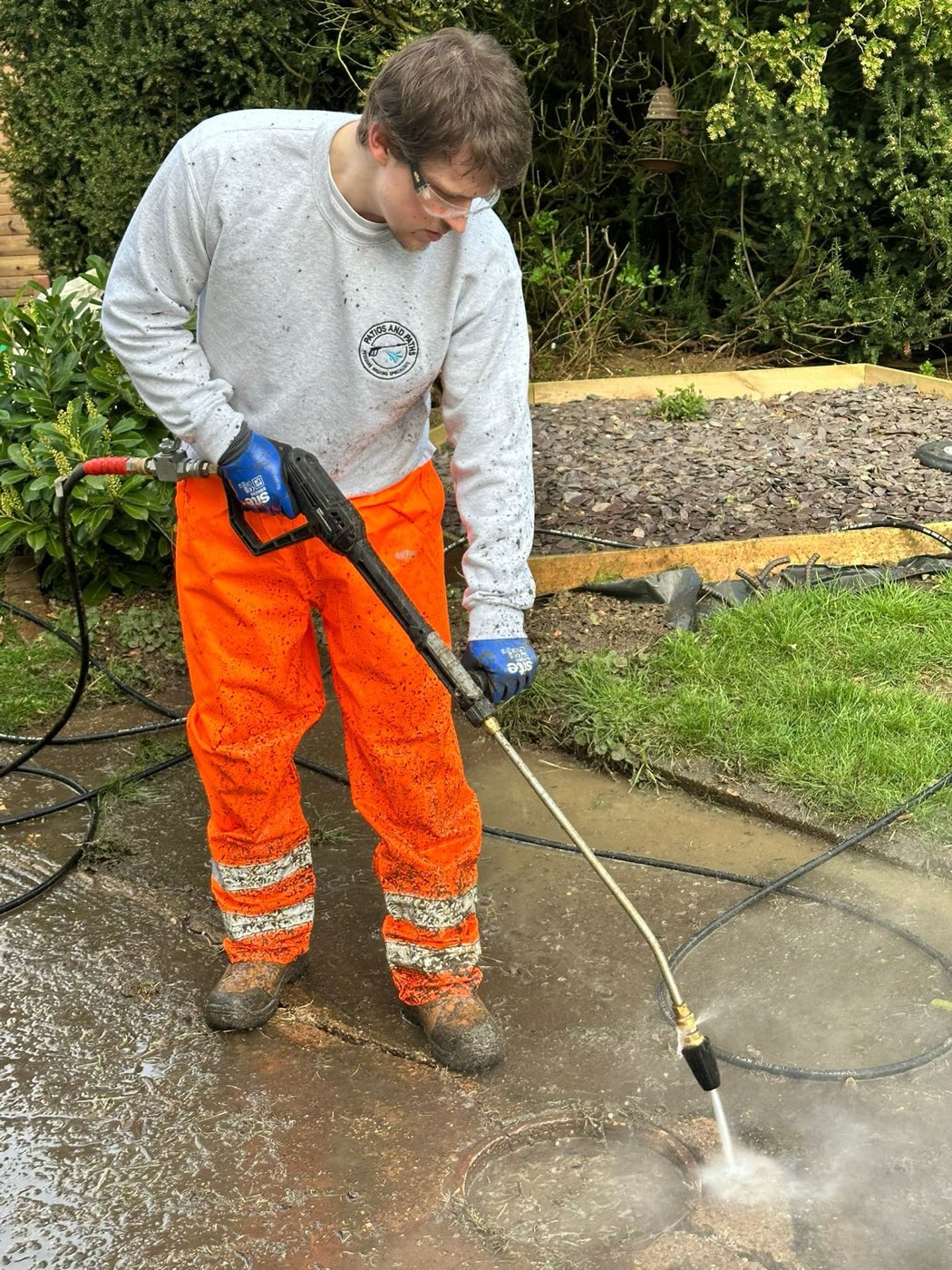
How to clean a patio with a pressure washer safely
Pressure washing a patio is satisfying — but the wrong settings or technique can cause real damage. Here's how to do it properly.
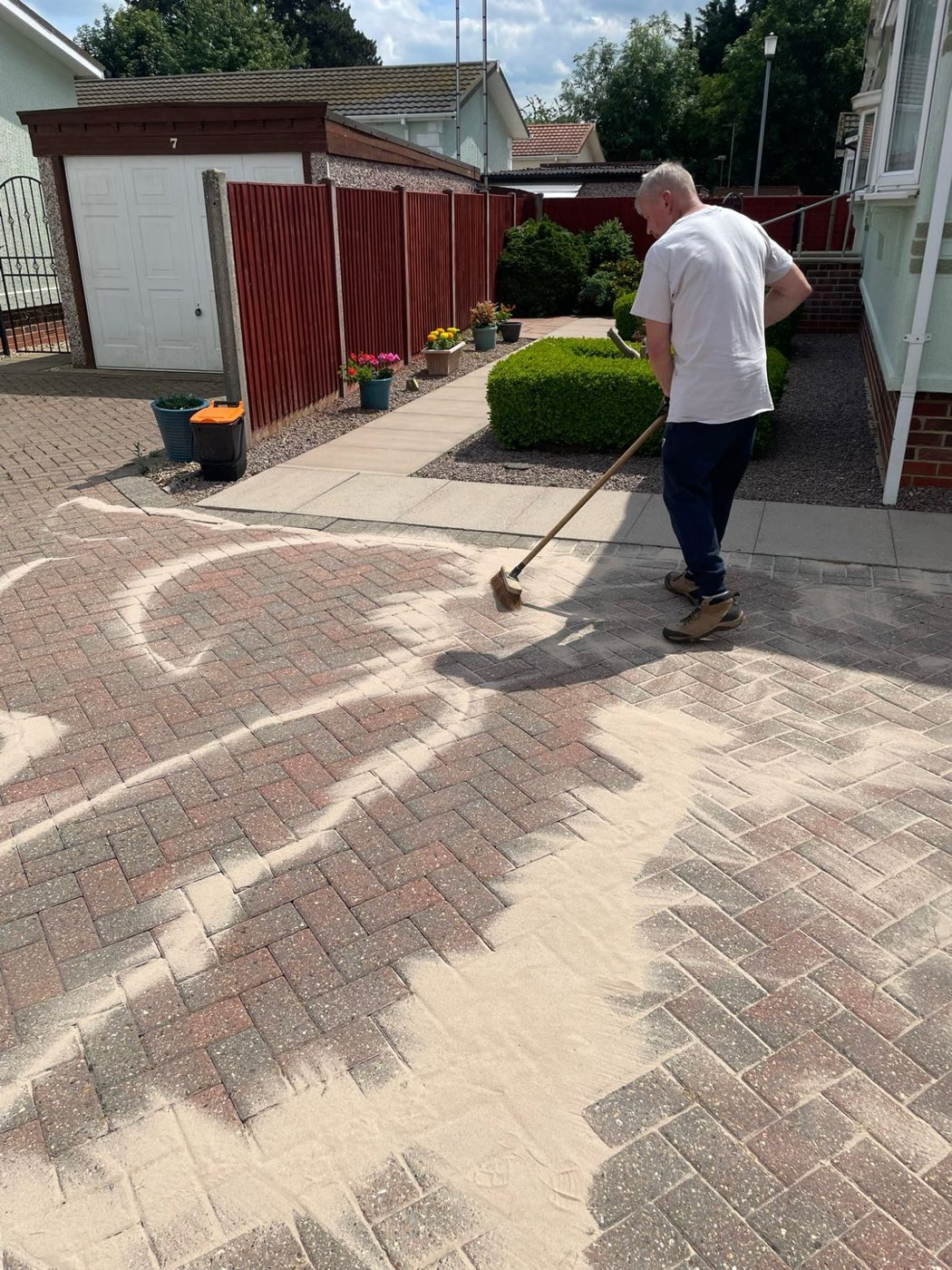
How to clean a wet pour rubber path properly
Wet pour rubber paths are low-maintenance — but they do get dirty, mossy and slippery. Here's how to clean them safely without causing damage.