
4 September 2026 · Patios and Paths
How to restore weathered patio pointing properly
Crumbling, receding mortar joints are one of the most common reasons a patio looks tired — and one of the most overlooked. If you want to restore weathered patio pointing, the good news is it's very achievable, but the order of steps matters. Get them wrong and you'll be redoing the job within a season. Get them right and your patio can look sharp and stay that way for years.
This guide walks through exactly what's involved, whether you're thinking about tackling it yourself or just want to understand what a professional will do when they arrive.
Why pointing deteriorates in the first place
Pointing — the filler material between your paving slabs — takes a constant battering. Freeze-thaw cycles crack it, rainwater erodes it, and moss or weeds slowly prise it apart. In Lincolnshire, where winters can be wet and sharp, this process happens faster than many homeowners expect. A patio laid five or six years ago can look completely different by the time the joints have started to go.
Once joints are open, water gets underneath the slabs. That leads to movement, further cracking, and eventually sunken or rocking slabs — a much bigger repair job than simply repointing.
The two main types of pointing
Before you buy anything, it's worth knowing which type of pointing suits your patio:
- Traditional sand and cement mortar — mixed on site, very durable when done properly, but unforgiving if the mix ratio is wrong or it dries too fast.
- Brush-in jointing compound — a dry or semi-dry product you brush into the joints and activate with water. Easier for a DIYer, but not suitable for all paving types and can look patchy if the surface isn't properly prepared first.
For natural stone (sandstone, limestone, slate) always check compatibility — some jointing compounds will stain pale stone permanently.
Step 1: clean the patio thoroughly before you start
This is the step most people skip, and it's the one that causes the most failures. Any moss, algae, loose debris or dirt left in the joints will prevent the new pointing from bonding and give weeds an easy foothold.
Pressure washing is the most effective way to clean patio joints properly. A professional rinse at the right pressure removes biological growth and old loose material without dislodging slabs or undercutting the substrate. If you're in an area like Nettleham or Washingborough where patios tend to sit in damp shade for much of the year, a biocide treatment before washing is worth considering too — it kills spores at the root rather than just washing the surface clean.
Once washed, the patio needs to dry completely. In warm weather, 24–48 hours is usually enough. In a cool Lincolnshire spring, allow longer — pointing applied to a damp surface won't cure evenly.
See the full range of patio cleaning and restoration services we offer if you'd like us to handle the prep work for you.
Step 2: rake out the old pointing
Any pointing that is loose, cracked or receding by more than a couple of millimetres needs to come out. Use a pointing tool, an old screwdriver, or a purpose-made joint raker to work along each joint. The goal is to get back to a firm, stable base — not necessarily the full depth of the slab.
Vacuum or brush out the dust, then rinse lightly and allow to dry again before applying new material.
Step 3: apply the new pointing
Using sand and cement
A standard mix for patio pointing is 3 parts sharp sand to 1 part cement. Keep it on the dry side — a wet, sloppy mix will slump out of the joints and stain the slab face. Work in manageable sections, pressing the mortar firmly into the joint with a pointing trowel and finishing slightly below flush so rainwater runs off the slab rather than pooling in the joint.
Avoid working in direct hot sun or when frost is forecast. Both will ruin the cure.
Using brush-in compound
Follow the manufacturer's instructions carefully. Most products are swept dry into the joints, levelled, then activated with a fine mist of water. Over-watering at this stage washes the compound out before it sets — a very common mistake.
Step 4: clean up and protect the surface
Once the pointing has cured (usually 24–72 hours depending on product and conditions), clean any smears off the slab face with a damp cloth or a dilute brick acid if required. This is also a good moment to consider whether sealing the patio makes sense — a quality impregnating sealer applied after repointing can significantly slow future biological growth and protect the new joints.
We cover patio cleaning approaches across Lincolnshire in detail if you'd like to find out what's most suitable for your surface type and location.
How long does repointing last?
Done properly on a stable, well-prepared surface, sand and cement pointing can last 10 years or more. Brush-in compounds vary more — some hold up very well, others need topping up every three to five years, particularly in exposed gardens. The single biggest factor is surface preparation. New pointing applied over dirty, damp or unstable joints simply won't last, regardless of the product used.
When to call a professional
If your patio has more than a few rocking or sunken slabs, the issue goes beyond pointing — the sub-base has likely moved and slabs may need lifting and re-laying before any pointing is applied. Attempting to point over an unstable surface will result in cracking within months.
For straightforward repointing on a settled patio, a confident DIYer can achieve good results. But if the surface needs proper pressure washing, biological treatment, and a consistent finish across a large area, a professional will save you a weekend and deliver a much cleaner result.
We work across Lincolnshire — from Lincoln and Branston to Cherry Willingham and Welton — and we're happy to take a look and give you an honest assessment. Find out more about how we work on our patio cleaning topic hub.
Ready to get your patio looking right again?
If your pointing is crumbling and you'd rather not spend a weekend on your hands and knees, we can help. We'll clean the surface properly, rake out the damaged joints, and re-point to a neat, long-lasting finish — all in one visit. Get a free, no-obligation quote and we'll get back to you quickly.
Frequently asked questions
Can I repoint a patio without pressure washing it first?
Technically yes, but the pointing is unlikely to last. Moss, algae and loose debris prevent the new material from bonding properly, so cleaning first is strongly recommended.
What's the best pointing for a sandstone or limestone patio?
A lime-based mortar or a compatible brush-in jointing compound is usually safest for natural stone, as standard cement mixes can cause staining. Always check the product label against your stone type before applying.
How long do I need to leave a patio before walking on it after repointing?
For sand and cement pointing, allow at least 24 hours in dry warm conditions before light foot traffic, and 48–72 hours before heavy use. Brush-in compounds vary, so follow the manufacturer's guidance.
Will repointing stop weeds growing between my patio slabs?
It significantly reduces weed growth by closing the gaps, but it won't stop it entirely — wind-blown seeds can still settle on the surface. Sealing the patio after repointing gives extra protection.
Need a hand with yours? We cover Lincolnshire for patios, driveways, paths and more — see the areas we cover or browse our services. Get a free quote or call 07874 010739.
Keep reading
More on patio cleaning
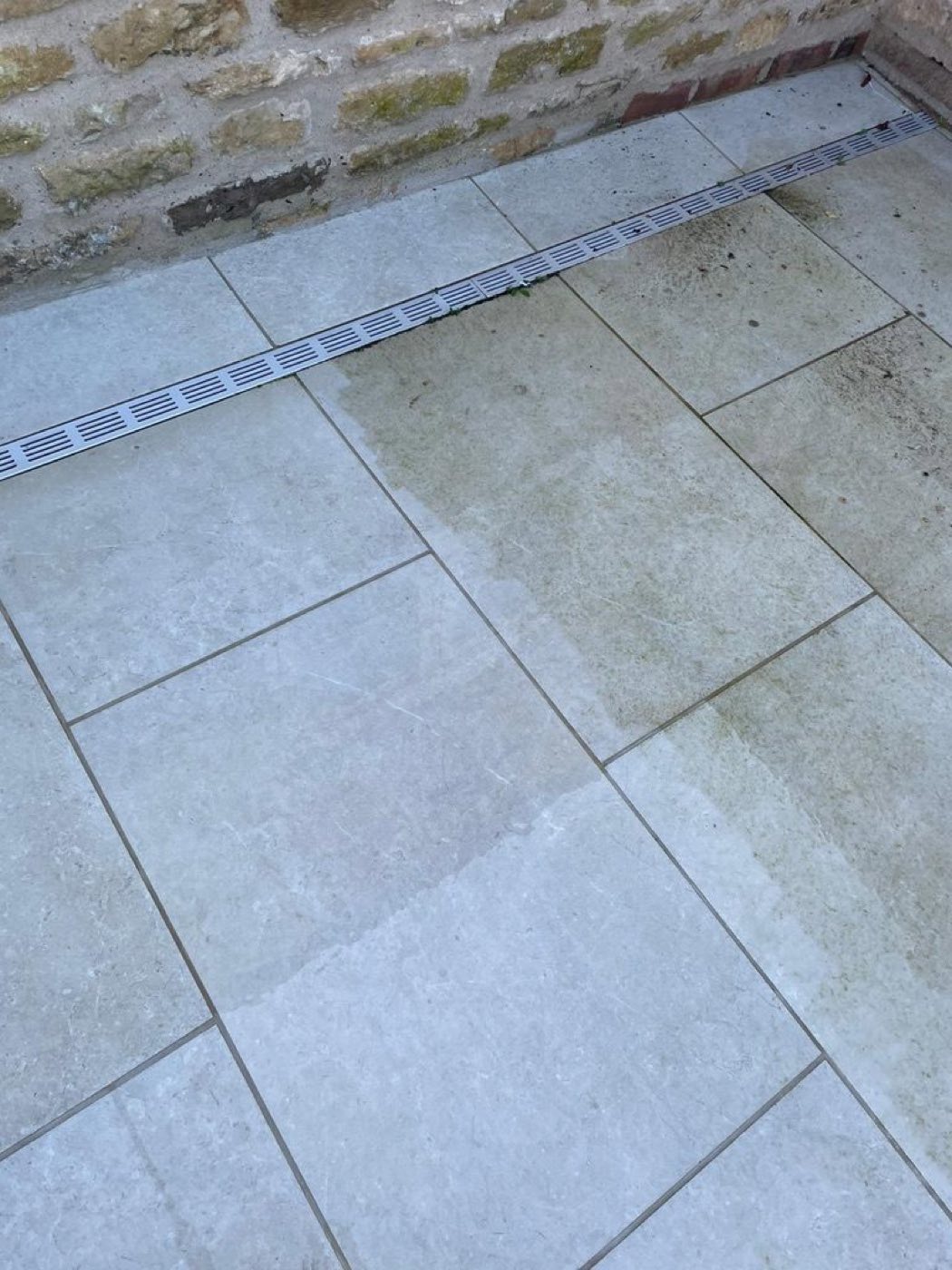
How to remove green algae from a patio or path
Green algae is the number-one reason patios and paths turn slippery — here's how to shift it properly and slow its return.
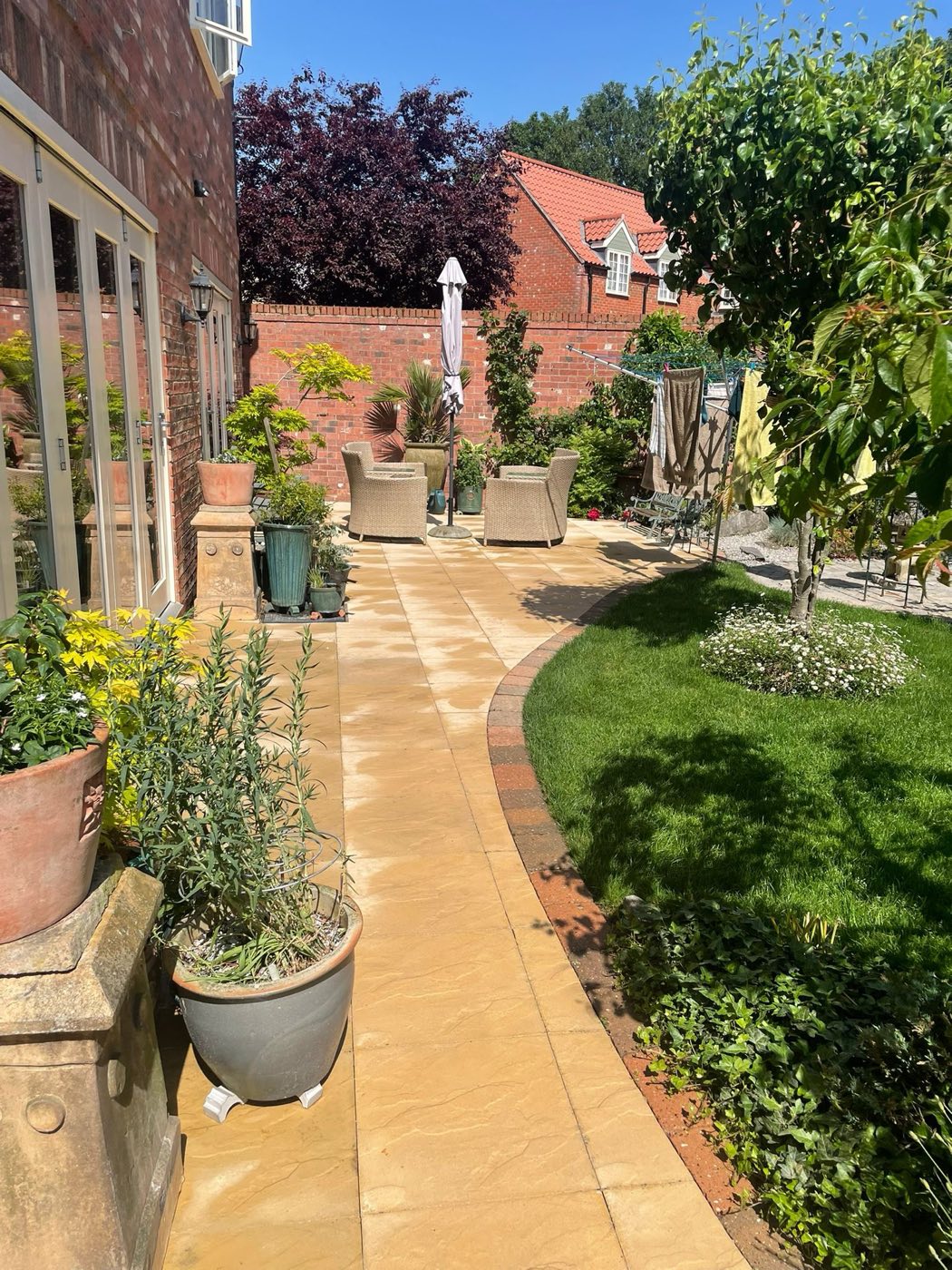
How to remove moss from a patio roof runoff
Roof runoff dumps moss spores straight onto your patio — here's how to clear it properly and stop it coming back.
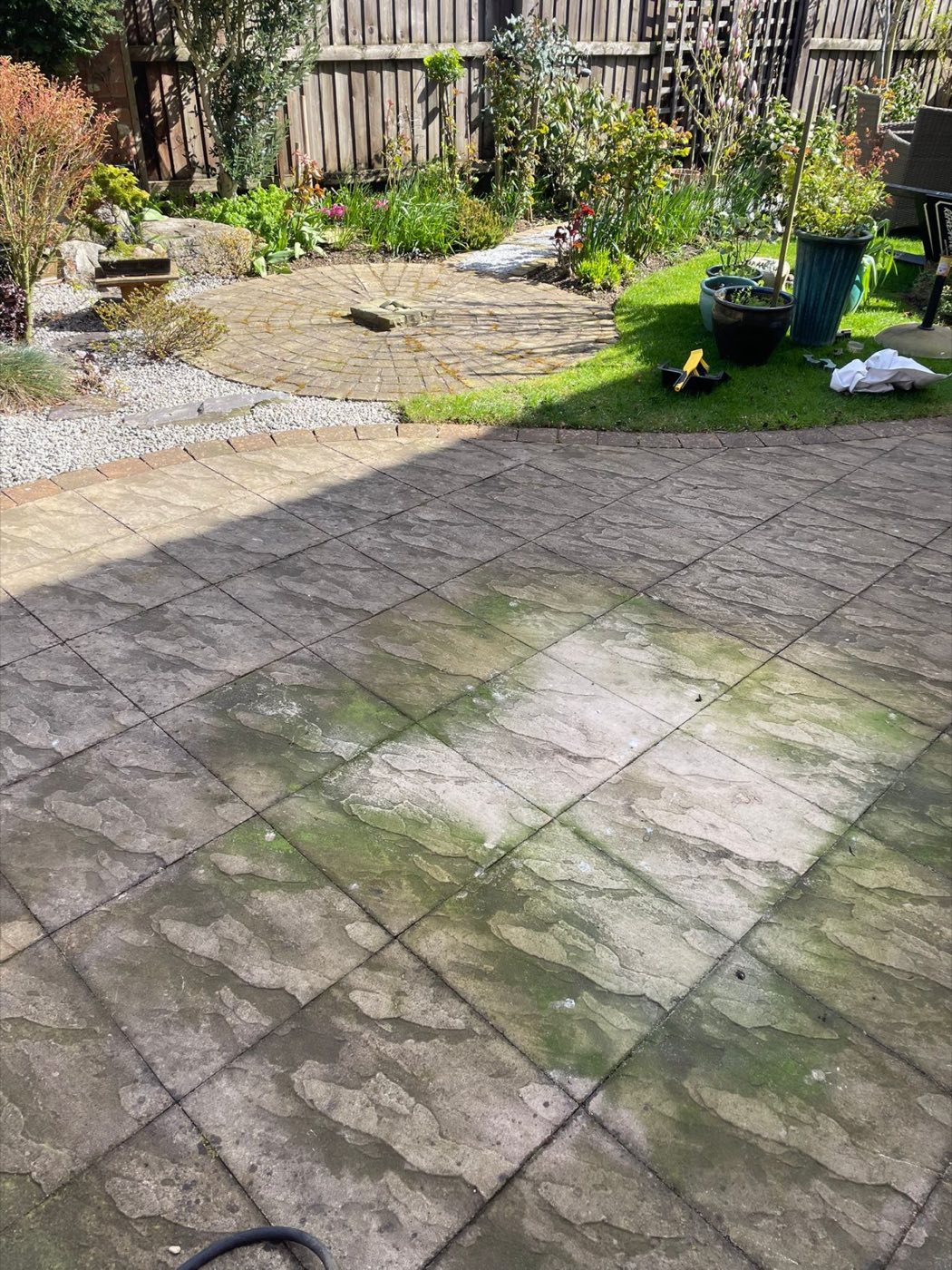
How to clean a patio drain and gully properly
A blocked patio drain causes standing water, slippery surfaces and bad smells — here's how to clean it properly and keep it flowing all year.