
24 October 2026 · Patios and Paths
How to remove green algae from a patio or path
Green algae is one of the most common complaints we hear from homeowners across Lincolnshire. One season your patio looks fine; the next it's coated in a slick green film that makes every step feel risky. If you want to know how to remove green algae from a patio or path — and actually keep it away — this guide covers everything you need to know.
Why green algae appears in the first place
Algae spores are always in the air. They settle on hard surfaces and, given moisture and a little shade, they multiply fast. Lincolnshire's climate doesn't help — we get plenty of damp, overcast weeks, especially from October through to April, and surfaces that don't dry out fully between showers become a perfect growing medium.
Patios and paths on the north side of a property are worst affected, as are surfaces under trees or next to fences where airflow is poor. But even a south-facing patio in Nettleham or Welton can turn green if it has a low-lying area where water pools after rain.
Is green algae dangerous?
It can be. A thin green film on natural stone, concrete or block paving becomes surprisingly slippery when wet — comparable to black ice underfoot. Elderly visitors and children are most at risk. If you've noticed your path looking greenish, treating it sooner rather than later is genuinely a safety issue, not just a cosmetic one.
What actually removes green algae
There are three approaches that work, and they're most effective when combined.
1. Pressure washing
A petrol or electric pressure washer with the right nozzle will blast away the surface layer of algae quickly. For most patios and paths, a fan nozzle at 25–40° angle is safer than a pencil jet, which can damage softer stones, grout lines or pointing. Work in overlapping passes and keep the lance moving — holding it still is how you get streaks and surface erosion.
Pressure washing on its own shifts the visible growth but often leaves spores behind in the pores of the stone. That's why algae can reappear within a few weeks if washing is the only treatment used.
2. Patio and path treatment fluid
Applying a diluted biocidal cleaner — either before or after pressure washing — kills algae at the root rather than just scrubbing the surface. Products containing benzalkonium chloride or didecyl dimethyl ammonium chloride are effective on most surfaces. Always follow the manufacturer's dilution rates and keep runoff away from planted borders and drains where possible.
For a heavily affected patio in somewhere like Branston or Heighington, a pre-soak of 20–30 minutes before pressure washing makes a noticeable difference to the end result.
3. Post-treatment inhibitor or sealer
Once the surface is clean and fully dry, applying a surface inhibitor or breathable impregnating sealer slows algae's return significantly. The sealer reduces the surface's ability to hold moisture — which is exactly what algae needs to take hold. This step is often skipped in DIY cleans, but it's the one that stops you repeating the whole job six months later.
You can read more about patio cleaning treatments and what's involved on our topic hub.
Step-by-step: how to tackle algae on a patio or path yourself
- Clear the surface — move furniture, plant pots and anything else off the area.
- Apply treatment fluid — dilute to the label's specification and apply with a watering can or garden sprayer. Leave for 20–30 minutes.
- Pressure wash — work in sections, using a fan nozzle. Keep the lance at a consistent angle and distance.
- Rinse thoroughly — push dirty water away from planted beds and off the surface completely.
- Allow to dry — ideally 24–48 hours of dry weather before applying any sealer or inhibitor.
- Apply an inhibitor or sealer — use a product suited to your surface type (natural stone, concrete, block paving and porcelain each have different requirements).
When it's worth calling in a professional
DIY methods work well on mild to moderate algae growth. But if your surface hasn't been cleaned in several years, if the algae is thick and deeply embedded, or if you have delicate materials like Indian sandstone, limestone or porcelain, a professional clean is likely to give you a better — and safer — result.
We work across Lincolnshire regularly, from Lincoln itself through to Cherry Willingham, Saxilby and Skellingthorpe, and we carry the right equipment and treatments for every surface type. Our full range of outdoor surface services covers patios, paths, driveways, decking and more.
How often should you treat algae?
For most Lincolnshire gardens, an annual professional clean is enough to keep surfaces safe and looking good. If your patio is heavily shaded or in a particularly damp spot, a light treatment with a diluted inhibitor spray in autumn can help slow winter growth.
- Lightly affected surfaces: treat once a year, ideally in spring or early autumn
- Shaded or damp spots: treat twice a year and consider a sealer to reduce moisture retention
- Surfaces near trees: clear fallen leaves promptly — decomposing leaves feed algae growth
The cost of leaving it
Green algae doesn't stay green. Left long enough, it becomes the darker, harder-to-shift black algae or lichen, both of which require more aggressive treatment and sometimes cause surface staining that's difficult to fully reverse. A quick annual clean is almost always cheaper than trying to restore a badly neglected surface.
If you're in Lincolnshire and your patio or path is looking greener than it should, we're happy to take a look and give you a straight, no-obligation quote.
Get a free quote from us today — we cover towns and villages right across the county, and we'll tell you honestly what your surface needs.
You can also check whether we cover your area on our Lincolnshire areas page.
Frequently asked questions
Will bleach kill green algae on a patio?
Diluted household bleach can kill algae on hard surfaces, but it can also discolour certain stones, damage nearby plants and harm aquatic life if it reaches drains. A purpose-made patio biocide is safer and usually more effective on porous surfaces.
How long does it take for algae to come back after cleaning?
On an untreated surface in a shaded or damp spot, algae can start returning within two to three months. Applying a surface inhibitor or impregnating sealer after cleaning can extend that to a year or more.
Is green algae on paving harmful to pets?
The algae itself is not toxic to dogs or cats, but the slippery surface it creates is a trip hazard for animals as well as people. Some treatment chemicals can be harmful until fully dry, so keep pets off the area during and immediately after treatment.
Can I remove green algae from natural stone without a pressure washer?
Yes — a soft-bristle brush, warm water and a diluted patio cleaner will shift light algae growth from natural stone without the risk of pressure washer damage. For heavier growth, low-pressure washing (below 1,500 psi) with a wide fan nozzle is a safer option than a high-powered jet.
Need a hand with yours? We cover Lincolnshire for patios, driveways, paths and more — see the areas we cover or browse our services. Get a free quote or call 07874 010739.
Keep reading
More on patio cleaning
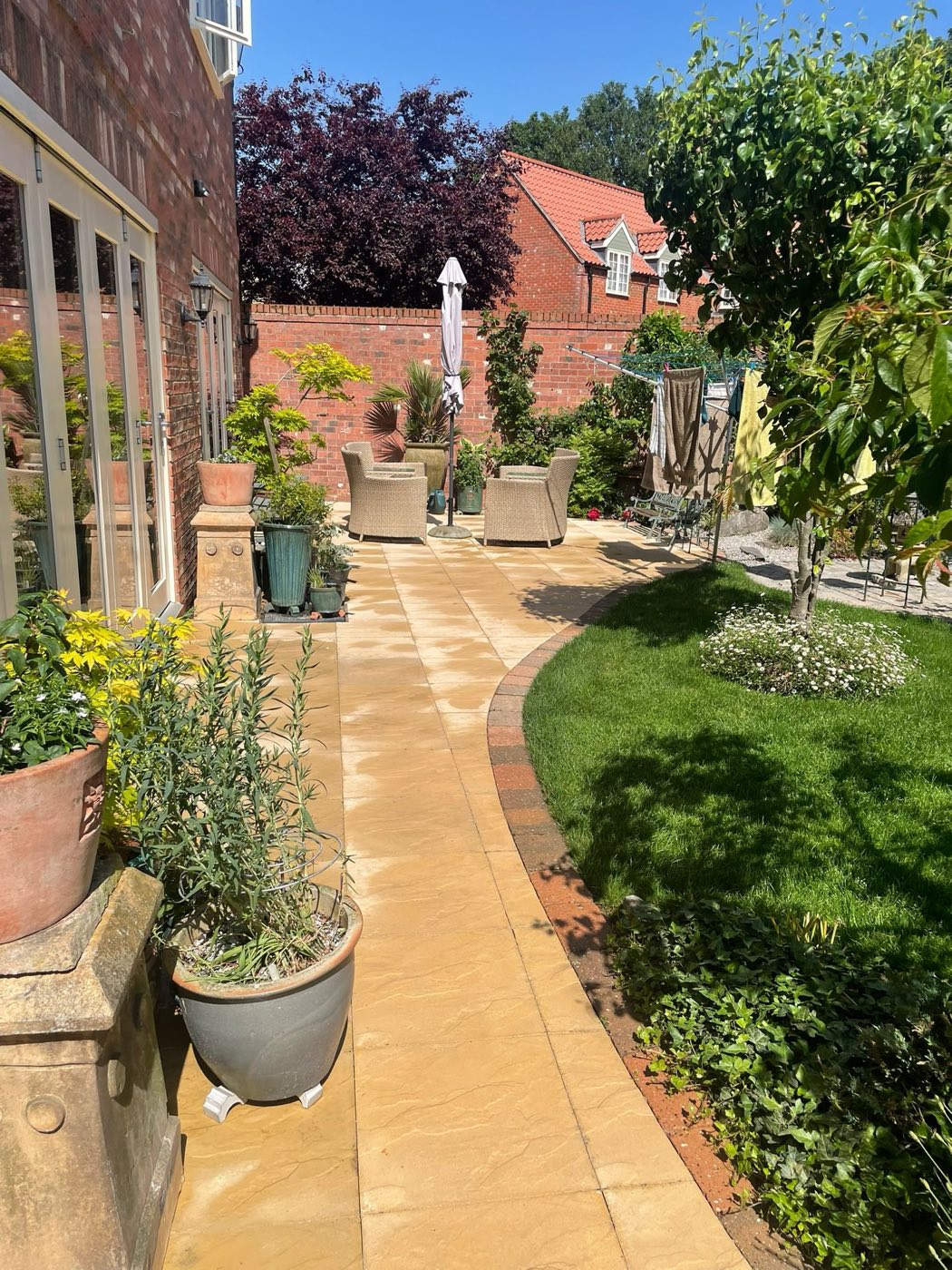
How to remove moss from a patio roof runoff
Roof runoff dumps moss spores straight onto your patio — here's how to clear it properly and stop it coming back.
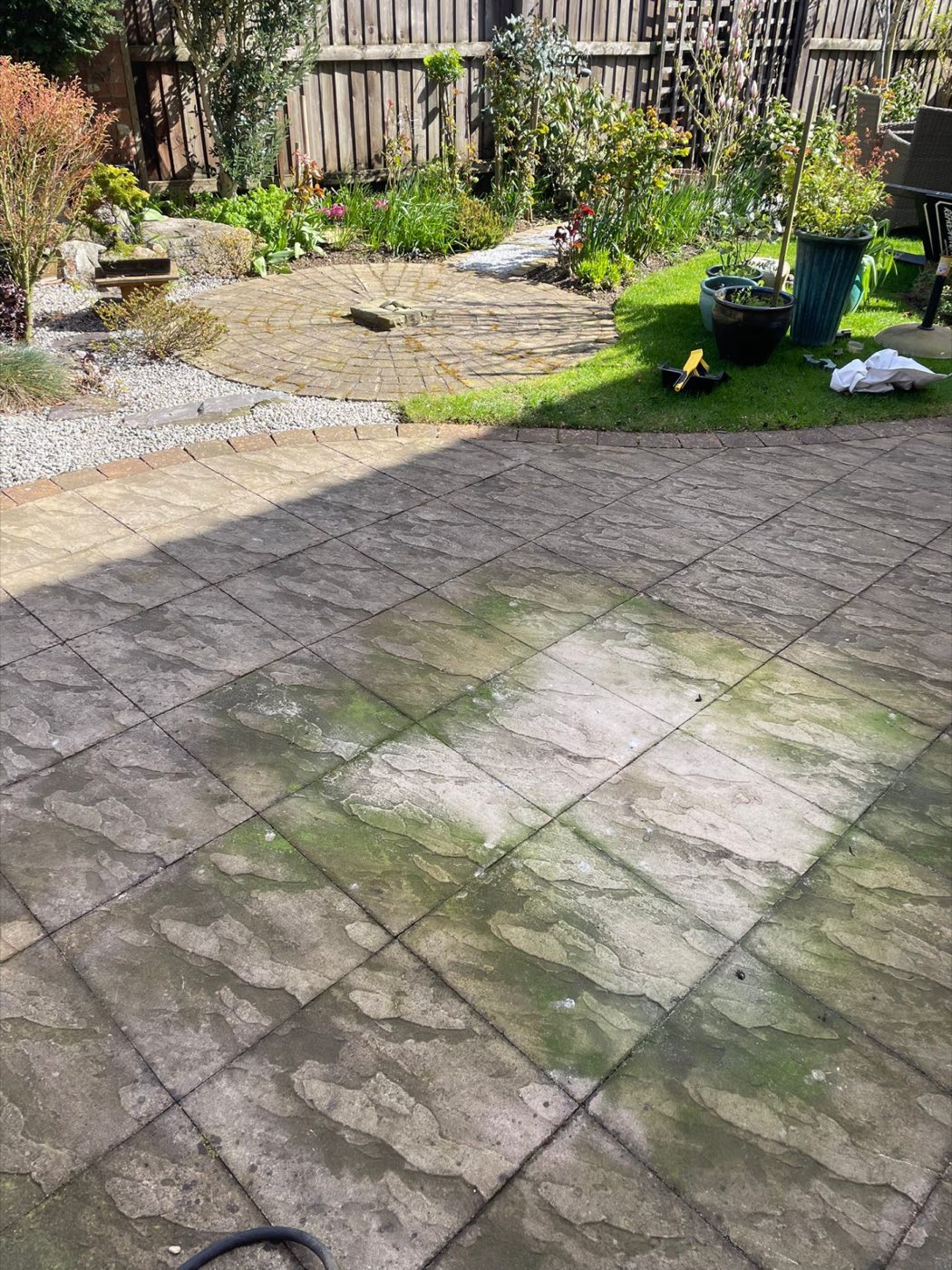
How to clean a patio drain and gully properly
A blocked patio drain causes standing water, slippery surfaces and bad smells — here's how to clean it properly and keep it flowing all year.
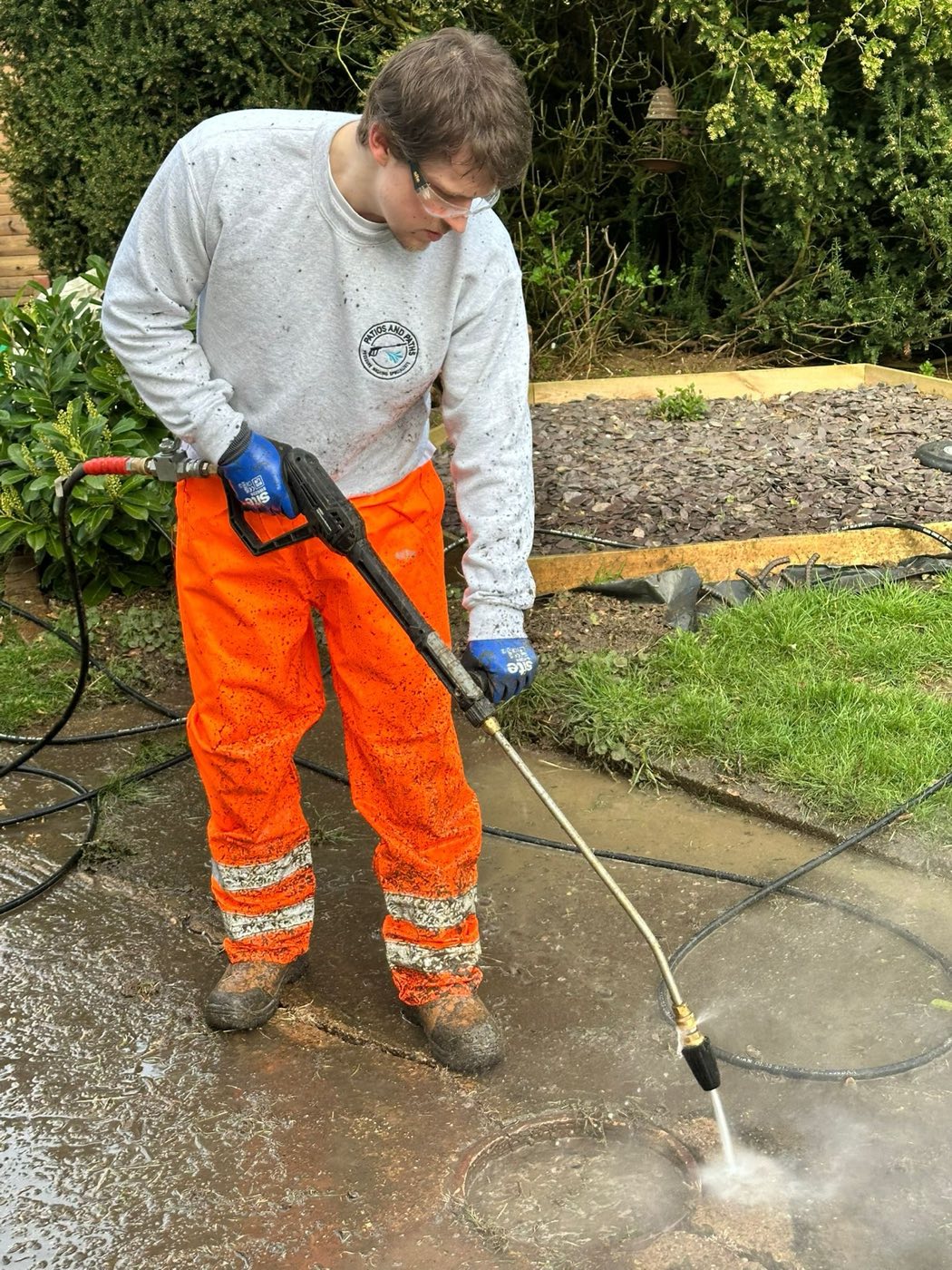
How to clean a block paving patio properly
Block paving patios are tough, but they need the right approach to come up clean without washing away the jointing sand — here's how to do it properly.