11 August 2026 · Patios and Paths
How to get rid of lichen on paving and paths
Lichen is one of the most stubborn things you'll ever find growing on outdoor surfaces. Unlike moss, which you can often brush away once it dries out, lichen actually bonds itself to stone, concrete and paving at a microscopic level. If you want to know how to get rid of lichen on paving and paths properly — not just shift it for a season — this guide covers what works, what doesn't, and when it's worth calling in a professional.
Why lichen is so much harder to remove than moss
Moss sits on top of a surface. Lichen is different — it's a combination of fungi and algae living together, and the fungal part physically anchors itself into the surface it grows on. On soft natural stone like limestone or sandstone, lichen can actually etch tiny pits into the face of the slab as it feeds.
This is why a pressure washer alone rarely solves the problem. You can blast the visible growth away and the surface will look clean — but the root-like structures (called rhizines) are still in place, and within a few months the lichen has regrown, often thicker than before.
In Lincolnshire, we see a lot of lichen on north-facing paths, shaded patios in older gardens, and on natural stone driveways — particularly in villages like Nettleham and Welton where mature trees keep surfaces damp for much of the year.
What lichen actually looks like
It helps to know what you're dealing with. Lichen comes in a few different forms:
- Crustose lichen — flat, crusty patches that look almost painted onto the stone. Often grey, orange, yellow or black. Very firmly attached.
- Foliose lichen — slightly leafy or layered, a bit easier to lift than crustose.
- Fruticose lichen — bushy or hair-like, less common on paving.
The orange and black varieties are particularly noticeable on light-coloured stone patios and can look alarming, but they're all the same basic problem.
The right way to remove lichen from paving
Step 1: Apply a proper biocidal treatment
A dedicated biocidal patio or path cleaner — one that contains active ingredients such as benzalkonium chloride or similar — is the starting point. Apply it diluted according to the label, let it dwell on the surface (usually 30–60 minutes for heavy lichen growth), and allow the lichen to die back. Don't rush this stage.
Avoid using bleach or cheap household cleaners on natural stone. They can strip colour, leave tide marks and don't penetrate the surface the way a proper biocide does. See our patio cleaning guides for more on choosing the right products for different surface types.
Step 2: Pressure wash at the right pressure
Once the biocide has done its work, pressure washing removes the dead growth. The key word here is right pressure — on softer stones like Indian sandstone or limestone, too high a PSI will erode the surface. On harder surfaces like concrete slabs or granite, you have more latitude.
A rotating or turbo nozzle gives better results than a fan jet for stubborn patches, but keep it moving and don't dwell in one spot.
Step 3: A second pass if needed
Thick, old lichen — the kind that's been building up for years on a neglected path — often needs a second application of biocide and a second wash. It's more time-consuming, but trying to rush it with brute water pressure just damages the surface without fully solving the problem.
Surfaces that need special care
- Sandstone and limestone — porous and soft; low-pressure washing only, acid-free treatments
- Porcelain — very hard and non-porous, but grout lines can harbour lichen; standard biocides work well
- Block paving — lichen often grows in the joints; re-sanding after cleaning helps prevent re-colonisation
- Concrete paths — more robust, but old concrete can be friable; don't assume high pressure is always fine
If you're not sure what your surface is made of, it's worth getting a professional opinion before you start — especially on older natural stone that could be damaged by the wrong treatment.
Why does lichen keep coming back?
Lichen thrives where surfaces stay damp and shaded. The single best thing you can do after a thorough clean is apply a surface sealant — this reduces the porosity of the stone, making it harder for lichen and algae to get a foothold. In consistently shaded spots around Skellingthorpe and Branston, we often recommend an annual application of a path and patio biocide as a preventative, rather than waiting until the problem returns visibly.
Improving drainage and cutting back overhanging trees or shrubs to let more light and airflow onto the surface also makes a meaningful difference over time.
When to call a professional
DIY lichen removal is entirely possible for small areas and straightforward surfaces. But if you're dealing with:
- A large area of heavy lichen growth
- Valuable or delicate natural stone that you don't want to risk
- Lichen that has returned repeatedly despite your own efforts
- Surfaces where you're not confident about the right pressure or products
…then it's worth getting a professional in. We work across Lincolnshire — from Lincoln itself out to smaller villages — and we see all kinds of surface and all stages of lichen growth. We have the right equipment, the right treatments and the experience to get it right without causing damage.
Take a look at our full range of services or check whether we cover your area to find out more.
Ready to get your paving looking clean again?
If lichen has taken hold on your patio, path or driveway, we're happy to take a look and give you a straightforward quote. No obligation, no hard sell — just an honest assessment and a fair price.
Request a free quote and we'll be in touch promptly.
Frequently asked questions
Will a pressure washer remove lichen from paving on its own?
A pressure washer will shift the visible growth, but lichen anchors itself into the surface at a microscopic level. Without a biocidal treatment first to kill the organism, it usually regrows within a few months. You need both: biocide to kill it, then pressure washing to remove the dead material.
Is lichen on paving harmful or just cosmetic?
Mostly it's cosmetic, but there are two practical concerns. Lichen can make surfaces slippery when wet, which is a safety risk on paths and steps. On soft natural stone like limestone or sandstone, lichen can also slowly etch and pit the surface over time, causing lasting damage.
Can I use bleach to kill lichen on my patio?
Bleach can kill surface growth temporarily, but it doesn't penetrate the surface the way a proper biocide does, and it can discolour or damage natural stone, strip colour from block paving jointing compound, and harm nearby plants. A dedicated path and patio biocide is safer and more effective.
How long does it take for lichen to come back after cleaning?
On an untreated surface in a shaded or damp spot, lichen can start to recolonise within six to twelve months. Applying a quality sealant after cleaning and treating annually with a preventative biocide can extend that significantly — often keeping surfaces clear for two to three years.
Need a hand with yours? We cover Lincolnshire for patios, driveways, paths and more — see the areas we cover or browse our services. Get a free quote or call 07874 010739.
Keep reading
More on patio cleaning
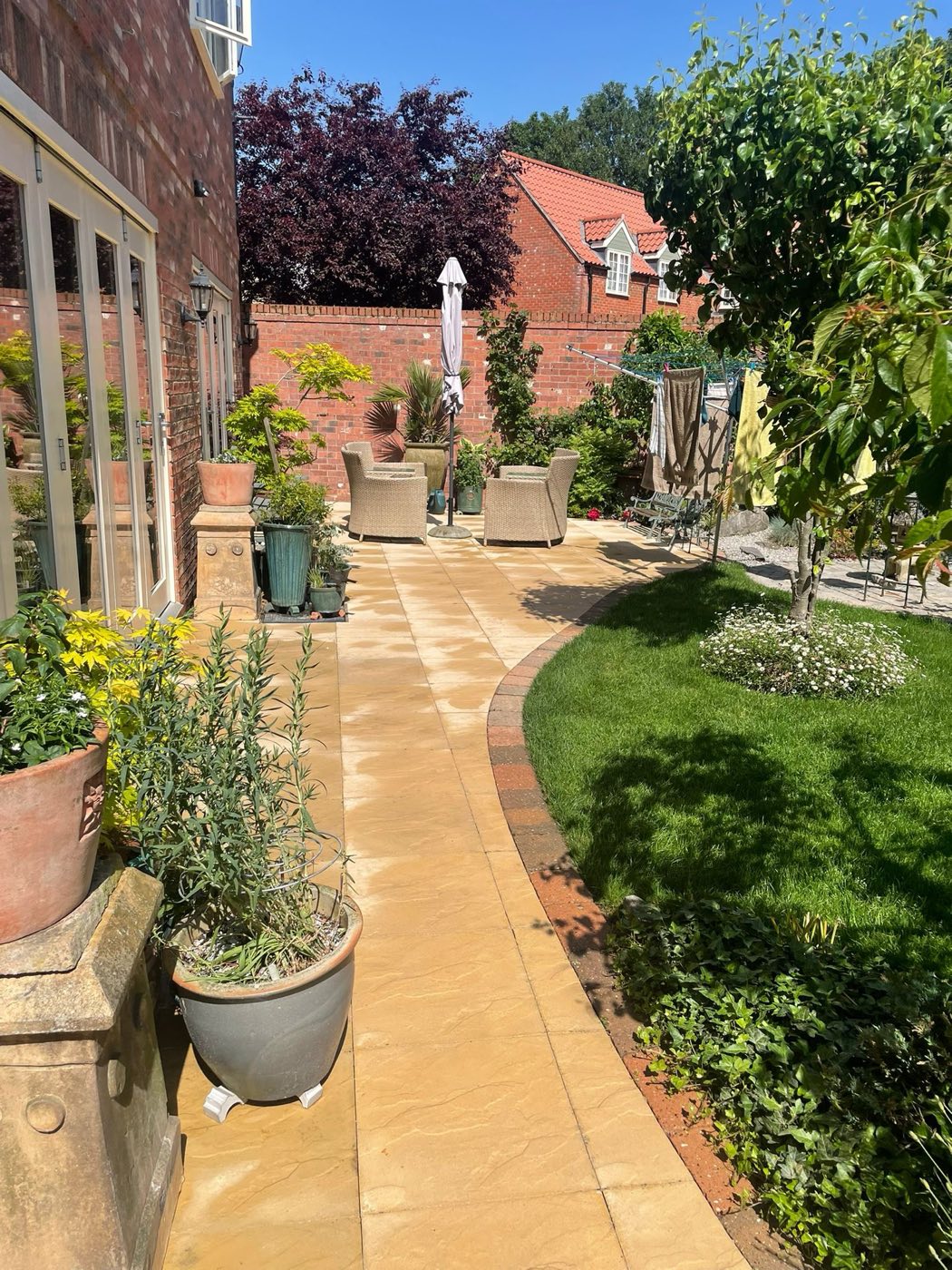
How to clean a shaded patio that stays damp
A permanently damp, shaded patio is the hardest surface to keep clean — here's what actually shifts the green and keeps it away longer.
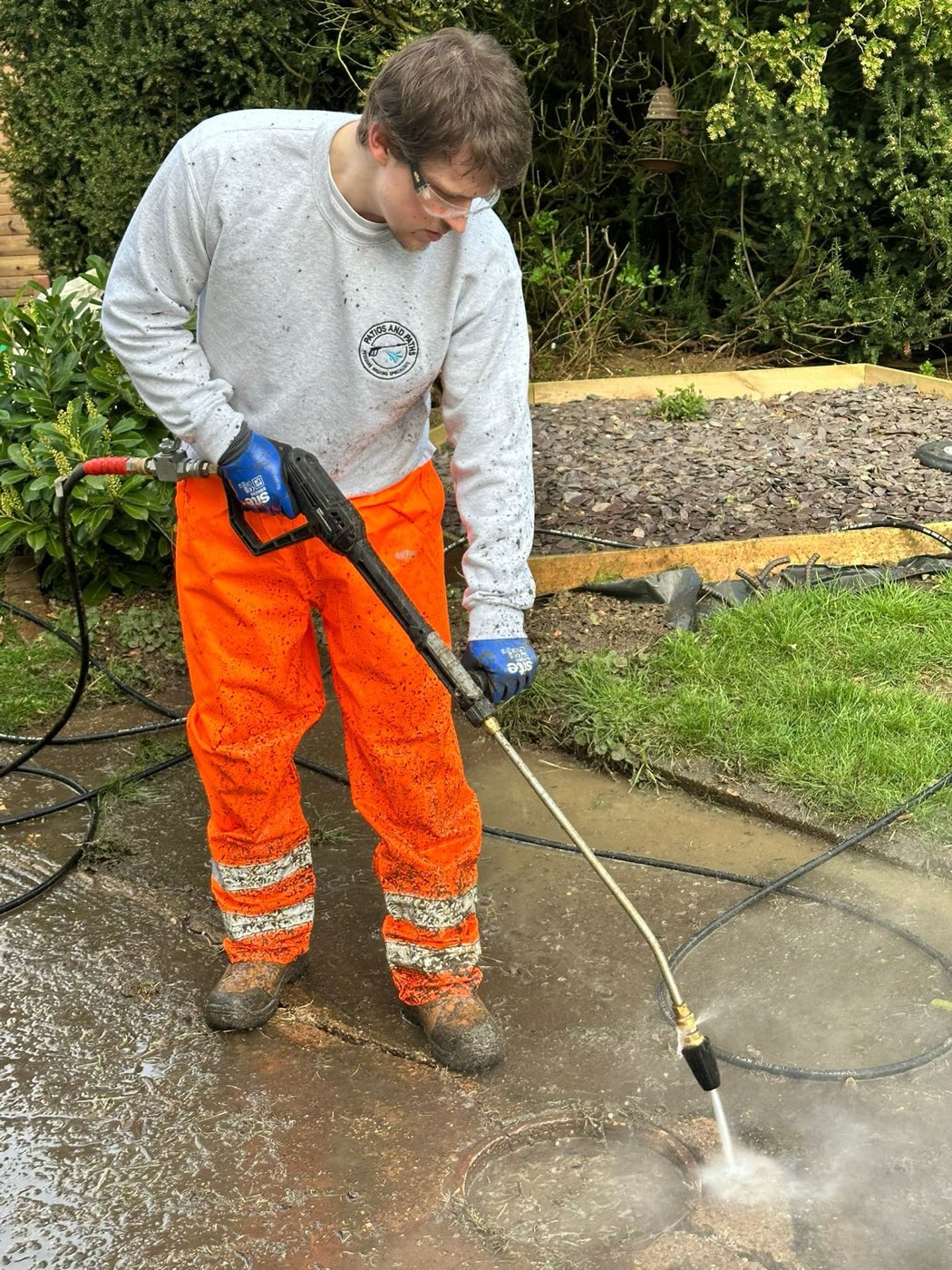
How to clean a patio with a pressure washer safely
Pressure washing a patio is satisfying — but the wrong settings or technique can cause real damage. Here's how to do it properly.
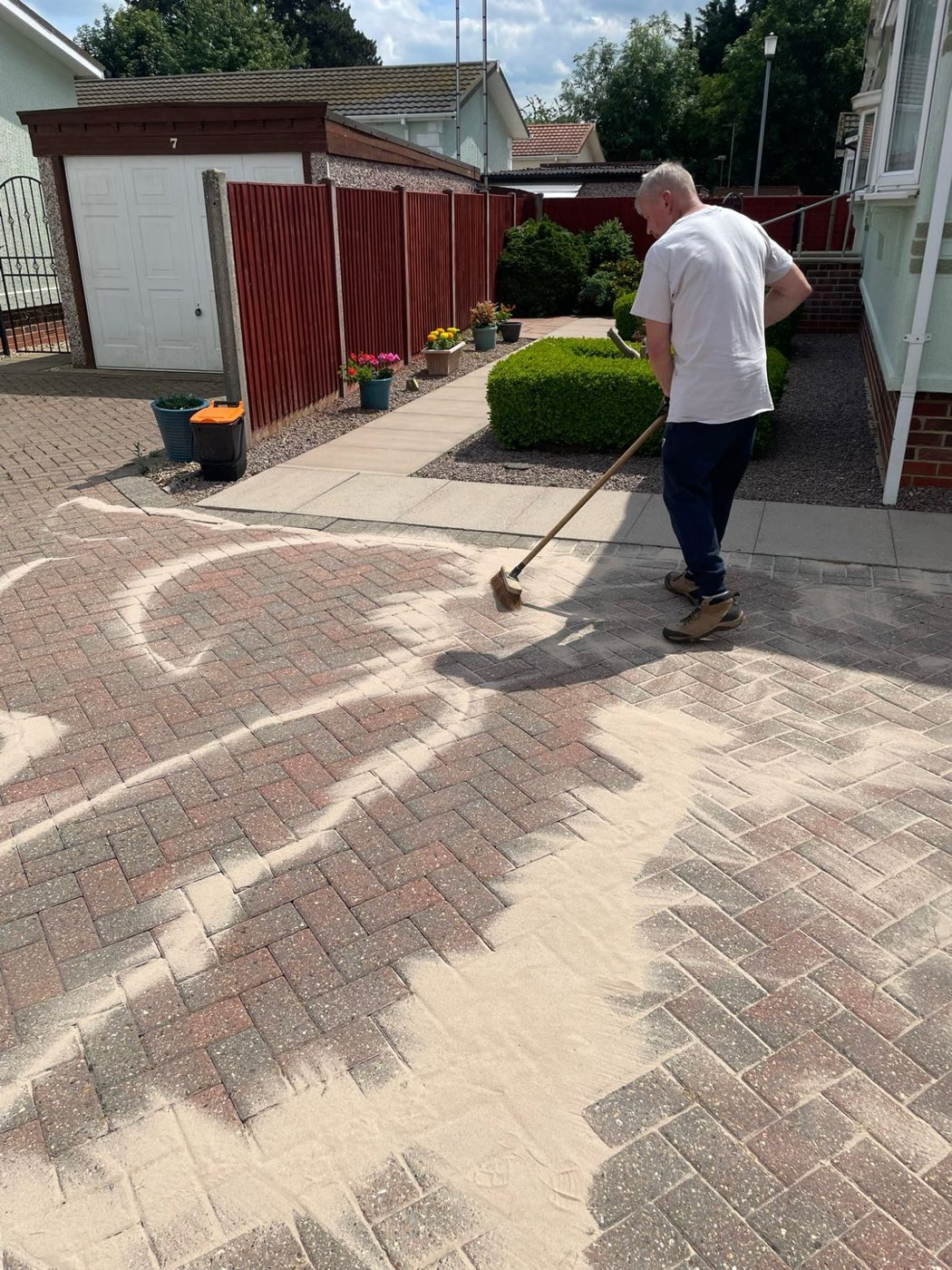
How to clean a wet pour rubber path properly
Wet pour rubber paths are low-maintenance — but they do get dirty, mossy and slippery. Here's how to clean them safely without causing damage.