28 September 2026 · Patios and Paths
How to clean a patio with a pressure washer safely
A pressure washer is one of the most effective tools for reviving a tired patio — but used carelessly, it can erode jointing sand, pit soft stone, or leave permanent streak marks. Knowing how to clean a patio with a pressure washer safely means understanding pressure settings, nozzle choice, and the order you work in. Get those things right and the results are genuinely impressive.
What pressure is safe for patio cleaning?
This is where most DIY jobs go wrong. Too high a pressure blasts away the surface of soft materials like sandstone or Indian sandstone, and strips out the sand between block paving joints. Too low and you're just moving dirt around.
As a general rule:
- Porcelain and hard granite slabs — up to 2,500 PSI with a wide-angle nozzle (25–40°)
- Concrete slabs and block paving — 1,500–2,000 PSI with a 25° nozzle
- Sandstone, limestone and natural stone — 1,000–1,500 PSI maximum, with the widest nozzle you have
- Timber decking — 600–1,000 PSI, always with the grain, never a zero-degree jet
If you're hiring a consumer pressure washer, check the PSI rating on the label. Most domestic machines sit around 1,300–1,800 PSI — fine for concrete, but worth dialling back for softer stone.
Choose the right nozzle
Nozzle colour codes are fairly standard across most machines:
- Red (0°) — a pinpoint jet. Never use this on patio surfaces. It will gouge and mark.
- Yellow (15°) — powerful; useful for heavy concrete staining only
- Green (25°) — the workhorse for most hard patio surfaces
- White (40°) — gentle; ideal for sandstone, limestone, or any surface you're unsure about
- Surface cleaner attachment — the single best upgrade for patio work. It spins two jets in a disc, giving an even clean without the tiger-stripe lines you get from a wand. Worth hiring if you don't own one.
Preparation before you start
Don't just point a washer at a dry patio and hope for the best. A little prep makes a big difference.
- Clear the area — move furniture, planters and anything else off the surface.
- Sweep off loose debris — leaves, soil and grit can clog drains and scratch surfaces as you wash.
- Pre-treat stubborn stains — moss, algae and black spot benefit from a patio cleaner or diluted bleach solution applied 20–30 minutes before you wash. Let it dwell and break down the growth before the water hits it.
- Check your joints — if the jointing sand or pointing is already crumbling, high-pressure washing will make it worse. It may need re-pointing after cleaning regardless.
- Cover drains if needed — if you're using a chemical pre-treatment, protect any drains leading to watercourses.
How to clean a patio with a pressure washer — the method
Once you're set up, work methodically:
- Start at the highest point of the patio and work downhill towards your intended drainage point.
- Keep the nozzle 20–30 cm from the surface. Closer means more power — don't inch towards the surface until you've tested on a discreet corner.
- Use slow, overlapping passes. Rushing leaves streaks.
- If you're using a wand rather than a surface cleaner, use consistent fan strokes rather than circular motions. Circular motions leave visible marks.
- Rinse the whole area thoroughly after cleaning to wash away loosened grime and any chemical residue.
Watch out for jointing sand
Block paving and some natural stone patios rely on compacted kiln-dried sand in the joints to keep everything locked in place. Pressure washing will loosen some of this — that's normal. Once the patio has dried fully (give it 48 hours), brush fresh kiln-dried sand into the joints and compact it lightly. This is an important step many people skip, and it's why weeds come back so quickly after cleaning.
Should you seal afterwards?
Sealing isn't always necessary, but it does make future cleaning much easier and helps slow moss and algae regrowth — a real benefit here in Lincolnshire where damp winters mean most surfaces are green again within a year if left untreated. If you're considering it, the surface must be completely dry before any sealer goes down — usually at least 48–72 hours after washing. You can read more about the cleaning work we carry out across the county on our patio cleaning topic hub.
When DIY becomes the harder option
For a small, straightforward concrete or porcelain patio, DIY pressure washing is very manageable. But there are situations where hiring a professional saves you money, time and potential damage:
- Large patios where hiring equipment and spending a full day doing it yourself costs more than a professional quote
- Delicate natural stone (sandstone, limestone, Indian sandstone) where the wrong pressure can cause irreversible surface damage
- Patios covered in heavy black algae, lichen or deeply embedded grime that need specialist treatments
- Surfaces that need re-pointing or re-sanding as part of the job
We cover properties across Lincolnshire — from Lincoln and Nettleham to Branston, Washingborough and Cherry Willingham. If you'd like us to take a look at your patio, you can see the full range of surfaces we work on at [/#services] or check whether we cover your area at [/areas/].
Getting the best result
Pressure washing done well is genuinely transformative — a patio that looked stained and neglected can look close to new again in a few hours. The key is matching your pressure and nozzle to the material, taking your time, and dealing with the joints properly afterwards.
If you'd rather leave it to someone who does this every day, get a free quote from us — we'll give you an honest price and tell you exactly what your surface needs.
Frequently asked questions
Can I pressure wash any type of patio slab?
Most patio materials can be pressure washed, but the settings vary significantly. Hard porcelain and granite tolerate higher pressure, while soft natural stone like sandstone or limestone needs a much gentler approach — typically no more than 1,000–1,500 PSI with a wide-angle nozzle.
Will pressure washing remove the sand from between my patio slabs?
Some sand loss is inevitable, especially from block paving joints. Once the patio has dried fully after washing, brush kiln-dried jointing sand back into the gaps and compact it gently — this keeps the surface stable and helps deter weeds.
How long does it take for a patio to dry after pressure washing?
Most patios feel dry to the touch within a few hours, but for sealing or re-sanding you should wait at least 48–72 hours in warm weather, and longer in cooler or overcast conditions.
Is it worth pressure washing a patio myself or should I hire a professional?
For small, hard-wearing surfaces like concrete or porcelain, DIY is perfectly reasonable if you have the right equipment. For large areas, delicate natural stone, or heavily soiled surfaces with lichen and black algae, a professional will usually get a better result and avoid costly damage.
Need a hand with yours? We cover Lincolnshire for patios, driveways, paths and more — see the areas we cover or browse our services. Get a free quote or call 07874 010739.
Keep reading
More on patio cleaning
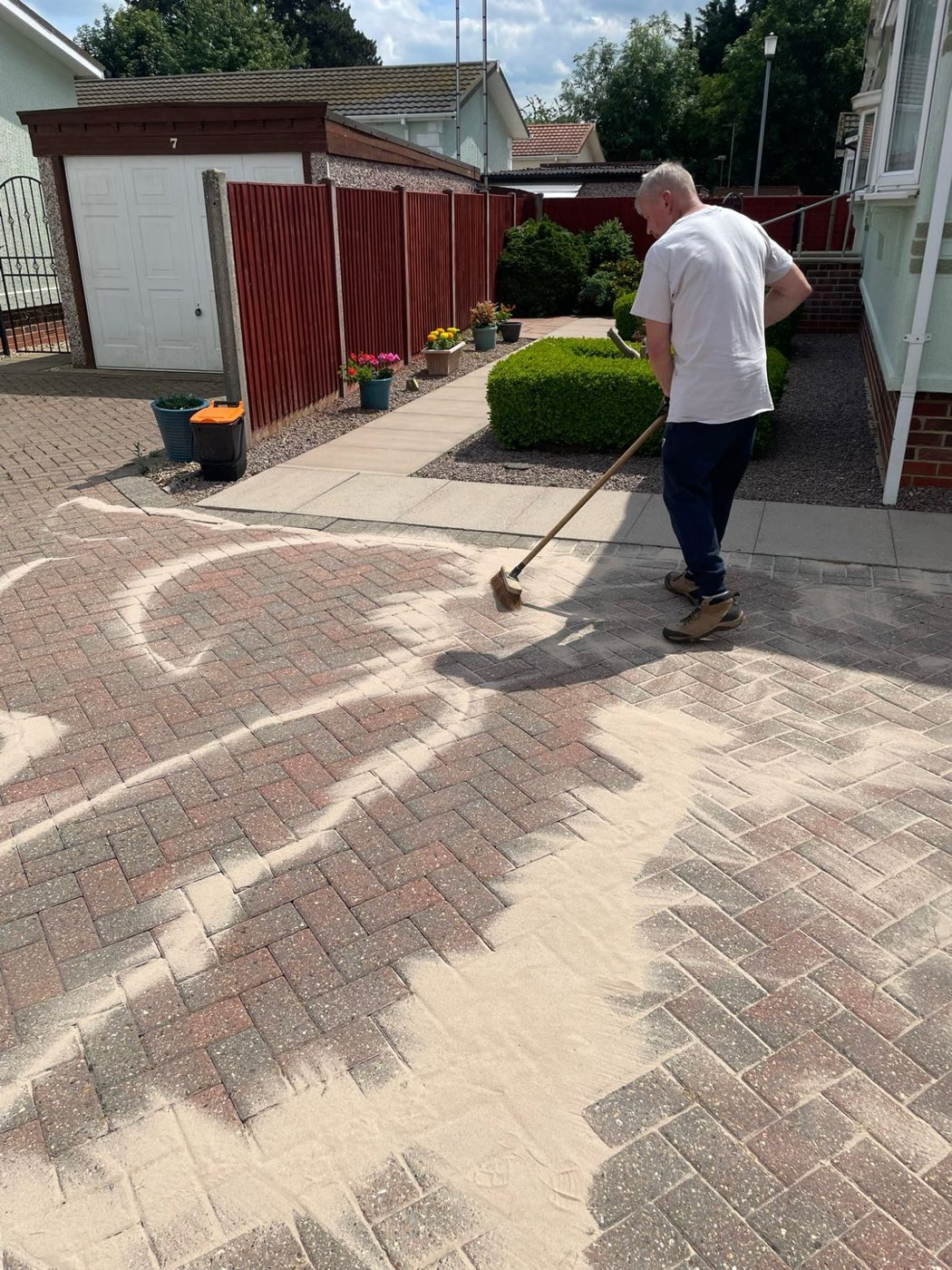
How to clean a wet pour rubber path properly
Wet pour rubber paths are low-maintenance — but they do get dirty, mossy and slippery. Here's how to clean them safely without causing damage.
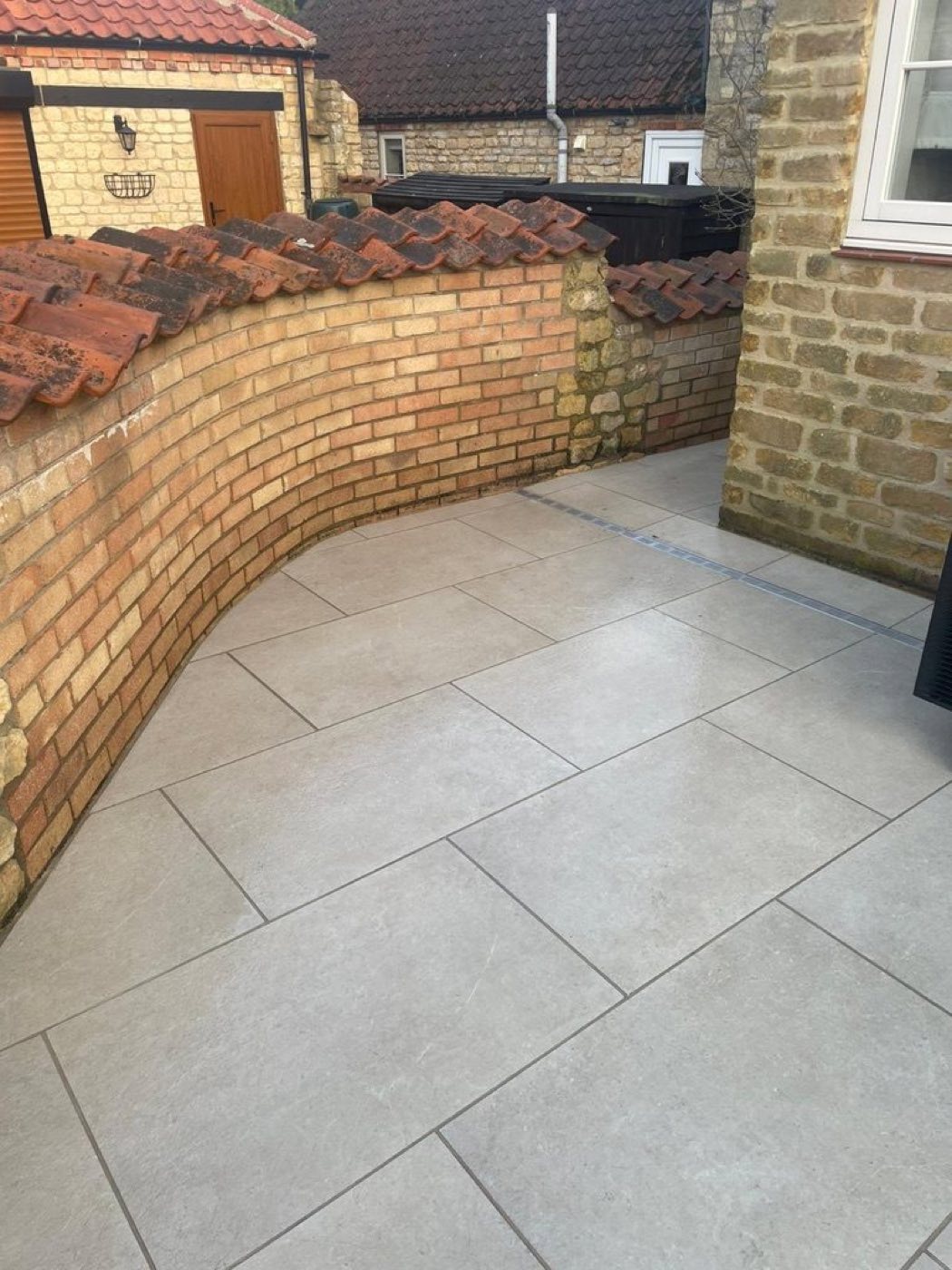
How to remove rust stains from paving and paths
Rust stains on paving are stubborn, but with the right approach they don't have to be permanent — here's what actually works.
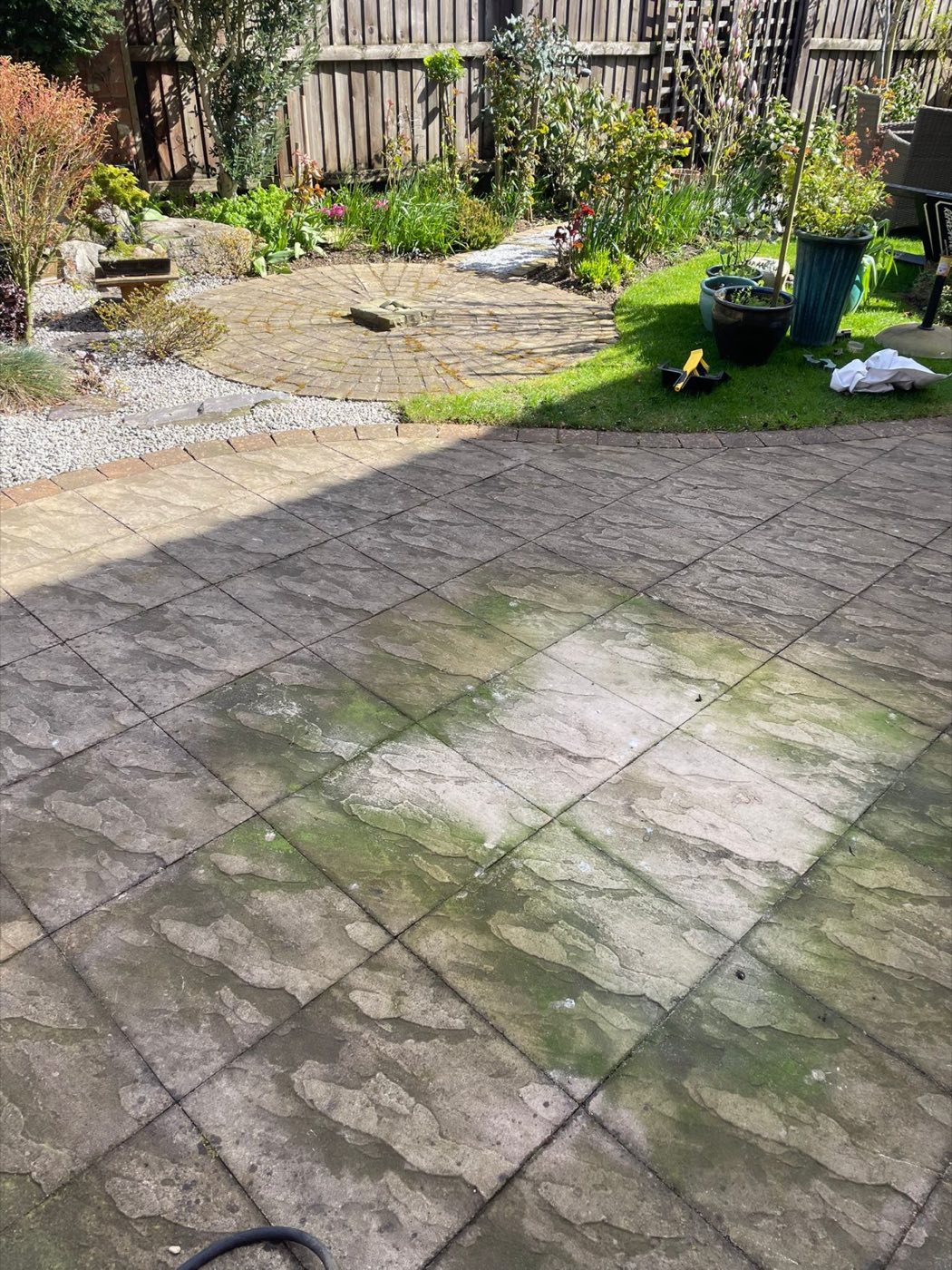
How to clean a patchy, stained concrete path properly
Concrete paths go patchy, green and grimy faster than most surfaces — here's how to get yours looking sharp again without causing damage.