13 August 2026 · Patios and Paths
How to clean York stone paving without damage
York stone is one of those surfaces that looks genuinely beautiful when it's well looked after. That warm, sandy-grey tone, the slightly textured face, the way it weathers into a garden rather than fighting it — it's a classic for a reason. But knowing how to clean York stone paving without damage is where a lot of homeowners come unstuck. Use the wrong pressure, the wrong chemical, or the wrong technique, and you can lift the surface, bleach the colour, or open up the stone to worse problems down the line.
The short answer: York stone needs a lower pressure wash than most people expect, a pH-neutral or mildly alkaline cleaner, and a soft-bristle scrub where needed. Done right, it comes up like new. Done wrong, it looks worse than before.
Why York stone needs special care
York stone is a natural sandstone — specifically a fine-grained, millstone grit quarried mostly from Yorkshire and the Pennines. It's dense and durable, but it's also porous in a way that some other stones aren't. That porosity is what gives it character, but it's also why moss, algae, and black spot take hold so readily, especially on shaded patios or paths that don't get much afternoon sun.
In Lincolnshire, we see a lot of original York stone that's been laid for decades, particularly on older properties in places like Lincoln, Nettleham, and Welton. It's often in good structural shape, just buried under years of biological growth and grime. The stone itself doesn't need replacing — it needs a careful, informed clean.
What to avoid when cleaning York stone
Before we get to what works, it's worth being clear about what doesn't:
- High-pressure washing with a narrow lance — the concentrated jet can erode the surface texture and blow out the jointing sand or mortar between slabs.
- Bleach or sodium hypochlorite — these can bleach the natural colour unevenly and leave patches that are hard to reverse. They also damage surrounding plants and soil.
- Acidic cleaners — products containing hydrochloric or muriatic acid will etch natural sandstone, leaving a rough, pitted surface that actually holds dirt more easily.
- Wire brushes or abrasive pads — too harsh for a stone that already has a naturally open surface.
How to clean York stone paving: the right method
Step 1 — Remove loose debris first
Sweep the area thoroughly and remove any planters, furniture, or loose items. Pull out any weeds growing in the joints by hand or with a narrow tool. Don't blast them out with pressure first — that just spreads the mess.
Step 2 — Apply a suitable cleaning solution
For York stone, use a pH-neutral stone cleaner or a specialist patio cleaner labelled safe for natural sandstone. Mix it to the manufacturer's dilution and apply evenly across the surface. Leave it to dwell for 10–15 minutes — this is what does the real biological lifting work, not the pressure alone.
If you're dealing with heavy black spot or lichen, a biocidal cleaner (not bleach) formulated for natural stone will give better results. Apply it, let it soak in, and give it time to work before rinsing.
Step 3 — Scrub where needed
A stiff-bristle brush (nylon, not wire) worked across the surface in circular motions helps lift embedded algae and grime, particularly in any recessed texture. Pay attention to the edges of slabs where growth tends to be heaviest.
Step 4 — Pressure wash at the right setting
This is the step that most people get wrong. York stone should be washed at 60–80 bar where possible — well below the 130–150 bar you might use on concrete or block paving. Use a fan nozzle or a rotating surface cleaner, keeping the lance moving constantly. Work in the direction of the stone grain, and don't linger in one spot.
A surface cleaner attachment is genuinely the best tool here — it gives even coverage, avoids the streaking you get with a lance, and dramatically reduces splashback.
Step 5 — Rinse and inspect
Rinse thoroughly with clean water. Once dry — usually after a day or two — inspect the surface. Most York stone will come up several shades lighter and significantly cleaner. If there are still patches of staining or biological growth, a second treatment is more effective than going harder with pressure.
Should you seal York stone after cleaning?
This is one of the most common questions we get. The honest answer is: it depends on your situation. A good impregnating sealer (not a surface film) will reduce the rate at which biological growth returns and make future cleaning easier. It won't change the look dramatically if you choose a natural-finish product.
That said, sealing isn't strictly necessary if the stone is well-maintained. If you've had it cleaned professionally and you're going to keep on top of it, you can make a decision later. For our thoughts on the broader question, our patio cleaning topic hub covers sealing, stone types, and maintenance in more depth.
When to call in a professional
If your York stone paving hasn't been cleaned in several years, has heavy black spot, or if the jointing mortar is fragile, a DIY clean carries real risk. Getting the pressure wrong on softened mortar can shift slabs or leave gaps that let water in underneath — which causes frost damage over winter.
We work with York stone patios across Lincolnshire, from older properties in Lincoln and Nettleham through to garden renovations in Cherry Willingham and Saxilby. A professional clean typically takes a few hours and leaves the stone looking genuinely restored, not just washed. You can see what we cover across the county on our areas page.
Ready to get your York stone looking its best?
If you'd like us to take a look and give you an honest assessment, we're happy to come out and quote — no obligation. Head to our services page for more on what we do, or go straight to get a free quote and we'll be in touch quickly.
Frequently asked questions
Can I use a pressure washer on York stone paving?
Yes, but at a much lower pressure than most people use — around 60 to 80 bar with a fan or surface cleaner attachment. Too much pressure or a narrow lance can erode the surface texture and damage the jointing between slabs.
What's the best cleaner for York stone paving?
A pH-neutral stone cleaner or a specialist natural-stone patio cleaner is the safest choice. Avoid bleach, acidic cleaners, and anything not specifically labelled safe for sandstone, as these can bleach or etch the surface permanently.
Why does my York stone patio keep going green?
York stone is porous, so it holds moisture — and where there's moisture, algae and moss follow, especially on shaded or north-facing areas. Regular cleaning and optionally applying a natural-stone sealer will slow the regrowth significantly.
How often should York stone paving be cleaned?
Most York stone patios and paths benefit from a professional clean every one to two years, depending on how much shade they get and how quickly biological growth returns. A biocidal treatment after cleaning can extend the time between cleans.
Need a hand with yours? We cover Lincolnshire for patios, driveways, paths and more — see the areas we cover or browse our services. Get a free quote or call 07874 010739.
Keep reading
More on patio cleaning
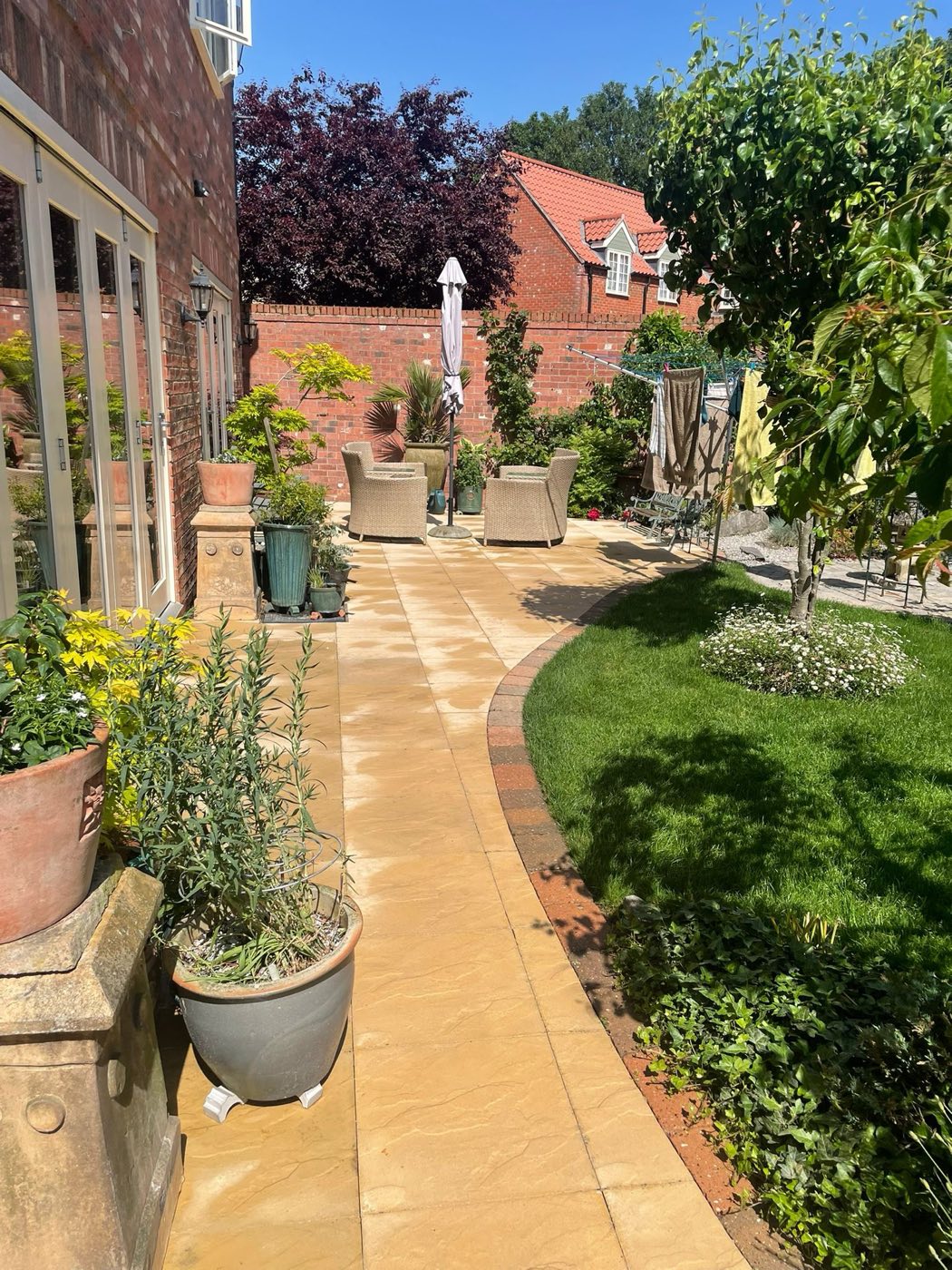
How to clean a shaded patio that stays damp
A permanently damp, shaded patio is the hardest surface to keep clean — here's what actually shifts the green and keeps it away longer.
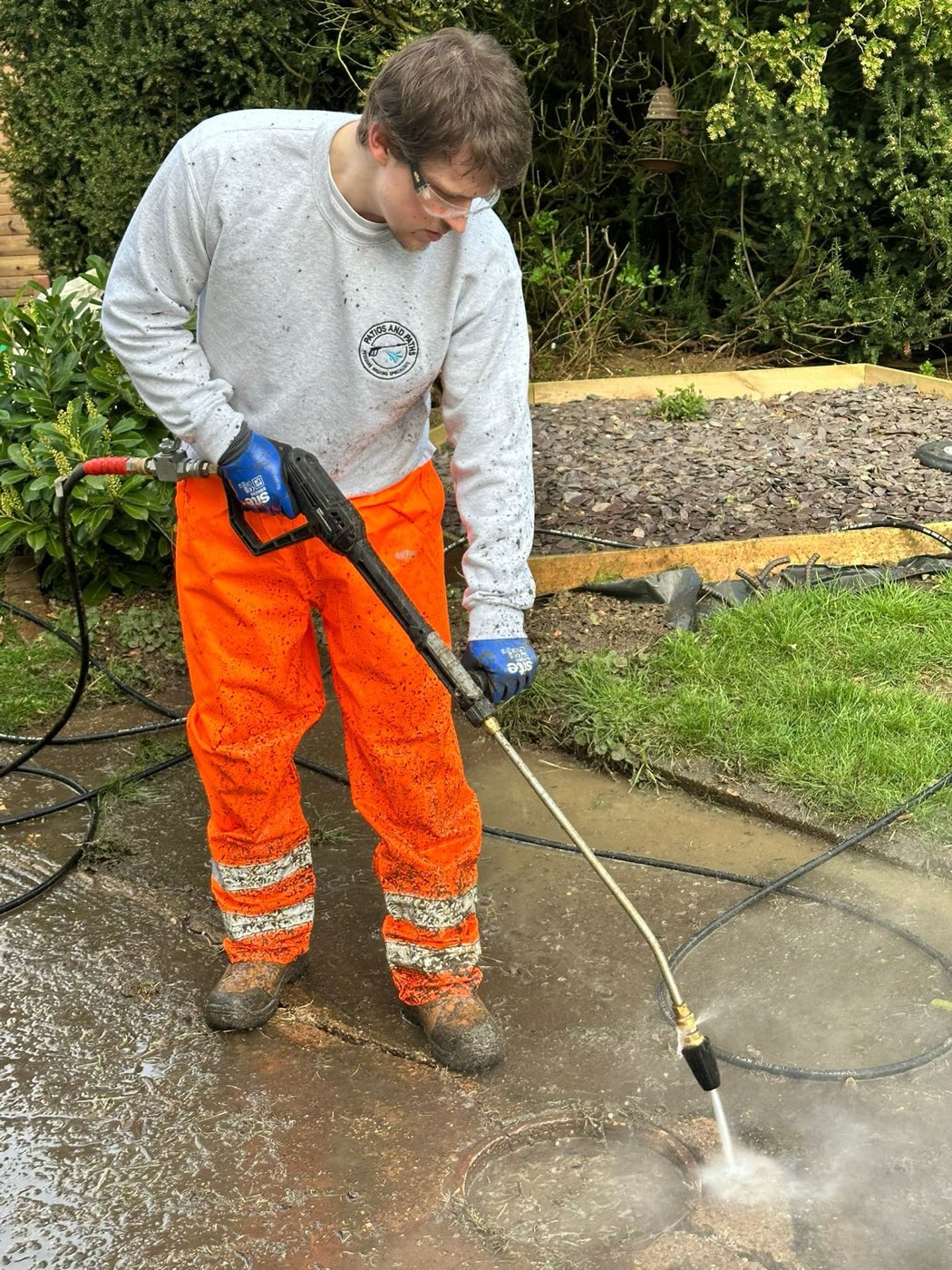
How to clean a patio with a pressure washer safely
Pressure washing a patio is satisfying — but the wrong settings or technique can cause real damage. Here's how to do it properly.
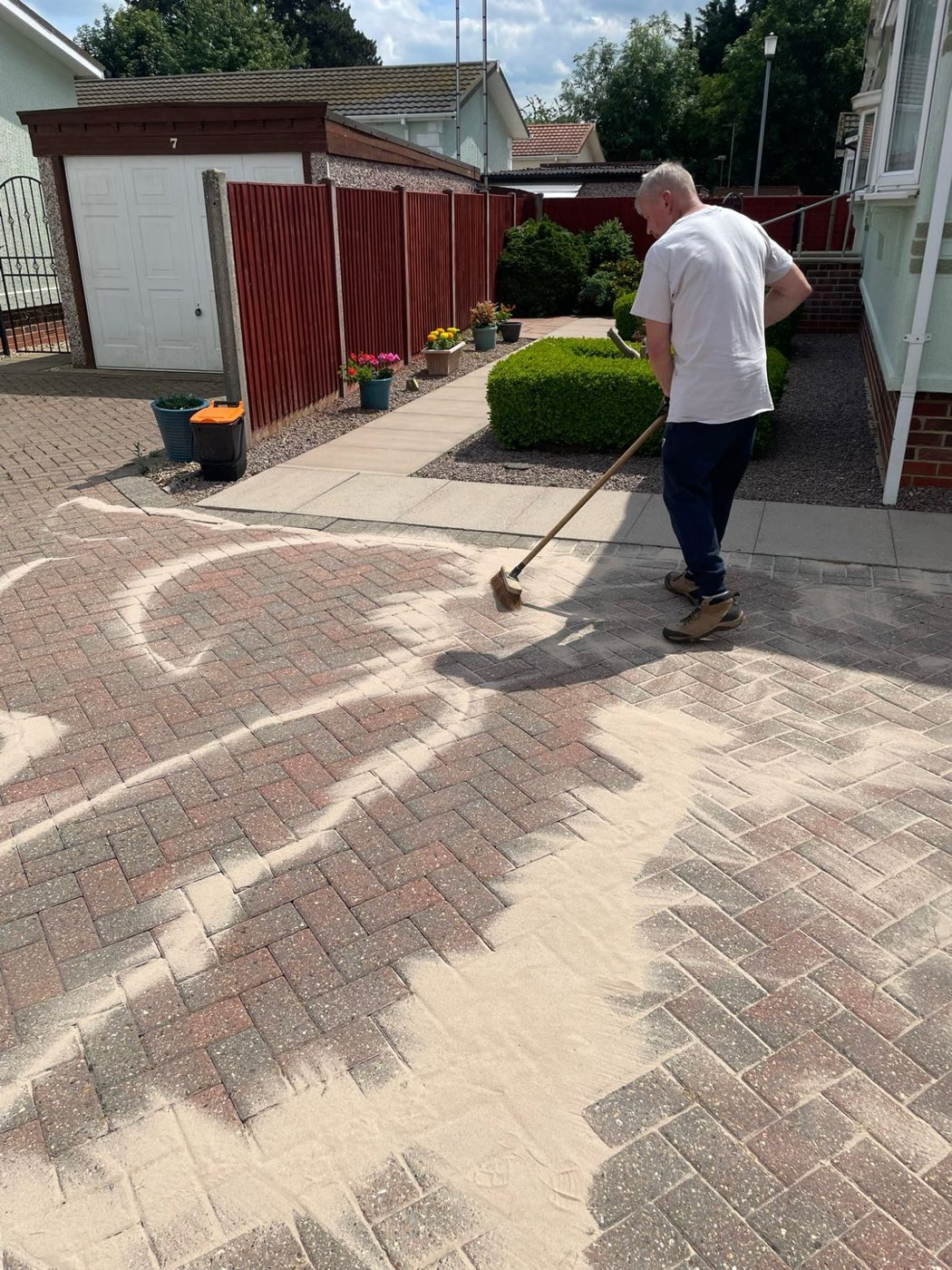
How to clean a wet pour rubber path properly
Wet pour rubber paths are low-maintenance — but they do get dirty, mossy and slippery. Here's how to clean them safely without causing damage.