
9 August 2026 · Patios and Paths
How to clean roof moss off paths and patios safely
After a wet Lincolnshire winter, you might notice a fresh green flush across your patio or path — even if you cleaned it only a year ago. The culprit is often your roof. Moss spores wash off tiles in the rain, travel down gutters or simply blow across, and land on any damp horizontal surface below. Knowing how to clean roof moss off paths and patios safely means treating not just what you can see on the ground, but understanding where it keeps coming from.
Here's a straightforward guide to doing this properly.
Why roof moss ends up on your patio
Moss thrives on roof tiles — especially north-facing slopes that stay damp for long periods. When it rains, water carries loose spores and fragments down the slope, through gutters (or over blocked ones), and straight onto the paths and patios below. It can also travel on footwear or be blown short distances in the wind.
If your patio sits beneath or near a roofline, or close to a fence that catches drip from the eaves, you're fighting a continuous source of new growth. Cleaning the patio alone is only half the answer.
Assessing the extent of the problem
Before you start, spend a few minutes looking upwards as well as downwards.
- Check your gutters. Blocked or overflowing gutters concentrate moss-laden water in one spot. If there's a green stripe across your path directly below a downpipe or a gap in the guttering, that's your main source.
- Look at the roof slope. A heavily mossy roof facing the patio means spores will keep arriving. The roof should be treated separately — that's a job for a roofing specialist — but knowing about it helps you plan maintenance intervals.
- Check surface texture. Rough or porous surfaces like old concrete, natural stone, or weathered block paving hold moisture and give moss a foothold far more easily than smooth porcelain or sealed surfaces.
In areas like Nettleham or Welton, where older properties often have pitched roofs close to paved garden areas, this is a particularly common pattern we see when we go out to quote.
How to clean roof moss off paths and patios safely
Once you understand the source, the cleaning process itself follows a logical sequence. Rushing straight in with a pressure washer spreads spores rather than removing them — so take it step by step.
Step 1: Remove loose debris first
Brush off as much loose moss as you can with a stiff-bristled broom before introducing water. Collect and bag the debris rather than sweeping it onto your lawn or borders, where moss can re-establish itself. This makes the subsequent steps far more effective.
Step 2: Apply a biocide treatment
A diluted moss and algae killer (biocide) applied to the surface and left to dwell for 15–30 minutes kills off the root system. This matters because just blasting moss away with water leaves the rhizoids — the hair-like anchoring fibres — behind in the surface, and growth returns very quickly.
Always follow the product label for dilution rates and keep pets off the area while it's wet.
Step 3: Pressure wash at the right pressure
Once the biocide has done its work, pressure washing lifts the dead material cleanly. Use a fan-tip lance rather than a rotating turbo head on softer surfaces like natural stone or older concrete — too much concentrated pressure can erode the surface over time. If you're not confident about the right settings, this is where a professional clean pays for itself. You can see the range of surfaces we work on across our [/#services].
Step 4: Re-treat with a residual algaecide
After washing and allowing the surface to dry fully (usually 24–48 hours in decent weather), apply a longer-lasting residual treatment. This creates a hostile environment for new spores landing from the roof. It won't last forever, but a good quality product applied correctly can give 12–18 months of reduced regrowth.
Natural stone and porous surfaces need extra care
If your patio is Indian sandstone, limestone, or similar natural stone, be cautious with biocide products. Some contain bleach or strong alkalis that can bleach or etch the surface. Look for pH-neutral options, or check with the product manufacturer. Our post on cleaning natural stone covers this in more detail — you can browse related patio cleaning guides in the blog for more surface-specific advice.
Preventing roof moss from taking hold again
Cleaning is a starting point, not a permanent fix — particularly if your roof hasn't been treated. Here's what helps:
- Keep gutters clear. A twice-yearly gutter clear (spring and autumn) dramatically reduces the volume of spores washing onto paths below.
- Improve drainage. Standing water on a patio encourages moss and algae. Check that your surface drains towards a lawn edge or drain rather than pooling.
- Seal the surface. Sealing block paving, concrete or natural stone reduces porosity, giving moss far less to grip. Even a basic impregnating sealer makes a real difference.
- Trim overhanging growth. Branches or shrubs that keep the surface shaded and damp accelerate moss return. Opening the area to more sunlight makes a meaningful difference.
Across Lincolnshire — from Skellingthorpe to Cherry Willingham — we regularly revisit properties where a combination of roof moss and poor drainage has caused the problem to cycle back year after year. The properties that stay cleanest longest are almost always the ones that addressed both the surface and the source.
When to call in a professional
If the moss is deeply embedded, the surface is large, or you're not sure what cleaning method suits your paving type, a professional clean is the practical option. We carry the right equipment and treatments for different surface types, and we'll tell you honestly what maintenance interval makes sense for your specific situation.
We cover homes and properties across Lincolnshire — you can check the [/areas/] page to see if we're in your area.
Ready to get your paths and patio cleared?
If roof moss has been building up over winter and your paths are starting to look green and slippery, we're happy to come and take a look. Get a free, no-obligation quote — we'll assess the surface, identify the source, and give you a straightforward price.
Frequently asked questions
Can I just pressure wash roof moss off my patio without using any chemicals?
Pressure washing alone will remove visible moss but leaves the root system and spores behind, meaning it grows back quickly — often within a season. Using a biocide treatment before washing kills the growth at the root and slows regrowth significantly.
Is it safe to use bleach to kill moss on a patio?
Diluted bleach can kill moss, but it risks discolouring natural stone surfaces like sandstone or limestone, and it's harmful to nearby plants and soil. A purpose-made pH-neutral biocide is safer for the surface and the garden.
How do I stop moss coming back if my roof keeps shedding spores?
Keeping gutters clear reduces the volume of spore-laden water reaching your patio. Applying a residual algaecide after cleaning and sealing the surface makes it harder for moss to take hold. If the roof itself is heavily mossy, having it treated by a roofing specialist removes the source.
How often should I treat my path or patio if it keeps getting moss from the roof?
In most cases, a professional clean and residual treatment once a year — ideally in spring or early autumn — is enough to keep the surface in good condition. Properties with heavy roof moss above them may benefit from treating twice a year.
Need a hand with yours? We cover Lincolnshire for patios, driveways, paths and more — see the areas we cover or browse our services. Get a free quote or call 07874 010739.
Keep reading
More on patio cleaning
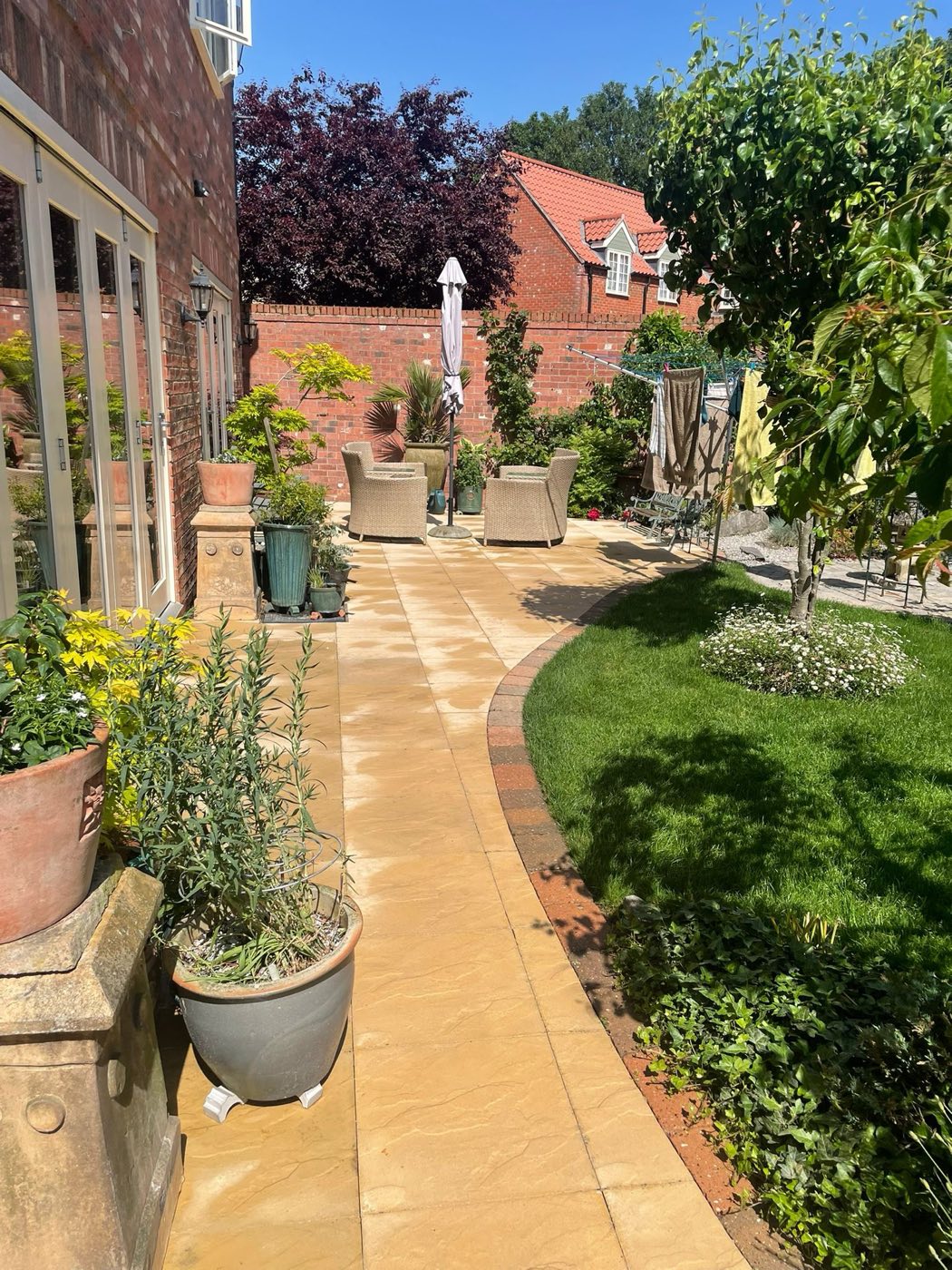
How to clean a shaded patio that stays damp
A permanently damp, shaded patio is the hardest surface to keep clean — here's what actually shifts the green and keeps it away longer.
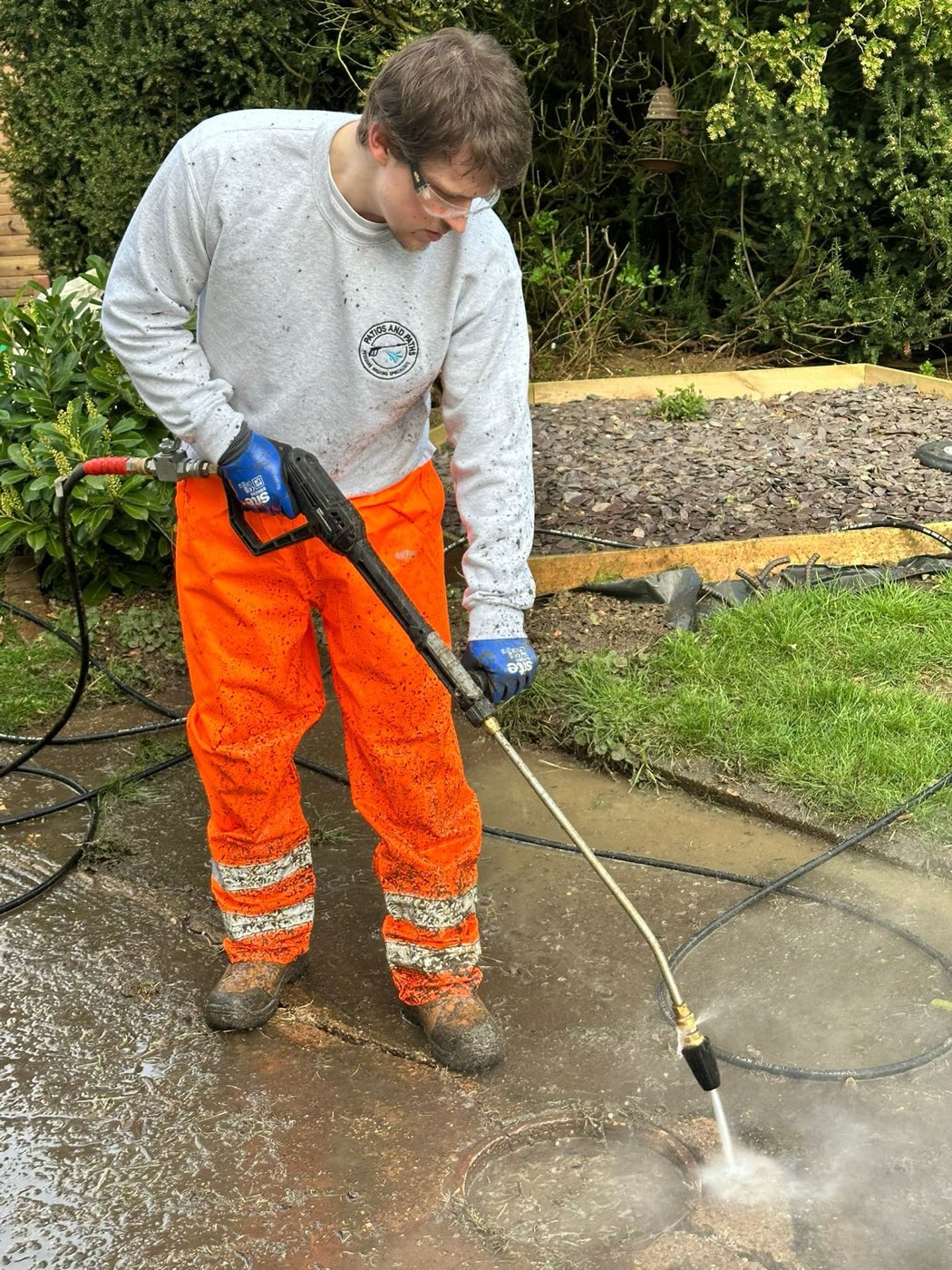
How to clean a patio with a pressure washer safely
Pressure washing a patio is satisfying — but the wrong settings or technique can cause real damage. Here's how to do it properly.
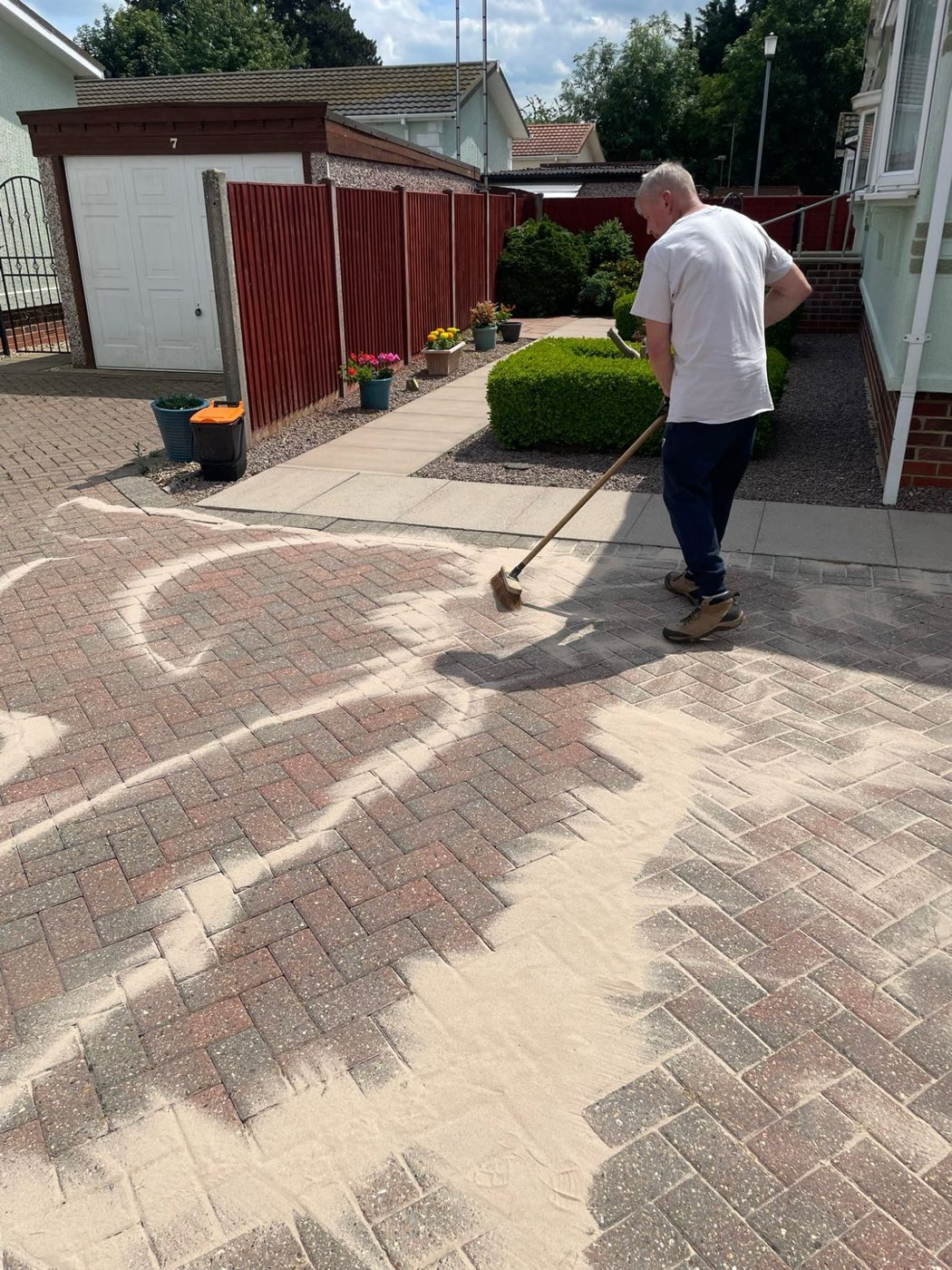
How to clean a wet pour rubber path properly
Wet pour rubber paths are low-maintenance — but they do get dirty, mossy and slippery. Here's how to clean them safely without causing damage.