
27 August 2026 · Patios and Paths
How to clean a concrete driveway: block vs poured
A clean driveway makes a real difference to how your home looks — and knowing how to clean a concrete driveway properly depends on one thing first: is it block paving or a solid poured slab? The two surfaces look similar at a glance but they respond very differently to cleaning, and using the wrong approach on either one can cause lasting damage. Here's what actually works.
Block vs poured concrete: why it matters
Poured concrete is one continuous surface — strong, dense, and fairly forgiving. Block paving (whether concrete blocks or brick-style pavers) is made up of individual units bedded in sand, with open joints between them. That difference changes everything about how you clean, what pressure you use, and how you finish the job.
Get it wrong with block paving and you'll blast away the jointing sand, leaving a surface that shifts, weeds invade, and eventually becomes uneven underfoot. Get it wrong with poured concrete and you can etch or streak the surface, especially if it's been sealed.
Cleaning poured concrete: step by step
Poured concrete is the more straightforward of the two. Here's a reliable approach:
- Sweep the surface thoroughly to remove loose debris, leaves and grit.
- Apply a concrete cleaner or diluted patio cleaner — leave it to dwell for 10–15 minutes, especially on stained areas.
- Pressure wash at a consistent distance — around 30 cm from the surface works well for most domestic pressure washers. Use a fan nozzle, not a rotary (turbo) head, which can leave tiger-stripe marks.
- Work in overlapping passes in the same direction to avoid patchiness.
- Rinse thoroughly so no cleaner residue is left sitting on the surface.
For stubborn oil or rubber tyre marks, a dedicated degreaser applied before the main clean will lift the worst of it. We've covered oil stains in more detail in our guide to driveway cleaning.
What pressure is safe for poured concrete?
Most domestic pressure washers sit between 100 and 150 bar — that's fine for poured concrete in good condition. If the concrete is older, pitted or has surface cracks, drop the pressure and keep the lance moving. Dwelling in one spot with a high-pressure lance will pit the surface further.
Cleaning block paving concrete: what's different
Block paving needs a gentler, more careful approach — particularly around the joints.
- Sweep and remove weeds first. Pull out any established weeds by hand or treat with a path weed killer a week beforehand.
- Apply a block paving cleaner — formulas designed for this surface tend to be less harsh and won't disturb the kiln-dried sand as aggressively.
- Pressure wash at lower pressure, keeping the lance at least 40 cm from the surface. A turbo head on block paving will scour out your jointing sand in minutes — avoid it.
- Work methodically, section by section, rinsing as you go.
- Re-sand the joints once the surface is fully dry. This is the step most DIYers miss. Without fresh kiln-dried sand brushed in, weeds return faster and the blocks can start to rock slightly.
Re-sanding: don't skip it
Re-jointing is genuinely important. Fine kiln-dried jointing sand is swept into the joints and compacted — it stabilises the blocks and creates a hostile environment for weed seeds. Brush it in dry, tamp it down, and add a second pass if needed. If you're having the driveway sealed afterwards, the sand goes in first and the sealer locks it in place.
Common mistakes that cause damage
- Using a rotary/turbo nozzle on block paving — it strips joints fast
- Standing too close — closer isn't always more effective; it just concentrates damage
- Using bleach neat — dilute it properly or use a purpose-made cleaner; neat bleach can discolour concrete and kill nearby plants
- Cleaning in bright direct sun — the cleaner dries before it can dwell, and streaks are more likely
- Skipping re-sanding after block paving work
How often should you clean a concrete driveway?
For most homes around Lincolnshire, a proper clean every one to two years is enough to keep on top of algae, moss and general grime. If your driveway is north-facing, under trees, or in a shaded spot — properties in areas like Washingborough, Branston or Skellingthorpe often have this — you may find green algae builds up quicker and an annual clean makes more sense. Between professional cleans, a quick sweep and occasional hose-down helps a lot.
When it's worth calling in a professional
If the driveway is heavily stained, the block paving joints are almost entirely gone, or the surface area is large, a professional clean will save you a full weekend and almost always get a better result. We use commercial-grade equipment calibrated to the surface type — so block paving gets cleaned without losing its jointing, and poured concrete comes up consistent and streak-free.
We work across Lincolnshire — from Lincoln and North Hykeham to Nettleham, Heighington and beyond. You can see the full list of areas we cover on our areas page.
If you're not sure which approach your driveway needs, or you'd just rather hand it over, take a look at our services or get in touch for a no-obligation quote.
Ready to get your driveway looking its best?
Whether it's block paving that needs re-sanding or a poured concrete slab with years of grime, we can help. Request a free quote and we'll get back to you quickly with a straightforward price.
Frequently asked questions
Can I use bleach to clean a concrete driveway?
Diluted bleach can help shift algae and mould on poured concrete, but it should never be used neat — it can discolour the surface and damage nearby plants or lawn edges. A purpose-made patio or driveway cleaner is usually a better choice and safer to rinse away.
Will pressure washing remove the sand from my block paving joints?
Yes, it can — especially if you use a rotary or turbo nozzle or hold the lance too close. The key is keeping the lance at a safe distance, using a fan nozzle, and re-sanding the joints once the surface is fully dry.
How long does a concrete driveway take to dry after pressure washing?
On a dry, mild day most concrete driveways are dry enough to walk on within a couple of hours and fully dry within 24 hours. Avoid sealing until the surface is completely dry — usually 48 hours in good weather.
Is it better to seal a concrete driveway after cleaning?
Sealing after a thorough clean can significantly slow the return of algae and moss and makes future cleaning easier. It's particularly worthwhile for block paving, where the sealer also helps lock in jointing sand. We'd always recommend cleaning first and sealing once the surface is fully dry.
Need a hand with yours? We cover Lincolnshire for patios, driveways, paths and more — see the areas we cover or browse our services. Get a free quote or call 07874 010739.
Keep reading
More on driveway cleaning
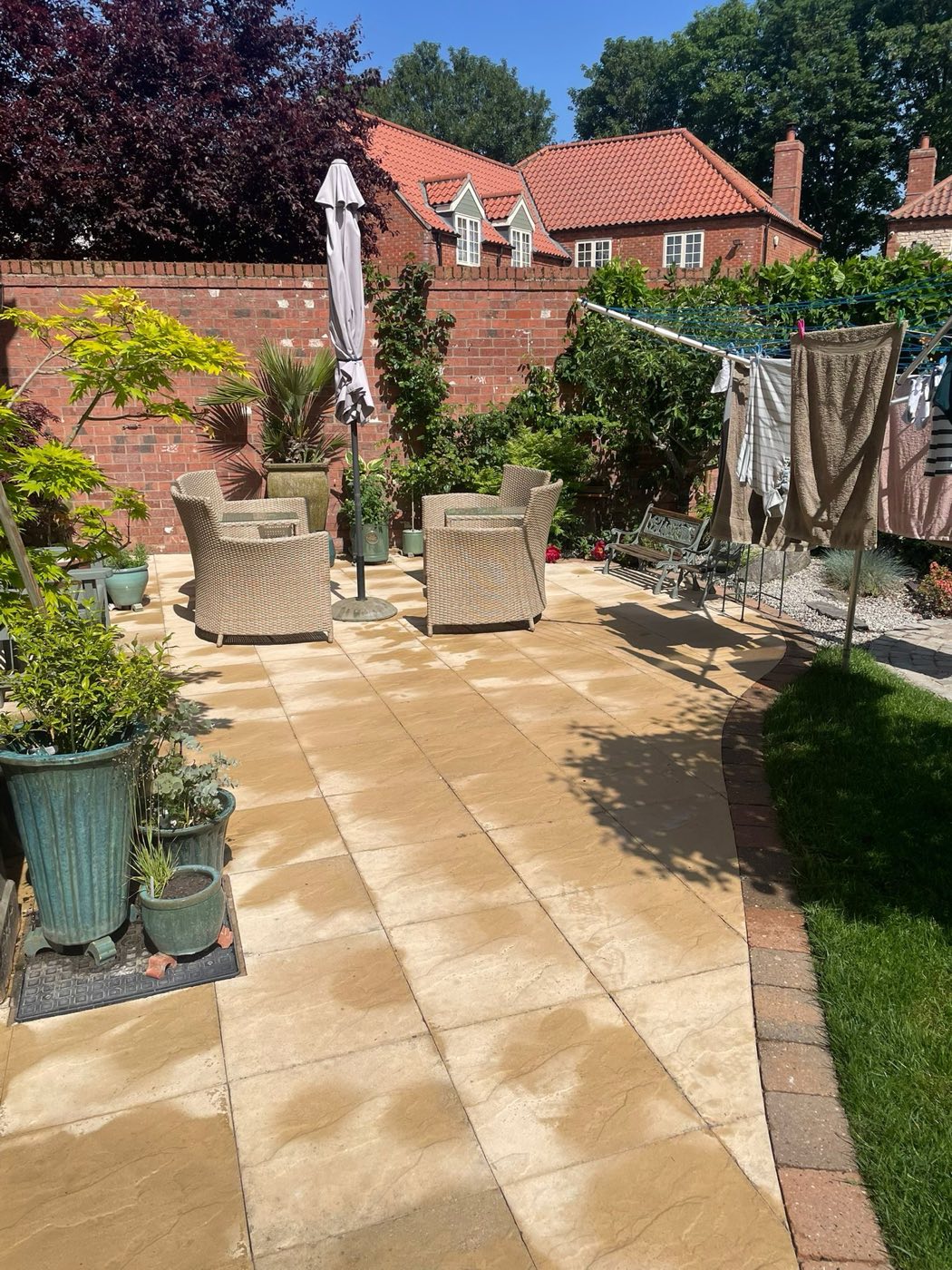
How to clean a driveway after heavy rain
Heavy rain leaves driveways muddy, stained and slippery — here's exactly how to clean yours back to a smart finish.
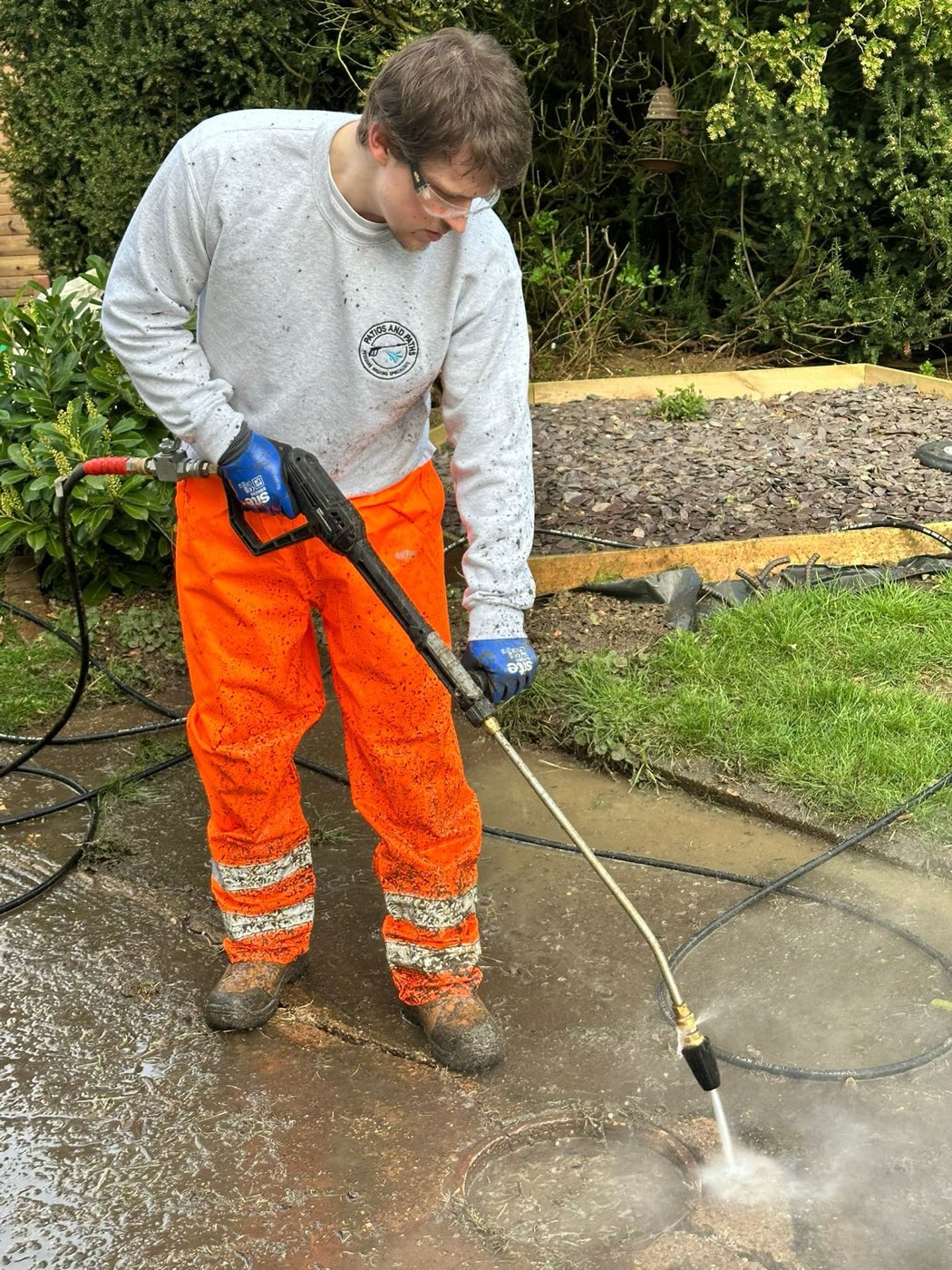
How to clean a driveway edging and border properly
Weedy, mossy joints can ruin an otherwise tidy driveway — here's how to clean block paving joints properly and stop the problem coming back.
How to clean a driveway edging and border properly
Driveway edging collects the worst of the grime — here's how to clean it properly and get that crisp, finished look back.