
21 August 2026 · Patios and Paths
How to clean a slate patio without causing damage
Slate is one of the most striking paving materials you can choose — deep charcoal tones, subtle texture, and a look that ages beautifully. But knowing how to clean a slate patio without causing damage is something many homeowners get wrong. The good news: cleaned properly, slate comes up like new. Done badly, you risk lifting the surface layers, creating white tide marks, or making it dangerously slippery.
Here's exactly what works, and what to avoid.
Why slate needs a different approach to other stone
Slate is a fine-grained metamorphic rock, which sounds technical but means one practical thing: it splits in layers. That layered structure (called cleavage or delamination) makes slate porous and slightly fragile compared to granite or porcelain. Water, pressure, and the wrong cleaning products can all work their way into those layers and cause problems over time.
It also tends to show white salt deposits — efflorescence — especially after a wet Lincolnshire winter, when moisture pushes mineral salts up through the stone and they dry on the surface.
What causes slate patios to look dirty?
The usual culprits are the same ones that affect most outdoor surfaces in the East Midlands:
- Green algae and moss — thriving in damp, shaded spots. Very common on north-facing patios in places like Nettleham and Welton where tree cover or fence lines keep surfaces in shadow.
- Black spot — a stubborn algae that bonds to the stone surface and resists light scrubbing.
- Efflorescence — the white powdery bloom caused by salts in the stone or the bedding mortar.
- General dirt and grime — soil, leaf stains, foot traffic, and organic debris.
- Rust or iron staining — slate naturally contains iron minerals, and these can oxidise into reddish-brown patches, especially when the stone stays damp.
How to clean a slate patio: step by step
1. Clear the surface and sweep thoroughly
Remove any furniture, planters, or debris. Sweep the whole area to get rid of loose grit — if you pressure wash over sharp particles, they can score the surface.
2. Apply a suitable stone cleaner
Use a pH-neutral or mildly alkaline cleaner designed for natural stone. Avoid anything acidic — vinegar, citric-acid products, or any cleaner labelled for concrete or block paving. Acid dissolves the surface of slate, strips the finish, and causes permanent dullness.
Dilute the cleaner according to the manufacturer's instructions and apply it evenly across the patio. Leave it to dwell for 10–15 minutes so it can break down the algae and grime.
3. Scrub problem areas
Use a stiff-bristled brush (not wire) on stubborn spots, particularly around the joints and anywhere black spot has taken hold. Work in the direction of the stone's natural grain where possible.
4. Pressure wash carefully — technique matters
This is where most DIY attempts go wrong. Pressure washing is effective on slate, but you need to:
- Keep the pressure below 100–120 bar (many domestic machines run hotter than this at the nozzle)
- Use a fan tip or turbo nozzle, never a pencil jet
- Keep the nozzle at least 20–30 cm from the surface
- Work with even, sweeping strokes — never hold the jet still
High-pressure pencil jets can flick off the top layer of slate, leave visible etching, and blast out the jointing sand or mortar. Once that happens, you'll have loose, rocking slabs to deal with as well as a stained patio.
5. Rinse completely
Rinse the whole area with clean water to remove all cleaning product residue. If any alkaline cleaner dries on the surface, it can leave its own marks.
6. Allow to dry fully before sealing
Slate benefits from sealing, but only once the stone is completely dry — typically 48–72 hours after cleaning in good weather. Sealing traps moisture if you rush it. See our guidance on patio cleaning services if you'd like us to handle both steps in one visit.
Dealing with efflorescence on slate
White salt blooms are frustrating because scrubbing often spreads them. The right approach is to let the surface dry fully, then use a dedicated efflorescence remover. These are slightly acidic, so dilute carefully and rinse thoroughly. If efflorescence keeps coming back season after season, the source is usually moisture rising from below — worth investigating the drainage and bedding layer.
Should you seal a slate patio after cleaning?
Yes, in most cases. A good natural-stone sealer (impregnating, not topical) feeds into the pores of the slate and repels water, oil, and organic growth. It won't change the look of the stone if you choose a 'natural finish' product, or it can deepen the colour slightly with an 'enhancing' sealer — worth considering if your slate has faded.
Sealing after a professional clean is one of the most cost-effective things you can do to extend how long your patio stays looking good. We cover this and more in our patio cleaning guides.
When it's worth calling a professional
If your slate patio is heavily colonised with black spot or lichen, stained with rust, or showing signs of delamination, a professional clean will get results that hours of DIY won't match. We use commercial-grade soft-wash equipment and the right stone-specific chemicals — getting the pressure and chemistry right is genuinely half the job.
We work across Lincolnshire, including Lincoln, Branston, Cherry Willingham, Saxilby, and Skellingthorpe. If you're not sure whether your slate needs a professional touch or you just want a quote, check the areas we cover and drop us a message.
A few things to avoid
- Never use bleach directly on slate — it can bleach the colour and harm nearby plants
- Avoid wire brushes or steel wool
- Don't use a rotary surface cleaner at full pressure on slate (it can leave circular marks)
- Don't seal before the stone has fully dried out after cleaning
With the right approach, a slate patio can look genuinely impressive for decades. It just needs a little more respect than concrete or porcelain.
Want a professional clean and seal for your slate patio? Get a free, no-obligation quote and we'll come and take a look.
Frequently asked questions
Can I use a pressure washer on slate paving?
Yes, but with care. Keep the pressure below 120 bar, use a fan or turbo nozzle, and hold it at least 20–30 cm from the surface. High-pressure pencil jets can flake the surface layers and blast out jointing.
Why is my slate patio going white after cleaning?
White patches after cleaning are usually efflorescence — mineral salts rising through the stone as it dries. Let the surface dry fully, then treat with a diluted efflorescence remover. Sealing the slate afterwards helps slow its return.
What cleaning products are safe for slate?
Use a pH-neutral or mildly alkaline natural stone cleaner. Avoid anything acidic — including vinegar, citric-acid cleaners, or products designed for concrete — as these dull and etch the surface of slate permanently.
How often should I clean a slate patio?
A thorough clean once a year is usually enough for most Lincolnshire gardens. If the patio is shaded or damp, you may need to treat for algae more frequently. Sealing after cleaning significantly reduces how quickly it dirties again.
Need a hand with yours? We cover Lincolnshire for patios, driveways, paths and more — see the areas we cover or browse our services. Get a free quote or call 07874 010739.
Keep reading
More on patio cleaning
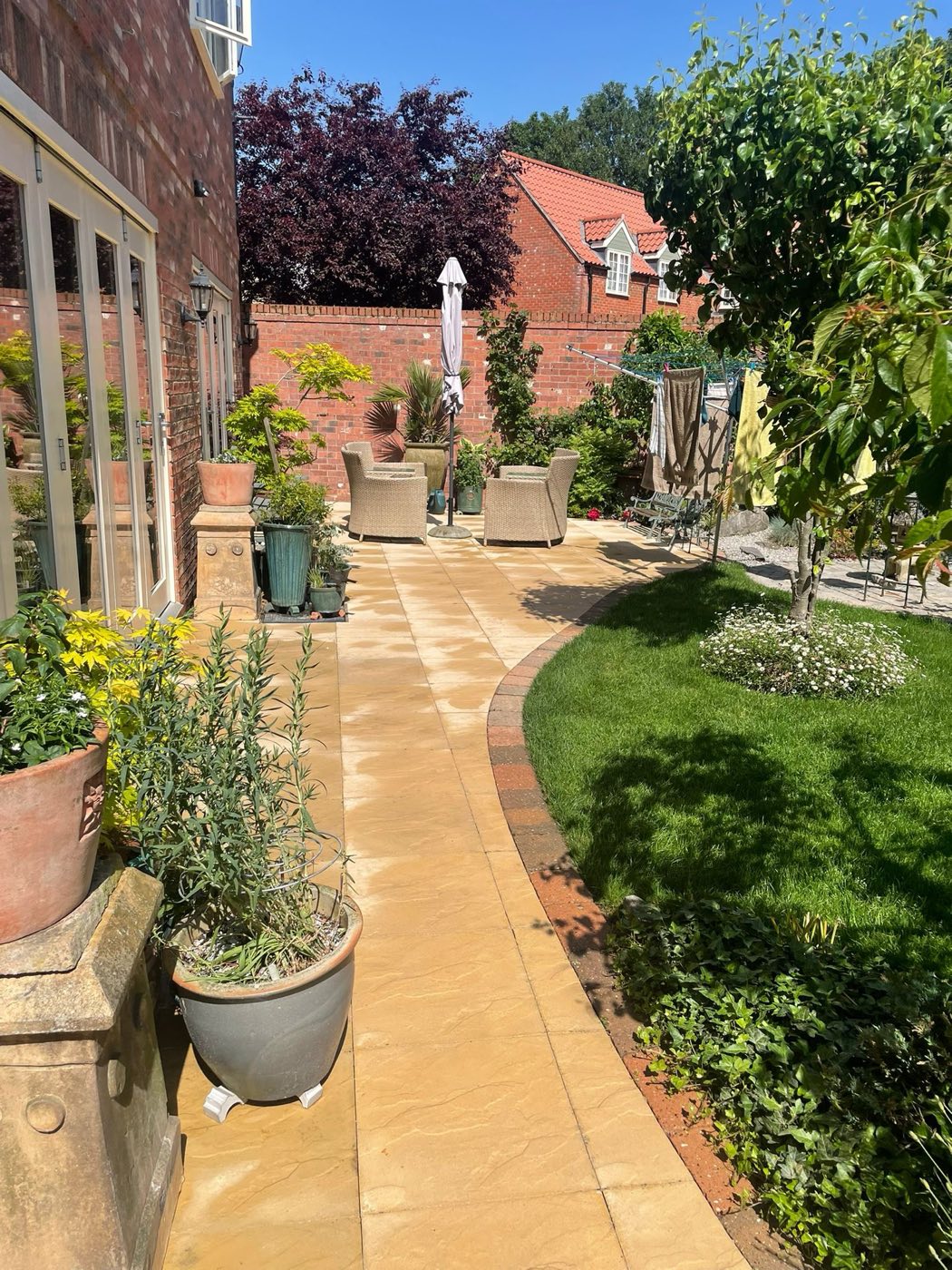
How to clean a shaded patio that stays damp
A permanently damp, shaded patio is the hardest surface to keep clean — here's what actually shifts the green and keeps it away longer.
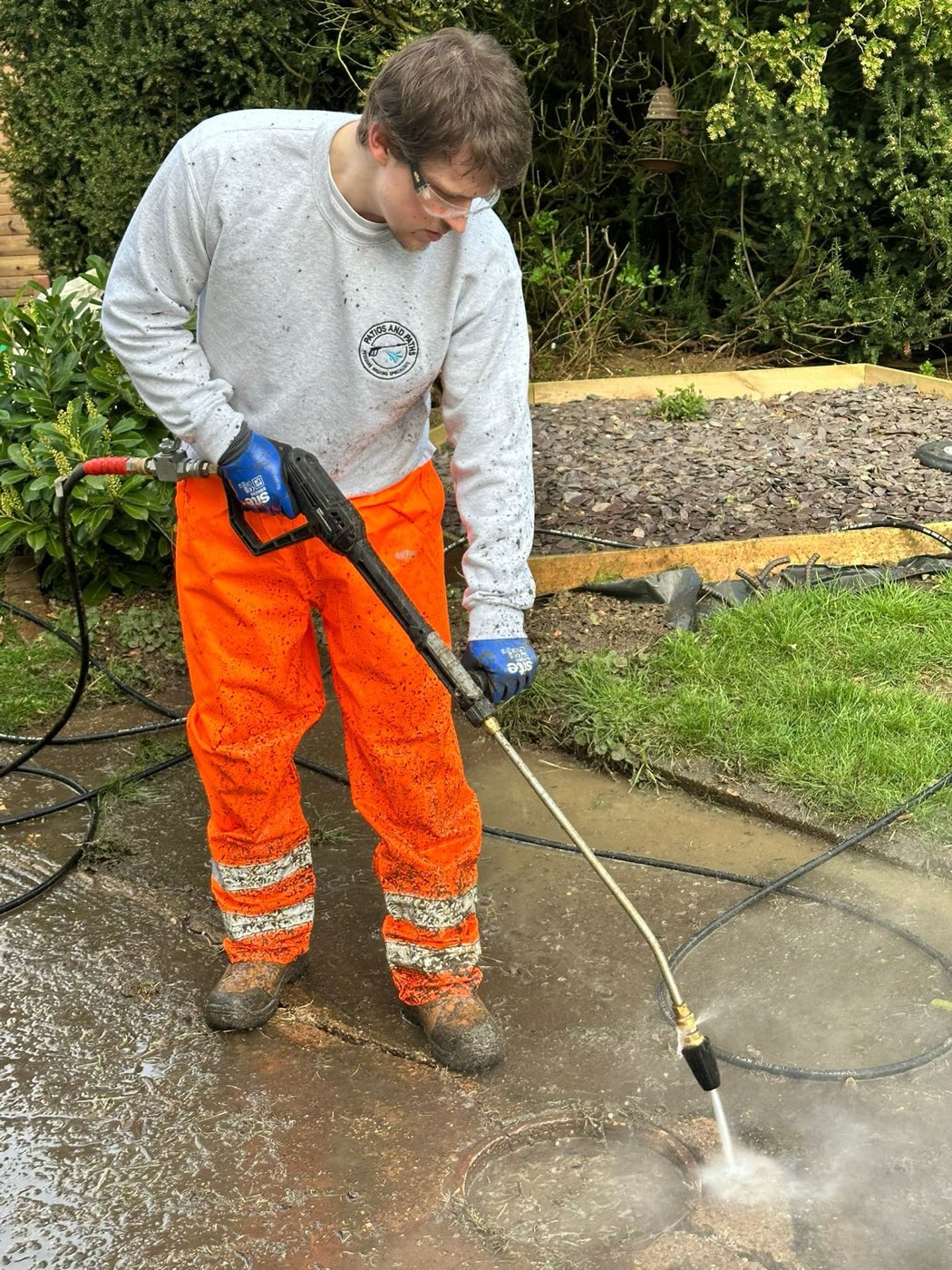
How to clean a patio with a pressure washer safely
Pressure washing a patio is satisfying — but the wrong settings or technique can cause real damage. Here's how to do it properly.
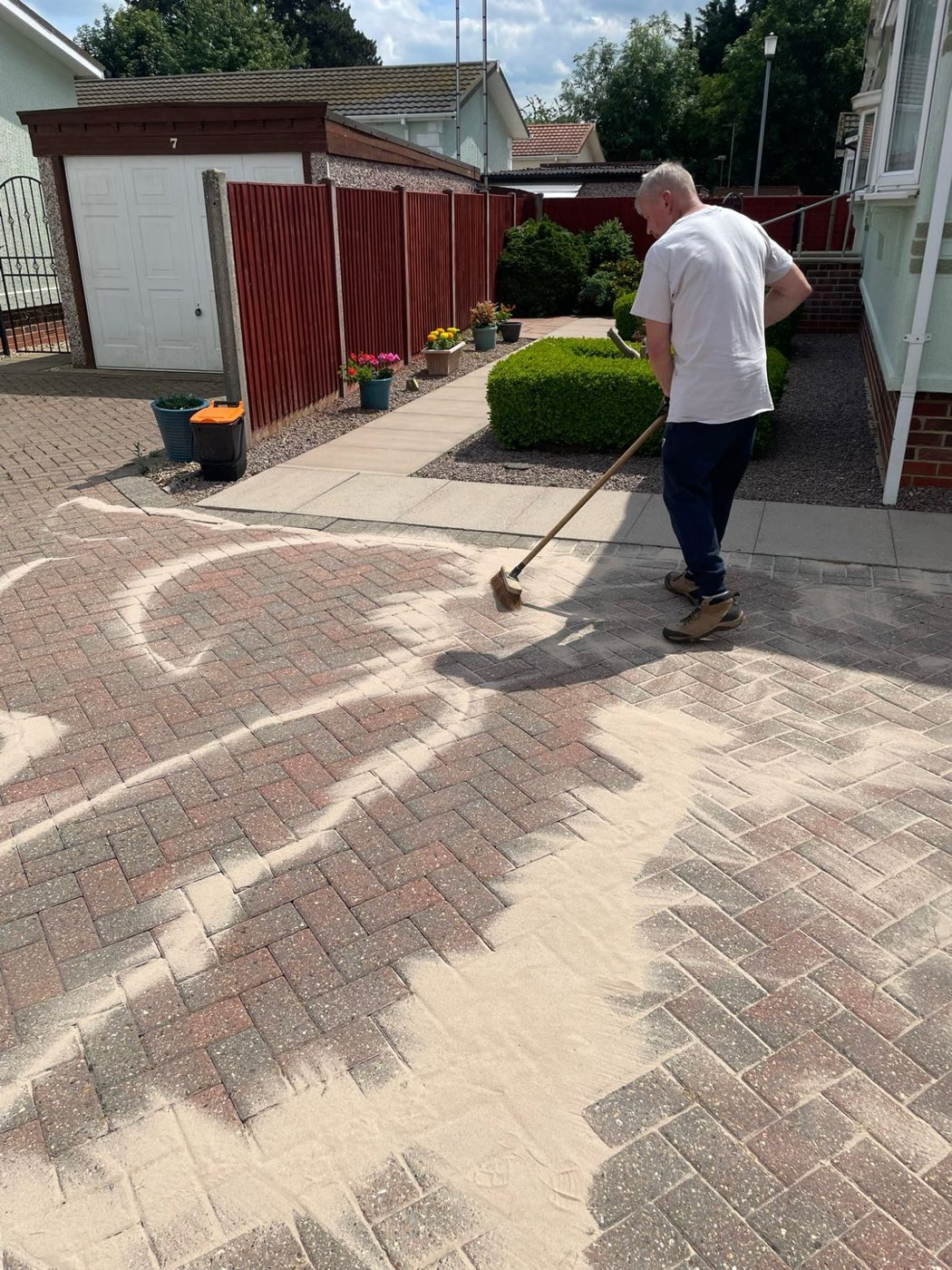
How to clean a wet pour rubber path properly
Wet pour rubber paths are low-maintenance — but they do get dirty, mossy and slippery. Here's how to clean them safely without causing damage.