
19 August 2026 · Patios and Paths
How to clean a patio after a wet Lincolnshire winter
A wet winter is hard on outdoor surfaces. By the time spring arrives, most patios across Lincolnshire are coated in a layer of green algae, black spots and general grime that makes them look years older than they are. The good news is that knowing how to clean a patio after a wet winter — and doing it in the right order — can restore it to something close to new in a single afternoon.
Here's what actually works, from assessment through to aftercare.
Why winter does so much damage to patios
It's not just the rain. It's the combination of low light, persistent damp and weeks of near-freezing temperatures that allow algae, moss and black spot fungus to take hold. North-facing patios in places like Nettleham or Washingborough can spend whole months in shade, and those conditions are ideal for biological growth to spread across every surface — grout lines, slab faces, even raised edges.
ByDecember, your patio might look fine. By March, the damage done since October becomes visible all at once as temperatures rise and the growth turns vivid green.
Step one: assess before you start
Before you reach for a pressure washer or a bottle of patio cleaner, take ten minutes to look carefully at what you're actually dealing with.
- Type of surface. Natural stone (sandstone, limestone, Indian sandstone), concrete slabs, porcelain and block paving all need different approaches and different pressure levels.
- Condition of pointing and jointing. If your grout or kiln-dried sand is already loose, high-pressure washing will make it worse.
- Type of growth. Green algae wipes off more easily than black spot or lichen, which need longer dwell times with the right product.
- Any efflorescence or staining. White salt bloom or rust marks need targeted treatment rather than just a wash.
Getting this right first saves you from making things worse.
Step two: treat biological growth before washing
This is the step most people skip, and it's probably the most important one.
Apply a diluted patio biocide or algaecide across the whole surface and let it dwell for the time specified on the product — usually 20 to 30 minutes, sometimes longer for heavy moss or established lichen. This kills the root structure of the growth rather than just lifting the surface layer. If you pressure wash without doing this first, you'll shift the visible colour but leave the biology behind, and it will return within weeks.
For natural stone surfaces in particular, check that the product is pH-neutral. Acidic cleaners will damage limestone and some sandstones even at low concentrations.
Step three: pressure wash correctly
Once the biocide has had time to work, you're ready to wash. A few key points:
Choose the right nozzle and pressure
For most patio surfaces, a 25-degree fan nozzle at 100–150 bar is plenty. Porcelain can handle more; older natural stone should have less. A rotary or turbo nozzle gives a more thorough clean but must be kept moving on softer materials.
Work methodically
Start at the highest point of your patio and work downhill so dirty water runs away from cleaned areas. Overlap each pass slightly. Get into grout lines with a dedicated grout-cleaning nozzle or a narrower fan — this is where most of the black spot hides.
Don't hold the lance too close
With block paving or pointing that's seen better days, holding the nozzle within a few centimetres will strip jointing sand rapidly. Keep a consistent distance — around 20–30 cm for most surfaces — and let the dwell time from step two do the heavy lifting.
If you're in any doubt about pressure levels or your surface is particularly old or delicate, this is a sensible point to call in a professional. We cover patios across Lincolnshire from Lincoln itself out to villages like Branston, Heighington and Saxilby — you can see the full list of areas we cover and get a sense of what's involved.
Step four: rinse thoroughly and inspect
Rinse the whole surface with a low-pressure wide fan to clear any remaining cleaning product and lifted debris. Then let it dry for a couple of hours — you'll see a much clearer picture of what's been shifted and what hasn't.
If stubborn black spots remain, a second application of biocide and a targeted re-wash usually clears them. Don't scrub hard with a stiff brush on natural stone — you'll scratch the surface.
Step five: re-sand block paving and re-point if needed
After washing block paving, the kiln-dried jointing sand will almost certainly need topping up. Brush dry sand into the joints and compact it gently. If pointing on natural stone or concrete slabs is crumbling or missing, it's worth repointing properly before the next winter — open joints let water in to freeze and expand, which speeds up further deterioration.
Should you seal the surface after cleaning?
Sealing after a thorough clean is one of the most effective ways to slow regrowth and make future cleaning much easier. It's not always necessary — porcelain, for instance, doesn't need sealing — but for Indian sandstone, concrete and block paving it can make a real difference to how your patio looks in twelve months' time. Our patio cleaning topic hub covers the sealing question in more detail if you want to read more before deciding.
When to call a professional instead
DIY cleaning works well when you have the right equipment, some patience and a surface that's in reasonable structural condition. But if your patio has:
- Heavy lichen or deeply ingrained black spot that's resisted previous attempts
- Cracked or loose slabs that need lifting before washing
- Pointing that's largely gone and needs full reinstatement
- A delicate natural stone surface you're not confident about
…then a professional clean is likely to give you a better result and avoid accidental damage. We've restored patios across Lincolnshire that homeowners had almost given up on, from Cherry Willingham to Skellingthorpe. Take a look at our outdoor surface cleaning services to see what we cover.
Get your patio looking its best this spring
If you'd rather have it done properly and not spend your weekend wrestling with a hired pressure washer, we'd be happy to take a look. Request a free quote and we'll get back to you quickly with a straightforward price for your patio, path or driveway.
Frequently asked questions
When is the best time to clean a patio after winter?
Late March to April is ideal — temperatures are rising, biological growth is visible, and you have the whole summer ahead to enjoy a clean surface. Avoid cleaning during frost or if overnight temperatures are still dropping below zero.
How long does a professionally cleaned patio stay clean?
On a sealed surface in a reasonably sunny position, a year or more is realistic. Shaded or north-facing patios may need an annual clean, particularly in a damp county like Lincolnshire where algae grows quickly.
Can I use a domestic pressure washer for a post-winter clean?
Yes, if the machine reaches at least 100 bar and you use the correct nozzle for your surface type. The key is treating biological growth with a biocide first — a pressure washer alone won't stop algae from coming back quickly.
Will pressure washing strip the jointing sand from my block paving?
It can, especially if the sand was already loose or the lance is held too close. Use a wide fan nozzle at a sensible distance and plan to top up the kiln-dried sand in the joints afterwards.
Need a hand with yours? We cover Lincolnshire for patios, driveways, paths and more — see the areas we cover or browse our services. Get a free quote or call 07874 010739.
Keep reading
More on patio cleaning
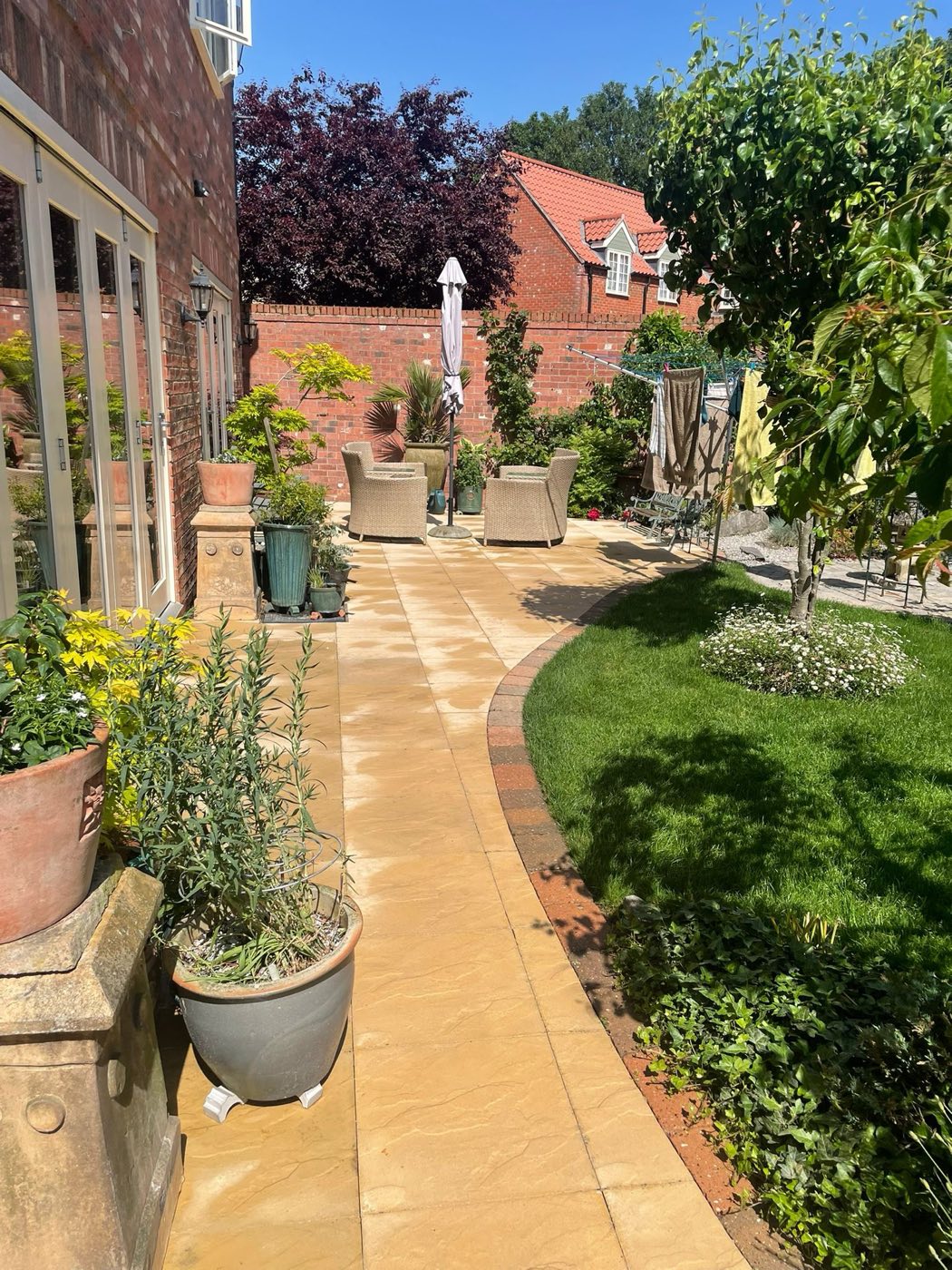
How to clean a shaded patio that stays damp
A permanently damp, shaded patio is the hardest surface to keep clean — here's what actually shifts the green and keeps it away longer.
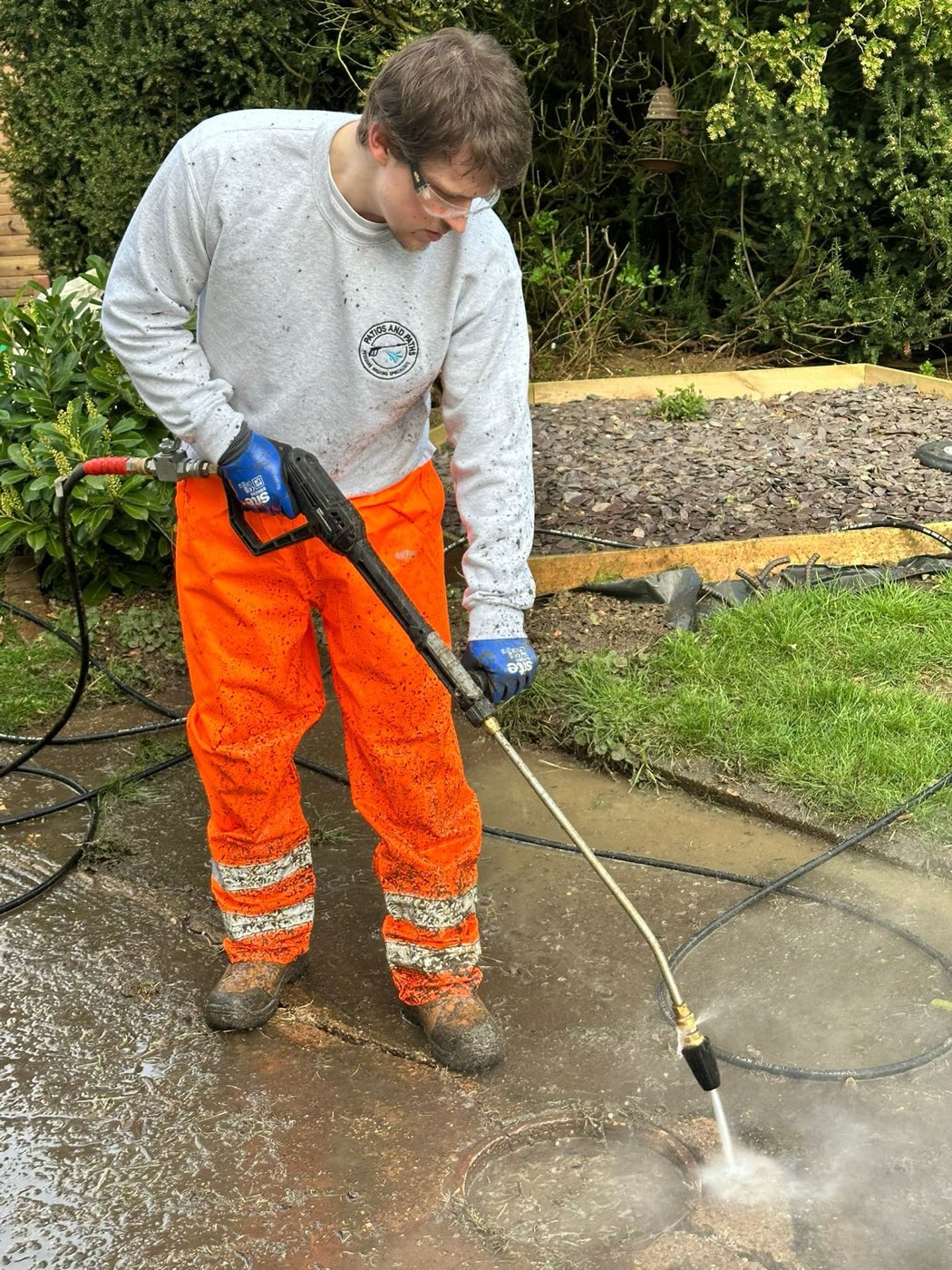
How to clean a patio with a pressure washer safely
Pressure washing a patio is satisfying — but the wrong settings or technique can cause real damage. Here's how to do it properly.
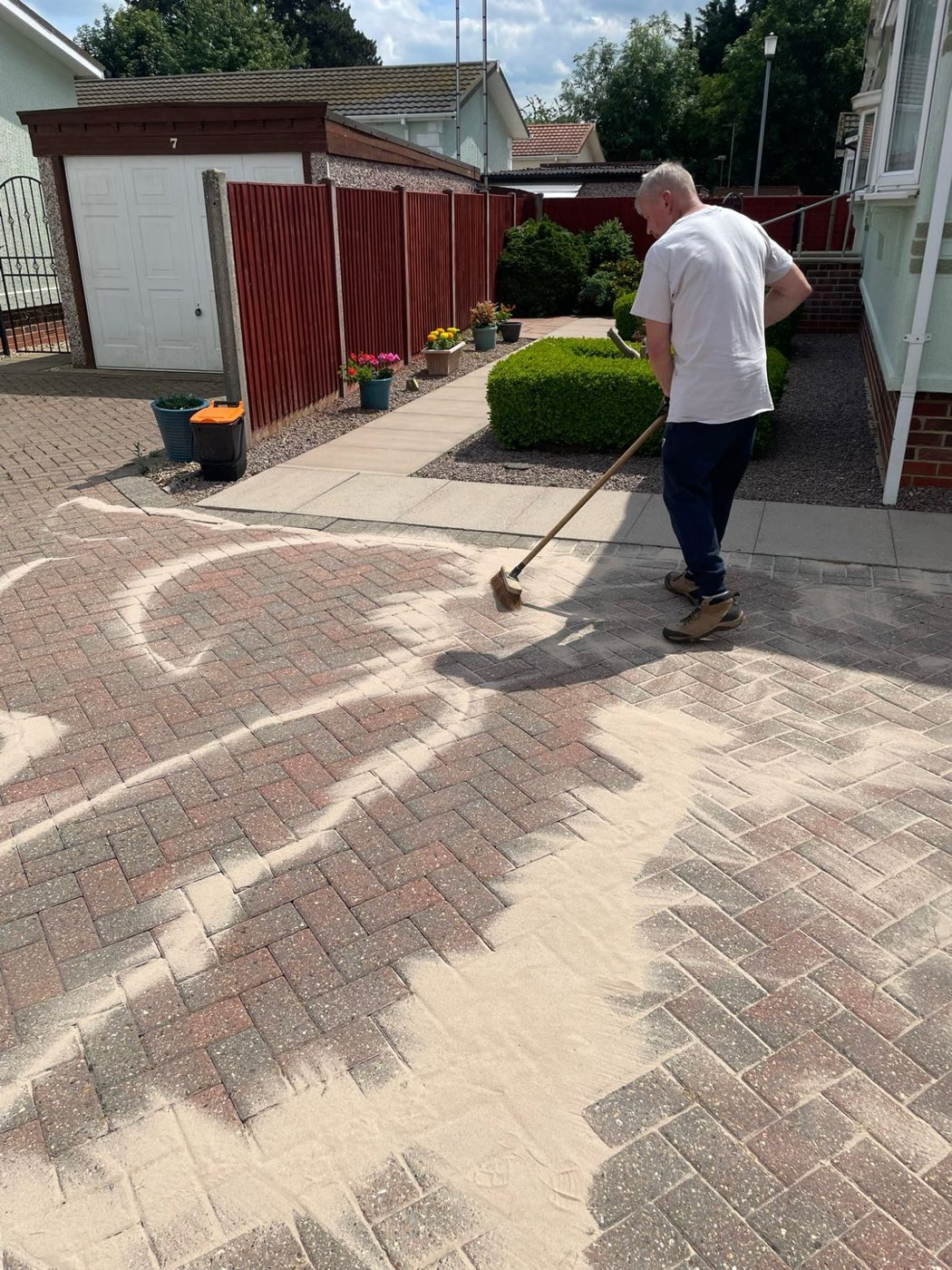
How to clean a wet pour rubber path properly
Wet pour rubber paths are low-maintenance — but they do get dirty, mossy and slippery. Here's how to clean them safely without causing damage.