
24 July 2026 · Patios and Paths
How to clean a limestone patio without damage
Limestone is one of the most beautiful paving materials you can lay in a garden — warm in colour, natural in texture, and it ages gracefully when it's looked after. The problem is that it's also one of the most unforgiving stones when it comes to cleaning. Get it wrong and you can etch the surface, strip the finish, or leave permanent staining. So if you're wondering how to clean a limestone patio, the short answer is: gently, with pH-neutral products, and never with anything acidic.
Here's everything you need to know.
Why limestone needs special treatment
Limestone is a calcium carbonate stone, which means it reacts badly to acid. That rules out a surprisingly long list of common cleaning products — including white vinegar, many patio cleaners sold in garden centres, and anything labelled as an 'algae blaster' that contains hydrochloric or citric acid.
Even brief contact with an acidic cleaner can dull the surface, cause tiny pits, and leave the stone looking worse than before you started. On honed or polished limestone this damage is particularly obvious.
The same goes for bleach-based products. They might shift the green algae on the surface, but they can discolour lighter limestone and damage the pointing between slabs over time.
What you'll need before you start
Gather these before you begin:
- A stiff-bristled brush (not wire — that scratches)
- A garden hose or low-pressure washer
- A pH-neutral stone cleaner (look for ones specifically labelled safe for limestone or calcium-based stone)
- A bucket and warm water
- Protective gloves
If you're planning to use a pressure washer, keep the pressure well below 100 bar and use a wide fan nozzle. High pressure can open up the pores of the stone and force water and dirt deeper in rather than clearing it out.
How to clean a limestone patio: step by step
- Clear the surface. Move furniture, pots and anything else off the patio. Sweep away loose debris, leaves and dirt.
- Wet the stone. Rinse the whole surface with a garden hose. This prevents any cleaner from soaking in unevenly on dry patches.
- Apply your pH-neutral cleaner. Follow the dilution instructions on the bottle. Apply it evenly across the patio, working in sections if the area is large.
- Agitate gently. Use your stiff brush to work the cleaner into the surface in circular motions. Pay extra attention to joints and any areas with visible algae or staining.
- Leave it to dwell. Most stone cleaners need five to ten minutes to do their job. Don't let it dry on the surface — if it's a warm day, mist with water to keep it wet.
- Rinse thoroughly. Flush away all the cleaner with clean water. Residue left behind can attract dirt faster.
- Check and repeat if needed. Stubborn marks may need a second pass. For really ingrained dirt, a soft rotary brush attachment on a low-pressure washer makes a real difference.
Dealing with green algae and moss on limestone
Algae and moss are the most common problems we see on limestone patios across Lincolnshire, particularly in shadier spots. North-facing gardens in places like Nettleham and Welton can develop a covering of green slime within a single winter.
A pH-neutral biological cleaner — one that breaks down organic growth rather than bleaching it — works well here. Apply it, brush it in, leave it, and rinse. For thicker moss, you may need to lift the bulk of it first with a brush before applying the cleaner.
If algae keeps coming back season after season, it's worth considering a limestone-compatible sealant after cleaning. This won't make the stone immune, but it will slow the regrowth considerably. See our guide to patio cleaning services and options for more detail on what's involved.
Stains that need a different approach
Rust stains
Orange-brown rust marks — often caused by metal furniture or plant pots — are one of the trickier problems on limestone. Don't use a standard rust remover; most are acidic and will damage the stone. Look for a rust remover specifically formulated for calcium-based stone, and always do a small test patch first.
Oil and grease
Fresh oil should be blotted (not rubbed) immediately with an absorbent material. Older, dried oil stains respond well to a poultice — a paste of an absorbent powder mixed with a degreasing agent, left on the stain for several hours and then rinsed away. It's slow, but it works.
Efflorescence (white chalky marks)
This white powdery deposit is mineral salts coming up through the stone, and it's very common on new limestone. The good news is it usually clears on its own with weathering and regular rinsing. Avoid scrubbing it hard — that can drive the salts back into the pores.
How often should you clean limestone?
For most Lincolnshire gardens, a proper clean once a year — ideally in late spring when the worst of the winter algae has built up — is enough to keep limestone looking its best. A light brush and rinse every month or two in between will stop debris and dirt from building up and staining.
If your patio is sealed, annual cleaning is even easier since dirt sits on the surface rather than soaking in.
When it's worth calling a professional
Limestone can be tricky to clean well, especially if it's been neglected for a few years or if previous owners used the wrong products on it. We work with limestone patios regularly across Lincolnshire — from Lincoln itself through to Branston, Heighington and out to Saxilby — and we use low-pressure, stone-safe equipment specifically suited to natural stone.
If you're not confident about the products, the pressure, or you just don't want to risk an expensive material, it genuinely makes sense to hand it over. You can see the areas we cover at /areas/ or browse our patio cleaning articles for more guidance on natural stone surfaces.
When the job is done right, a limestone patio comes up looking almost new — the kind of result that makes the whole garden look different. If you'd like us to take a look at yours, get a free quote and we'll come out and assess the surface before any work starts.
Frequently asked questions
Can I use a pressure washer on limestone paving?
Yes, but keep the pressure low — ideally under 100 bar — and use a wide fan nozzle. High pressure can open the pores of the stone, force dirt deeper in, and eventually erode the surface texture.
Why does my limestone patio go dull after cleaning?
This is usually a sign that an acidic cleaner has been used, even briefly. Acid etches the calcium carbonate in the stone, creating a matt or pitted finish. In mild cases the surface can be restored with a stone-safe cleaner and re-sealing; in severe cases professional honing may be needed.
Is white vinegar safe to use on a limestone patio?
No — avoid it completely. Vinegar is acidic and will etch limestone, dulling the surface and potentially causing permanent damage. Always use a pH-neutral cleaner designed for natural stone.
How do I stop algae coming back on my limestone?
A limestone-compatible sealant applied after a thorough clean will significantly slow algae regrowth by reducing the stone's porosity. Regular rinsing and an annual clean will also help keep the surface clear.
Need a hand with yours? We cover Lincolnshire for patios, driveways, paths and more — see the areas we cover or browse our services. Get a free quote or call 07874 010739.
Keep reading
More on patio cleaning
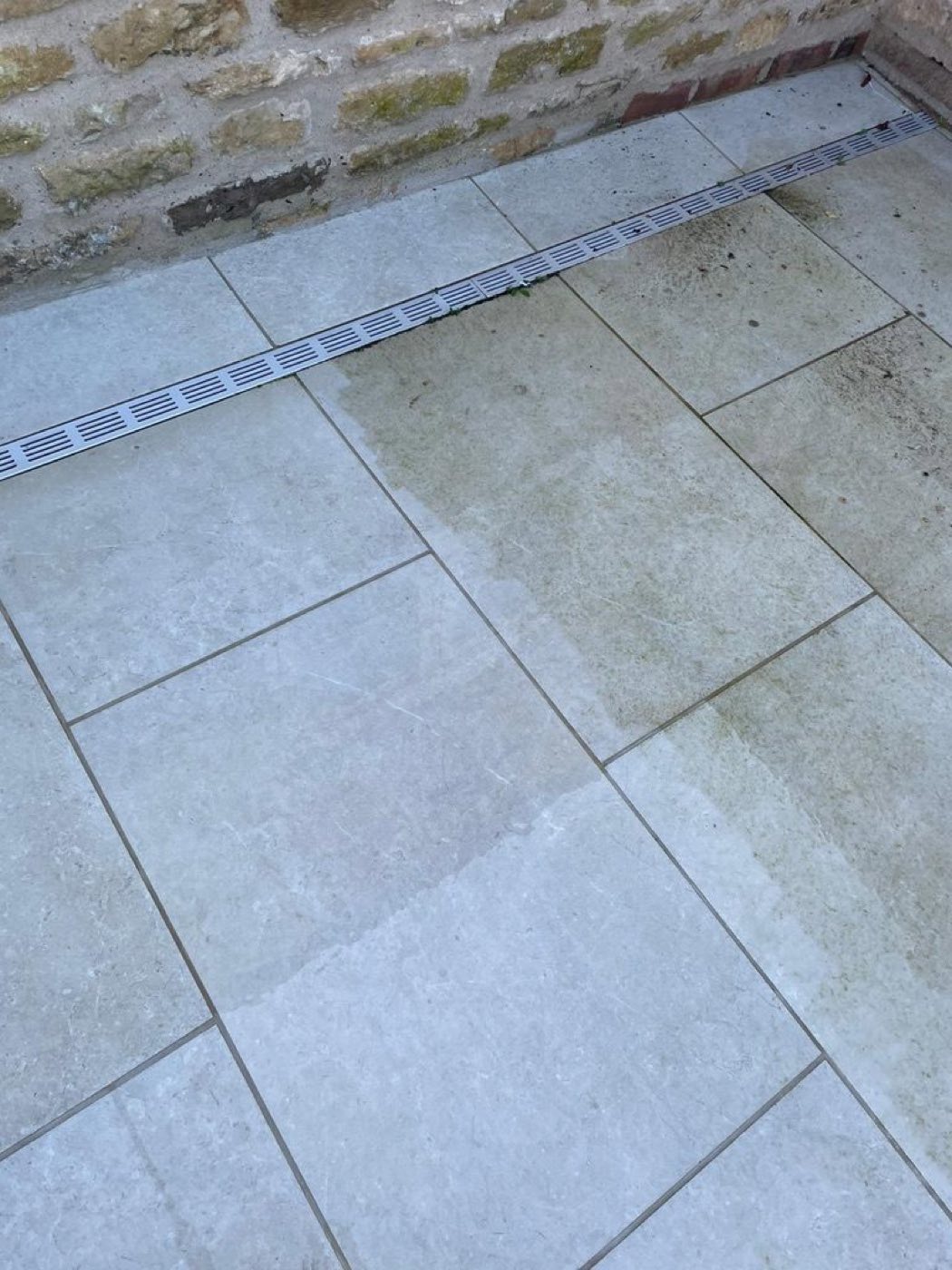
How to remove green algae from a patio or path
Green algae is the number-one reason patios and paths turn slippery — here's how to shift it properly and slow its return.
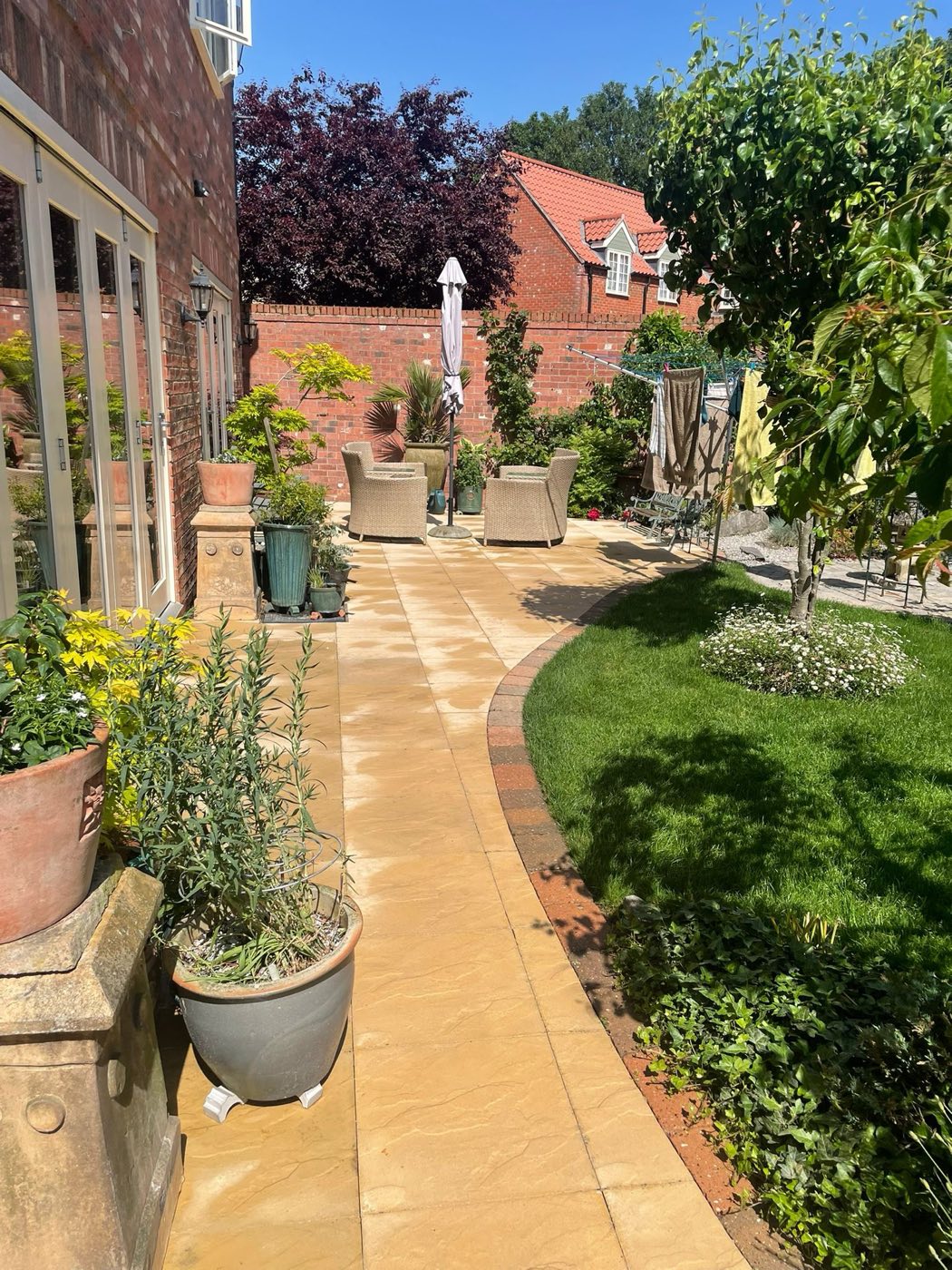
How to remove moss from a patio roof runoff
Roof runoff dumps moss spores straight onto your patio — here's how to clear it properly and stop it coming back.
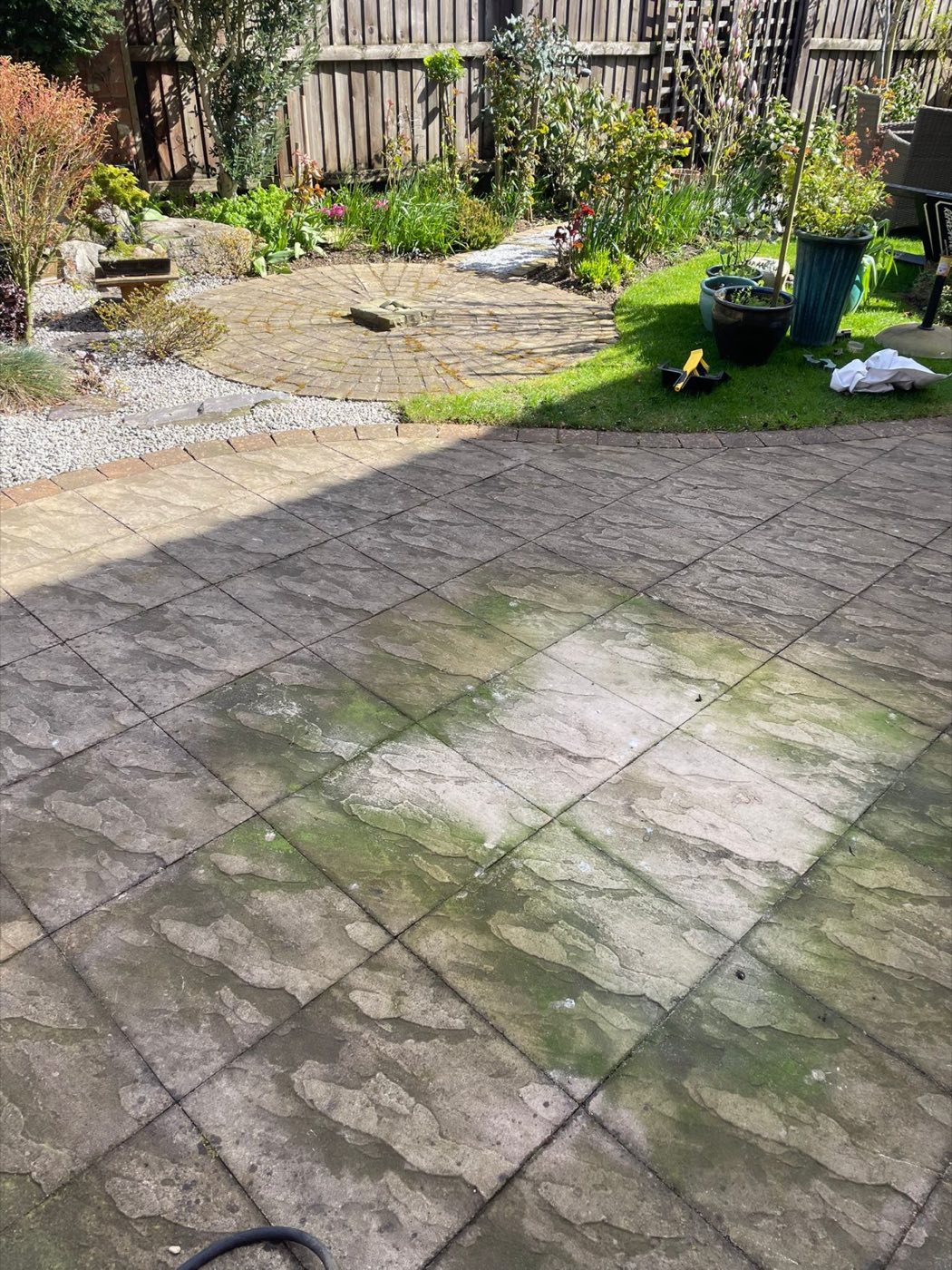
How to clean a patio drain and gully properly
A blocked patio drain causes standing water, slippery surfaces and bad smells — here's how to clean it properly and keep it flowing all year.