
25 August 2026 · Patios and Paths
How to clean a garden wall without causing damage
A grimy garden wall can let down an otherwise tidy outdoor space. If you've been wondering how to clean a garden wall without causing damage to the pointing, the stone or the render, you're in the right place. The short answer: gentle is almost always better than aggressive, and the cleaning method depends entirely on what the wall is made from.
We cover all kinds of outdoor surface cleaning across Lincolnshire — from patios and driveways to boundary walls and retaining walls — and garden walls are one of the jobs we're asked about most often. Here's what actually works.
Why garden walls go dirty so quickly
Garden walls sit out in the open, catching rain, shade and wind from every direction. That combination creates the perfect conditions for biological growth — moss, algae, lichen and black spot — especially on north- or east-facing boundaries that stay damp for much of the year.
In areas like Nettleham, Washingborough and Cherry Willingham, where older brick and stone walls are common, it's not unusual to see a wall that looks almost permanently green by February. Concrete render walls can develop dark streaking from algae running down in wet weather. Even newer walls built from reconstituted stone can stain quickly if left untreated.
The dirt itself isn't always just cosmetic — moss traps moisture against the surface and can gradually degrade mortar joints over time.
Know your wall material before you reach for the pressure washer
This is the single most important step. Cleaning a hard engineering-brick wall is a very different job to cleaning a lime-mortared sandstone wall from the 1930s. Get it wrong and you risk:
- Blasting out soft, aged mortar
- Etching or spalling natural stone
- Damaging painted or rendered finishes
- Spreading algae spores further across the surface
Common wall types and what they need
Brick walls with cement mortar — generally the most forgiving. A medium-pressure rinse followed by a suitable biocidal wash handles most biological growth well.
Natural stone walls (limestone, sandstone, granite) — need low pressure and a pH-neutral or specialist stone cleaner. High pressure or acidic cleaners cause lasting surface damage.
Rendered or painted walls — require soft-washing: a low-pressure application of diluted biocide, left to dwell, then a gentle rinse. Pressure washing render directly often causes cracks or delamination.
Lime-mortared or heritage walls — these need the most care. Lime mortar is deliberately softer than the stone or brick around it (so it flexes with movement). High-pressure washing strips it out fast. Hand-scrubbing and biocide treatment is usually the right approach.
The safest cleaning method: soft-washing and biocide
For most garden walls, soft-washing — applying a diluted biocidal solution at low pressure and letting it do the work — gives excellent results without the risk of physical damage.
Here's the basic process:
- Brush off any loose debris, heavy moss or leaves by hand first.
- Mix or apply a suitable outdoor biocide (one formulated for masonry, not a general weedkiller).
- Apply it at low pressure or with a hand sprayer, working from the top of the wall down.
- Leave it to dwell — usually 15 to 30 minutes, longer for heavy growth.
- Rinse gently from top to bottom. Most biological matter will have loosened and will wash away.
- For stubborn patches, a second application the following week is safer than more pressure.
This method works well on brick, most render, reconstituted stone and many natural stone types.
When pressure washing is appropriate
Pressure washing has its place on garden walls — but only on the right surfaces and at the right settings. Engineering brick with cement mortar can take a fairly confident rinse. Dense concrete block walls are similarly robust.
Keep the lance at least 30 cm from the surface and use a wide fan tip rather than a pinpoint jet. Work in smooth horizontal passes rather than holding the lance in one place. Never pressure wash a wall you haven't tested in a small, hidden area first.
If you're not sure, start gentle. You can always apply more treatment — you can't undo blasted-out mortar.
What to do about stubborn staining
Some stains don't shift with biocide alone:
- Green algae streaks on render — often need a second biocide treatment and a soft-bristle scrub before rinsing.
- Rust staining (common near metal fixtures) — specialist rust removers formulated for masonry are available; avoid acidic products on natural stone.
- Black lichen — one of the toughest to remove. It bonds to the surface and needs a dedicated lichen treatment, dwell time of several hours, and patience. Two or three applications over a few weeks often work better than one heavy-handed attempt.
- Efflorescence (white salt bloom) — brush off dry with a stiff brush first; then rinse. Avoid sealing over it — the salt needs to escape.
Should you seal a garden wall after cleaning?
For many wall types, a breathable masonry sealer applied after cleaning helps slow the return of biological growth and reduces water ingress. It's especially worth considering on porous natural stone walls or older brick in exposed positions — places like Welton or Saxilby, where walls take a fair battering from Lincolnshire winters.
Just make sure the wall is completely dry before sealing — usually 48 hours minimum after cleaning in decent weather. Sealing a damp wall traps moisture and can cause long-term problems.
For more on how sealing fits into a proper cleaning and maintenance plan, take a look at our patio cleaning guides and advice.
When it's worth calling a professional
If your wall is heritage stone, lime-mortared, painted render, or simply large and awkward to access safely, professional help is usually the better call. A wrong move on a historic or delicate wall can be expensive to put right.
We work across Lincolnshire — including Lincoln, Branston, Bracebridge Heath and beyond — cleaning and restoring outdoor surfaces of all kinds. Take a look at where we cover to see if we're in your area.
If you'd like us to take a look at your garden wall, we're happy to give you an honest assessment and a free quote — no pressure, no obligation. Just get in touch for a quote and we'll take it from there.
Frequently asked questions
Can I use a pressure washer on an old brick garden wall?
It depends on the mortar. Modern cement-mortared brick is generally fine at medium pressure with a wide fan tip. Older walls with lime mortar are much more vulnerable — high pressure strips the mortar out quickly, so soft-washing with a biocide is much safer.
What kills the green algae on my garden wall?
A diluted outdoor biocide, left to dwell on the surface for 20–30 minutes before rinsing, is the most effective treatment. General weedkillers won't do the job — you need a product specifically formulated for masonry algae and moss.
How often does a garden wall need cleaning?
Most walls benefit from a biocide treatment every one to two years, depending on how shaded and damp the location is. North-facing walls in sheltered spots may need attention annually; sunny, exposed walls often stay cleaner for longer.
Will cleaning a garden wall damage the pointing?
If done correctly, no. The risk comes from using too much pressure or the wrong nozzle on soft or aged mortar. A gentle approach — biocide treatment first, low-pressure rinse — cleans effectively without disturbing sound pointing.
Need a hand with yours? We cover Lincolnshire for patios, driveways, paths and more — see the areas we cover or browse our services. Get a free quote or call 07874 010739.
Keep reading
More on patio cleaning
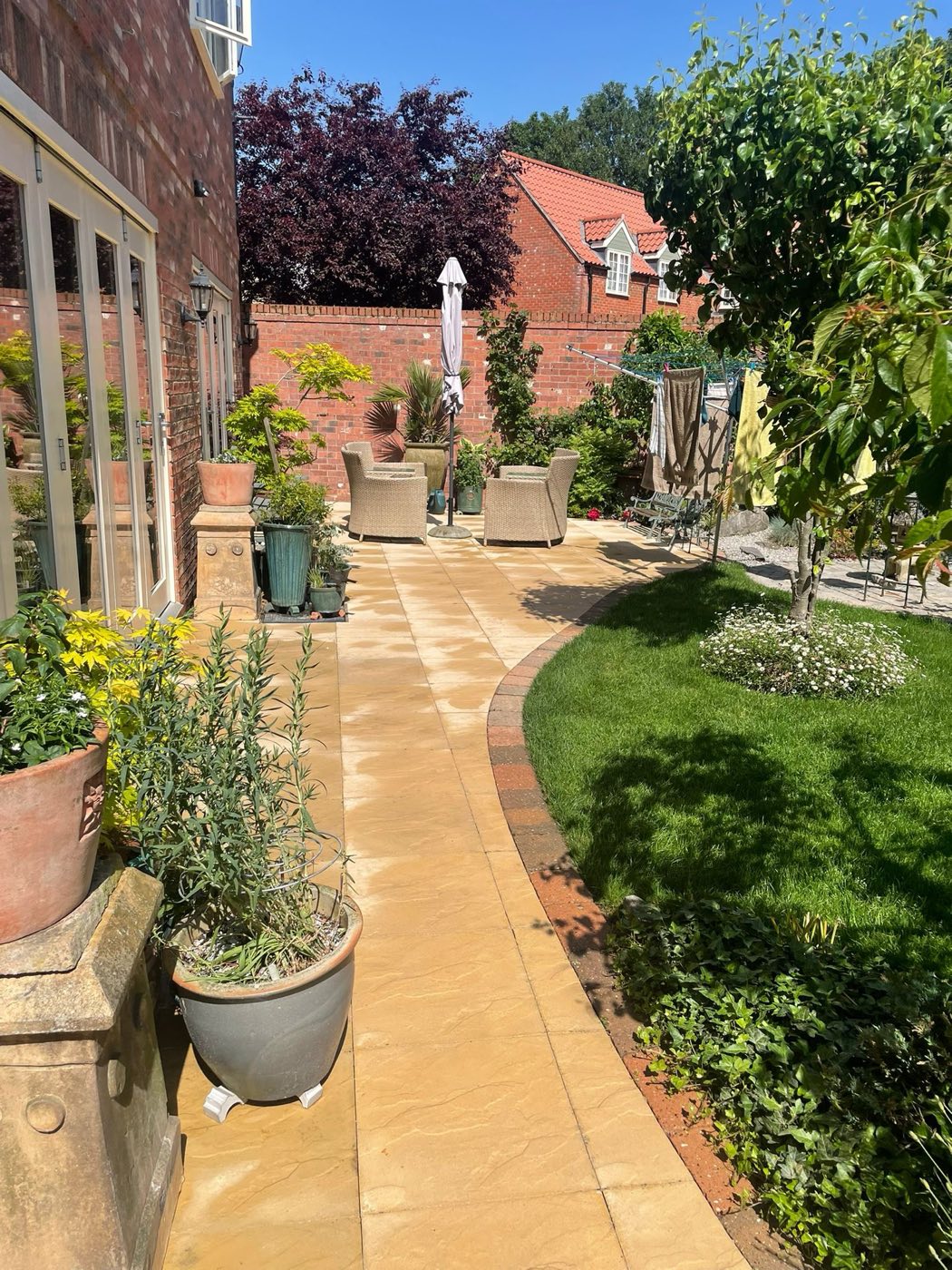
How to clean a shaded patio that stays damp
A permanently damp, shaded patio is the hardest surface to keep clean — here's what actually shifts the green and keeps it away longer.
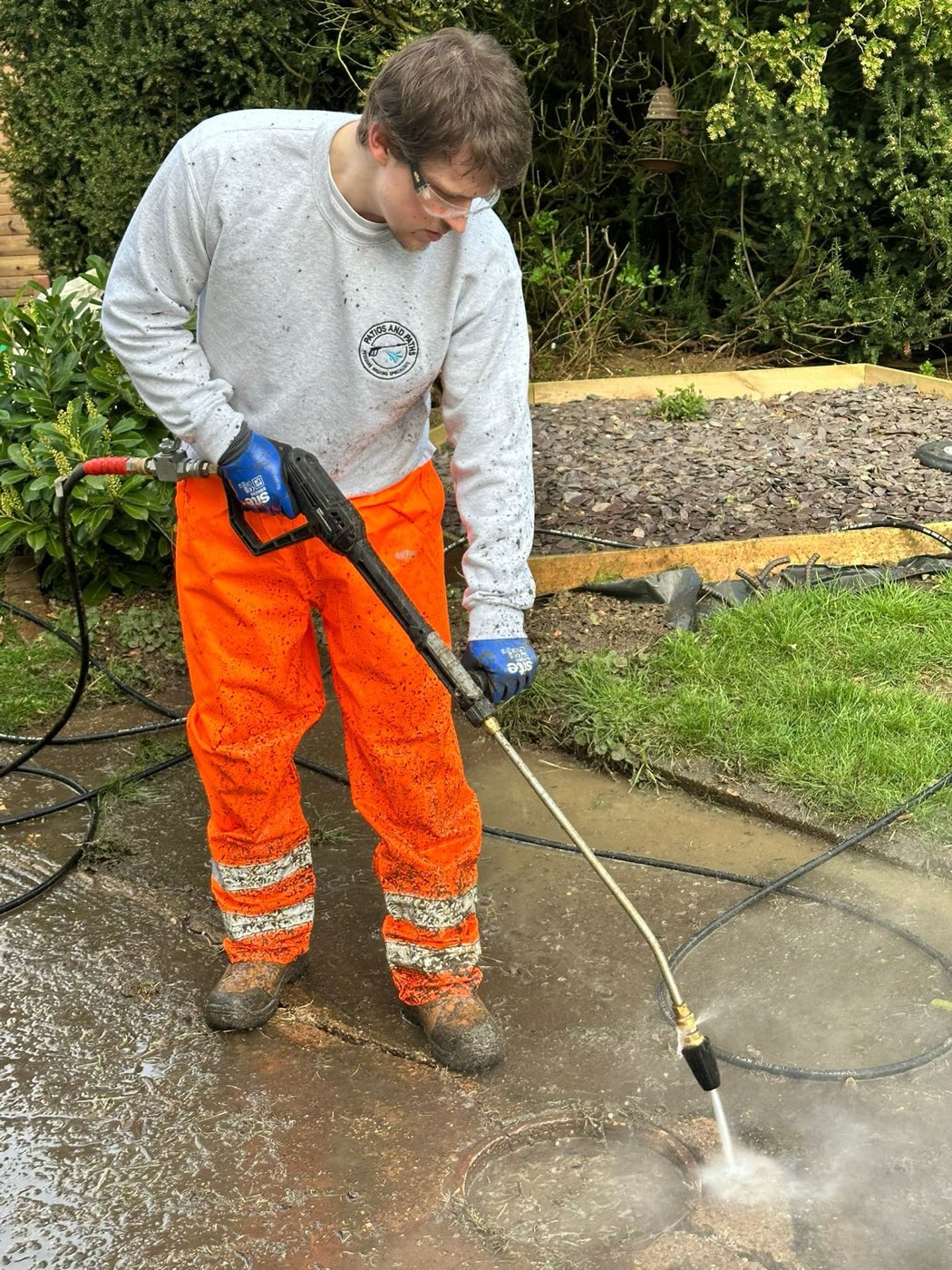
How to clean a patio with a pressure washer safely
Pressure washing a patio is satisfying — but the wrong settings or technique can cause real damage. Here's how to do it properly.
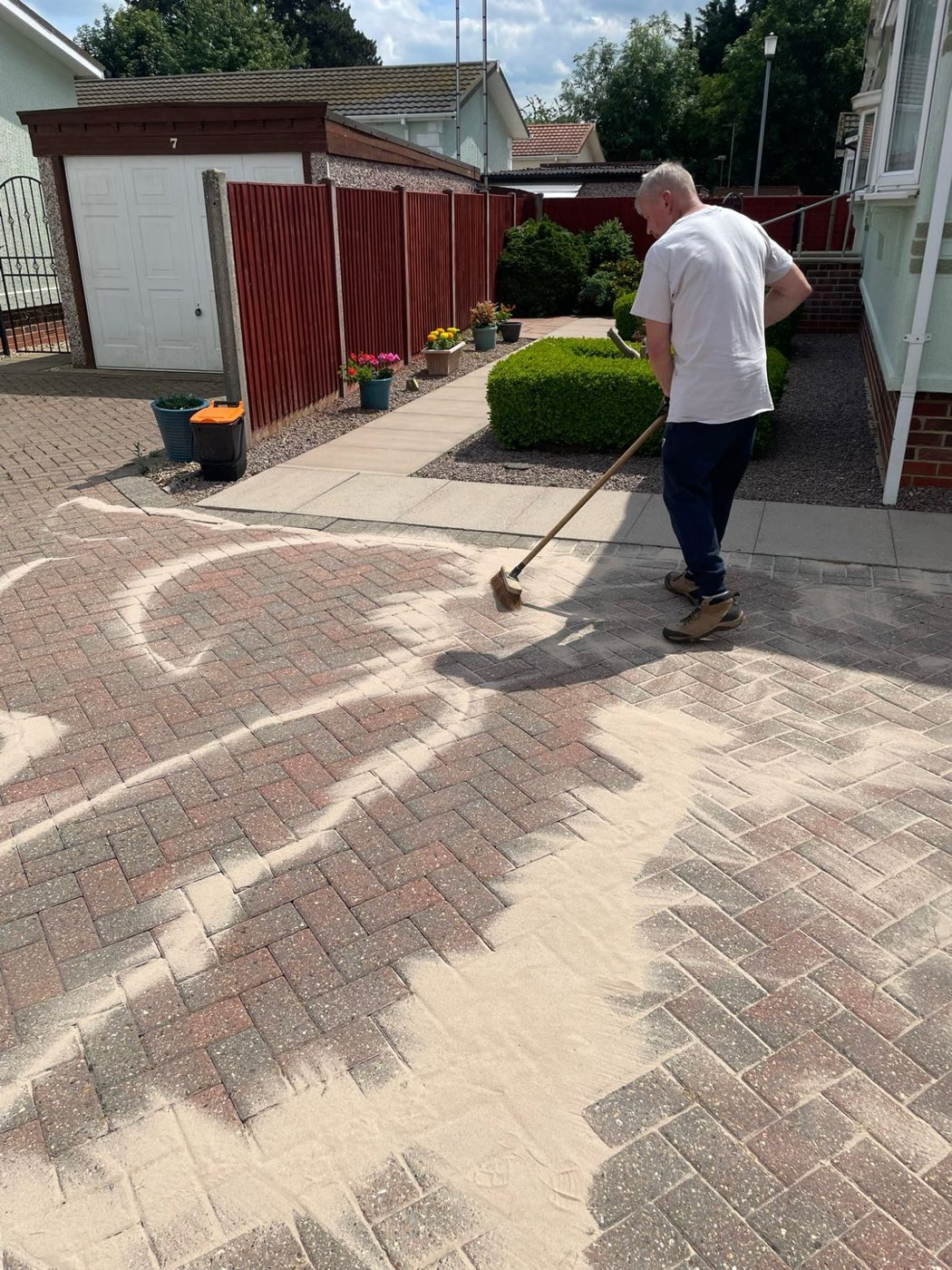
How to clean a wet pour rubber path properly
Wet pour rubber paths are low-maintenance — but they do get dirty, mossy and slippery. Here's how to clean them safely without causing damage.