
22 July 2026 · Patios and Paths
How to clean a conservatory base and paths
The paving around a conservatory is one of the most neglected spots in any garden. It sits in the shadow of the glazing, gets dripped on constantly, and never quite dries out. If you're wondering how to clean a conservatory base and paths properly, the good news is that it's very achievable — you just need to understand what you're dealing with before you reach for a pressure washer.
Why this area gets so dirty so quickly
Conservatory bases and the paths leading to them face a particular set of problems that open patios don't:
- Constant drip line. Rainwater runs off the glazing and hammers the same strip of paving day after day, washing in algae spores and organic debris.
- Permanent shade. Most conservatories face north or east, or are tucked against a house wall, so the paving below rarely gets direct sun. Damp lingers, and green algae and black spot thrive.
- Poor air circulation. With a wall on one side and the conservatory frame above, air barely moves. Surfaces stay wet hours longer than an open patio would.
- Rubber seals and UPVC frames nearby. Any cleaning method needs to be safe for the conservatory itself, not just the paving.
The result is usually a dark green or black strip of slippery paving that looks years older than the rest of your garden. We see this constantly across Lincolnshire — from terraced houses in Lincoln to newer builds in Nettleham and Welton.
Identify your surface type first
Before you do anything, work out what your conservatory base is made of, because the wrong approach can cause real damage.
Concrete slabs and pressed concrete
The most common base material in older properties. Fairly resilient, but can be etched by strong acids or alkaline cleaners. A dilute patio cleaner and a stiff brush, or a professional hot-water pressure wash, works well.
Indian sandstone or natural stone
Porous and easily stained. Avoid bleach and high-pressure jets at close range — they erode the surface over time. A pH-neutral stone cleaner applied with a soft brush is the safe route. We've covered the detail in our guide to cleaning Indian sandstone paving.
Porcelain tiles
Increasingly popular around modern conservatories. Very dense and largely non-porous, so they clean up well — but the grout lines between tiles are a different story. They need separate attention.
Block paving or brick
The joints can trap moss and weed growth. Pressure washing helps, but re-sanding and sealing afterwards makes a big difference to how long it stays clean.
The right cleaning process, step by step
- Clear the area. Move plant pots, furniture and doormats. Brush off loose debris with a stiff outdoor broom.
- Pre-treat with an algae or moss killer. Apply a diluted biocidal patio cleaner and leave it for the time stated on the label — usually 20–30 minutes. This loosens the biological growth so it lifts more easily and doesn't just get redistributed.
- Scrub stubborn spots by hand. Around the conservatory frame, along the edge of the drip line and in tight corners, a stiff hand brush gives you the control a lance can't.
- Rinse or pressure wash. Work away from the conservatory frame, not towards it, so you're not driving dirty water up under the seals. Keep the nozzle at least 30 cm from the surface on natural stone; you can get closer on dense concrete or porcelain.
- Treat the grout lines (if tiled). A narrow grout brush with a mild cleaner shifts the dark staining that often persists after the main wash.
- Allow to dry fully before considering sealer. Applying sealer to damp stone traps moisture beneath it and causes discolouration.
Protecting the conservatory frame while you clean
This is where many DIY jobs go wrong. UPVC frames, rubber seals and aluminium trims don't respond well to bleach-based cleaners or high-pressure water forced directly at the joints. A few simple precautions help:
- Rinse the frame down with plain water first so any cleaning product splashback is diluted immediately.
- Avoid pressure washing directly at the threshold strip between the conservatory floor and the external paving — water can track through here into the base.
- Wipe the frame down with clean water once you've finished the paving, so no chemical residue is left sitting on the UPVC.
How often does this area need cleaning?
In Lincolnshire's climate, a conservatory base and adjoining paths will typically need a proper clean every one to two years if you want them to stay safe underfoot and looking their best. North-facing spots, or those overhung by trees — common in older village gardens around Saxilby and Skellingthorpe — may need attention every year. A post-cleaning application of patio sealer on stone or concrete can push that out to every two or three years by making the surface far less hospitable to algae.
You can see the full range of surfaces we work with across the county on our services page.
When it's worth calling a professional
DIY cleaning is perfectly reasonable for a small, straightforward concrete base. But if the surface is natural stone, if the area is large, if there's heavy lichen or black spot, or if the paving is close to newly installed conservatory seals you don't want to risk damaging — a professional clean is money well spent. We carry hot-water pressure washing equipment that lifts deep-set algae far more effectively than cold domestic machines, and we know how to protect the frame while we work.
If you'd like a free, no-obligation quote for your conservatory base and paths, get in touch with us today. We cover the whole of Lincolnshire and can usually give you a rough price from a couple of photographs.
Frequently asked questions
Can I use bleach to clean the paving around my conservatory?
It's best avoided. Bleach can discolour natural stone, damage UPVC frames and harm nearby plants. A purpose-made patio or algae cleaner is safer and usually more effective for biological growth.
Will pressure washing damage my conservatory frame or seals?
Not if you work carefully — direct the lance away from the frame and avoid blasting water at joints or threshold strips. If you're unsure, a professional will know exactly how to protect the frame while still cleaning the paving thoroughly.
Why does the paving around my conservatory go green so quickly compared to the rest of my patio?
The drip line from the roof keeps the surface constantly damp, and the shade from the glazing means it never fully dries out — perfect conditions for algae and moss. Sealing the paving after cleaning can significantly slow regrowth.
How long does it take to professionally clean a conservatory base and path?
Most conservatory base and path cleans take between one and three hours depending on size, surface type and how heavily soiled the area is. We'll give you a realistic time estimate when we quote.
Need a hand with yours? We cover Lincolnshire for patios, driveways, paths and more — see the areas we cover or browse our services. Get a free quote or call 07874 010739.
Keep reading
More on patio cleaning
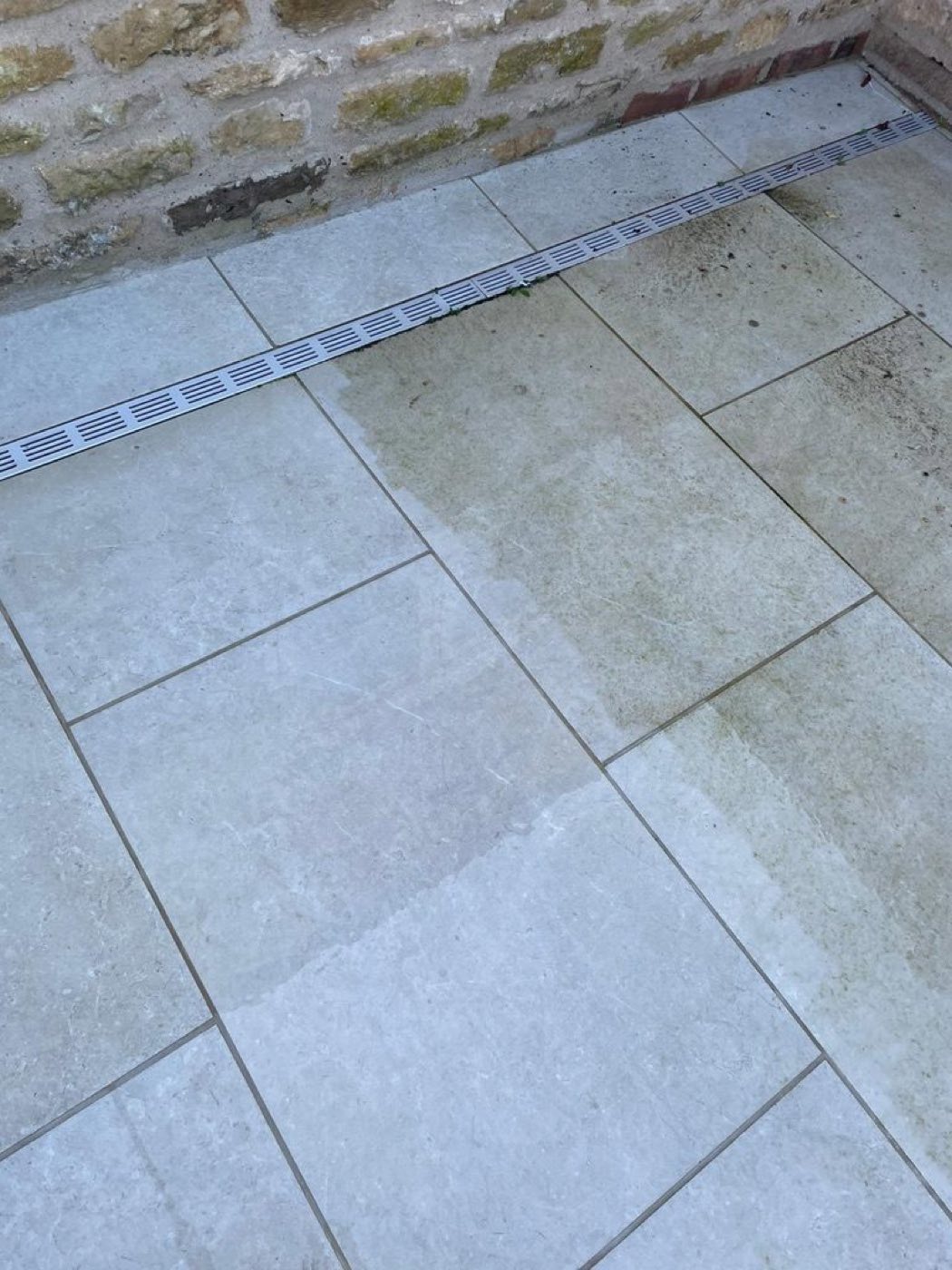
How to remove green algae from a patio or path
Green algae is the number-one reason patios and paths turn slippery — here's how to shift it properly and slow its return.
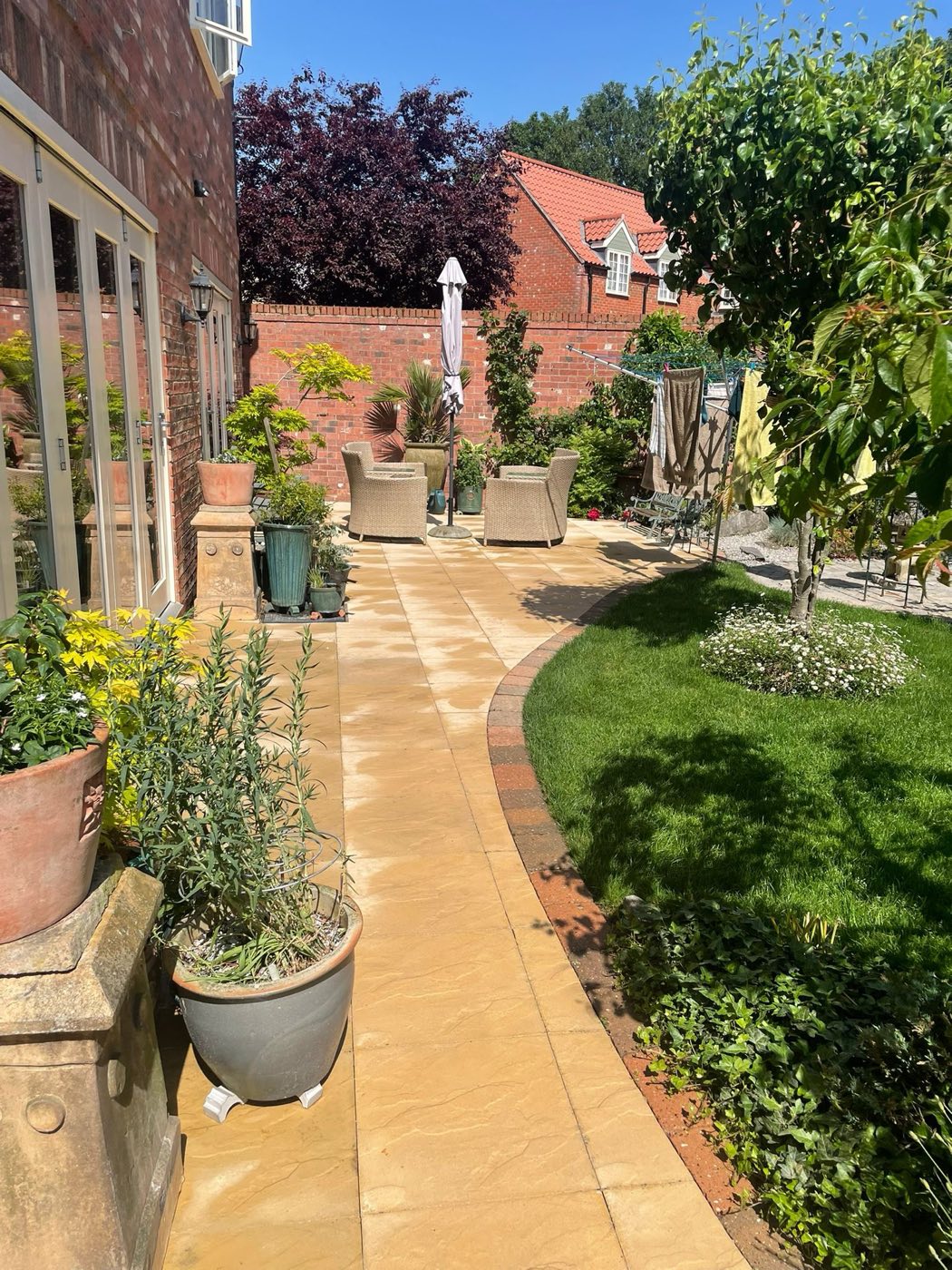
How to remove moss from a patio roof runoff
Roof runoff dumps moss spores straight onto your patio — here's how to clear it properly and stop it coming back.
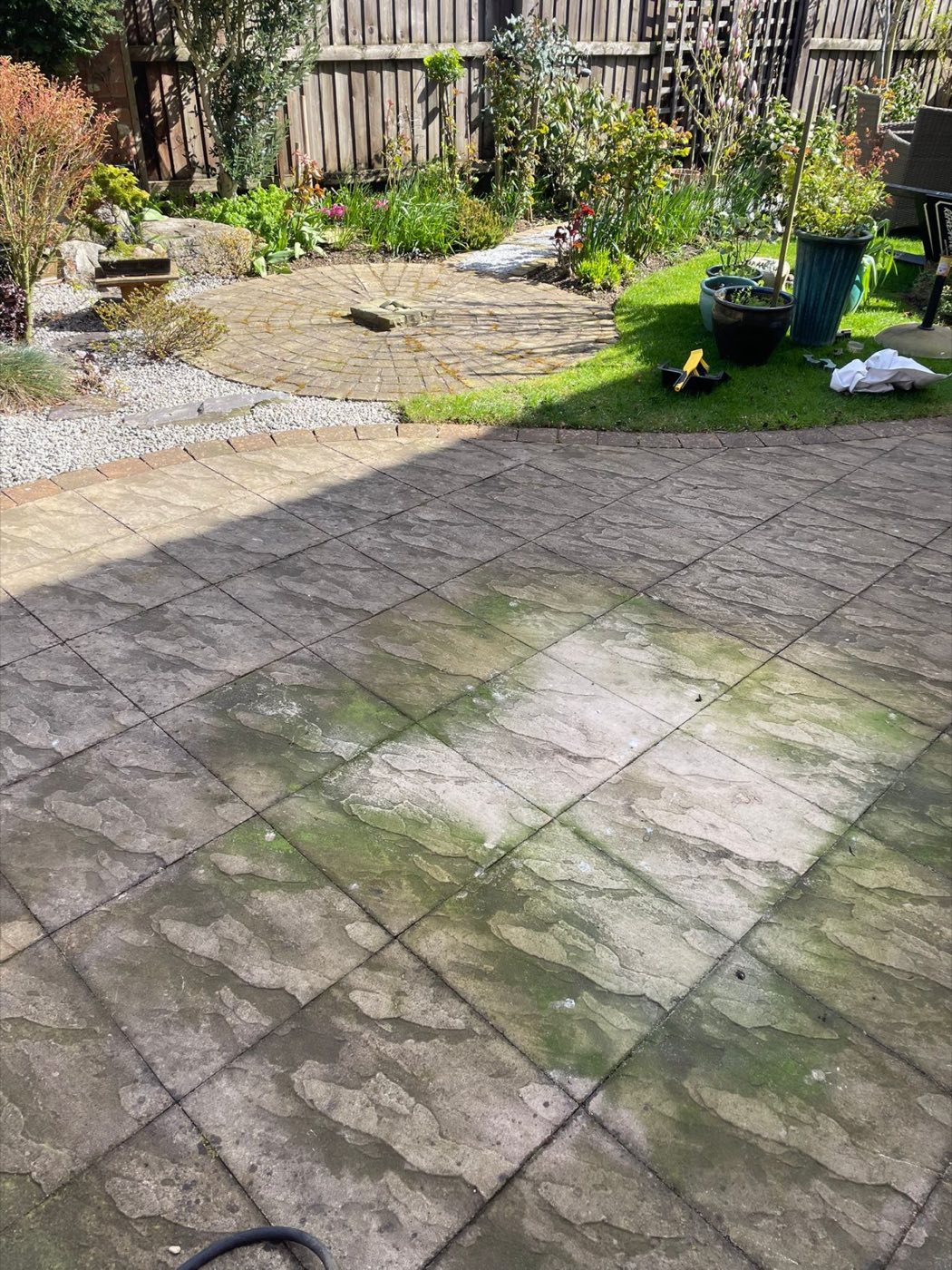
How to clean a patio drain and gully properly
A blocked patio drain causes standing water, slippery surfaces and bad smells — here's how to clean it properly and keep it flowing all year.