
30 July 2026 · Patios and Paths
How to clean a concrete driveway: block vs poured
If you're wondering how to clean a concrete driveway, the honest answer is: it depends on what type of concrete you've got. Block paving and poured concrete slabs both look great when clean, but they respond differently to pressure washing, cleaning products and sealing — and getting the method wrong can cause real damage. Here's what actually works, from someone who cleans driveways across Lincolnshire every week.
Block paving vs poured concrete: why it matters
These two surfaces might both be concrete, but they behave very differently.
Block paving is made of individual pressed or cast blocks laid on a compacted sand bed. The gaps between blocks are filled with kiln-dried sand, which is what holds the whole surface stable. Cleaning too aggressively blasts that jointing sand away and leaves you with wobbly, sinking blocks.
Poured concrete — sometimes called brushed concrete or exposed aggregate — is a single continuous slab. There are no joints to worry about, but the surface can be more porous and prone to staining, and harsh chemicals can etch or discolour it if you're not careful.
Knowing which one you have changes almost every decision you make.
How to clean block paving concrete
Block paving is the most common driveway surface we restore across Lincolnshire, from Nettleham and Welton to the newer estates around North Hykeham and Bracebridge Heath.
Step-by-step: block paving
- Clear the surface. Move bins, plant pots and anything else off the driveway. Sweep away loose debris — leaves, grit, moss clumps.
- Apply a moss and algae treatment. For heavily greened blocks, a diluted biocide applied and left to dwell for 20–30 minutes makes the pressure washing far more effective. Don't skip this if the surface is slippery.
- Pressure wash at the right angle and pressure. A rotary surface cleaner attachment is ideal — it gives an even clean without the 'tramline' streaks that a lance leaves. Keep the pressure at around 100–130 bar. Work methodically in sections.
- Don't blast the joints. Angle the cleaning head to clean the block face, not dig into the sand. Even so, you'll lose some jointing sand — that's normal.
- Re-sand the joints. Once the surface is fully dry (allow at least 48 hours in good weather), brush kiln-dried sand back into the joints. This is a step many DIYers skip, and it causes the blocks to shift over time.
- Consider sealing. A good block paving sealer locks the sand in, resists future staining and makes moss much slower to return. We cover this in more detail in our driveway cleaning guides.
How to clean poured concrete
Poured concrete — particularly exposed aggregate — is common on older Lincolnshire properties and around Saxilby, Skellingthorpe and Washingborough. It's durable, but it stains easily and can go a dull grey-brown without regular attention.
Step-by-step: poured concrete
- Pre-treat stubborn stains first. Oil stains, rust marks and tyre scuffs need a dedicated degreaser or alkaline cleaner applied before you start pressure washing. Let it dwell for at least 15 minutes.
- Use a surface cleaner attachment. Same as block paving — a rotary head gives a much more even result than a lance and avoids patchy 'tiger striping'.
- Pressure wash at a slightly higher setting. Poured concrete is denser and can handle around 130–150 bar. Work in overlapping passes.
- Rinse thoroughly. Any cleaning product left on poured concrete can leave a residue that attracts dirt. Rinse the whole area with clean water.
- Allow to dry fully before sealing. Poured concrete really benefits from a penetrating concrete sealer — it reduces water absorption, slows moss and algae growth, and keeps the surface looking cleaner for longer.
Common mistakes to avoid
- Using neat bleach. Household bleach does kill green algae temporarily, but it doesn't clean the surface, it can lighten block colours unevenly, and it harms plants at the driveway edge.
- Skipping the re-sanding. This is the single biggest DIY mistake on block paving. Loose joints mean unstable blocks.
- Pressure washing when it's about to rain. You need the surface dry enough to re-sand or seal — washing on a wet day just delays everything.
- Using a lance at close range. A narrow lance jet held close to poured concrete can physically pit the surface, especially on older or softer mixes.
When to call a professional
Most homeowners can manage a light clean on a well-maintained driveway. But if you're dealing with years of built-up algae and moss, deep oil staining, or you want sealing done properly, it's worth getting a professional in. We use commercial-grade surface cleaners and the right biocides for each surface type — and we re-sand block paving joints as standard, which most one-person-and-a-hired-pressure-washer jobs miss entirely.
We cover all of Lincolnshire — take a look at our areas we serve to see if we cover your postcode.
How often should you clean a concrete driveway?
For most Lincolnshire homes, a thorough clean every 12–24 months keeps a concrete driveway in good condition. North-facing driveways and those under trees will green up faster and may need attention annually. If you've had the surface sealed, you'll typically get an extra year or two before the next clean is needed.
Get a free quote
Whether you've got block paving that needs re-sanding or poured concrete that's gone green and grimy, we can restore it properly. Check our services or go straight to our free quote form — we'll get back to you quickly, usually the same day.
Frequently asked questions
Can I use a pressure washer on block paving without losing the sand?
Yes, but technique matters. Use a rotary surface cleaner rather than a lance, keep the pressure under 130 bar, and angle the head to clean the block face rather than dig into the joints. Expect to top up the kiln-dried jointing sand afterwards — it's a normal part of the process.
What's the best cleaner for a poured concrete driveway?
An alkaline degreaser works well on most staining, including oil and tyre marks. Apply it diluted, let it dwell for 15 minutes, then pressure wash off thoroughly. Avoid neat bleach — it can mottle the colour and doesn't clean the surface properly.
How long does a concrete driveway take to dry after pressure washing?
Allow at least 24–48 hours in dry, mild weather before re-sanding or sealing. In cooler or damp Lincolnshire conditions, give it longer — sealing onto a damp surface traps moisture and causes the sealer to fail early.
Does sealing a concrete driveway stop weeds and moss coming back?
It significantly slows regrowth by reducing the moisture and nutrients that moss and algae need. It won't stop weeds in block paving joints entirely, but combined with proper re-sanding it makes a noticeable difference to how long the surface stays clean.
Need a hand with yours? We cover Lincolnshire for patios, driveways, paths and more — see the areas we cover or browse our services. Get a free quote or call 07874 010739.
Keep reading
More on driveway cleaning
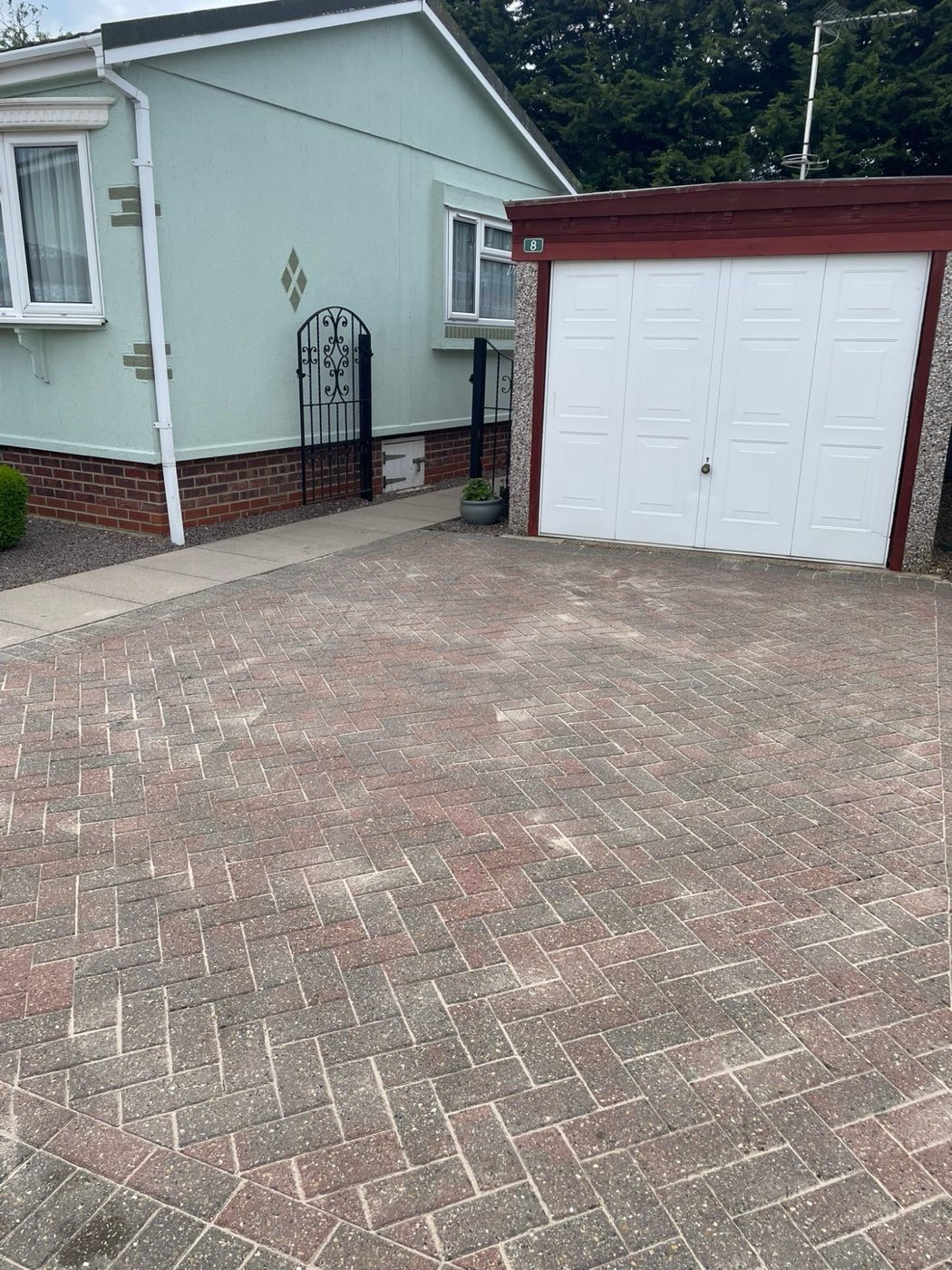
How to clean a block paving driveway after winter
Winter leaves block paving looking tired, mossy and washed-out — here's exactly how to bring it back to life safely.
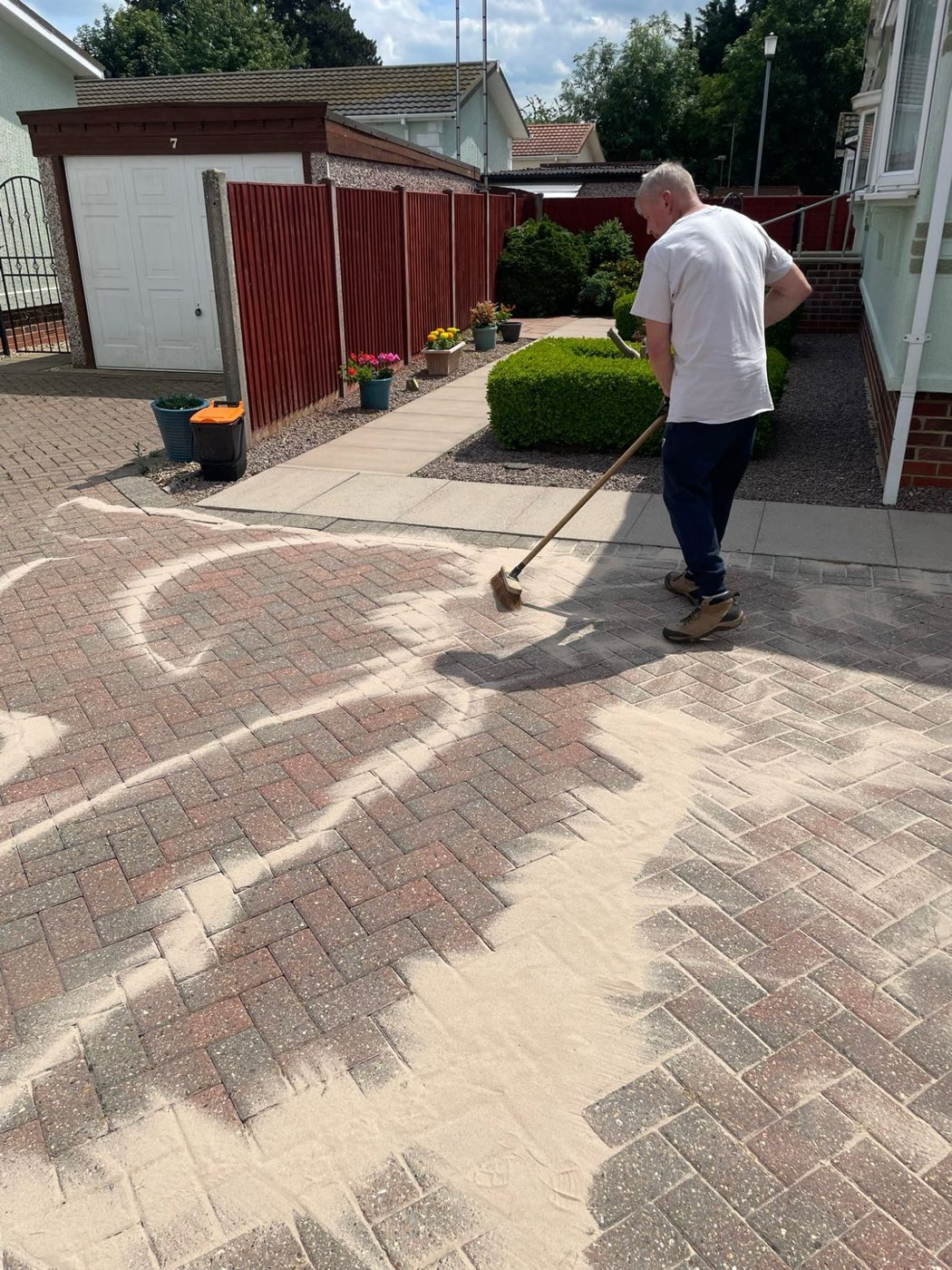
How to clean a cobblestone driveway properly
Cobblestone driveways look stunning when clean — here's how to get yours back to its best without loosening the joints or damaging the stone.
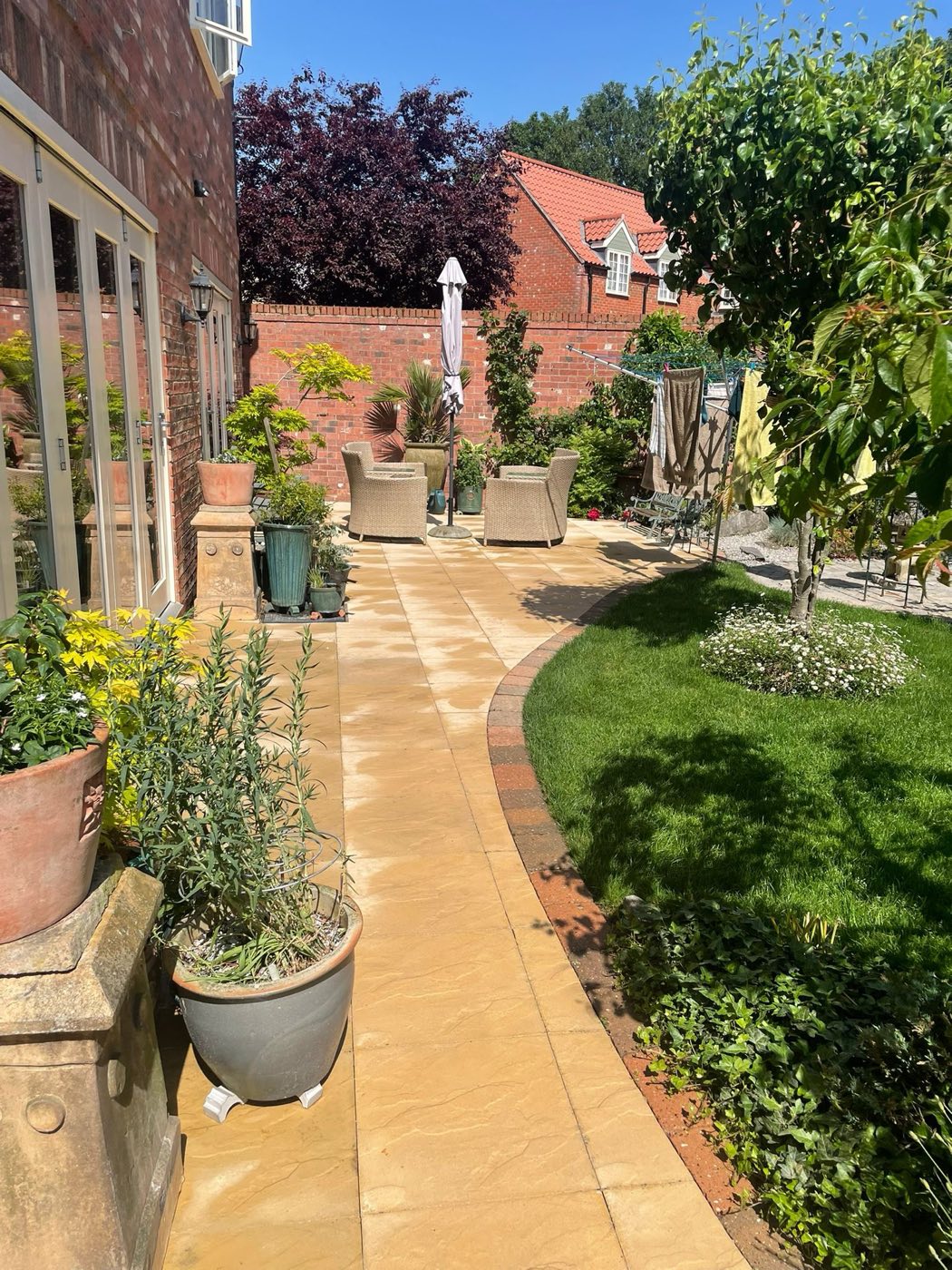
How to remove black algae from block paving
Black algae turns block paving dark, slippery and stubborn — here's what actually shifts it and how to stop it coming back.