
29 August 2026 · Patios and Paths
How to clean a brick driveway without damage
A clean brick driveway makes a real difference to the front of your home. But knowing how to clean a brick driveway without causing damage is trickier than it looks. Brick is porous, the pointing between courses can be fragile, and the wrong approach — too much pressure, the wrong chemical, or a surface spinner held too close — can leave you with worse problems than the moss you started with.
Here's what actually works, whether you're tackling it yourself or thinking about calling someone in.
Why brick driveways get dirty so quickly
Brick is one of the most beautiful driveway materials you can choose, but its porosity is a double-edged sword. Rain soaks in, algae and moss find a foothold, and traffic grime works its way into the surface over time. North-facing driveways and those shaded by hedges or walls — common in older Lincolnshire streets — are especially prone to a thick green or black biological crust that builds up year on year.
The pointing (the mortar between the bricks) is often the first thing to suffer. Old or lime-based mortar can be soft, and once water and plant roots get into the joints, they start to break down.
What you need before you start
Before you pick up a pressure washer, gather a few things:
- A stiff brush or a hand brush for pre-sweeping
- A low-pressure garden hose or pressure washer set to a gentle fan nozzle
- A purpose-made patio or driveway cleaner (pH-neutral is safest for brick)
- A pointing repair kit if you can see crumbling joints
- Knee pads and waterproof gloves
Avoid bleach-based products unless you know exactly what you're doing. They can lighten brick, kill off the pleasing weathered look, and harm plants at the edges of your driveway.
How to clean a brick driveway step by step
- Sweep thoroughly. Remove loose leaves, grit and debris before any water touches the surface. Wet debris turns into a slurry that's harder to deal with.
- Check the pointing. If joints are crumbling, hold off on pressure washing until you've repaired them — water forced into weak joints will make it worse.
- Pre-wet the surface. A gentle rinse with a garden hose lifts surface dust and lets any cleaning solution work more effectively.
- Apply your cleaner. Work it in with a stiff brush rather than relying on the pressure washer to do everything. Leave it to dwell for the time stated on the label — usually ten to fifteen minutes.
- Rinse with controlled pressure. Use a fan nozzle rather than a rotary head. Keep the lance at least 30 cm from the surface and work in the direction of the joints, not across them.
- Treat stubborn stains separately. Oil and rust need specific products — a biological driveway cleaner won't shift a diesel spill.
- Let it dry completely before deciding if a second pass or sealant is needed.
Getting the pressure right
This is where most DIY attempts go wrong. Brick can handle pressure washing, but the pointing often can't. A domestic pressure washer on full power, held close, will blast the mortar out in seconds. Start low — around 80–100 bar if your machine has a gauge — and only increase if the surface needs it. A surface cleaner attachment (the spinning disc type) can help distribute pressure more evenly, but again, don't press it too close.
Dealing with moss and algae
For heavy biological growth, a specialist moss and algae treatment applied a few days before you pressure wash will do most of the hard work for you. The treatment kills the growth at the root, so it rinses away cleanly rather than smearing. This is the approach we take on most jobs across Lincolnshire — from older brick drives in Lincoln's West End to newer estates in Nettleham and Welton.
When to consider a professional clean
If your brick driveway hasn't been cleaned in several years, the pointing is showing wear, or you have persistent staining that hasn't responded to your own efforts, it's worth getting a professional in. The risk of causing expensive damage — cracked or loosened bricks, blown-out pointing, or a patchy finish — is real, and a professional clean followed by a sand re-joint and sealant will last far longer than a DIY pass.
We cover the full range of driveway cleaning services across Lincolnshire, and you can see the areas we work in on our areas page.
Should you seal a brick driveway after cleaning?
Sealing isn't essential, but it makes future cleaning much easier. A breathable, penetrating sealant won't change the look of your bricks but will reduce how quickly moss and algae re-establish. It also protects the pointing. If you're going to seal, make sure the surface is bone dry first — at least 48 hours of dry weather after cleaning. We can advise on whether sealing is right for your particular drive when we come out for a look.
Keep it cleaner for longer
A few habits make a real difference between cleans:
- Clear leaves promptly in autumn — decomposing organic matter feeds algae
- Trim back overhanging hedges and shrubs to let light and airflow onto the surface
- If you have a regular jet wash routine, once a year is usually enough to stay on top of biological growth before it becomes a deep clean job
If you'd like us to take a look at your brick driveway, we're happy to come out and give you an honest assessment and a free, no-obligation quote. Head to our homepage services section to see what's included, or go straight to #quote and we'll be in touch quickly.
Frequently asked questions
Can I pressure wash a brick driveway without damaging the pointing?
Yes, but you need to use a fan nozzle, keep the lance at least 30 cm from the surface, and avoid directing the spray at an angle that undermines the mortar joints. If the pointing is already soft or crumbling, repair it before you wash.
What is the best cleaner to use on a brick driveway?
A pH-neutral patio and driveway cleaner is the safest choice for brick. Avoid strong bleach-based products as they can discolour the brick and damage any plants at the driveway edges. For oil stains, use a specific degreaser rather than a general cleaner.
How often should I clean my brick driveway?
Once a year is usually enough to prevent moss and algae from taking hold. Shaded or north-facing driveways may benefit from a treatment every six to twelve months, especially in the damp Lincolnshire climate.
Will cleaning my brick driveway remove the colour or weathered look?
Careful cleaning with the right products and controlled pressure won't strip the character from your bricks. Bleach and very high pressure are the main culprits for colour loss — avoid both and your drive should clean up beautifully.
Need a hand with yours? We cover Lincolnshire for patios, driveways, paths and more — see the areas we cover or browse our services. Get a free quote or call 07874 010739.
Keep reading
More on driveway cleaning
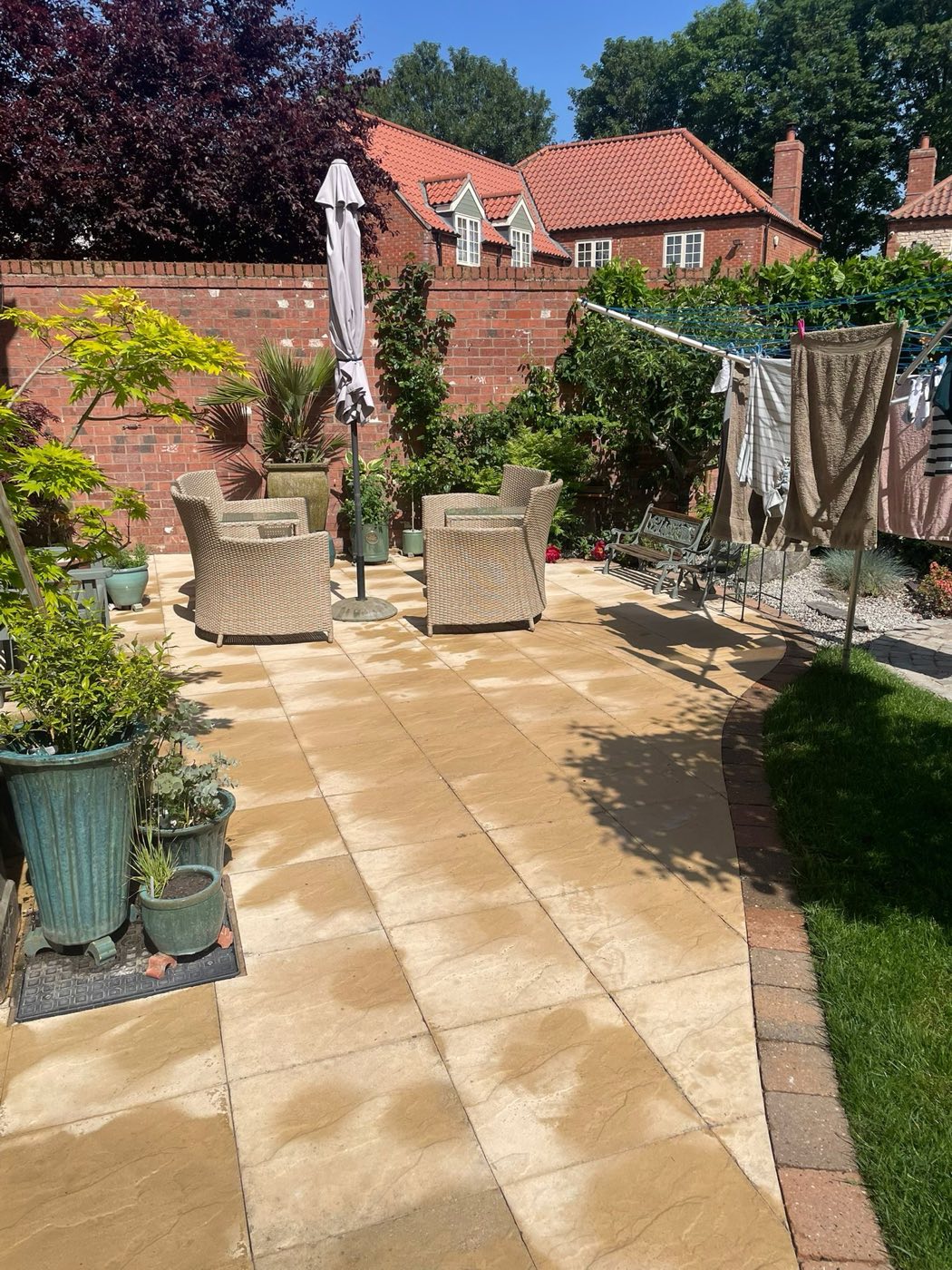
How to clean a driveway after heavy rain
Heavy rain leaves driveways muddy, stained and slippery — here's exactly how to clean yours back to a smart finish.
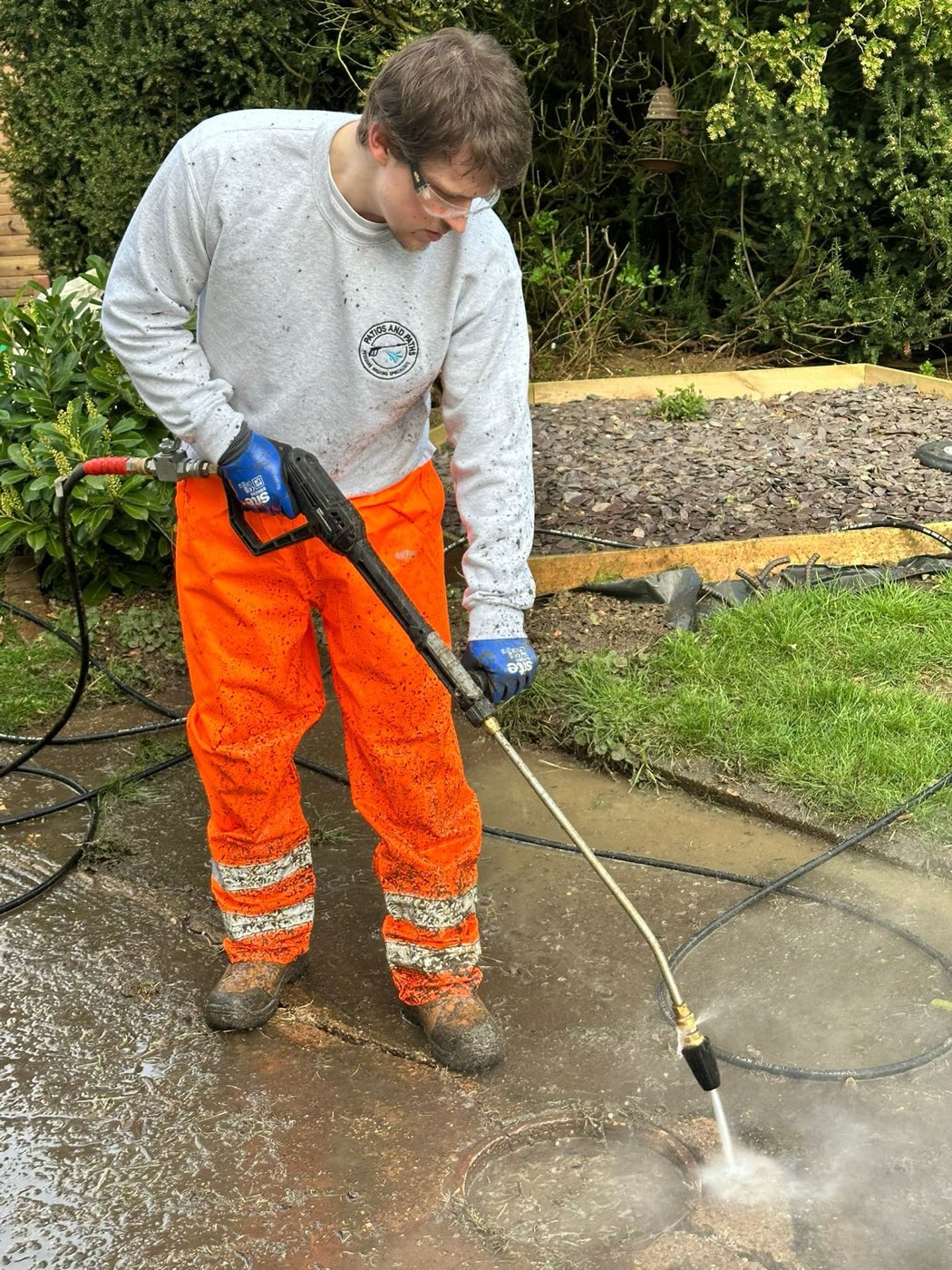
How to clean a driveway edging and border properly
Weedy, mossy joints can ruin an otherwise tidy driveway — here's how to clean block paving joints properly and stop the problem coming back.
How to clean a driveway edging and border properly
Driveway edging collects the worst of the grime — here's how to clean it properly and get that crisp, finished look back.